中文    English

Journal of library and information science in agriculture


Construction of a Data Element Value Release Model from the Perspective of Value Co-creation: A Grounded Analysis Based on Typical Application Scenarios of "Data Element ×"

LIU Siyi1, LIU Guifeng1,2(), LIU Qiong1,2, HAN Muzhe1,2   

  1. 1.Institute of Science and Technology Information, Jiangsu University, Zhenjiang 212013
    2.Jiangsu University Library, Zhenjiang 212013
  • Received:2026-04-29 Online:2026-08-10
  • Contact: LIU Guifeng E-mail:liuguifeng29@163.com

Abstract:

[Purpose/Significance] Against the backdrop of the accelerated development of the digital economy, data elements have become a core production factor, driving the optimization of resource allocation and the transformation and upgrading of of industry in China. A series of national policy documents, including the "Data Element ×" Three-Year Action Plan (2024-2026) and the Digital Agriculture and Rural Development Plan (2019-2025), have established systematic progresses for allocating data elements to the market and integrating them deeply into agricultural production, operations, circulation, and services. With the prominent characteristics of scattered data sources, spatiotemporal heterogeneity and multi-stakeholder coupling, the agricultural sector serves as a typical scenario for observing the whole process of data value evolution. Existing studies mostly focus on single dimensions such as technical empowerment or market transaction mechanisms, and fail to fully reveal the dynamic process of data element value release driven by multi-subject collaboration in specific industrial contexts. This research explores the internal logic and realization process of releasing value of data elements in agricultural scenarios from the perspective of value co-creation, so as to provide theoretical support and practical references for allocating data elements in a market-oriented manner. [Method/Process] Twenty-eight typical cases from the agricultural track of the national "Data Element ×" competition were selected as empirical materials, all of which meet three core screening criteria: a complete business closed loop covering the whole data value chain, participation of two or more types of stakeholders, and quantifiable value release effects. Procedural grounded theory was adopted as the core research method, following the standard three-level coding procedure including open coding, axial coding and selective coding. Double independent coding by two researchers with relevant professional backgrounds was applied to ensure coding reliability, and the inter-coder consistency coefficient reached 0.87. The 28 cases were divided into three groups for initial framework construction, category iteration and theoretical saturation test, respectively, to guarantee the rigor and saturation of the theoretical model. [Results/Conclusions] Through systematic coding analysis, 90 initial concepts, 22 basic categories, 8 main categories and 3 core categories were extracted, and a three-layer "driving-supporting-pathway" theoretical model of data element value release was constructed. The findings show that the value co-creation actor network acts as the driving premise, which breaks the dilemma of "unwilling to share and difficult to share" data through multi-stakeholder collaboration and mutual trust mechanism. The data resource integration and governance mechanism serves as the key support, transforming scattered heterogeneous raw data into high-quality usable data resources through multi-source fusion, full-life-cycle governance and trusted environment construction. The data element value transformation mechanism is a process by which data evolve from a resource to a factor and then to a value through algorithm empowerment, scenario-driven service innovation, and data productization. This study broadens the scope of value co-creation theory in the field of data element research, and provides practical, replicable references for the digital transformation of agriculture. Due to the limited sample selection of excellent cases, the research has a certain survivorship bias. Follow-up studies can include cases with unsatisfactory value release effects and perform cross-industry verification to further improve the model's generalizability.

Key words: data elements, value co-creation, value release, data governance, grounded theory

CLC Number: 

  • G203

Table 1

Case introduction (partial)"

序号案例名称申报单位数据来源概况
1建设北大荒数据管理体系,提升农业生产数智化水平北大荒信息有限公司企业报道+案例文本+媒体报道汇聚“天-空-地-机-人”多源异构数据,构建全生命周期数据管理体系,以资源画像、土地画像和算法模型支撑农业生产、管理、服务与金融场景
2融合农业农村大数据和遥感风控数据助力普惠金融服务浙江网商银行股份有限公司、蚂蚁科技集团股份有限公司、农业农村部大数据中心企业报道+案例文本+媒体报道依托隐私计算融合遥感识别数据、农户授权数据与农业农村公共数据,建立农业信用贷款授信评估模型,拓展农村普惠金融服务
...............
28“后土云”大数据引擎驱动传统农业“耕种管收”全面智慧化转型九天智慧农业集团有限公司案例文本+媒体报道+政府数据依托智慧农业平台、设备物联平台和数据中台整合农业多源数据,并面向种植、管理、销售和供应链金融场景开展精准决策和定制化服务

Table 2

Conceptualization of primitive statements (partial)"

编号原始语句初始概念
a1北大荒构建了天、空、地、机、人,采、存、管、算、用一体的数据全生命周期管理体系多源数据采集体系
a2为每个主体建立资源画像、土地画像、人员画像等,形成资源资产“一张图”数据资源画像化
a3截至目前累计汇聚数据超200TB,画像覆盖耕地4 874.4万亩、地块26万块大规模数据汇聚
a4基于多源异构数据引入大模型、小模型算法,突破感知、决策、执行与集成4个关键技术层次数据驱动智能算法
.........
a48对数据产品二次加工复用,在理论创新、产学研用深度融合转化等方面发挥核心优势数据产品复用与产学研融合创新
.........
a87为增强公司产品的存储、负载及计算能力,公司先后投资6 000余万元建设企业级数据中心企业级数据中心建设
a88结合3D建模技术,融合企业各类数据采集管理软硬件系统与模块功能,先后推出行情宝、猪病通、养猪大脑等大数据应用服务3D建模与数据融合应用
a89通过数据中台的技术处理,形成不同产业主体的数据产品,让数据产品在产业链中各个主体的使用过程中进行实际应用数据中台产品化
a90依托团队多年生猪产业一线深耕积累,利用新一代数智技术,通过对产业各环节的数据深度挖掘,实现生猪从出生、出栏到屠宰加工全生命周期的数字化、远程化、智能化管控全生命周期数据管控

Table 3

Logic behind the coding of basic categories"

基本范畴初始概念包含范畴归纳依据与内涵解析
A01. 软硬一体化数据底座a21、a51、a52、a87数据治理、存储与计算提供底层承载的软硬件基础设施集合
A02. 数据资源画像化与标注a2、a13、a43、a60、a77对原始数据的标准化加工,目的是让零散数据具备可计算、可分析的基础
A03. 高价值数据安全管控a27、a74针对高敏感、高价值数据实施重点防护措施
A04. 全流程精准决策与辅助a5、a15、a16、a17、a56、a90将数据决策能力嵌入生产经营各环节,实现精准管控与降本增效
A05. 个性化定制化数据服务a25、a49、a53、a58、a65、a69、a79面向不同主体、不同场景输出差异化数据服务
A06. 数据标准化与质量控制a7、a22、a34、a42通过统一标准与质控流程提升数据质量、消除数据异构性的管理手段,是数据治理的核心质量环节
A07. 融合产品二次开发与复用a48、a50、a89体现了数据产品在不同场景下的复用增值,释放数据要素的乘数效应
A08. 产学研用金协同联动a9、a37、a38、a48涵盖政府、科研院所、企业、金融机构等多元主体围绕数据开展的协作模式与联合行动,体现了多主体通过资源互补、能力协同共同参与数据价值创造
A09. 多模态多维度感知采集a1、a11、a32、a33、a40、a59、a71通过多种技术手段与采集渠道获取原始农业数据
A10. 闭环式数据治理架构a6、a8、a62、a67、a73覆盖数据采集、存储、治理、应用全流程的制度框架与体系设计
A11.跨部门跨层级数据互联a35、a64、a76、a82反映不同行政层级、职能部门及产业链主体打破组织边界,实现数据互联互通与业务协同
A12. 智能化动态感知与预测a47、a84、a85聚焦状态感知与趋势预判,为后续决策提供依据
A13. 权限管理与分类分级a44、a45、a66从制度层面划定数据流通的安全边界,明确不同主体的数据使用范围
A14. 产业链生态资源聚合a20、a30、a31、a54以数据流为纽带,串联产业链上下游的物资、技术、人才、资金等要素的聚合过程,核心是通过数据带动产业要素的协同配置
A15. 评估入表与数据资产化a28、a72数据价值的显性化与资产化确认,使数据具备可计量、可交易的资产属性
A16. 大模型与智能体驱动a4、a14、a24、a57、a75依托大模型、智能体等技术提升数据认知与自主决策能力
A17. 知识图谱与深度挖掘a18、a23、a55、a81初始概念涵盖领域知识图谱、数据深度挖掘、精准决策支撑、遥感数据价值挖掘,核心是拓展数据分析的深度,发现数据背后的关联与趋势
A18. 隐私计算与可信空间a26、a80通过技术手段实现数据“可用不可见”,保障数据安全流通
A19. 数据跨域合作与共享a39、a45、a68破解跨主体数据流通的制度与技术障碍,解决数据“难共享”的问题
A20. 数据要素信用体系构建a9、a27、a29基于数据明确权属、利益分配与风险规则,建立主体间信任关系的制度,通过信用体系降低数据共享的风险成本
A21. 数据融合建模a46、a78、a86、a88基于多源数据构建分析模型,将数据转化为决策支撑工具
A22. 批流一体化技术汇聚a3、a41、a61、a63、a70、a83通过技术手段将分散的多源数据进行集中存储与整合

Table 4

Spindle encoding results"

核心范畴内涵阐述主范畴基本范畴
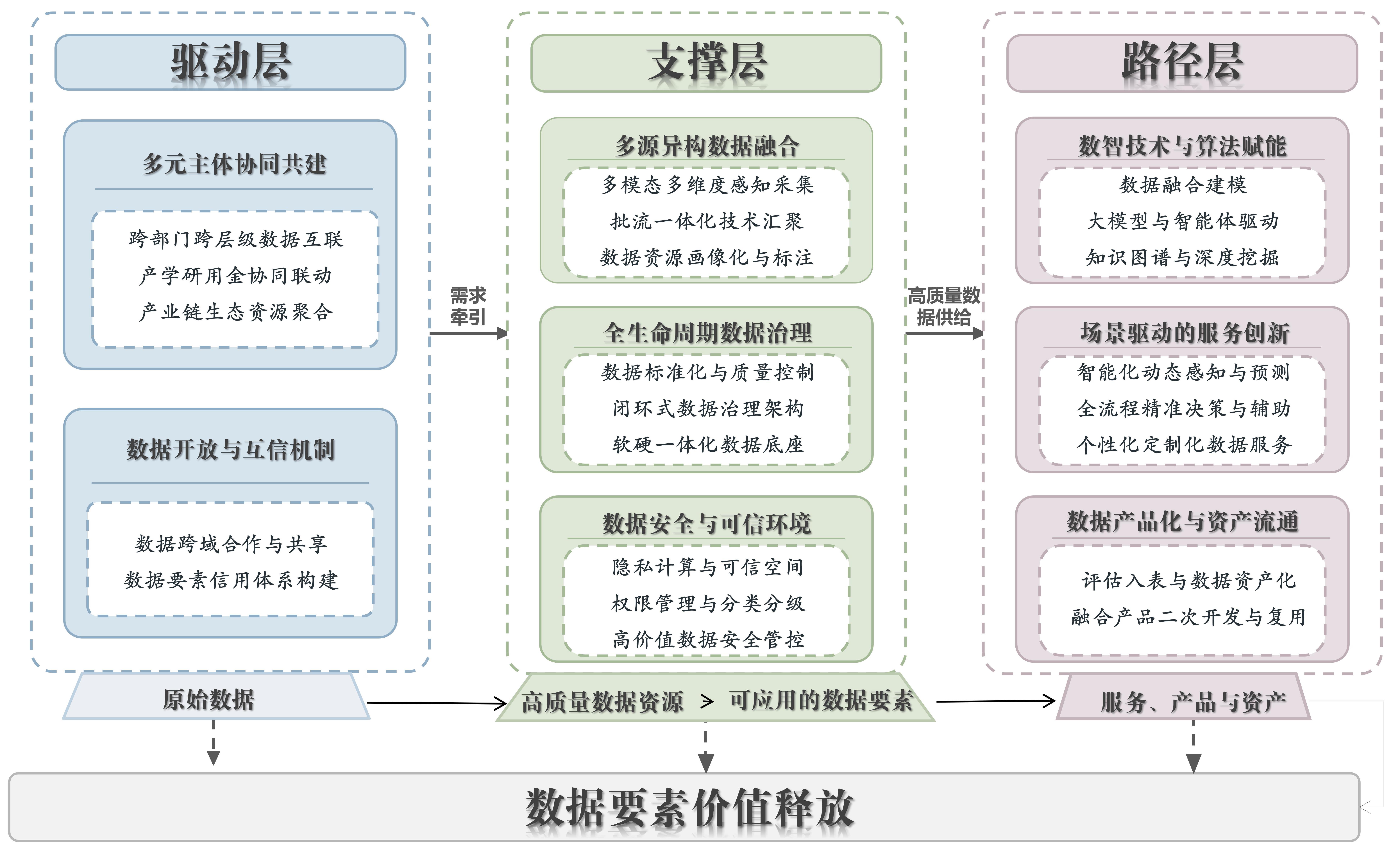
价值共创主体网络(驱动层)破解数据不愿共享和难共享的困境,重构利益分配与信任机制,形成跨界融合的主体协作网络B01. 多元主体协同共建A11
A08
A14
B02. 数据开放与互信机制A19
A20
数据资源整合与治理(支撑层)攻克数据不可用、不敢用的技术与管理壁垒,通过标准化治理与可信空间构建,实现高价值数据的供给B03. 多源异构数据融合A09
A22
A02
B04. 全生命周期数据治理A06
A10
A01
B05. 数据安全与可信环境A18
A13
A03
数据要素价值转化(路径层)解决数据不会用、难变现的难题,通过算法建模与场景嵌入,实现资源优化与服务定制,推动数据产品化与资产化探索B06. 数智技术与算法赋能A21
A16
A17
B07. 场景驱动的服务创新A12
A04
A05
B08. 数据产品化与资产流通A15
A07

Fig.1

Selective encoding construction results"

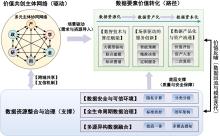
Fig.2

Theoretical model of data element value release from the perspective of value co-creation"

[1] 中华人民共和国中央人民政府. 《中华人民共和国国民经济和社会发展第十五个五年规划纲要》[EB/OL]. [2026-03-27]. .
[2] 马费成, 吴逸姝, 卢慧质. 数据要素价值实现路径研究[J]. 信息资源管理学报, 2023, 13(2): 4-11.
Ma Feicheng, Wu Yishu, Lu Huizhi. Research on the path to realize the value of data elements[J]. Journal of Information Resources Management, 2023, 13(2): 4-11.
[3] 中共中央、国务院. 中共中央、国务院关于构建更加完善的要素市场化配置体制机制的意见[EB/OL]. [2025-11-25]. .
[4] 中央网络安全和信息化委员会办公室. 十七部门关于印发《“数据要素×”三年行动计划(2024-2026年)》的通知[EB/OL]. [2025-11-25]. .
[5] 农业农村部, 中央网络安全和信息化委员会办公室. 数字农业农村发展规划(2019-2025年)[EB/OL]. [2025-05-11]. .
[6] 张满朝, 张永奇, 庄天慧. 数据要素能否驱动农业劳动生产率提升?[J]. 世界农业, 2026(3): 79-96.
Zhang Manchao, Zhang Yongqi, Zhuang Tianhui. Can data factors drive the improvement of agricultural labor productivity?[J]. World Agriculture, 2026(3): 79-96.
[7] 孙九林, 李灯华, 许世卫, 等. 农业大数据与信息化基础设施发展战略研究[J]. 中国工程科学, 2021, 23(4): 10-18.
Sun Jiulin, Li Denghua, Xu Shiwei, et al. Development strategy of agricultural big data and information infrastructure[J]. Strategic Study of CAE, 2021, 23(4): 10-18.
[8] 郭威, 吴华瑞, 朱华吉, 等. 农业生产大数据治理:关键技术、应用分析与发展方向[J]. 智慧农业(中英文), 2025, 7(3): 17-34.
Guo Wei, Wu Huarui, Zhu Huaji, et al. Agricultural big data governance: Key technologies, applications analysis and future directions[J]. Smart Agriculture, 2025, 7(3): 17-34.
[9] 高丹, 崔斌. 文化遗产数据资源的价值共创机制研究——基于“阶段-主体-场景”框架的分析[J]. 农业图书情报学报, 2025, 37(7): 61-72.
Gao Dan, Cui Bin. Value co-creation mechanism of cultural heritage data resources: An analysis based on the "stage-subject-scenario" framework[J]. Journal of Library and Information Science in Agriculture, 2025, 37(7): 61-72.
[10] 刘桂锋, 吴雅琪, 韩牧哲, 等. 我国数据要素研究进展: 内涵阐释、运行机理、治理体系与实践应用[J]. 图书情报工作, 2024, 68(23): 139-152.
Liu Guifeng, Wu Yaqi, Han Muzhe, et al. Data element research in China: Connotation interpretation, operation mechanism, governance system and practical application[J]. Library and Information Service, 2024, 68(23): 139-152.
[11] 孙静, 王建冬. 多级市场体系下形成数据要素资源化、资产化、资本化政策闭环的总体设想[J]. 电子政务, 2024(2): 12-20.
Sun Jing, Wang Jiandong. The general idea of forming a closed-loop policy of resource, asset and capitalization of data elements under the multi-level market system[J]. E-Government, 2024(2): 12-20.
[12] 吴雨婷, 周晓英, 陈燕方. 三力驱动下的文化遗产数据要素价值实现路径研究[J]. 信息资源管理学报, 2025, 15(3): 20-36.
Wu Yuting, Zhou Xiaoying, Chen Yanfang. Pathways to the value realization of cultural heritage data elements: A three-force-driven perspective[J]. Journal of Information Resources Management, 2025, 15(3): 20-36.
[13] Driessen S W, Monsieur G, Van Den Heuvel W J. Data market design: A systematic literature review[J]. IEEE Access, 2022, 10: 33123-33153.
[14] Dong Li, Zhu Xiaowei, Yang Luwei, et al. Unleashing the power of data element markets: Driving urban green growth through marketization, innovation, and digital finance[J]. International Review of Economics & Finance, 2025, 99: 104070.
[15] Mahajan S. Data marketplaces: A solution for personal data control and ownership?[J]. Sustainability, 2022, 14(24): 16884.
[16] 冯钰瑶, 张宏云, 王鹏飞, 等. 推动全生命周期数据治理的关键技术选择与对策[J]. 中国科学院院刊, 2025, 40(10): 1696-1708.
Feng Yuyao, Zhang Hongyun, Wang Pengfei, et al. Key technology selection and countermeasures to promote full lifecycle data governance[J]. Bulletin of Chinese Academy of Sciences, 2025, 40(10): 1696-1708.
[17] 吴玉浩, 刘艺浩, 李庆军, 等. 基于大语言模型的图书馆数据开放共享:逻辑、路径与策略[J]. 农业图书情报学报, 2026, 38(1): 28-43.
Wu Yuhao, Liu Yihao, Li Qingjun, et al. Open sharing of library data based on large language models: Logic, path and strategy[J]. Journal of Library and Information Science in Agriculture, 2026, 38(1): 28-43.
[18] 赵需要, 张杰妮, 姬祥飞. 应用场景牵引下公共开放数据价值释放机制与路径研究[J]. 情报理论与实践, 2025, 48(4): 12-21, 34.
Zhao Xuyao, Zhang Jieni, Ji Xiangfei. Research on the mechanism and pathways of open public data value release driven by application scenarios[J]. Information Studies (Theory & Application), 2025, 48(4): 12-21, 34.
[19] 陈梦根, 李趣鼎, 高一涵. 数据要素分配:理论解析、国际实践与制度创新[J]. 财经问题研究, 2026(4): 20-37.
Chen Menggen, Li Quding, Gao Yihan. Data element allocation: Theoretical analysis, international practice, and institutional innovation[J]. Research on Financial and Economic Issues, 2026(4): 20-37.
[20] 韩永彩, 程丽雯, 钟昌标. 数据要素和传统要素协同配置与企业新质生产力[J]. 工业技术经济, 2025, 44(4): 80-89.
Han Yongcai, Cheng Liwen, Zhong Changbiao. The synergistic allocation between data factor and traditional factors and enterprise new quality productivity of enterprises[J]. Industrial Technology & Economy, 2025, 44(4): 80-89.
[21] 刘婷, 刘姝含, 刘振岩, 等. 数据要素利用水平对企业供应链话语权的影响研究[J]. 农业图书情报学报, 2025, 37(9): 32-48.
Liu Ting, Liu Shuhan, Liu Zhenyan, et al. Impact of data element utilization level on enterprises' supply chain discourse power[J]. Journal of Library and Information Science in Agriculture, 2025, 37(9): 32-48.
[22] 王开科, 何强. 基于价值增值视角的数据要素资本化核算研究[J]. 统计研究, 2025, 42(3): 16-31.
Wang Kaike, He Qiang. Research on data factor capitalization accounting based on value added perspective[J]. Statistical Research, 2025, 42(3): 16-31.
[23] Prahalad C K, Ramaswamy V. Co-creation experiences: The next practice in value creation[J]. Journal of Interactive Marketing, 2004, 18(3): 5-14.
[24] 蔡家玮, 欧阳桃花, 曾德麟, 等. 技术可供性视角下数据要素价值实现机制研究——以联通数科为例[J]. 科技进步与对策, 2025, 42(20): 11-21.
Cai Jiawei, Ouyang Taohua, Zeng Delin, et al. The value realization mechanism of data elements from the perspective of technology affordance: A case study of unicom digital tech[J]. Science & Technology Progress and Policy, 2025, 42(20): 11-21.
[25] Stofberg N, Ciulli F, Bridoux F, et al. Value co-creation in sharing service ecosystems: The role of institutional arrangements and social norms[J]. Journal of Cleaner Production, 2025, 492: 144663.
[26] Jayashankar P, Johnston W J, Nilakanta S, et al. Co-creation of value-in-use through big data technology- a B2B agricultural perspective[J]. Journal of Business & Industrial Marketing, 2019, 35(3): 508-523.
[27] 谢艳乐, 毛世平. 数字技术如何驱动农业全产业链融合发展——来自西瓜特色产业的经验证据[J]. 中国农村经济, 2024(10): 64-83.
Xie Yanle, Mao Shiping. How does digital technology drive the integrated development of the whole agricultural industry chain? Empirical evidence from the watermelon characteristic industry[J]. Chinese Rural Economy, 2024(10): 64-83.
[28] Wysel M, Baker D, Billingsley W. Data sharing platforms: How value is created from agricultural data[J]. Agricultural Systems, 2021, 193(C): 103241
[29] 杨春朝, 陈莹, 高国兴, 等. 大数据在农业生产中的应用研究综述与展望[J]. 科技创新与应用, 2024(2): 6-10.
Yang Chunzhao, Chen Ying, Gao Guoxing, et al. Application research of big data in agricultural production: Overview and prospect[J]. Technology Innovation and Application, 2024(2): 6-10.
[30] Borrero J D, Mariscal J. A case study of a digital data platform for the agricultural sector: A valuable decision support system for small farmers[J]. Agriculture, 2022, 12(6): 767.
[31] Rozenstein O, Cohen Y, Alchanatis V, et al. Data-driven agriculture and sustainable farming: Friends or foes?[J]. Precision Agriculture, 2024, 25(1): 520-531.
[32] 贾芫凯. 人工智能赋能乡村产业发展:理论机理、现实挑战与国际经验[J]. 世界农业, 2026(5): 54-67.
Jia Yuankai. AI-enabled rural industrial development: The oretical mechanisms, practical challenges, and international experiences[J]. World Agriculture, 2026(5): 54-67.
[33] 肖尧, 彭桥. 数字乡村建设对农业全要素生产率的影响效应研究[J]. 统计研究, 2025, 42(12): 101-113.
Xiao Yao, Peng Qiao. Research on the impact of digital rural construction on agricultural total factor productivity[J]. Statistical Research, 2025, 42(12): 101-113.
[34] Strauss A, Corbin J. Basics of Qualitative Research: Grounded Theory Procedures and Techniques[M]. Thousand Oaks: SAGE Publications, 1990: 11-12.
[35] 陈向明. 扎根理论的思路和方法[J]. 教育研究与实验, 1999(4): 58-63, 73.
Chen Xiangming. Grounded theory: Its train of thought and methods[J]. Educational Research and Experiment, 1999(4): 58-63, 73.
[36] 董华, 张皓越, 高爱宇. 生成式人工智能大模型赋能传统出版企业转型升级路径研究——基于扎根理论的质性研究[J]. 出版科学, 2024, 32(4): 37-46.
Dong Hua, Zhang Haoyue, Gao Aiyu. Research on the transformation and upgrading path of traditional publishing enterprises empowered by generative artificial intelligence large models: Qualitative research based on grounded theory[J]. Publishing Journal, 2024, 32(4): 37-46.
[1] HUANG Shuiqing, LIU Liu, ZHANG Wei. Data Resources and Data Intelligence: Origins, Value, and Application Domains [J]. Journal of library and information science in agriculture, 2026, 38(6): 4-16.
[2] FAN Zhenjia, ZHANG Yunong, LIU Tingxiao, JI Xiangfei. Connotations and Innovative Path of Data Element Discipline Construction under the Background of New Liberal Arts [J]. Journal of library and information science in agriculture, 2026, 38(6): 17-27.
[3] WU Yuhao, ZHOU Zhigang, LIU Wei. Digital Resilience of Smart Libraries Driven by Data Elements - Digital Technology [J]. Journal of library and information science in agriculture, 2026, 38(6): 70-85.
[4] HU Anqi. Construction of an Artificial Intelligence Literacy Ability Framework and Training System for College Students [J]. Journal of library and information science in agriculture, 2026, 38(2): 42-55.
[5] REN Fubing, LUO Ya. Evolution Mechanism of User's Network Cluster Behavior from the Perspective of Cognitive Bias [J]. Journal of library and information science in agriculture, 2025, 37(9): 18-31.
[6] YANG Guancan, ZHANG Zihe. Construction of a Dynamic Perception System for Talent Supply-Demand Matching: Theoretical Framework and Implementation Path [J]. Journal of library and information science in agriculture, 2025, 37(9): 4-17.
[7] CHENG Fan, GU Liping. Research Data Cloud of Japan's Open Science Consortium [J]. Journal of library and information science in agriculture, 2025, 37(8): 78-91.
[8] DONG Ke, SONG Yuchen, WU Jiachun. Layout and Characteristics of European AI Data Governance Policy [J]. Journal of library and information science in agriculture, 2025, 37(7): 4-18.
[9] GAO Dan, CUI Bin. Value Co-Creation Mechanism of Cultural Heritage Data Resources: An Analysis Based on the “Stage-Subject-Scenario” Framework [J]. Journal of library and information science in agriculture, 2025, 37(7): 61-72.
[10] XIA Sudi, ZHANG Shuai, ZHANG Shumin, XIE Jing. An Evolutionary Game Analysis of Knowledge Sharing in Online Medical Communities in a Service Ecosystem Environment [J]. Journal of library and information science in agriculture, 2025, 37(6): 37-54.
[11] TANG Feng, FANG Xiangming, WANG Yixin. On the Practical Needs, Theoretical Framework, and Implementation Strategies for Constructing a Trusted Data Space for Library Digital Special Collections [J]. Journal of library and information science in agriculture, 2025, 37(11): 47-61.
[12] WU Yuhao, ZHOU Zhihong, LIU Wei, XU Bangdong. Trusted Data Space System of Smart Libraries from the Perspective of Value Chain Synergy [J]. Journal of library and information science in agriculture, 2025, 37(11): 30-46.
[13] Hecan ZHANG, Chengqi YI, Peng GUO, Qianqian HUANG, Xiaokun JIN. Copyright Data Dilemma of Building High-Quality Data System for AI: Present Situation, Coping Strategies, and Implementation Path [J]. Journal of library and information science in agriculture, 2024, 36(9): 32-43.
[14] Zhijun CHANG, Li QIAN, Yaoting WU, Yunpeng QU, Yue GONG, Zhixiong ZHANG. Construction of a Scientific Literature AI Data System for the Thematic Scenario: Technical Framework Research and Practice [J]. Journal of library and information science in agriculture, 2024, 36(9): 4-17.
[15] PENG Lihui, ZHANG Qiong, LI Tianyi. Risk of AI Algorithmic Discrimination Embedded in Government Data Governance and Its Prevention and Control [J]. Journal of library and information science in agriculture, 2024, 36(5): 23-31.
Viewed
Full text


Abstract

Cited

  Shared   
  Discussed   
No Suggested Reading articles found!