中文    English

Journal of library and information science in agriculture


Digital Resilience of Smart Libraries Driven by Data Elements - Digital Technology

WU Yuhao, ZHOU Zhigang, LIU Wei()   

  1. School of Economics and Management, Weifang University, Weifang 261061
  • Received:2025-12-16
  • Contact: LIU Wei

Abstract:

[Purpose/Significance] As the core hub for public cultural services and the inclusive dissemination of knowledge, the digital transformation of smart libraries is accelerating continuously. However, they also face multiple digital risks such as data fragmentation, insufficient technological adaptation, and prominent system vulnerabilities, which seriously constrain the stability and sustainability of public cultural services. The construction of digital resilience has become a key support for smart libraries to respond to environmental changes and ensure the realization of core functions. This paper focuses on the sustainable development demands of smart libraries in the digital age. Based on the dual-wheel drive perspective of "data elements-digital technology", it explores the generation logic and improvement path of digital resilience. This approach can not only provide a new dimension for improving the theoretical system of digital risk governance in smart libraries, but also provide practical solutions to solve real problems such as data fragmentation and insufficient technical adaptation. Furethermore, it can enhance the stability and efficiency of public cultural services. [Method/Process] Supported by theories of data governance, technological innovation and organizational resilience, this research adopts a progressive approach of literature review, logical deconstruction, framework construction and path optimization, and integrates literature research methods, system deconstruction methods and logical deduction methods. We systematically analyze the penetration and impact of data elements and digital technologies on the resources, services, technologies, and organizational dimensions of smart libraries, clarify the correlation logic and operational mechanism between dual-wheel drive and digital resilience, construct practical approaches from two aspects: the release of data element value and the collaboration of digital technology clusters, and provide a multi-dimensional guarantee system. [Results/Conclusions] The core essence of digital resilience in smart libraries lies in their dynamic adaptation, efficient response, and continuous evolution capabilities in the face of digital risks. Its formation relies on the deep collaboration between data elements and digital technologies: Data elements, by building a multimodal collaborative data ecosystem, break down information silos and lay a solid resource foundation for digital resilience. Digital technology, relying on the collaborative efforts of technology clusters such as big data, artificial intelligence, and blockchain, has formed a full-cycle risk response technology system covering risk perception, emergency response, and system recovery. The coupled interaction between the two promotes a qualitative leap in digital resilience from passive risk resistance to active value creation, ultimately achieving a deep integration and development driven by data elements - digital technology-driven and resilience construction. Based on this, practical suggestions are put forward. Smart libraries should strengthen the standardized construction of data governance, promote the scenario-based application of technology clusters, and improve the cross-departmental collaboration mechanism.

Key words: digital resilience, smart library, data elements, digital technology

CLC Number: 

  • G250.7

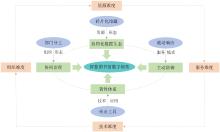
Fig.1

Analysis of the impact of data elements and digital technologies on smart libraries"

Table 1

Comparison of the old and new paradigms of library risk response models"

维度特征 传统图书馆风险应对模式 双轮驱动下智慧图书馆数字韧性模式
核心驱动 以人工经验与单一技术工具为核心,依赖事后故障修复与静态预案,风险应对遵循问题导向逻辑 以数据要素价值释放与数字技术集群协同为双轮驱动,依托全周期风险治理与动态适配机制,韧性建设遵循预防、应对、恢复和优化的闭环逻辑
风险感知 依赖人工巡检与用户反馈发现风险,感知范围局限于硬件故障等显性问题,存在滞后性与片面性 通过多源数据融合分析与数字技术实时监测,实现显性故障与隐性风险的全域感知
资源支撑 风险应对资源以物理设备备份与人工储备为主,资源调配依赖部门间人工协调,效率低下且联动性差 构建多模态数据资源池与弹性技术资源网络,数据要素实现跨领域资源语义关联,数字技术支撑资源动态调度,形成数据、技术与人力协同支撑体系
应对机制 采用标准化应急流程,应对策略固化且缺乏灵活性,难以适配复杂多变的数字风险场景 依托人工智能算法生成动态应急方案,区块链技术保障风险处置过程可追溯,云计算实现跨区域资源协同响应,形成场景化、智能化的应对机制
恢复能力 服务恢复依赖人工逐项排查与系统重装,恢复周期长且易出现数据丢失,难以保障服务连续性 通过数据备份技术与恢复算法实现关键数据秒级还原,数字孪生技术模拟恢复过程并优化路径,结合用户行为数据精准定位服务断点,提升恢复效率与质量
优化路径 基于事后经验总结优化风险应对策略,迭代周期长且缺乏数据支撑,难以形成持续改进能力 依托风险应对数据与用户反馈数据,通过机器学习算法挖掘风险演化规律,自动生成技术优化与制度完善建议,实现韧性体系的动态迭代
价值目标 以恢复基础服务功能为核心目标,价值衡量聚焦故障解决效率,未体现风险应对的增值效应 在保障服务连续性基础上,通过风险应对过程实现数据价值深化、技术能力升级,形成风险应对和价值创造的双重目标

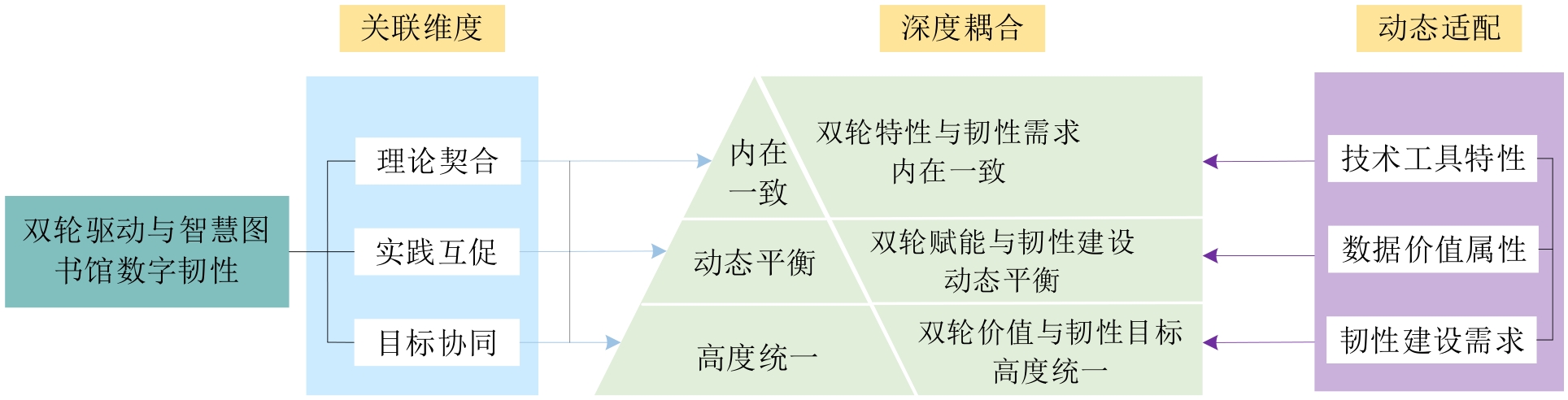
Fig.2

Correlation logic between the model driven by data elements-driven digital technology and digital resilience of smart libraries"

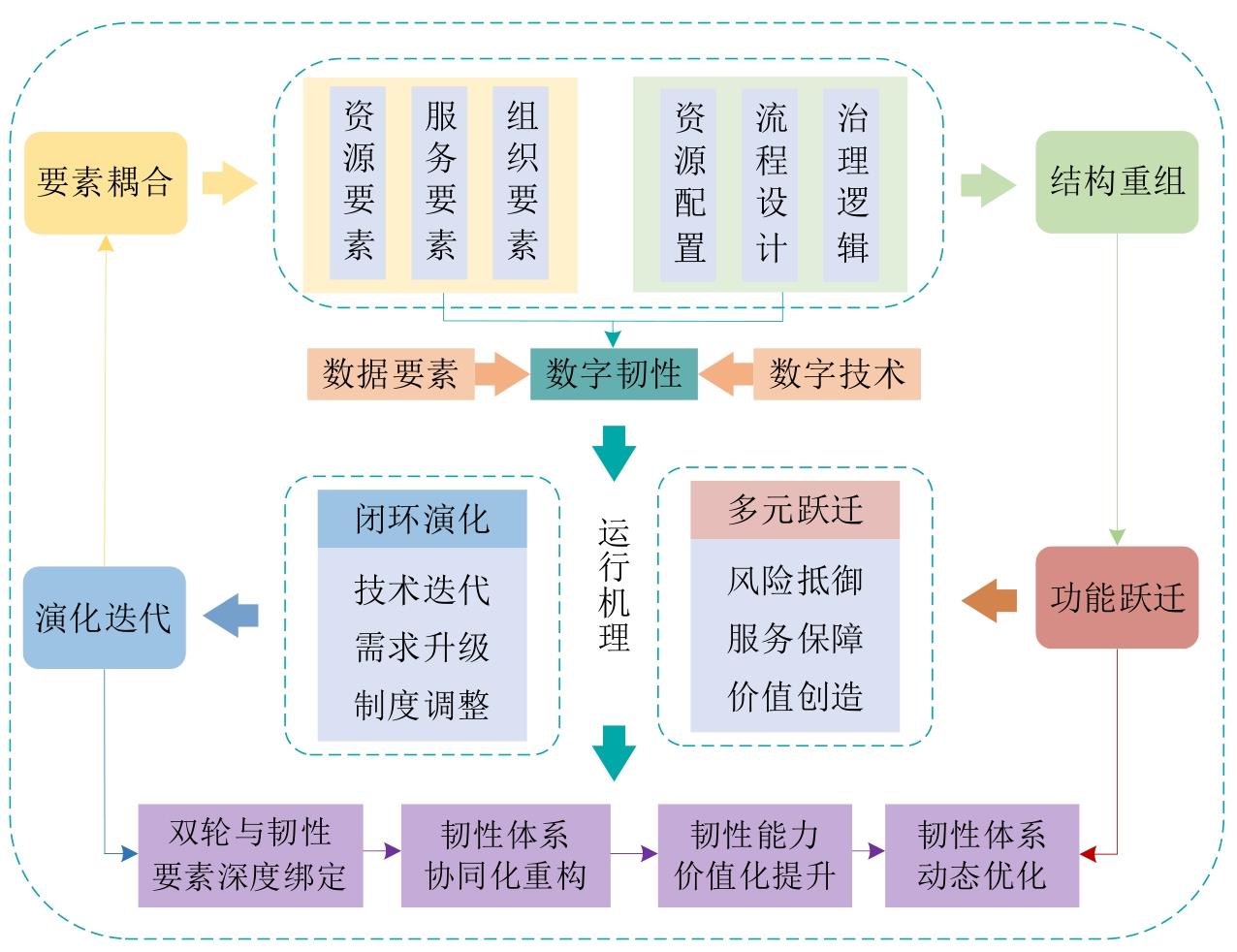
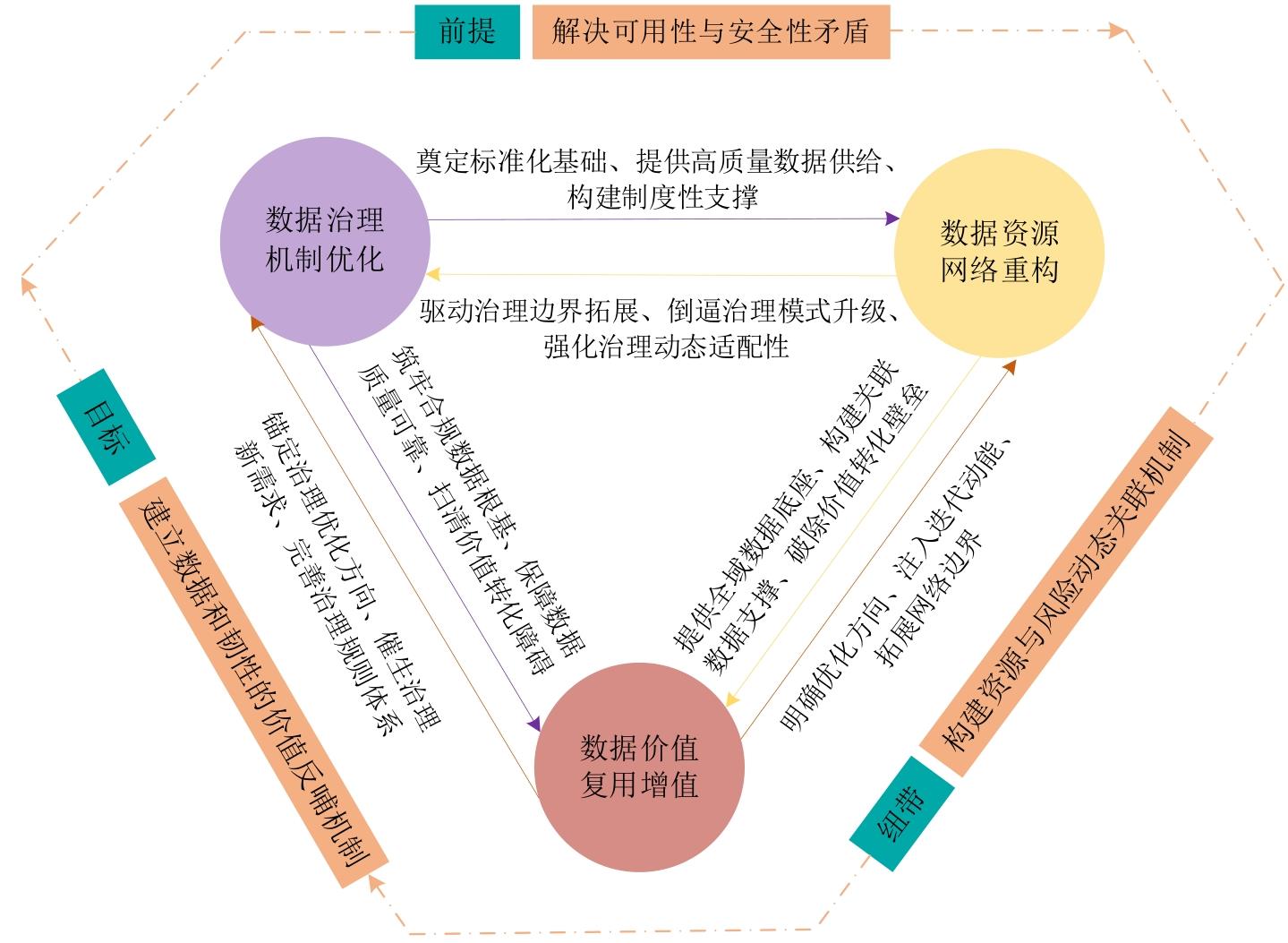
Fig.3

Operational mechanism of digital resilience in smart libraries driven by data elements and digital technology"

Fig.4

Analysis of the resilience foundation based on the valuable release of data elements"

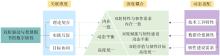
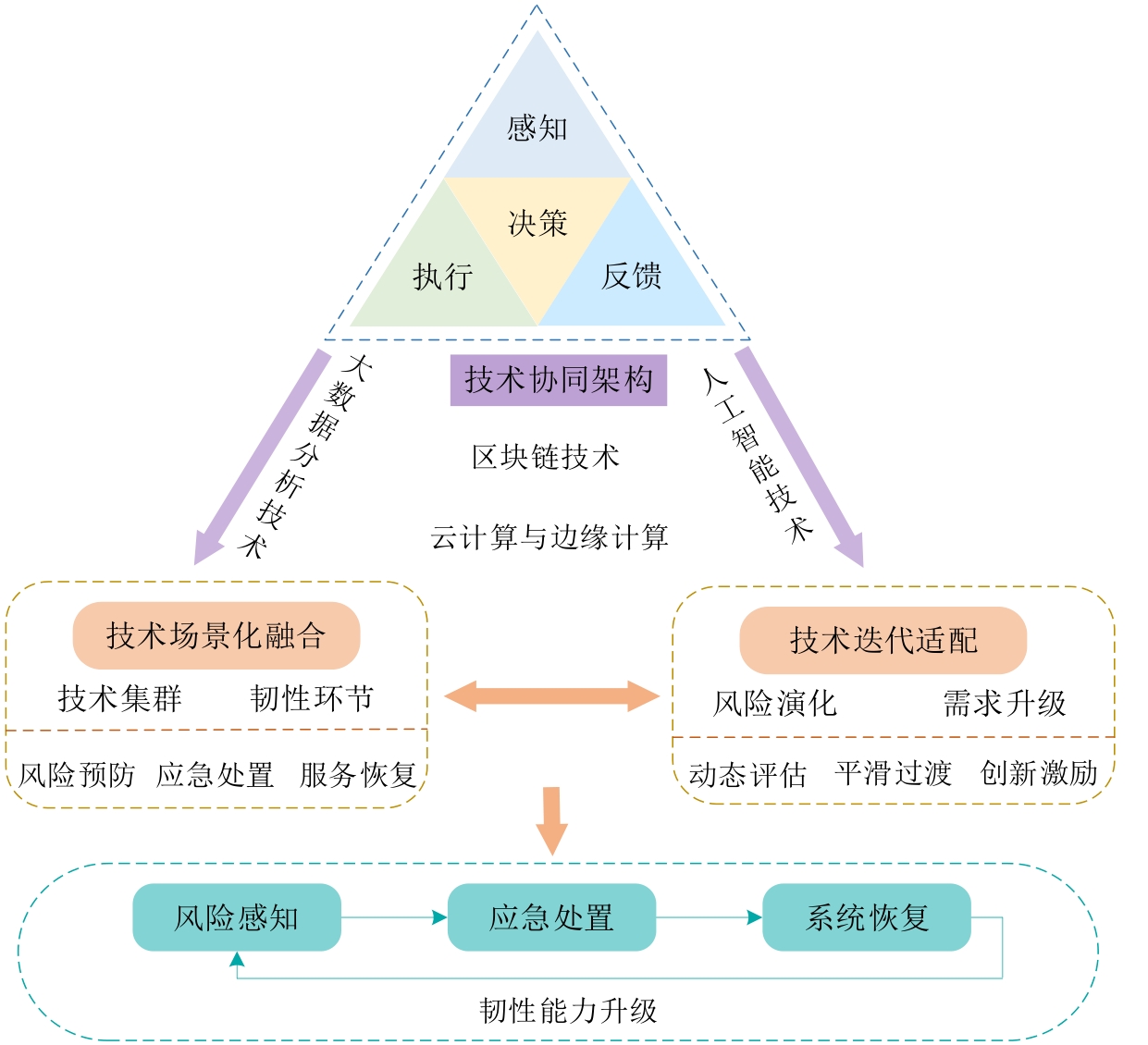
Fig.5

Path for upgrading the resilience capabilities of digital technology cluster collaboration"

[1]
董丽杰, 张永庆, 刘新萍. 从要素认知到框架建构: 新质生产力视角下数据生产要素研究述评[J]. 科研管理, 2025, 46(9): 13-24.
Dong Lijie, Zhang Yongqing, Liu Xinping. From factor cognition to framework construction: A review of the research on data production factors from the perspective of new quality productive force[J]. Science Research Management, 2025, 46(9): 13-24.
[2]
桑媛媛. 多模态学习技术面向图书馆智慧服务中的创新路径探究[J]. 农业图书情报学报, 2025, 37(3): 42-52.
Sang Yuanyuan. Multimodal learning technology aimed at exploring the innovative path of library intelligence service[J]. Journal of Library and Information Science in Agriculture,2025, 37(3): 42-52.
[3]
Lee P C. Navigating the path to sustainability: Digital resilience in libraries[J]. IFLA Journal, 2025, 51(4): 969-981.
[4]
Abidi O, Richet J L, Vitari C. Digital transformation and resilience: Dimensions and interactions[J]. Journal of Global Information Management, 2025, 33(1): 1-64.
[5]
Farkhari F, CheshmehSohrabi M, Karshenas H. Smart library: Reflections on concepts, aspects and technologies[J]. Journal of Information Science, 2024: 01655515241260715.
[6]
Große C, Sundberg L. Generative AI and digital resilience: A research agenda[J]. Journal of Risk Research, 2025: 1-26.
[7]
曾群, 杨柳青. 5G环境下智慧图书馆创新服务模式研究[J]. 图书馆学研究, 2020(22): 2-6.
Zeng Qun, Yang Liuqing. A research on innovative service mode of smart library in 5G environment[J]. Research on Library Science, 2020(22): 2-6.
[8]
Yunus N, Nasir Ismail M, Osman G. Smart library themes and elements: A systematic literature review[J]. Journal of Librarianship and Information Science, 2025, 57(1): 175-190.
[9]
He Zeya, Huang Huiling, Choi H, et al. Building organizational resilience with digital transformation[J]. Journal of Service Management, 2023, 34(1): 147-171.
[10]
汪旭晖, 谢寻. “数据要素-数字技术”双轮驱动的数字产业集群演化机理: 一个多案例研究[J]. 科研管理, 2025, 46(10): 9-20.
Wang Xuhui, Xie Xun. Evolution mechanism of digital industry clusters dually driven by "data elements and digital technology": A multi-case study[J]. Science Research Management, 2025, 46(10): 9-20.
[11]
杨智勇, 赵欣淼. 数据要素驱动下的档案数据价值实现策略研究[J]. 档案学研究, 2025(5): 4-13.
Yang Zhiyong, Zhao Xinmiao. Research on strategies for value realization of archival data driven by data elements[J]. Archives Science Study, 2025(5): 4-13.
[12]
Boh W, Constantinides P, Padmanabhan B, et al. Building digital resilience against major shocks[J]. MIS Quarterly, 2023, 47(1): 343-360.
[13]
李海舰, 赵丽. 数据价值理论研究[J]. 财贸经济, 2023, 44(6): 5-20.
Li Haijian, Zhao Li. Research of data valuation[J]. Finance & Trade Economics, 2023, 44(6): 5-20.
[14]
马乐存, 裴雷, 李白杨. 数据要素流通安全治理:体系架构与实践进路[J]. 农业图书情报学报, 2024, 36(3): 46-58.
Ma Lecun, Pei Lei, Li Baiyang. Security governance of data element circulation: System architecture and practical approach[J]. Journal of Library and Information Science in Agriculture, 2024, 36(3): 46-58.
[15]
张群, 刘康. 高校图书馆数智化转型背景下的数据要素: 现状、问题及驱动路径[J]. 图书馆理论与实践, 2024(4): 33-42.
Zhang Qun, Liu Kang. Data elements in the context of digital intelligence transformation of university Libraries: Current situation, problems and driving paths[J]. Library Theory and Practice, 2024(4): 33-42.
[16]
钟昊泽, 孙红蕾, 汪姗姗. 数智时代公共图书馆数据治理模式研究[J]. 图书馆学研究, 2025(7): 66-78.
Zhong Haoze, Sun Honglei, Wang Shanshan. Data governance model of public libraries in the data intelligence era[J]. Research on Library Science, 2025(7): 66-78.
[17]
袁硕. 数字技术赋能公共文化服务高质量发展: 影响效应与作用机制[J/OL]. 农业图书情报学报, 1-14[2025-12-05].
Yuan Shuo. Digital technology empowering high-quality development of public cultural services: Impact effects and influencing mechanisms[J/OL]. Journal of Library and Information Science in Agriculture, 1-14[2025-12-05].
[18]
刘炜, 张磊, 嵇婷, 等. 以AI塑形智慧图书馆:基于智能体的下一代图书馆服务平台[J]. 农业图书情报学报, 2025, 37(5): 15-26.
Liu Wei, Zhang Lei, Ji Ting, et al. Shaping the smart librarieswith AI: An agent-based, next-generation library service platform[J]. Journal of Library and Information Science in Agriculture, 2025, 37(5): 15-26.
[19]
王勇, 刘佳佳. 数字技术赋能图书馆智慧化服务: 逻辑、障碍与纾解路径[J]. 图书馆, 2024(1): 47-52.
Wang Yong, Liu Jiajia. Digital technology enabling library intelligent service: Logic, obstacles and ways to relieve[J]. Library, 2024(1): 47-52.
[20]
雷忠恺. 技术赋能下图书馆高质量发展新模式探究[J]. 图书馆, 2025(4): 44-49.
Lei Zhongkai. Research on the new model of high-quality development of libraries under technology empowerment[J]. Library, 2025(4): 44-49.
[21]
吴建中. 市民素养与韧性社会——公共图书馆参与社会转型的一个新课题[J]. 图书情报工作, 2020, 64(1): 14-19.
Wu Jianzhong. Civic literacy and resilient society - A new topic for public libraries to participate in social transformation[J]. Library and Information Service, 2020, 64(1): 14-19.
[22]
张秋, 李津. 高校图书馆韧性协同资源服务体系的构建与思考——以清华大学图书馆防疫实践为例[J]. 大学图书馆学报, 2021, 39(1): 50-55.
Zhang Qiu, Li Jin. Construction of the collaborative and synergetic system in university library - Taking tsinghua university library as an example[J]. Journal of Academic Libraries, 2021, 39(1): 50-55.
[23]
Tim Y, Leidner D E. Digital resilience: A conceptual framework for information systems research[J]. Journal of the Association for Information Systems, 2023, 24(5): 1184-1198.
[24]
邓胜利, 袁梦. 面向韧性社会的信息韧性理论内涵与实践路径[J]. 图书情报知识, 2025, 42(5): 44-53, 65.
Deng Shengli, Yuan Meng. Theoretical connotation and practical path of information resilience for resilient society[J]. Documention, Information & Knowledge, 2025, 42(5): 44-53, 65.
[25]
包鑫, 柯平. 图书馆赋能社区韧性: 国外经验与启示[J]. 图书馆论坛, 2023, 43(11): 120-129.
Bao Xin, Ke Ping. Community resilience empowered by libraries: Foreign experience and enlightenment[J]. Library Tribune, 2023, 43(11): 120-129.
[26]
陈梁, 王修来, 王婧怡, 等. 数据科学赋能高校图书馆专利信息服务韧性: 内在逻辑与实现路径[J]. 图书馆建设, 2024(6): 111-121.
Chen Liang, Wang Xiulai, Wang Jingyi, et al. Data science empowers the resilience of patent information services in university libraries: Internal mechanism and implementation path[J]. Library Development, 2024(6): 111-121.
[27]
马文飞, 刘凡儒, 袁风, 等. 应急管理视角下图书馆韧性评估研究[J]. 图书馆学刊, 2021, 43(10): 29-38.
Ma Wenfei, Liu Fanru, Yuan Feng, et al. Research on library resilience evaluation from the perspective of emergency management[J]. Journal of Library Science, 2021, 43(10): 29-38.
[28]
冯鑫. 高校图书馆韧性服务体系构建策略研究[J]. 河北科技图苑, 2021, 34(3): 21-25.
Feng Xin. Research on the construction strategy of resilient service system in university library[J]. Hebei Library Journal of Science and Technology, 2021, 34(3): 21-25.
[29]
石艳霞, 于静. 公共图书馆参与个体数字韧性构建的实践路径研究——以大英图书馆为例[J]. 高校图书馆工作, 2025, 45(5): 65-72.
Shi Yanxia, Yu Jing. Practice approaches of public libraries in constructing individual digital resilience: Taking the British library as an example[J]. Library Work in Colleges and Universities, 2025, 45(5): 65-72.
[30]
刘桂锋, 吴雅琪, 韩牧哲, 等. 面向数据要素价值化的数据资源应用场景创新研究[J]. 情报理论与实践, 2025, 48(1): 53-62.
Liu Guifeng, Wu Yaqi, Han Muzhe, et al. Research on the innovation of data resource application scenarios oriented to the valorization of data elements[J]. Information Studies (Theory & Application), 2025, 48(1): 53-62.
[31]
黄林英, 王杨, 钟飞亚. 智慧图书馆创新实践案例探析[J]. 图书馆, 2025(8): 42-48.
Huang Linying, Wang Yang, Zhong Feiya. Case study on the innovative practice of smart libraries[J]. Library, 2025(8): 42-48.
[32]
曹萍, 陈由彬. 组态视角下数据要素利用水平的影响因素研究[J]. 科研管理, 2025, 46(1): 1-11.
Cao Ping, Chen Youbin. Research on the influencing factors of data element utilization levels from the perspective of configuration[J]. Science Research Management, 2025, 46(1): 1-11.
[33]
白永秀, 李嘉雯, 王泽润. 数据要素: 特征、作用机理与高质量发展[J]. 电子政务, 2022(6): 23-36.
Bai Yongxiu, Li Jiawen, Wang Zerun. Data elements: Characteristics, mechanism and high-quality development[J]. E-Government, 2022(6): 23-36.
[34]
戴双兴. 数据要素: 主要特征、推动效应及发展路径[J]. 马克思主义与现实, 2020(6): 171-177.
Dai Shuangxing. Data elements: Main features, driving effects and development path[J]. Marxism & Reality, 2020(6): 171-177.
[35]
肖旭, 戚聿东. 数据要素的价值属性[J]. 经济与管理研究, 2021, 42(7): 66-75.
Xiao Xu, Qi Yudong. The value attributes of data factor[J]. Research on Economics and Management, 2021, 42(7): 66-75.
[36]
Zhang Baizhen, Zhang Jingjing, Chen Changrun. Digital technology innovation and corporate resilience[J]. Global Finance Journal, 2024, 63: 101042.
[37]
Chavez L C. Finding the ties that bind: Coalition building in loosely coupled academic libraries[J]. Library Leadership & Management, 2018, 33(1): 1-10.
[1] GAO Dan, CUI Bin. Value Co-Creation Mechanism of Cultural Heritage Data Resources: An Analysis Based on the “Stage-Subject-Scenario” Framework [J]. Journal of library and information science in agriculture, 2025, 37(7): 61-72.
[2] LIU Wei, ZHANG Lei, JI Ting, CHEN Xiaoyang. Shaping the Smart Libraries with AI: An Agent-based, Next-Generation Library Service Platform [J]. Journal of library and information science in agriculture, 2025, 37(5): 15-26.
[3] ZHANG Li, WANG Bo, JING Shui. Generative AI-Driven Resource Discovery in Public Libraries: Service Optimization Based on a Dynamic Evaluation Model [J]. Journal of library and information science in agriculture, 2025, 37(5): 58-71.
[4] CHEN Nan. Strategies for Smart Library Services in Public Libraries during the Digitally-Intelligence Era under the 15th Five-Year Plan [J]. Journal of library and information science in agriculture, 2025, 37(12): 64-80.
[5] TANG Feng, FANG Xiangming, WANG Yixin. On the Practical Needs, Theoretical Framework, and Implementation Strategies for Constructing a Trusted Data Space for Library Digital Special Collections [J]. Journal of library and information science in agriculture, 2025, 37(11): 47-61.
[6] WU Yuhao, ZHOU Zhihong, LIU Wei, XU Bangdong. Trusted Data Space System of Smart Libraries from the Perspective of Value Chain Synergy [J]. Journal of library and information science in agriculture, 2025, 37(11): 30-46.
[7] Hecan ZHANG, Chengqi YI, Peng GUO, Qianqian HUANG, Xiaokun JIN. Copyright Data Dilemma of Building High-Quality Data System for AI: Present Situation, Coping Strategies, and Implementation Path [J]. Journal of library and information science in agriculture, 2024, 36(9): 32-43.
[8] Jia LIU. Innovation and Risk Avoidance of Smart Library Services Based on Generative Artificial Intelligence [J]. Journal of library and information science in agriculture, 2024, 36(7): 63-75.
[9] MA Lecun, PEI Lei, LI Baiyang. Security Governance of Data Element Circulation: System Architecture and Practical Approach [J]. Journal of library and information science in agriculture, 2024, 36(3): 46-58.
[10] YANG Xinya, RAN Weiran, LI Li. Key Points of the 15th Five-Year Plan for University Libraries to Support the Construction of a Powerful Country in the Education Sector [J]. Journal of library and information science in agriculture, 2024, 36(12): 35-44.
[11] XIA Yikun, JIANG Jie, ZHANG Xiaheng, WANG Jiandong, ZHOU Wenjie, YANG Xinya, LI Yang. Developing the New Quality Productivity: Responses and Reflections on the Discipline of Information Resource Management [J]. Journal of library and information science in agriculture, 2024, 36(1): 4-32.
[12] SUN Lili, WANG WeiJie, SHENG Jiefei. Influencing Factors of Scientific Data Value Increment Based on System Dynamics [J]. Journal of library and information science in agriculture, 2023, 35(9): 28-42.
[13] FU Rongxin, YANG Xiaohua. Analysis of AIGC Language Models and Application Scenarios in University Libraries [J]. Journal of library and information science in agriculture, 2023, 35(7): 27-38.
[14] Guo Limin. The Practice and Enlightment of Cloud Collaboration in Libraries: A Case Study of the Mobile Library App of Shanghai Library [J]. Journal of library and information science in agriculture, 2023, 35(6): 93-102.
[15] YANG Xiaofei, KONG Yuefan, SUN Jipu. Design and Analysis of a Blockchain Security Framework Model for Smart Libraries [J]. Journal of library and information science in agriculture, 2023, 35(4): 79-89.
Viewed
Full text


Abstract

Cited

  Shared   
  Discussed   
No Suggested Reading articles found!