中文    English

Journal of library and information science in agriculture


Perspective and Graph Construction of the Archival Data Intelligence Paradigm

YANG Peng1,2, QIAO Jingjing1   

  1. 1. School of Cultural Heritage and Information Management, Shanghai University, Shanghai 200444
    2. Shanghai University Archives Development Research Center, Shanghai 200444
  • Received:2026-01-21 Online:2026-03-27

Abstract:

[Purpose/Significance] In the contemporary era, which is characterized by digital intelligence, the profound and unprecedented integration of big data analytics and artificial intelligence technologies is fundamentally transforming archival resources. This paradigm-shifting transition transforms traditional, static analog archival records into highly dynamic, interconnected, data-centric digital records. The fundamental transformation of these primary archival management objects triggers an inevitable, multi-dimensional, holistic reconstruction of the prevailing disciplinary paradigm. Consequently, the rigorous conceptualization and structural construction of the "archival data intelligence paradigm" has definitively emerged as a paramount and indispensable research issue for the sustainable development and continuous modernization of archival science. This issue demands meticulous academic scrutiny and strategic foresight. [Method/Process] Grounded firmly in the foundational scientific paradigm theory and meticulously combined with the pre-existing theoretical frameworks of the archival science paradigm, this comprehensive study methodically explores and elucidates the evolutionary lineage and underlying historical logic of the discipline. Through rigorous systematic literature reviews, advanced conceptual model construction, and cross-disciplinary theoretical integration, this research systematically traces the epistemological and methodological trajectory of the archival science paradigm. It provides a critical analysis of the transformative journey from the paradigm of traditional archival documents and historical materials, to the transitional paradigm of archival information resources, and finally to the cutting-edge, technology-driven paradigm of archival data intelligence. [Results/Conclusions] The newly articulated archival data intelligence paradigm intrinsically positions archival digital intelligence as its fundamental operational core. It is powerfully propelled by the dual interactive engines of data element empowerment and artificial intelligence augmentation. Within this sophisticated architectural framework, the "smart archive" functions as the central cognitive brain, meticulously driven by robust computing power hubs and advanced algorithmic machine-learning models, while being reliably supported by the continuous curation of high-quality, machine-readable archival datasets. This synergistic integration fundamentally culminates in a comprehensive theoretical knowledge framework and a robust practical development system, seamlessly synthesizing digital intelligence culture, innovative technologies, specialized talent cultivation, and adaptive administrative management strategies. Furthermore, by rigorously deconstructing the complex theoretical implications of this novel paradigm and firmly grounding it in both profound philosophical foundations and empirical practical development, this study systematically delineates a holistic structural landscape of the archival data intelligence paradigm. This conceptual landscape is mapped out meticulously across five critical dimensions: ontology (redefining the nature of archival data), epistemology (reconceptualizing how archival knowledge is validated), methodology (innovating analytical approaches), technology (implementing advanced AI architectures), and axiology (reevaluating the inherent societal value of archives). Ultimately, this comprehensive theoretical construct provides invaluable conceptual references and strategic, practical guidance. It actively facilitates the successful digital intelligence transformation and future-proofing of contemporary archival institutions and the broader archival profession worldwide.

Key words: digital intelligence era, archival data, intelligent paradigm, digital intelligence empowerment, graph construction, data element

CLC Number: 

  • G270

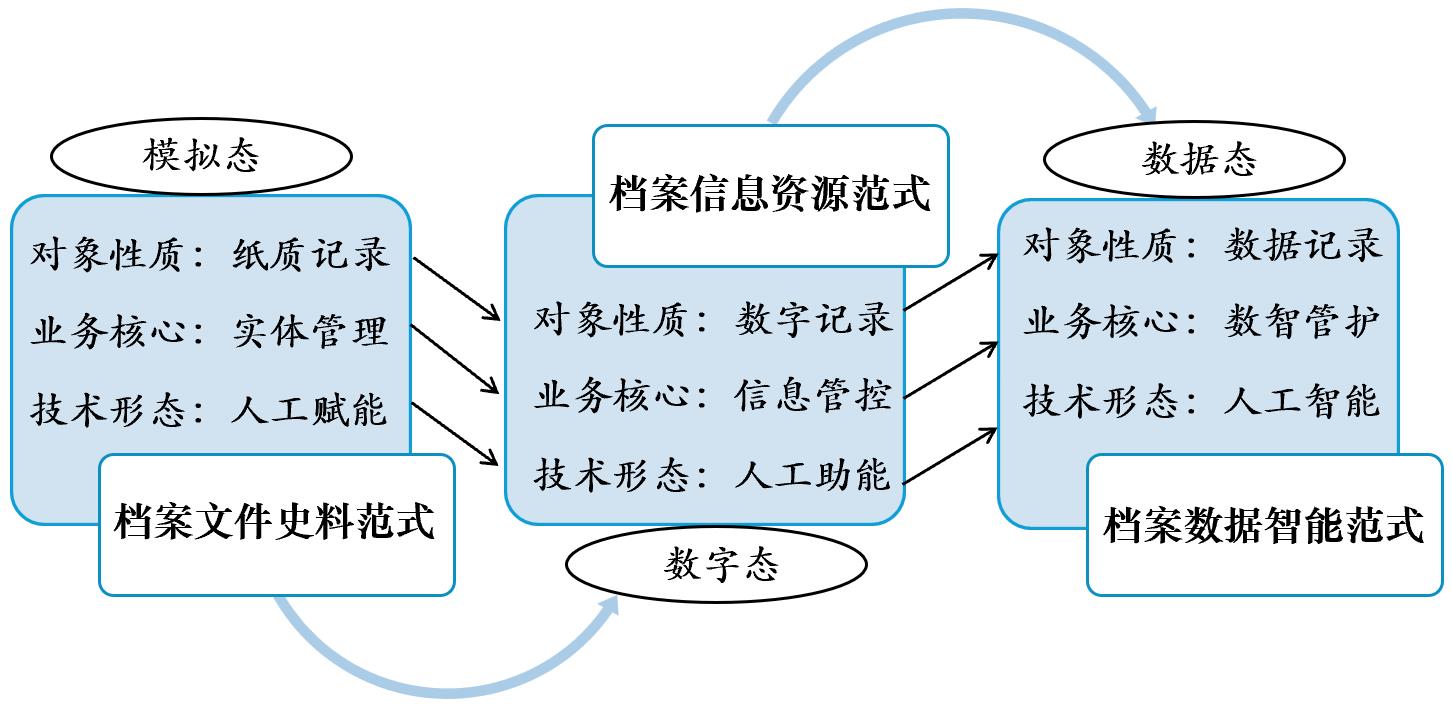
Fig.1

Evolutionary timeline of disciplinary paradigms in archival science"

Fig.2

Schematic diagram of the intelligent archival data paradigms"

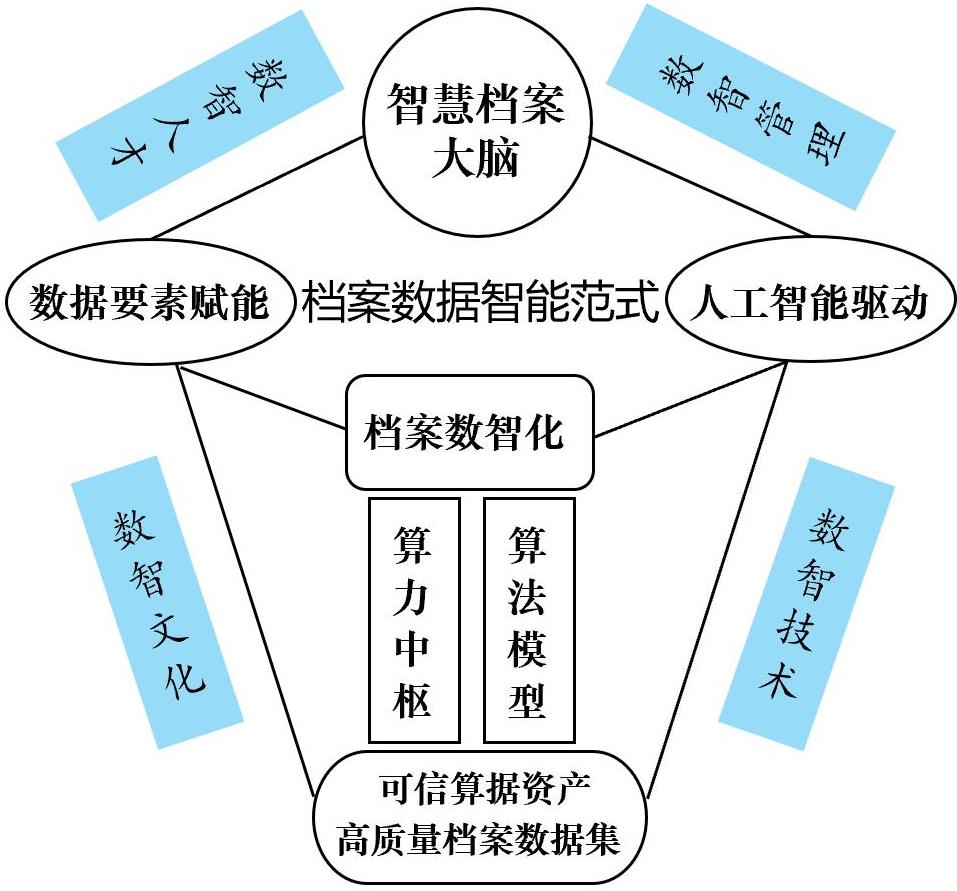
Fig.3

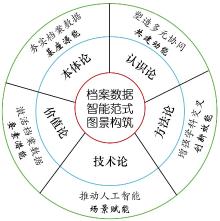
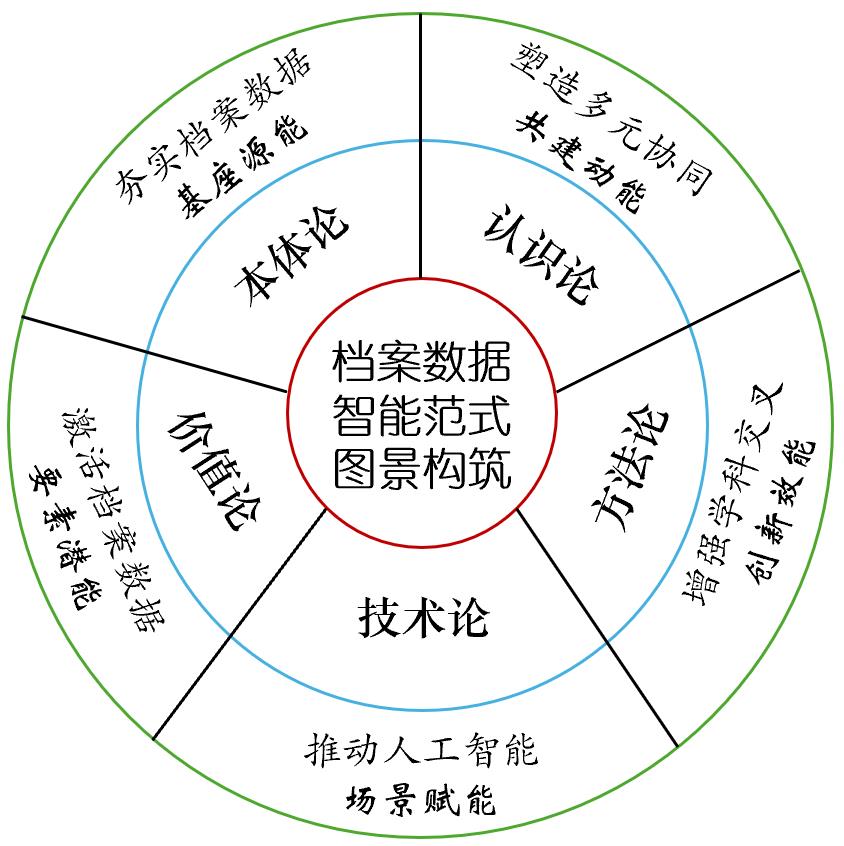
Five-dimensional framework for intelligent archival data paradigms"

[1]
王益民. 数据论[M]. 北京: 中共中央党校出版社, 2021: 37.
Wang Yimin. The theory of data[M]. Beijing:Central party school press of the communist party of China, 2021: 37.
[2]
杨鹏, 金波. 档案数智化的理论内涵与实践路径[J]. 图书情报工作, 2025, 69(11): 90-100.
Yang Peng, Jin Bo. Theoretical connotation and practical path of digital intelligence in archives[J]. Library and Information Service, 2025, 69(11): 90-100.
[3]
特里·库克, 李音. 四个范式: 欧洲档案学的观念和战略的变化——1840年以来西方档案观念与战略的变化[J]. 档案学研究, 2011(3): 81-87.
Terry C, Li Yin. Four paradigms: Changing ideas and strategies about archives in the western world, 1840 to 2011, and beyond[J]. Archives Science Study, 2011(3): 81-87.
[4]
徐拥军. 档案记忆观的理论基础[J]. 档案学研究, 2017(6): 4-12.
Xu Yongjun. The theoretical basis of archival memory viewpoint[J]. Archives Science Study, 2017(6): 4-12.
[5]
韩立波. 档案管理范式的转型与社会变迁[J]. 中外企业家, 2020(3): 136.
Han Libo. Transformation of archives management paradigm and social changes[J]. Chinese and Foreign Entrepreneurs, 2020(3): 136.
[6]
章燕华. 以数智化驱动引领档案事业现代化的发展进程与实施路径[J]. 档案学通讯, 2023(6): 4-13.
Zhang Yanhua. The trends and paths of "digitization and intelligence" to drive the archival modernization[J]. Archives Science Bulletin, 2023(6): 4-13.
[7]
金波, 杨鹏. “数智赋能”驱动档案学学科范式变革[J]. 中国图书馆学报, 2024, 50(4): 85-99.
Jin Bo, Yang Peng. "Data intelligence empowerment" drives the discipline paradigm change of archival science[J]. Journal of Library Science in China, 2024, 50(4): 85-99.
[8]
托马斯·库恩. 科学革命的结构[M]. 2版. 金吾伦, 胡新和, 译. 北京: 北京大学出版社, 2012: 147.
Thomas S K. The structure of scientific revolutions[M]. 2nd ed. Beijing: Peking University Press, 2012: 147.
[9]
孙大东. 基于范式论批判的中国档案学发展研究[M]. 北京: 科学出版社, 2017: 49.
Sun Dadong. Research on the development of archives science in China based on paradigm criticism[M]. Beijing: Science Press, 2017: 49.
[10]
胡鸿杰. 中国档案学的理念与模式[M]. 北京: 中国人民大学出版社, 2005: 11-12.
Hu Hongjie. The idea and mode of China's archives science[M]. Beijing: China Renmin University Press, 2005: 11-12.
[11]
赵瑞雪. 走向第四范式——数据密集型科学研究[M]. 北京: 科学出版社, 2024: 4.
Zhao Ruixue. Towards the fourth paradigm - Data-intensive scientific research[M]. Beijing: Science Press, 2024: 4.
[12]
丁华东, 张燕. 论档案学的三大研究取向及其当代发展[J]. 档案学通讯, 2019(6): 4-10.
Ding Huadong, Zhang Yan. Three research orientations of archival science and their contemporary development[J]. Archives Science Bulletin, 2019(6): 4-10.
[13]
张斌, 张旭. 数字时代档案价值的新思考[J]. 档案学通讯, 2025(3): 4-10.
Zhang Bin, Zhang Xu. New thinking on the value of archives in the digital age[J]. Archives Science Bulletin, 2025(3): 4-10.
[14]
谢震香, 顾晓琦. 苏州丝绸档案率先完成数据登记[N]. 中国档案报, 2025-06-30(2).
[15]
胡红生. 论社会科学发展的内在机制——从主体思维生产的角度看[J]. 华中师范大学学报(人文社会科学版), 2002, 41(4): 35-40.
Hu Hongsheng. On the internal mechanism of the development of social science - Research from the angle of the production of thought[J]. Journal of Central China Normal University (Humanities and Social Sciences), 2002, 41(4): 35-40.
[16]
梁尔真. 智慧档案管理概论[M]. 北京: 中国原子能出版社, 2025: 18.
Liang Erzhen. Introduction to intelligent archival management[M]. Beijing: China Atomic Energy Press, 2025: 18.
[17]
浙里办. 数创高地书写“浙”里新答卷 浙江13个项目获2025“数据要素×”大赛奖项[EB/OL]. (2025-11-26)[2026-03-04].
[18]
王君正. 重庆运用大语言模型赋能婚姻档案数据治理[N]. 中国档案报, 2025-10-09(1).
[19]
金波, 杨鹏. 将“以学生为中心”的理念转化为具体行动[N]. 中国档案报, 2025-09-15(4).
[20]
陈祖芬.档案学范式的历史演进及未来发展[M].上海:上海世界图书出版公司,2010:24.
CHEN Z F. The historical evolution and future development of archival science paradigms[M]. Shanghai: World publishing corporation, 2010:24.
[21]
杨鹏, 金波. 档案数据论: 大数据时代档案学新论域[J]. 档案学通讯, 2025(1): 38-45.
Yang Peng, Jin Bo. Archival data theory: A new field of archival science in the era of big data[J]. Archives Science Bulletin, 2025(1): 38-45.
[22]
国家档案局. 2024年度全国档案主管部门和档案馆基本情况摘要(二)[EB/OL]. (2025-09-10)[2026-01-20].
[23]
《全国数据资源调查报告(2024年)》正式发布[EB/OL]. (2025-04-30)[2026-01-20].
[24]
金波, 杨鹏. “数智”赋能档案治理现代化: 话语转向、范式变革与路径构筑[J]. 档案学研究, 2022(2): 4-11.
Jin Bo, Yang Peng. "Data intelligence" empowers modernization of archives governance: Discourse turn, paradigm change and path construction[J]. Archives Science Study, 2022(2): 4-11.
[25]
国家数据局. 高质量数据集典型案例名单发布[EB/OL]. (2025-09-12)[2026-01-20].
[26]
马林青. 档案数据产教融合发展平台的实践与经验[J]. 北京档案, 2024(11): 53-55.
Ma Linqing. Practice and experience of development platform for integration of production and education of archival data[J]. Beijing Archives, 2024(11): 53-55.
[27]
金波, 杨鹏, 刘娟娟. 档案数据要素价值内涵要义与生成机理[J]. 档案学通讯, 2024(6): 4-12.
Jin Bo, Yang Peng, Liu Juanjuan. The connotation and mechanism of archival data elements value[J]. Archives Science Bulletin, 2024(6): 4-12.
[28]
刘越男, 杨建梁, 何思源, 等. 计算档案学: 档案学科的新发展[J]. 图书情报知识, 2021, 38(3): 4-13.
Liu Yuenan, Yang Jianliang, He Siyuan, et al. Computational archival science: The new development of archival science[J]. Document, Informaiton & Knowledge, 2021, 38(3): 4-13.
[29]
段博. 广东推进档案开放审核数智化发展[N]. 中国档案报, 2025-10-13(1).
[30]
牟沁妍. 互联网档案馆因黑客攻击而陷入瘫痪[N]. 中国档案报, 2024-12-12(3).
[31]
金波, 杨鹏. 大数据时代档案数据治理研究[J]. 档案学研究, 2020(4): 29-37.
Jin Bo, Yang Peng. Research on archival data governance in big data era[J]. Archives Science Study, 2020(4): 29-37.
[32]
国家统计局. 中国统计年鉴(2025)国家综合档案馆基本情况[EB/OL]. [2026-01-21].
[33]
金波,杨鹏.大数据时代档案数据治理研究[M].北京:科学出版社,2025:16.
JIN B, YANG P. Research on archival data governance in big data era[M].Beijing: Science Press, 2025:16.
[34]
上海数据交易所. 玉龙光碧挂牌影像档案数据产品, 激活影像数据价值[EB/OL]. (2025-01-10)[2026-01-21].
[1] LIU Ting, LIU Shuhan, LIU Zhenyan, ZENG Dequan, HU Yuan. Impact of Data Element Utilization Level on Enterprises' Supply Chain Discourse Power [J]. Journal of library and information science in agriculture, 2025, 37(9): 32-48.
[2] GAO Dan, CUI Bin. Value Co-Creation Mechanism of Cultural Heritage Data Resources: An Analysis Based on the “Stage-Subject-Scenario” Framework [J]. Journal of library and information science in agriculture, 2025, 37(7): 61-72.
[3] ZHAO Hui, CHEN Jinghao, GUO Sha, LI Zhixing, YAN Longfei. Constructing a Cross-border Data Governance Paradigm in the International Cooperation Mechanism of Artificial Intelligence [J]. Journal of library and information science in agriculture, 2025, 37(11): 4-29.
[4] TANG Feng, FANG Xiangming, WANG Yixin. On the Practical Needs, Theoretical Framework, and Implementation Strategies for Constructing a Trusted Data Space for Library Digital Special Collections [J]. Journal of library and information science in agriculture, 2025, 37(11): 47-61.
[5] Hecan ZHANG, Chengqi YI, Peng GUO, Qianqian HUANG, Xiaokun JIN. Copyright Data Dilemma of Building High-Quality Data System for AI: Present Situation, Coping Strategies, and Implementation Path [J]. Journal of library and information science in agriculture, 2024, 36(9): 32-43.
[6] ZHOU Zhian, WANG Jiewei. Integrated Model of Digital Construction and Operation of Rural Areas Guided by Value-added Data Elements [J]. Journal of library and information science in agriculture, 2024, 36(5): 43-51.
[7] MA Lecun, PEI Lei, LI Baiyang. Security Governance of Data Element Circulation: System Architecture and Practical Approach [J]. Journal of library and information science in agriculture, 2024, 36(3): 46-58.
[8] XIA Yikun, JIANG Jie, ZHANG Xiaheng, WANG Jiandong, ZHOU Wenjie, YANG Xinya, LI Yang. Developing the New Quality Productivity: Responses and Reflections on the Discipline of Information Resource Management [J]. Journal of library and information science in agriculture, 2024, 36(1): 4-32.
[9] ZHANG Xingwang, DUAN Xuechun, XIN Jie. A Study on the Knowledge-Based Description Framework and Application Scenarios of Ancient Chinese Map Documents in the Digital Intelligence Era [J]. Journal of library and information science in agriculture, 2023, 35(9): 4-11.
[10] SUN Lili, WANG WeiJie, SHENG Jiefei. Influencing Factors of Scientific Data Value Increment Based on System Dynamics [J]. Journal of library and information science in agriculture, 2023, 35(9): 28-42.
Viewed
Full text


Abstract

Cited

  Shared   
  Discussed   
No Suggested Reading articles found!