中文    English

Journal of library and information science in agriculture


Lifelong Learning Mechanism and Competence Construction Path of University Library Librarians in the Digital Intelligence Era

JIANG Jingze1, LU Jing1, YU Yangchuan2   

  1. 1. Library and Archives of Hainan Medical University, Haikou 571199
    2. School of Traditional Chinese Medicine, Hainan Medical University, Haikou 571199
  • Received:2026-04-16 Online:2026-07-13

Abstract:

[Purpose/Significance] Generative artificial intelligence, big data, knowledge graphs, and other smart digital technologies are being rapidly integrated into university library resource development, subject services, information literacy education, and smart consultation, shifting service models from a purely resource-supply approach to one focused on knowledge discovery, data support, and intelligent collaboration. Librarian skill development is also moving from general knowledge updates to continuous capability building centered on job tasks, service scenarios, technology applications, and organizational collaboration. In reality, some university libraries still face issues such as training content being disconnected from positions, a gap between technology learning and service application, unclear job roles, insufficient cross-department collaboration, and underutilization of communities. Based on this, this study examines how organizational support systems-through rules, tools, communities, and coordinated division of labor-promote the development of librarians' smart digital skills and their application in services. The research topic stems from the practical tension between "rapid technology iteration" and "relatively lagging librarian skill updates" during digital transformation. Unlike previous studies that focus on individual learning motivation, skill components, or training models, this paper places librarian learning within the organizational activity system, revealing the interactions between job tasks, technical tools, institutional rules, learning communities, and project division. It proposes a skill-building path of "job task guidance-community collaboration-tool adaptation-rule feedback," aiming to shift related research from static description to dynamic mechanism analysis, and provides a basis for university libraries to respond to technological substitution, role redefinition, and service upgrading. [Method/Process] This study uses activity theory as the analytical framework and regards librarians as activity subjects, intelligent platforms, digital resources, and training tools as mediating tools, training policies, job norms, and performance evaluations as rules, and librarian teams, users, teaching staff, and technical departments as communities. It also uses job division to analyze the process of turning learning outcomes into service practice. Using purposive sampling, three different types of university libraries were selected, and semi-structured interviews were conducted with 18 librarians responsible for resource development, subject services, information literacy education, technical support, and overall management. Organizational documents such as training policies, project records, and job descriptions were also collected for triangulation. Data analysis followed familiarization, open coding, theme generation, theme review, and theoretical integration. This method is suitable for revealing interactive mechanisms and action logic within organizational contexts. This study is exploratory and qualitative in nature, without performing related statistical analysis, significance testing, or general causal inference. [Results/Conclusions] The study found that librarians' digital intelligence is not just about personal willingness or one-time training; it is shaped by job tasks, organizational rules, digital tools, learning communities, and project division together. Job tasks can enhance the sense of learning goals; adapting to rules and tools can boost learning motivation and efficiency; communities help calibrate learning direction through feedback, resource sharing, and peer evaluation; proper division of labor helps leverage the complementary strengths of technical and service-oriented librarians, easing the mismatch between tech supply and service demand; conflicts between old rules and new tasks drive institutional adjustments and updates to the skills system. It is recommended to set up tiered training aligned with job tasks, build cross-departmental learning communities, improve trial and feedback mechanisms for digital tools, and include knowledge sharing, project outcomes, and service innovation in performance evaluations. Limitations of the study include a restricted sample and regional coverage, mainly relying on interviews and organizational documents. In the future, the sample could be expanded, combining surveys, behavioral data, and longitudinal cases to further explore AI ethics, librarian professional identity, human-machine collaboration boundaries, and digital intelligence assessment standards.

Key words: digital intelligence era, university librarians, lifelong learning, organizational support system, activity theory

CLC Number: 

  • G251.6

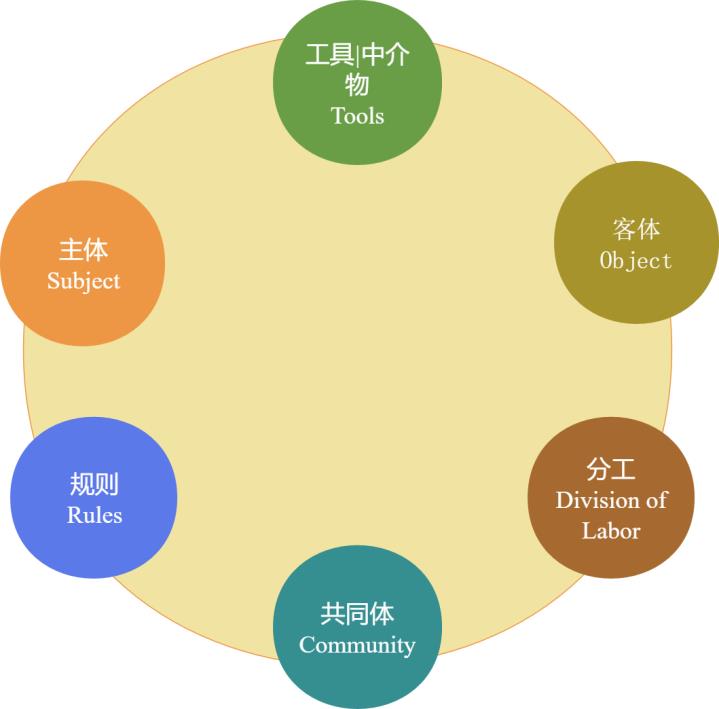
Fig.1

Activity theory model diagram"

Table 1

Operationalization transformation of activity theory elements"

活动理论要素 本研究操作化概念 具体说明

主体

(Subject)

高校图书馆馆员 以馆员为主要活动主体,重点关注其在数智化转型中的学习体验、能力更新和服务实践,样本按专业技术岗位内部业务方向与从业年限分层并列比较

客体

(Object)

终身学习机制与数智能力建构 指馆员围绕AI工具应用、数据分析、知识组织、学科服务、信息素养教育等任务持续更新能力,并将学习结果转化为智慧服务绩效

工具/中介物

(Tools)

数智工具与学习平台 包括AI课程平台、数据可视化软件、知识图谱系统、智慧服务平台、内部知识库和项目化培训资源等

规则

(Rules)

学习支持与评价制度 包括培训安排、项目考核、成果认定、岗位评价、导师制、激励办法和服务绩效反馈机制

共同体

(Community)

馆内外学习与实践共同体 包括馆内业务团队、学校信息化部门、院系教师、学生读者和外部技术支持主体,强调共同体对学习目标、工具使用和服务改进的影响

分工

(Division of Labor)

业务方向与项目责任配置 包括技术系统、资源建设、学科服务、读者服务、阅读推广和项目协调等任务分配,体现不同业务方向之间的知识互补和协作关系

Table 2

Basic information of the interview sample"

高校类型 业务方向/职责特征 5年以下 5~10年 10年以上 小计
综合类A 技术系统与数据服务 1/G1 1/G2 0 2
读者与学科服务 1/G3 1/G4 0 2
资源建设/阅读推广/组织协调 0 1/G5 1/G6 2
理工类B 技术系统与数据服务 1/G7 0 1/G8 2
读者与学科服务 1/G9 1/G10 0 2
资源建设/阅读推广/组织协调 0 1/G11 1/G12 2
文科类C 技术系统与数据服务 0 1/G13 1/G14 2
读者与学科服务 1/G15 1/G16 0 2
资源建设/阅读推广/组织协调 0 1/G17 1/G18 2
合计 4 7 7 18

Table 3

Example of the interview outline"

序号 访谈维度 访谈问题示例 对应活动理论要素
1 学习需求与任务变化 “数智化转型后,你的工作任务发生了哪些变化?这些变化对你的学习内容提出了什么新要求?” 客体/主体
2 规则与学习动力 “馆内有哪些培训、考核或成果认定制度会影响你的学习意愿吗?这些制度是否能支持持续学习?” 规则
3 工具与资源适配 “你使用过哪些AI、数据分析或智慧服务工具?这些工具是否符合你的岗位任务和学习需要?” 工具
4 共同体影响 “院系教师、学生读者、馆内其他部门或信息化部门的需求,是否改变过你的学习目标或服务方式?” 共同体
5 分工与协作学习 “你参与过跨部门数智服务项目吗?不同业务方向人员如何分工?协作中有哪些冲突和调整?” 分工
6 能力转化与反馈 “你学到的数智技能如何被应用到学科服务、资源推荐、信息素养教育或参考咨询中?服务反馈如何影响后续学习?” 客体/结果

Table 4

Examples of open coding"

原始访谈内容 所属维度 理论要素 备注/分析
“培训讲了很多算法,但我做学科服务时更需要能直接分析读者需求的工具” 工具适配 工具-客体 反映培训内容与岗位任务存在错位,工具未能有效服务终身学习目标
“老师提出想看某学科资源使用情况,我们才意识到只会做借阅统计不够” 学习需求生成 共同体-客体 院系教师的服务需求推动馆员重新界定学习内容,说明共同体能够牵引学习客体变化
“现在项目成果能纳入考核,大家愿意把培训学到的东西用到服务里” 规则激励 规则 成果评价改变了学习的价值感,使学习由完成培训转向解决服务问题
“技术同事做了平台,但服务部门不会用,后来一起改成可视化模板才顺畅” 协作学习 工具-分工 技术供给与服务需求经过协商后实现适配,体现分工调适对能力转化的促进作用
“学生希望检索结果能更快、更精准,我们开始学习AI检索和提示词设计” 需求反馈 共同体 学生读者作为共同体成员,通过使用体验反馈影响馆员学习方向
“以前觉得学习是个人的事,现在做项目发现不会数据分析就没法完成任务” 学习动力 主体-客体 数智服务任务改变馆员对学习必要性的理解,推动被动学习向主动学习转变
“资源建设、学科服务和技术部门一起开会,问题会暴露得更早,后面返工少了” 分工协作 分工-共同体 跨业务协同能够减少信息不对称,提高学习成果进入服务实践的效率
“导师不是直接替我做,而是带我一起看数据、改模板,我慢慢知道怎么用了” 支持机制 规则-工具 导师制提供情感支持与操作指导,降低新馆员学习焦虑
“有些培训只讲概念,结束后不知道能放在哪个业务场景里用” 学习转化阻碍 工具-客体 反映培训工具与实际服务情境连接不足,影响终身学习机制运行
“项目结束后我们会复盘,把可用模板放进共享库,下次别人可以直接参考” 知识沉淀 工具-共同体 共享知识库使个体学习成果转化为共同体资源,有助于形成持续学习循环

Table 5

Example of coding for factors influencing the establishment and operation of librarians' lifelong learning mechanisms"

原始访谈内容 影响因素类别 理论要素 备注/分析
“刚接触AI工具时不知道从哪里开始,连数据表怎么整理都不清楚” 技术认知基础 主体-工具 新馆员技术基础不足会削弱工具使用信心,需要基础性培训和导师支持
“我以前主要做纸本文献管理,现在突然要求做数据分析,经验一下子接不上” 职业经验结构 主体-客体 传统岗位经验与新型数智任务之间存在断裂,影响学习机制启动
“培训如果和正在做的项目结合起来,大家就会认真学;如果只是听讲座,效果不明显” 培训组织方式 工具-客体 项目化培训更容易促进学习成果转化,单次讲座式培训效果有限
“前期有人带,后面遇到问题没人跟进,很多工具就放下了” 支持连续性 规则-工具 学习支持缺乏持续跟进,会导致能力建构中断
“学院老师的需求很具体,反而逼着我们去学新的分析方法” 外部需求牵引 共同体-客体 院系教师需求能够提高学习目标的明确性,推动馆员主动更新能力
“技术部门和服务部门说的不是一套话,很多时候要反复解释” 跨部门沟通机制 共同体-分工 共同体内部沟通成本影响协作学习效率,需要建立需求翻译机制
“项目里到底谁负责数据、谁负责报告、谁负责和学院沟通,一开始没有说清楚” 任务边界配置 分工 分工不清会造成职责重叠或空缺,影响学习成果转化
“如果做出来的服务成果没人评价,也没有进入考核,后面积极性就会下降” 评价激励制度 规则 规则反馈不足会削弱持续学习动力
“学生反馈模板好用,我们才知道这个方法值得继续优化” 用户反馈机制 共同体-规则 读者反馈将服务效果转化为学习改进依据
“把项目经验写成内部案例后,新同事上手会快很多” 知识沉淀机制 工具-共同体 案例库和共享资源使个体经验沉淀为共同体学习资源

Table 6

Relationship between subject categories and core categories"

初始概念 主题范畴 核心范畴 关系内涵
岗位任务变化;院系需求牵引;用户反馈压力 学习需求生成 数智时代高校图书馆馆员终身学习机制的生成与运行 数智化任务和共同体需求共同推动馆员重新界定“学什么”和“为何学”
成果评价激励;培训考核衔接;导师制支持 规则激励与支持 数智时代高校图书馆馆员终身学习机制的生成与运行 规则通过评价、激励和支持安排影响学习动力,是终身学习机制持续运行的重要保障
培训内容错位;工具门槛高;模板化工具包需求 工具适配与资源嵌入 数智时代高校图书馆馆员终身学习机制的生成与运行 工具的可用性和岗位适配度决定学习能否从培训环节进入实际服务场景
教师需求反馈;学生体验评价;馆内业务团队协作 共同体牵引与互动 数智时代高校图书馆馆员终身学习机制的生成与运行 共同体通过需求、资源和评价不断塑造学习目标,是外审意见中需要强化的关键要素
任务边界不清;技术供给与服务需求磨合;跨部门复盘 分工调适与协作学习 数智时代高校图书馆馆员终身学习机制的生成与运行 分工通过明确角色、促进知识互补和减少沟通内耗,推动协作型学习形成
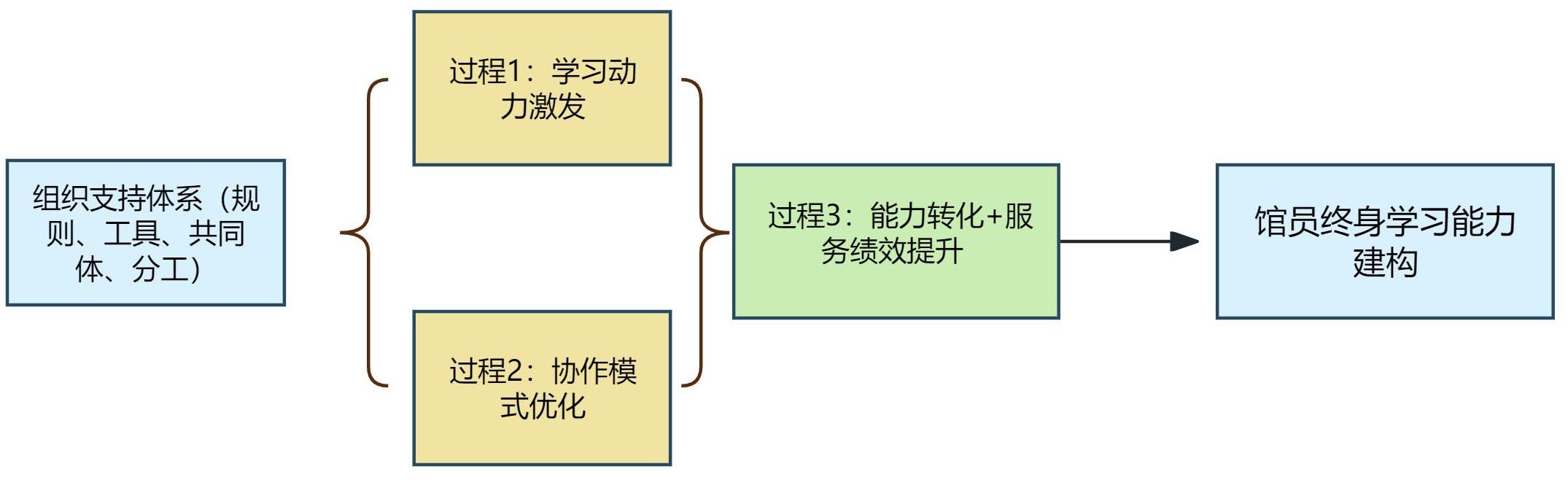
服务成果应用;案例库沉淀;绩效反馈改进 能力转化与反馈优化 数智时代高校图书馆馆员终身学习机制的生成与运行 能力转化机制实现“学习-应用-评价-再学习”的循环,使终身学习具有持续性

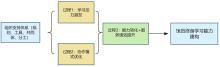
Fig.2

Competence construction model of lifelong learning for university librarians"

[1]
教育部. 普通高等学校图书馆规程: 教高〔2015〕14号[Z]. 北京: 教育部, 2015-12-31.
[2]
教育部. 教育信息化2.0行动计划: 教技〔2018〕6号[Z]. 北京: 教育部, 2018-04-13.
[3]
教育部, 中央网信办, 国家发展和改革委员会, 等. 关于推进教育新型基础设施建设构建高质量教育支撑体系的指导意见: 教科信〔2021〕2号[Z]. 北京: 教育部, 2021-07-01.
[4]
中共中央, 国务院. 数字中国建设整体布局规划[Z]. 北京: 中共中央, 国务院, 2023-02-27.
[5]
中共中央, 国务院. 教育强国建设规划纲要(2024-2035年)[Z]. 北京: 中共中央, 国务院, 2025-01-19.
[6]
陈嘉敏. 高校图书馆应用AIGC转型对馆员的重塑探索[J]. 江苏科技信息, 2026, 43(3): 22-25, 37.
Chen Jiamin. Exploration of the transformation of university libraries using AIGC and the reshaping of librarians[J]. Jiangsu Science Technology Information, 2026, 43(3): 22-25, 37.
[7]
乔晋华, 马雪赟. LLaMA人工智能大模型在高校未来学习中心应用的风险与规制[J]. 农业图书情报学报, 2025, 37(2): 37-48.
Qiao Jinhua, Ma Xue)Bin|Yun). Risks and regulations for application of the LLaMA model in university future learning centers[J]. Journal of Library and Information Science in Agriculture, 2025, 37(2): 37-48.
[8]
王欣然. 数智时代高校图书馆馆员创新能力的重塑与提升路径研究[J]. 文化创新比较研究, 2025, 9(34): 86-90.
Wang Xinran. Research on the reshaping and enhancement path of the innovation ability of university librarians in the digital intelligence era[J]. Comparative Study of Cultural Innovation, 2025, 9(34): 86-90.
[9]
王国丽. 数字智能化驱动高校图书馆馆员能力提升研究[J]. 数字化传播, 2025(3): 78-80.
Wang Guoli. Research on the ability improvement of university librarians driven by digital intelligence[J]. Digital Communication, 2025(3): 78-80.
[10]
李莉琼, 李佳倩, 贺道远. 未来高校图书馆馆员角色定位的思考[J]. 江苏科技信息, 2025, 42(8): 81-85, 90.
Li Liqiong, Li Jiaqian, He Daoyuan. Reflections on the future role orientation of university librarians[J]. Jiangsu Science Technology Information, 2025, 42(8): 81-85, 90.
[11]
孙丽娟. 新质生产力视域下公共图书馆员向提示词馆员转型探索[J]. 农业图书情报学报, 2025, 37(1): 17-32.
Sun Lijuan. Exploring the transition of public librarians to "prompt librarians" from the perspective of new quality productive forces[J]. Journal of Library and Information Science in Agriculture, 2025, 37(1): 17-32
[12]
易童, 罗国锋. 教育技术应用下高校图书馆馆员数字素养提升路径研究[J]. 农业图书情报学报, 2024, 36(2): 61-70.
Yi Tong, Luo Guofeng. Improving digital literacy of university librarians using educational technology[J]. Journal of Library and Information Science in Agriculture, 2024, 36(2): 61-70.
[13]
肖喆光, 张兰兰, 张一. 智慧馆员的核心素养及其培养路径研究[J]. 农业图书情报学报, 2023, 35(2): 77-86.
Xiao Zheguang, Zhang Lanlan, Zhang Yi. Core librarian literacy of smart libraries and its training path[J]. Journal of Library and Information Science in Agriculture, 2023, 35(2): 77-86.
[14]
王球云, 彭奇志. 数智赋能馆员学术破界之道[J]. 文化产业, 2025(17): 121-123.
Wang Qiuyun, Peng Qizhi. The way of empowering librarians with mathematical intelligence to break through academic boundaries[J]. Cultural Industry, 2025(17): 121-123.
[15]
陈永光. 数字化转型背景下高校图书馆员数字能力提升研究——基于扎根理论的探索[J]. 大学图书情报学刊, 2026, 44(1): 97-103, 122.
Chen Yongguang. Research on the digital competence of university librarians in the context of digital transformation: An exploration based on grounded theory[J]. Journal of Academic Library and Information Science, 2026, 44(1): 97-103, 122.
[16]
杨行. 美国佛罗里达大学图书馆提升馆员数字学术服务能力的实践与启示[J]. 农业图书情报学报, 2024, 36(5): 93-101.
Yang Xing. Practice and enlightenment of developing librarians' digital scholarship service skills at the university of Florida library[J]. Journal of Library and Information Science in Agriculture, 2024, 36(5): 93-101.
[17]
吴丹, 孙昕玦. 以人为本的人工智能素养教育探究: UNESCO教师和学生人工智能能力框架的解读与启示[J]. 农业图书情报学报, 2024, 36(8): 4-19.
Wu Dan, Sun Xinjue. Exploring human-centered AI literacy education: Interpretation and insights from UNESCO's AI competency framework for teachers and students[J]. Journal of Library and Information Science in Agriculture, 2024, 36(8): 4-19.
[18]
Engeström Y. Learning by expanding: An activity-theoretical approach to developmental research[M]. Helsinki: Orienta-Konsultit Oy, 1987.
[19]
周均奕, 刘孛, 尚俊杰. 面向数字素养培育的数字创作: 理论与实践[J]. 华东师范大学学报(教育科学版), 2026, 44(1): 94-104.
Zhou Junyi, Liu Bo, Shang Junjie. Digital creation for digital literacy cultivation: Theory and practice[J]. Journal of East China Normal University (Educational Sciences), 2026, 44(1): 94-104.
[20]
李鹏, 程川生, 马赛, 等. 基于布鲁姆分类法高校图书馆员AI素养培育框架构建[J/OL]. 图书馆杂志, 1-14[2026-04-14].
Li Peng, Cheng Chuansheng, Ma Sai, et al. Construction of an AI literacy cultivation framework for university librarians based on Bloom's taxonomy[J/OL]. Library Journal, 1-14[2026-04-14].
[21]
柯平, 吴建华, 赵俊玲, 等. 青少年学生读书行动的行业回应与思考[J]. 农业图书情报学报, 2025, 37(8): 5-18, 23, 19-22, 24-28.
Ke Ping, Wu Jianhua, Zhao Junling, et al. The industry's response and reflections on the youth and student reading initiative[J]. Journal of Library and Information Science in Agriculture, 2025, 37(8): 5-18, 23, 19-22, 24-28.
[22]
肖宏. 高校图书馆基于“轮岗+导师”双制模式的“全岗位”馆员培育机制探析[J]. 大学图书情报学刊, 2021, 39(5): 7-11, 54.
Xiao Hong. The training system of librarians based on "post shift system" and "tutorial system" in university library[J]. Journal of Academic Library and Information Science, 2021, 39(5): 7-11, 54.
[23]
袁轶男. 图书馆员数智素养研究: 基于陀螺理论模型[J]. 图书馆学刊, 2025, 47(10): 54-59.
Yuan Yinan. Research on librarians' mathematical literacy: Based on gyro theory model[J]. Journal of Library Science, 2025, 47(10): 54-59.
[24]
叶小娇, 贺俊英. 协同育人视域下高校图书馆劳动教育岗位化实践研究[J]. 文化创新比较研究, 2025, 9(21): 120-124.
Ye Xiaojiao, He Junying. Research on the post practice of labor education in university libraries from the perspective of collaborative education[J]. Comparative Study of Cultural Innovation, 2025, 9(21): 120-124.
[25]
梁春燕. 数智时代地方高校图书馆员形象提升研究[J]. 河北科技图苑, 2025, 38(6): 25-31.
Liang Chunyan. Research on the image enhancement of librarians in local universities in the digital intelligence era[J]. Hebei Sci-Tech Library Journal, 2025, 38(6): 25-31.
[26]
贺聪, 杨静, 肖雄, 等. AI时代背景下高校图书馆资源建设效能评估体系构建——北京理工大学图书馆的实践探索[J]. 农业图书情报学报, 2025, 37(10): 96-111.
He Cong, Yang Jing, Xiao Xiong, et al. Construction of efficiency evaluation system for university library resource construction under the background of AI era: Practical exploration of Beijing institute of technology library[J]. Journal of Library and Information Science in Agriculture, 2025, 37(10): 96-111.
[27]
吴爱芝, 张亦驰, 傅居正, 等. AI赋能高校图书馆资源服务一体化: 动力机制与推进路径[J/OL]. 大学图书馆学报, 1-14[2026-04-14].
Wu Aizhi, Zhang Yichi, Fu Juzheng, et al. AI-enabled integration of resource services in university libraries: Driving mechanisms and promotion paths[J/OL]. Journal of Academic Libraries, 1-14[2026-04-14].
[28]
李斌斌. 高校图书馆“智慧”馆员的养成[J]. 文化产业, 2024(32): 103-105.
Li Binbin. Cultivation of "smart" librarians in university libraries[J]. Cultural Industry, 2024(32): 103-105.
[1] Xiaoyu WANG, Shuo LI, Suluo ZHANG. Constructing and Researching the Collaborative Cultivation Model of Farmers' Digital Literacy from the Perspective of Activity Theory [J]. Journal of library and information science in agriculture, 2024, 36(10): 63-75.
[2] ZHANG Xingwang, DUAN Xuechun, XIN Jie. A Study on the Knowledge-Based Description Framework and Application Scenarios of Ancient Chinese Map Documents in the Digital Intelligence Era [J]. Journal of library and information science in agriculture, 2023, 35(9): 4-11.
[3] LI Xuguang, XIAO Siqi, LI Shanshan, ZHANG Heng. Research on User Profiles of Xiaomi Community Based on Knowledge Behavior [J]. Journal of library and information science in agriculture, 2021, 33(8): 4-12.
Viewed
Full text


Abstract

Cited

  Shared   
  Discussed   
No Suggested Reading articles found!