中文    English

Journal of library and information science in agriculture ›› 2026, Vol. 38 ›› Issue (8): 32-48.doi: 10.13998/j.cnki.issn1002-1248.26-0178

Previous Articles     Next Articles

Multimodal Knowledge Extraction Toolchain for Scientific Literature towards AI4S

GE Lan1, HUANG Yongwen1, KONG Lingbo1, SUN Tan2,3, ZHAO Ruixue1,4, LUO Tingting1, XIAN Guojian1,2()   

  1. 1. Agricultural Information Institute, Chinese Academy of Agricultural Sciences, Beijing 100081
    2. Key Laboratory of Agricultural Big Data, Ministry of Agriculture and Rural Affairs, Beijing 100081
    3. Chinese Academy of Agricultural Sciences, Beijing 100081
    4. Key Laboratory of Knowledge Mining and Knowledge Services in Agricultural Converging Publishing, National Press and Publication Administration, Beijing 100081
  • Received:2026-04-03 Online:2026-08-05 Published:2026-08-17
  • Contact: XIAN Guojian

Abstract:

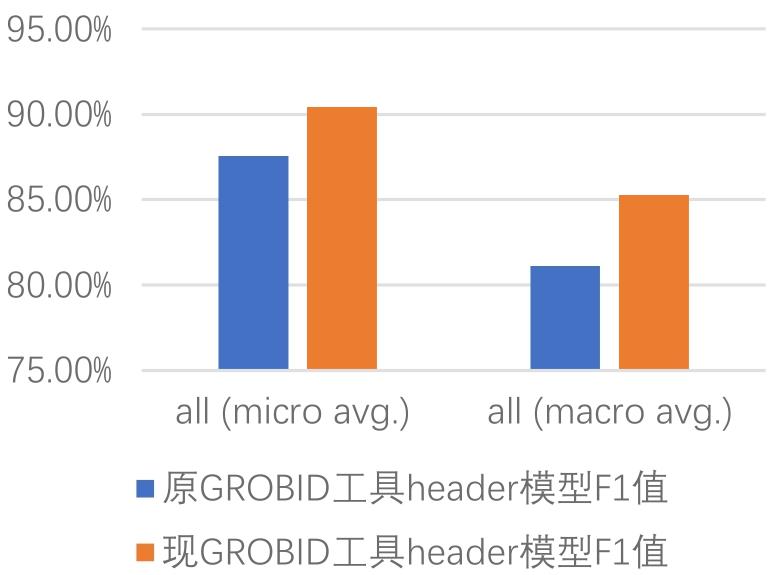
[Purpose/Significance] The deep integration of the latest technological revolution and industrial transformation has created an urgent demand for high-quality multimodal corpora for artificial intelligence-driven scientific discovery (AI4S) and large language models. Traditional coarse-grained knowledge organization methods based on documents have become insufficient for deep knowledge services. This study aims to construct a toolchain for extracting multimodal and multigranular knowledge units from scientific and technological literature, enabling the systematic mining of structured knowledge units from massive literature and enhancing the depth and efficiency of knowledge services. [Method/Process] This study conducted a systematic review of mainstream knowledge extraction tools, both domestical and international, and performed a comparative analysis and screening on dimensions such as technical principles, functional characteristics, application advantages, existing limitations, and processing efficiency. An application demand system was constructed from four levels: identification of research subjects, context tracing, content analysis, and evidence localization. Taking the field of rice breeding as an empirical scenario, a knowledge representation model for multimodal information was constructed based on the physical organizational logic of literature. Documents were divided into four major categories of 22 knowledge units: basic information subjects, structural support, material systems, and academic descriptions. The boundaries between knowledge units are clear, and there are abundant associative relationships. Integrating the extraction needs of various types of scientific and technological literature knowledge units with tool research results, a pipeline-style extraction process framework for multimodal and multigranular knowledge units has been designed. This framework implemented a pipeline-style processing framework for the entire process of document acquisition, physical structure analysis, logical structure reconstruction, multimodal content extraction, and knowledge unit fusion and storage, constructing a cascading processing toolchain from PDF original documents to semi-structured data, and then to structured knowledge. To address three major issues: insufficient accuracy of basic information, chaotic structure of academic statements, and missing information in supporting materials, GROBID domain-adaptive retraining, XML and Markdown fusion parsing, and DeepSeek large model hierarchical extraction instructions were optimized and integrated into a full-chain toolchain. [Results/Conclusions] Preliminary experiments on the toolchain have achieved good extraction of multimodal and multigranular data. In optimization experiments, overall micro-average F1 score of the header model increased by nearly 3 percentage points, significantly enhancing the model's balance and generalization ability when processing documents in diverse formats. The problems of chaotic distribution and weakened structure of academic statement information were successfully solved, achieving robust structured extraction of more than ten types of statement information such as acknowledgements, conflicts of interest, and data availability. The introduction of the large language model DeepSeek enabled deep mining and association of chart titles, formal citation sentences, and related discussion sentences in literature. The model achieved an F1 score greater than 0.99 for extracting chart titles and greater than 0.93 for recognizing formal citation sentences. Verification through the SciWatch platform demonstrates the extraction, presentation, knowledge association, and contextual coherence of charts, supporting deep literature understanding and cross-validation. The multimodal knowledge extraction toolchain for scientific literature constructed in this paper has been able to efficiently and accurately complete the automated extraction and structured application of various knowledge units in scientific literature, covering a complete toolchain, including preprocessing, multimodal information recognition, relation extraction, knowledge fusion, and storage. The research results provide a scalable solution and practical reference for the evolution of domain knowledge mining and knowledge service technology.

Key words: knowledge extraction, multimodal knowledge, AI4S, scientific literature, knowledge unit, large language model

CLC Number: 

  • G254.9

Table 1

Comparative analysis of open-source extraction tools"

工具名称 技术描述 优点 缺点 处理效率
GROBID CRF算法 可以批量从PDF文献中提取、解析和restructuring为结构化的XML/TEI编码文档,识别68个细粒度标签,涵盖出版物元数据和全文结构各个方面,准确度和运行效率高 中文文献信息抽取效果较差,对复杂多模态PDF文档的处理能力有限 并发~2.5PDF/s,元数据提取达36PDF/s;CPU运行,内存<2GB,无需GPU
MinerU 版面分析+OCR 能够完美保留原始文档的结构,支持复杂多模态PDF文档的处理,包括去除页眉页脚、保留标题段落和表格结构、公式和表格格式转换、OCR识别等操作,输出Markdown文件 对非结构化数据的深度理解能力有限,对特殊任务和非英语环境的适应性有待提高 CPU约32s/页,GPU加速>10 000tokens/s;建议4核CPU+8GB内存,GPU可加速
PaddleX 飞桨套件 支持多种任务场景,包括图像分类、目标检测、图像分割、OCR、文本图像版面分析、文本图像信息抽取等,提供低代码开发模式,支持统一API接口,便于模型串联 对文献知识抽取的专注度不够,对复杂推理任务的处理能力有限 GPU下单页2~5s,吞吐量12~30页/min;需GPU(≥4GB显存),CPU回退慢5~10倍
RAGFlow 深度文档理解+大语言模型 能够从复杂格式的非结构化数据中提取信息,支持无限上下文场景,基于模板的文本切片机制保证结果可控性和可解释性,降低幻觉风险,兼容异构数据源 对文献知识抽取的效率有待提高,对多语言文献的处理能力有限 单文档分钟级(含Embedding与LLM推理);需高性能GPU及≥16GB内存
DeepSeek MoE+MLA架构 结合检索增强生成(RAG)技术,实时检索外部知识库,提升生成内容的准确性与专业性,尤其在处理多语言文献和复杂推理任务时表现突出 对文献知识抽取的效率有待提高,对复杂多模态PDF文档的处理能力有限 单请求秒级至10秒级,多轮交互更长;需大显存GPU或API调用

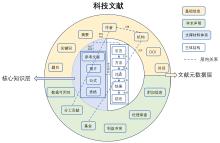
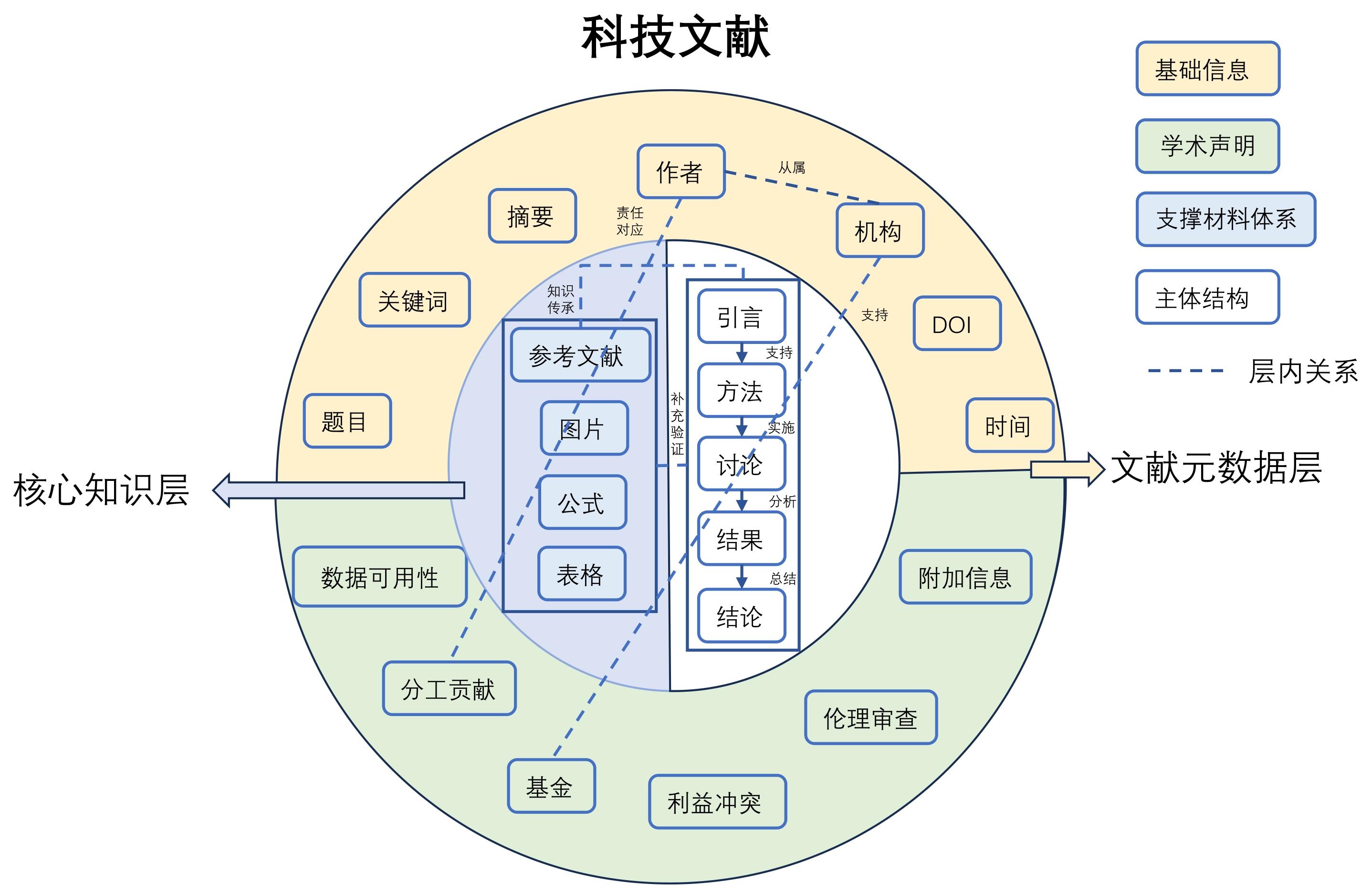
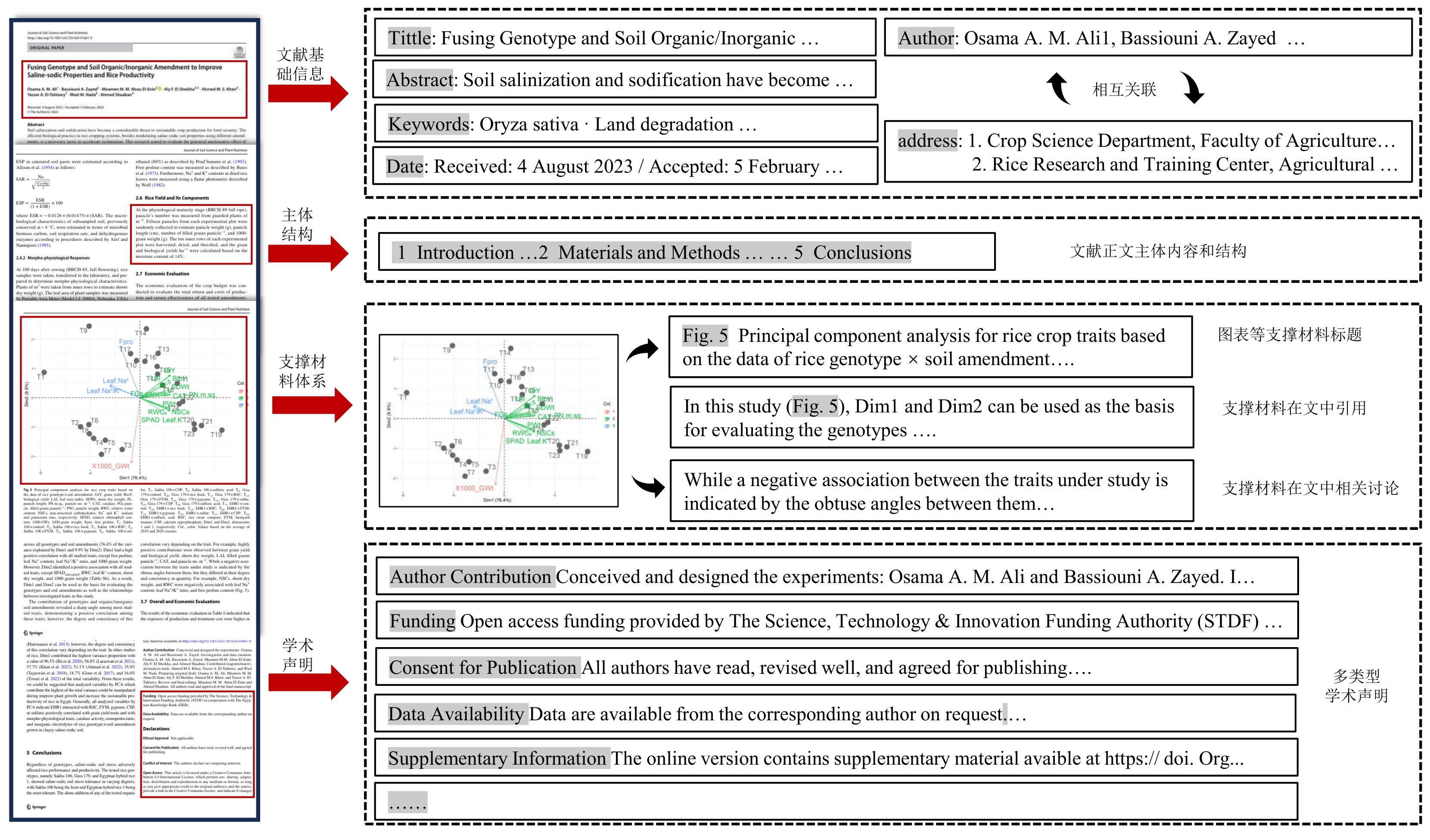
Fig.1

Relationship between knowledge units"

Fig.2

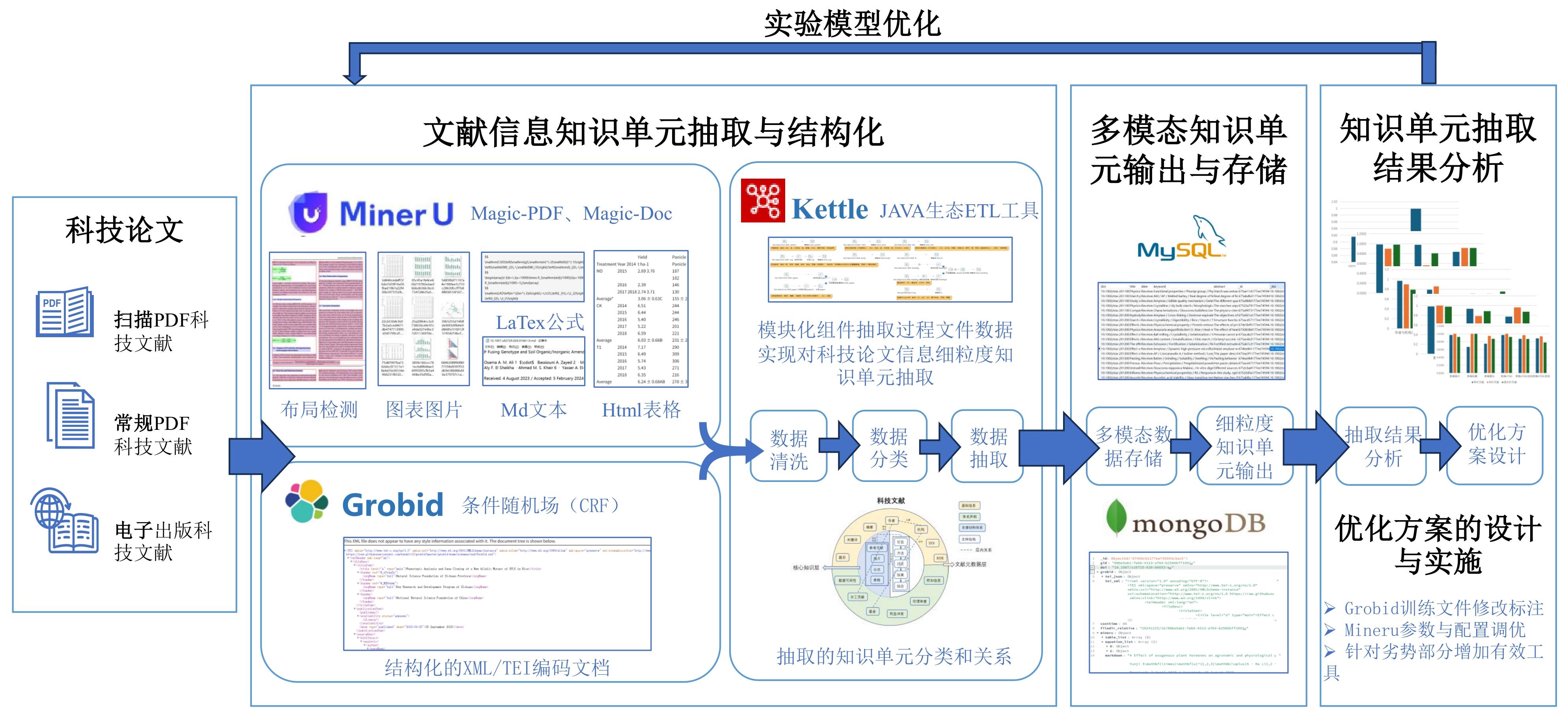
Pipeline-style technical process of knowledge extraction tools"

Fig.3

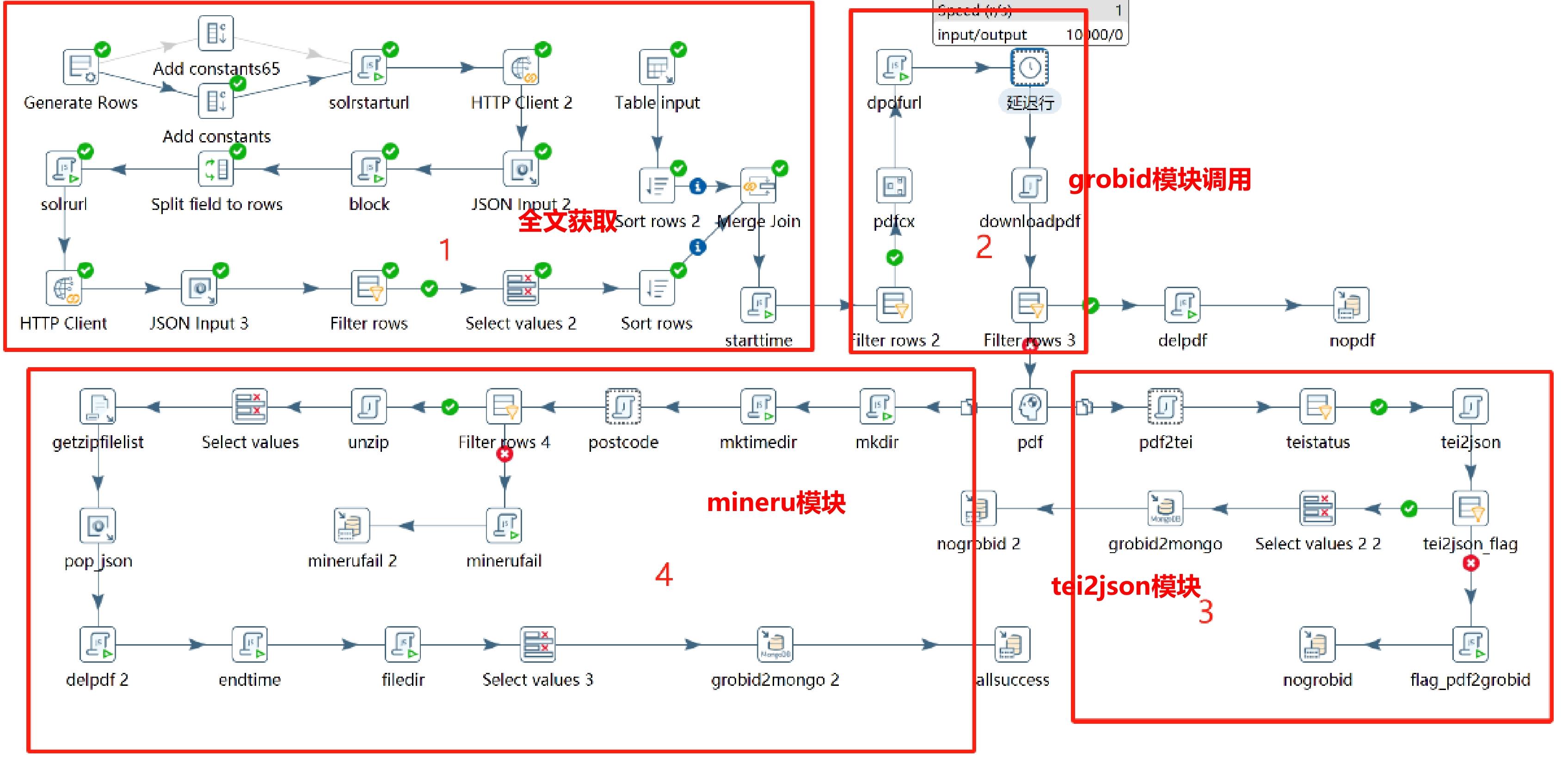
Preliminary processing module for knowledge extraction from scientific and technological literature"

Fig.4

Kettle extracts organizational information processed by GROBID"

Table 2

Evaluation data for extraction performance of three types of literature"

知识类型 知识单元 评估维度 单栏 双栏 混合栏
基础信息 摘要 levenshtein_distance 244.50 109.70 104.40
normalized_similarity 0.92 0.89 0.90
标题 levenshtein_distance 0.10 85.90 86.30
normalized_similarity 1.00 0.91 0.91
作者 精确率 0.97 0.82 0.98
召回率 1.00 1.00 0.98
F1值 0.99 0.90 0.98
关键词 精确率 0.82 0.86 0.89
召回率 0.98 0.56 0.80
F1值 0.89 0.68 0.85
时间 精确率 1.00 1.00 1.00
召回率 0.72 0.84 0.84
F1值 0.84 0.91 0.92
作者与机构关联 精确率 1.00 1.00 0.84
召回率 0.94 0.81 0.74
F1值 0.97 0.89 0.79
邮件 精确率 1.00 1.00 0.89
召回率 0.65 0.75 0.53
F1值 0.79 0.86 0.67
通讯情况 精确率 1.00 1.00 0.86
召回率 0.15 0.33 0.60
F1值 0.27 0.50 0.71
ORCID 精确率 0.78 0.00 0.75
召回率 0.64 0.00 0.75
F1值 0.70 0.00 0.75
机构(抽取和分类正确) 精确率 0.90 0.86 0.88
召回率 0.88 0.86 0.87
F1值 0.89 0.86 0.88
机构(抽取正确) 精确率 0.99 0.95 0.96
召回率 0.98 0.95 0.95
F1值 0.99 0.95 0.96
主体结构 正文 levenshtein_distance 3 504.70 1 070.10 1 349.50
normalized_similarity 0.90 0.96 0.96
支撑材料体系 图片抽取 精确率 1.00 1.00 1.00
召回率 0.97 1.00 0.96
F1值 0.98 1.00 0.98
图片完整度 精确率 0.95 0.79 0.90
召回率 0.92 0.79 0.87
F1值 0.94 0.79 0.88
图片标题 精确率 0.86 0.96 0.93
召回率 0.70 0.96 0.82
F1值 0.77 0.96 0.88
表格图片 精确率 1.00 1.00 0.86
召回率 0.94 1.00 1.00
F1值 0.97 1.00 0.92
表格标题 精确率 0.82 1.00 1.00
召回率 0.56 1.00 1.00
F1值 0.67 1.00 1.00
表格脚注 精确率 0.67 0.95 0.93
召回率 0.86 0.95 0.82
F1值 0.75 0.95 0.88
表格HTML 精确率 0.94 1.00 0.86
召回率 1.00 1.00 1.00
F1值 0.97 1.00 0.92
表格HTML结构 精确率 0.85 0.97 0.81
召回率 0.90 0.97 0.94
F1值 0.88 0.97 0.87
表格HTML内容 精确率 0.86 0.94 0.73
召回率 0.91 0.94 0.85
F1值 0.89 0.94 0.78
LaTeX公式 精确率 1.00 1.00 1.00
召回率 1.00 1.00 1.00
F1值 1.00 1.00 1.00
参考文献 精确率 0.99 0.99 0.99
召回率 0.97 0.99 0.98
F1值 0.98 0.99 0.98

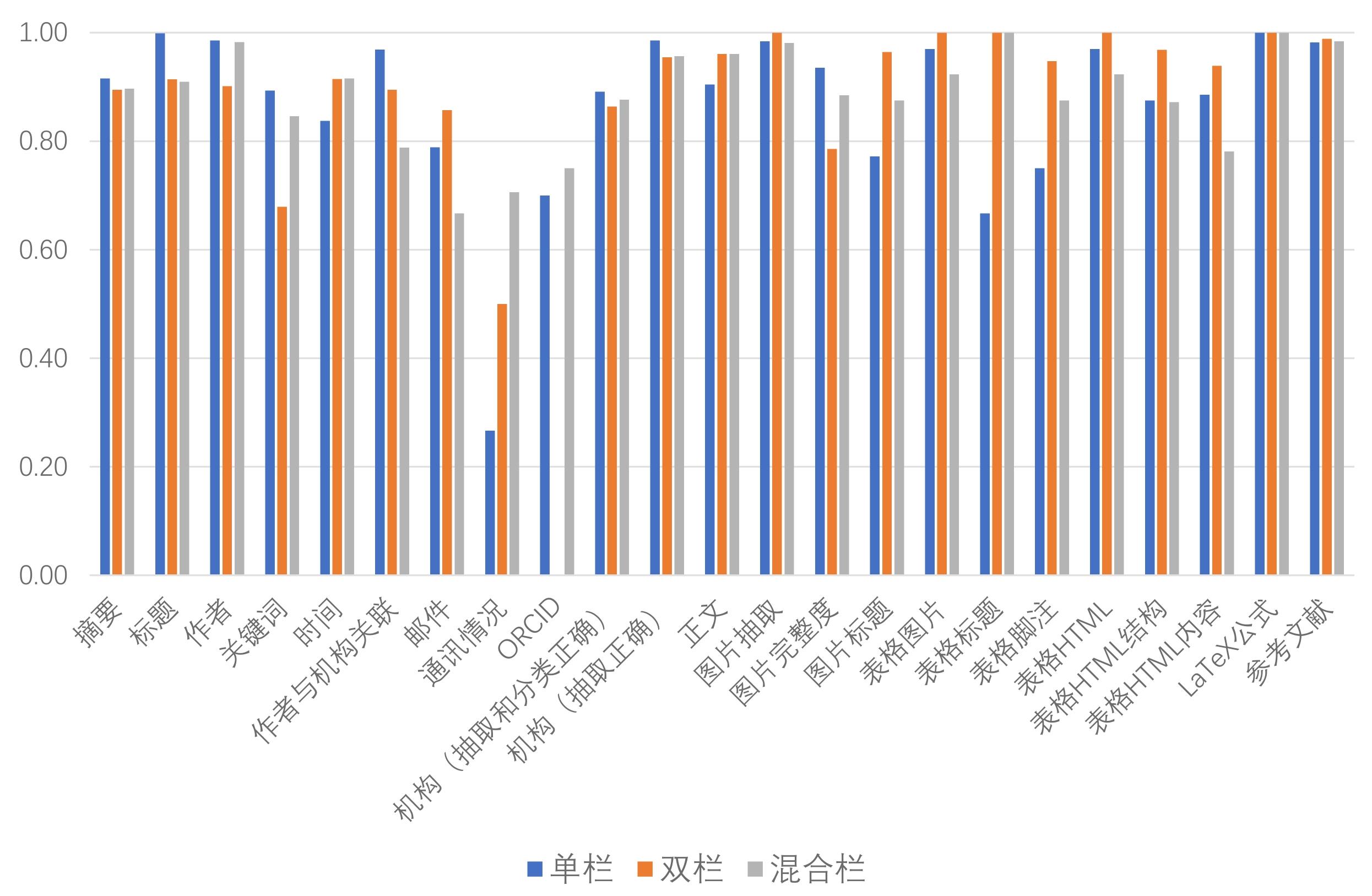
Fig.5

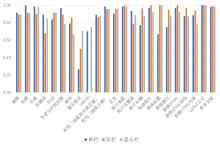
Comparison of accuracy in knowledge extraction from three types of literature"

Fig.6

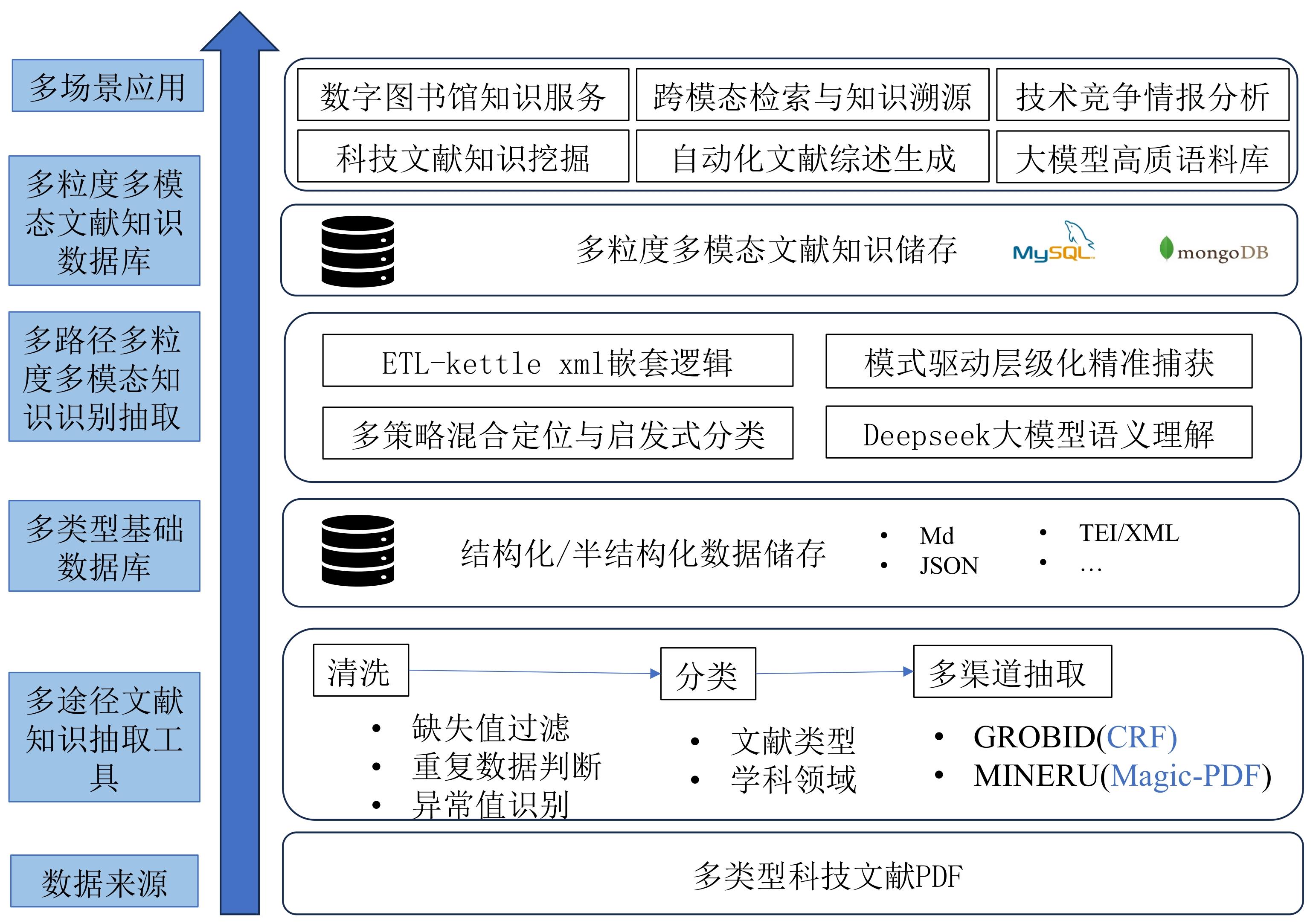
Optimized toolchain framework diagram"

Table 3

Evaluation data for the annotation effect of the new_header model"

标签 准确率 精确率 召回率 F1
<abstract> 98.95 88.89 84.21 86.49
<address> 98.95 93.88 95.83 94.85
<affiliation> 98.74 93.75 93.75 93.75
<author> 99.79 100 96.55 98.25
<copyright> 96.86 61.54 76.19 68.09
<date> 99.58 87.5 87.5 87.5
<doctype> 99.16 100 66.67 80
<editor> 100 100 100 100
<email> 99.79 100 96.43 98.18
<keyword> 98.74 81.25 81.25 81.25
<pubnum> 100 100 100 100
<reference> 97.9 78.95 71.43 75
<submission> 99.37 93.75 88.24 90.91
<title> 98.53 85 80.95 82.93
<web> 100 100 100 100

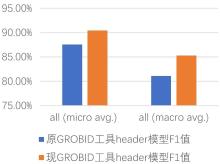
Fig.7

Comparison between the new_header model and the original model"

Table 4

Evaluation data on the optimization effect of two methods on academic statement information"

学术声明具体模块 基于xml方法 基于md方法
精确率 召回率 F1 精确率 召回率 F1
Acknowledgments 1.000 0 1.000 0 1.000 0 1.000 0 1.000 0 1.000 0
Data Availability 1.000 0 1.000 0 1.000 0 1.000 0 0.928 6 0.963 0
Author Contributions 1.000 0 0.611 1 0.758 6 1.000 0 1.000 0 1.000 0
Funding 1.000 0 0.882 4 0.937 5 0.894 7 1.000 0 0.944 4
Conflict of Interest 1.000 0 0.950 0 0.974 4 1.000 0 0.950 0 0.974 4
Supplementary Material 1.000 0 0.307 7 0.470 6 1.000 0 1.000 0 1.000 0
Additional Information 0.000 0 0.000 0 1.000 0 1.000 0 1.000 0
Publisher's Note 0.000 0 0.000 0 1.000 0 1.000 0 1.000 0
Ethical Approval 1.000 0 0.666 7 0.800 0 1.000 0 1.000 0 1.000 0
Open Access 1.000 0 0.272 7 0.428 6 0.875 0 0.636 4 0.736 8
Statement 1.000 0 0.250 0 0.400 0 1.000 0 1.000 0 1.000 0

Table 5

Comparison of ablation results of components"

子组件 Avg-Pre Avg-Rec Avg-F1
去除Md方法刚性抽取 0.978 5 0.858 9 0.870 8
去除Md方法柔性捕获 1.000 0 0.679 7 0.755 2
去除Xml方法标题通道 0.978 5 0.961 6 0.968 3
去除Xml方法属性通道 0.978 5 0.957 0 0.966 0
md-xml综合框架(完整) 0.979 1 0.966 9 0.971 0

Table 6

Structured prompt word"

基础提示词 具体要求提示词 格式与质量提示词
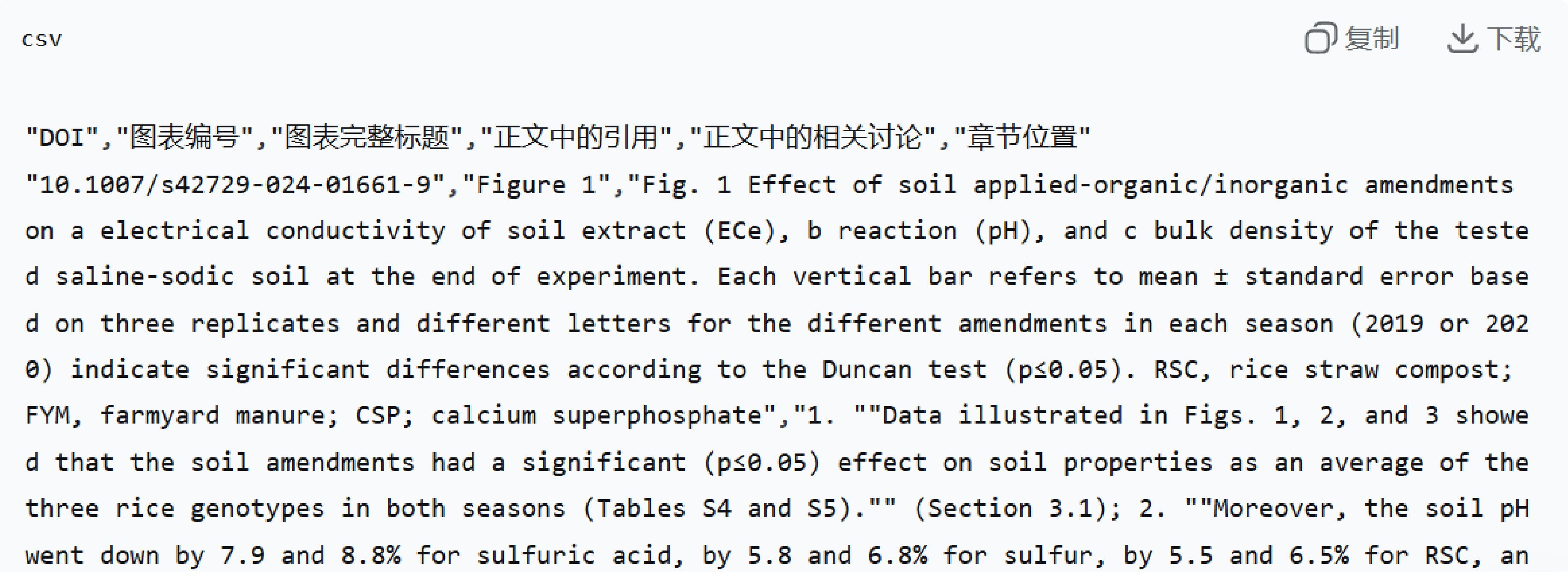
请帮我从以下学术文献中提取所有图片(Figure)和表格(Table)的详细信息,并整理到一个汇总CSV中输出

表格需要包含以下列:

文献标识:使用文献的DOI号

图表编号:例如Figure 1Table 2

图表完整标题:从原文中完整复制图注或表题

正文中的引用:列出文中所有直接提及该图表的完整原句(即句中明确包含图表编号,如“as shown in Figure 1”“Table 2 presents...”等)。多个引用时用“分号+空格”分隔,每条引用前加编号,如:1.“第一句引用”;2.“第二句引用”

正文中的相关讨论:列出文中对该图表数据、结果或意义进行解释、分析、引申、总结的句子(这些句子可能包含图表编号,也可能不包含;但请不要包含那些仅是直接引用图表的句子,以免重复)。如果同一句子既是引用又是讨论,请将其同时放入两列(即重复录入)

章节位置:分别说明每一条引文和讨论所在的章节和小节标题(如果某条引用或讨论跨越多段,可注明起止小节)

完整性:找到每一个图表对应的全部引用,不要遗漏

精确性:所有标题和引用句必须直接从原文复制,保持原貌

多引用处理:同一图表有多个引用时,在“正文中的引用”列中用“分号+空格”分隔,每条引用前加编号

多篇文献整合:如果涉及多篇文献,将它们整合到同一个CSV中,使用DOI作为首要区分标识

CSV格式:使用逗号分隔,文本字段用双引号包裹,内部双引号用两个双引号转义

Fig.8

Chart-related results extracted by DeepSeek (partial)"

Table 7

Knowledge recognition and extraction results"

抽取内容 精确率 召回率 F1
标题 1.000 0 0.993 8 0.996 8
正式引用句 0.956 0 0.909 3 0.932 0

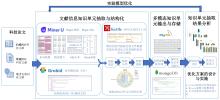
Fig.9

Disassembly of toolchain in scientific literature"

Fig.10

SciWatch platform example"

[1]
科技部启动“人工智能驱动的科学研究”专项部署工作-中国法院网[EB/OL]. [2024-11-19].
[2]
彭以祺. 国家科技文献保障工作的形势与NSTL“十四五”规划[J]. 数字图书馆论坛, 2021(5): 2-7.
Peng Yiqi. Situation of the national scientific and technological literature guarantee work and the 14th Five-Year Plan of NSTL[J]. Digital Library Forum, 2021(5): 2-7.
[3]
国家数据局. “数据要素×”三年行动计划(2024-2026年)[R]. 北京: 国家数据局, 2023.
[4]
蔡祎然, 胡正银, 刘春江. 大语言模型赋能科技文献数据挖掘进展分析[J]. 农业图书情报学报, 2025, 37(2): 4-22.
Cai Yiran, Hu Zhengyin, Liu Chunjiang. Analysis of progress in data mining of scientific literature using analysis using large language models[J]. Journal of Library and Information Science in Agriculture, 2025, 37(2): 4-22.
[5]
Asai A, He J, Shao Rulin, et al. Synthesizing scientific literature with retrieval-augmented language models[J]. Nature, 2026, 650(8103): 857-863.
[6]
刘峥, 孙坦, 张建勇. NSTL资源的深度组织和揭示: 从资源描述到语义描述[J]. 数字图书馆论坛, 2020, 16(7): 60-66.
Liu Zheng, Sun Tan, Zhang Jianyong. The knowledge organization of NSTL resources: From resource description to semantic description[J]. Digital Library Forum, 2020, 16(7): 60-66.
[7]
秦春秀, 马续补. 基于知识单元的科技文献细粒度组织研究[M]. 西安: 西安电子科技大学出版社, 2024.
Qin Chunxiu, Ma Xubu. Research on fine-grained organization of scientific literature based on knowledge unit[M]. Xi'an: Xidian University Press, 2024.
[8]
Information and documentation - Foundation and vocabulary: ISO 5127: 2017 [S]. International Organization for Standardization, 2017.
[9]
邱均平, 段宇锋, 陈敬全, 等. 我国文献计量学发展的回顾与展望[J]. 科学学研究, 2003(2): 143-148.
Qiu Junping, Duan Yufeng, Chen Jingquan, et al. Review and prospect of the development of Bibliometrics in China[J]. Studies in Science of Science, 2003(2): 143-148.
[10]
Ding Ying, Liu Xiaozhong, Guo Chun, et al. The distribution of references across texts: Some implications for citation analysis[J]. Journal of Informetrics, 2013, 7(3): 583-592.
[11]
陆伟, 黄永, 程齐凯. 学术文本的结构功能识别——功能框架及基于章节标题的识别[J]. 情报学报, 2014, 33(9): 979-985.
Lu Wei, Huang Yong, Cheng Qikai. The structure function of academic text and its classification[J]. Journal of the China Society for Scientific and Technical Information, 2014, 33(9): 979-985.
[12]
秦春秀, 杨智娟, 赵捧未, 等. 面向科技文献知识表示的知识元本体模型[J]. 图书情报工作, 2018, 62(3): 94-103.
Qin Chunxiu, Yang Zhijuan, Zhao Pengwei, et al. The knowledge element ontology model of scientific literature for knowledge representation[J]. Library and Information Service, 2018, 62(3): 94-103.
[13]
徐雷, 秦翠玉, 李娇. 科技文献数据化及组织呈现路径研究[J]. 中国图书馆学报, 2022, 52(3): 25-42.
Xu Lei, Qin Cuiyu, Li Jiao. Datafication, organization and manifestation of scientific literature[J]. Journal of Library Science in China, 2022, 52(3): 25-42.
[14]
李晶, 杨雪, 苏秋丹, 等. 基于知识单元理论的科技成果创新性测度研究述评[J]. 现代情报, 2023, 43(8): 161-177.
Li Jing, Yang Xue, Su Qiudan, et al. Review of the research on the measurement of innovation of scientific and technological achievements based on the theory of knowledge units[J]. Journal of Modern Information, 2023, 43(8): 161-177.
[15]
叶光辉, 彭泽, 陈国梁, 等. 学术文献中的知识单元抽取及其分布特征识别研究[J]. 情报理论与实践, 2023, 46(4): 90-98.
Ye Guanghui, Peng Ze, Chen Guoliang, et al. Research on knowledge element extraction in academic literature and its distribution feature recognition[J]. Information Studies: Theory & Application, 2023, 46(4): 90-98.
[16]
赵冠壹, 韩松花. 科技文献的多粒度知识组织研究[J]. 情报科学, 2023, 41(8): 134-138, 161.
Zhao Guanyi, Han Songhua. Multi-granularity knowledge organization of sci-tech literature[J]. Information Science, 2023, 41(8): 134-138, 161.
[17]
冯儒佳, 王忠义, 王艳凤, 等. 科技论文的多粒度知识组织框架研究[J]. 情报科学, 2016, 34(12): 46-50, 54.
Feng Rujia, Wang Zhongyi, Wang Yanfeng, et al. Research on multi-granularity knowledge organization framework of scientific and technological papers[J]. Information Science, 2016, 34(12): 46-50, 54.
[18]
Hinchey M, Vassev E. KnowLang - A formal specification model for self-adaptive systems[M]//Theories of Programming and Formal Methods. Cham: Springer Nature Switzerland, 2023: 367-392.
[19]
王忠义, 夏立新, 李玉海. 基于知识内容的数字图书馆跨学科多粒度知识表示模型构建[J]. 中国图书馆学报, 2019, 45(6): 50-64.
Wang Zhongyi, Xia Lixin, Li Yuhai. Construction of interdisciplinary multi-granularity knowledge representation model in digital library based on knowledge content[J]. Journal of Library Science in China, 2019, 45(6): 50-64.
[20]
任亮, 杜薇薇, 刘伟利. 面向科技文献知识元的知识图谱构建研究[J]. 情报科学, 2022, 40(9): 26-31.
Ren Liang, Du Weiwei, Liu Weili. The construction of knowledge graph for knowledge elements of scientific literature[J]. Information Science, 2022, 40(9): 26-31.
[21]
National Information Standards Organization JATS Standing Committee. ANSI/NISO Z39.96-2024 JATS : Journal Article Tag Suite, Version 1.4 [S/OL]. Baltimore: National Information Standards Organization, 2024[2026-03-31].
[22]
Consortium TEI. TEI P5: Guidelines for Electronic Text Encoding and Interchange [S/OL]. 2025[2026-03-31].
[23]
刘熠, 张智雄, 王宇飞, 等. 基于语步识别的科技文献结构化自动综合工具构建[J]. 数据分析与知识发现, 2024, 8(2): 65-73.
Liu Yi, Zhang Zhixiong, Wang Yufei, et al. Constructing automatic structured synthesis tool for sci-tech literature based on move recognition[J]. Data Analysis and Knowledge Discovery, 2024, 8(2): 65-73.
[24]
牛永洁, 薛苏琴. 基于PDFBox抽取学术论文信息的实现[J]. 计算机技术与发展, 2014, 24(12): 61-63, 68.
Niu Yongjie, Xue Suqin. Realization of extraction of academic papers information based on PDFBox[J]. Computer Technology and Development, 2014, 24(12): 61-63, 68.
[25]
Tkaczyk D, Bolikowski L, Czeczko A, et al. A modular metadata extraction system for born-digital articles[C]//2012 10th IAPR International Workshop on Document Analysis Systems. Gold Coast: IEEE, 2012: 11-16.
[26]
李雪驹, 王智广, 鲁强. 一种规则与SVM结合的论文抽取方法[J]. 计算机技术与发展, 2017, 27(10): 24-29.
Li Xueju, Wang Zhiguang, Lu Qiang. An extraction method for papers via integration of rules with SVM[J]. Computer Technology and Development, 2017, 27(10): 24-29.
[27]
Kan M Y, Luong M T, Nguyen T D. Logical structure recovery in scholarly articles with rich document features[J]. International Journal of Digital Library Systems, 2010, 1(4): 1-23.
[28]
周忆莲. 学术论文PDF结构解析技术的研究[D]. 长沙: 湖南大学, 2020.
Zhou Yilian. Research on PDF Structure Analysis Technology of Academic Papers[D]. Changsha: Hunan University, 2020.
[29]
秦成磊, 章成志. 基于层次注意力网络模型的学术文本结构功能识别[J]. 数据分析与知识发现, 2020, 4(11): 26-42.
Qin Chenglei, Zhang Chengzhi. Recognizing structure functions of academic articles with hierarchical attention network[J]. Data Analysis and Knowledge Discovery, 2020, 4(11): 26-42.
[30]
刘昊坦, 刘家伟, 张帆, 等. 科技文献的多层次结构功能识别[J]. 信息资源管理学报, 2024, 14(3): 90-103.
Liu Haotan, Liu Jiawei, Zhang Fan, et al. Multi-level functional structure recognition of scientific literature[J]. Journal of Information Resources Management, 2024, 14(3): 90-103.
[31]
何彦青, 陈光云, 兰天, 等. 基于Rule-Faster-RCNN的多语科技论文PDF文档结构框架元素解析[J]. 情报科学, 2023, 41(4): 51-61.
He Yanqing, Chen Guangyun, Lan Tian, et al. Extraction of structure frame elements of PDF documents in multilingual scientific papers based on rule-faster-RCNN[J]. Information Science, 2023, 41(4): 51-61.
[32]
沈雪莹, 欧石燕. 科学文献知识单元抽取及应用研究: 梳理与展望[J]. 情报理论与实践, 2022, 45(12): 195-207.
Shen Xueying, Ou Shiyan. Research on extraction and application of knowledge units in scientific literature: Reviews and prospects[J]. Information Studies (Theory & Application), 2022, 45(12): 195-207.
[33]
丁培. 学术图表知识发现技术框架及研究进展[J]. 图书情报工作, 2021, 65(23): 136-148.
Ding Pei. The technical framework and research progress of knowledge discovery in academic figures and tables[J]. Library and Information Service, 2021, 65(23): 136-148.
[34]
Li Pengyuan, Jiang Xiangying, Shatkay H. Figure and caption extraction from biomedical documents[J]. Bioinformatics, 2019, 35(21): 4381-4388.
[35]
于丰畅, 程齐凯, 陆伟. 基于几何对象聚类的学术文献图表定位研究[J]. 数据分析与知识发现, 2021, 5(1): 140-149.
Yu Fengchang, Cheng Qikai, Lu Wei. Locating academic literature figures and tables with geometric object clustering[J]. Data Analysis and Knowledge Discovery, 2021, 5(1): 140-149.
[36]
李英群, 李亚菲, 裴雷, 等. 基于YOLOv5-ECA-BiFPN的学术期刊文献图表识别与提取方法研究[J]. 数据分析与知识发现, 2023, 7(11): 158-171.
Li Yingqun, Li Yafei, Pei Lei, et al. Identifying and extracting figures and tables from academic literature based on YOLOv5-ECA-BiFPN[J]. Data Analysis and Knowledge Discovery, 2023, 7(11): 158-171.
[37]
Peters S E, Zhang Ce, Livny M, et al. A machine reading system for assembling synthetic paleontological databases[J]. PLoS One, 2014, 9(12): 1-22.
[38]
马建霞, 袁慧, 蒋翔. 基于Bi-LSTM+CRF的科学文献中生态治理技术相关命名实体抽取研究[J]. 数据分析与知识发现, 2020, 4(2): 78-88.
Ma Jianxia, Yuan Hui, Jiang Xiang. Extracting name entities from ecological restoration literature with Bi-LSTM+CRF[J]. Data Analysis and Knowledge Discovery, 2020, 4(2): 78-88.
[39]
彭玉芳, 陈将浩. 基于深度学习与需求规则融合的学术文献“目标数据”抽取模型构建与应用—以南海数字资源为例[J]. 情报科学, 2022, 40(1): 141-147, 157.
Peng Yufang, Chen Jianghao. Combine deep learning with the rules of requirement to construct the "target data" extraction model for the academic literature-Taking the resources of the South China Sea as an example[J]. Information Science, 2022, 40(1): 141-147, 157.
[40]
蔡乐, 罗卓然, 陆伟. 学术论文科研贡献类型自动识别研究[J]. 情报理论与实践, 2023, 46(6): 168-175.
Cai Le, Luo Zhuoran, Lu Wei. Research on automatic recognition of scientific research contribution types of academic papers[J]. Information Studies (Theory & Application), 2023, 46(6): 168-175.
[41]
曹树金, 闫颂. 基于语义角色信息的科技论文创新段落定位及功能句识别方法研究——以中文情报学领域论文为例[J]. 情报理论与实践, 2022, 45(11): 1-9, 20.
Cao Shujin, Yan Song. Research on innovative paragraph positioning and functional sentence identification method of scientific and technical papers based on semantic role information: A case study of papers in the field of Chinese intelligence[J]. Information Studies (Theory & Application), 2022, 45(11): 1-9, 20.
[42]
张颖怡, 章成志. 基于学术论文全文的研究方法句自动抽取研究[J]. 情报学报, 2020, 39(6): 640-650.
Zhang Yingyi, Zhang Chengzhi. Methodological and automatic sentence extraction from academic article's full-text[J]. Journal of the China Society for Scientific and Technical Information, 2020, 39(6): 640-650.
[43]
Wadden D, Shi Kejian, Morrison J, et al. SciRIFF: A resource to enhance language model instruction-following over scientific literature[PP/OL]. V4. arXiv (2025-09-29)[2026-03-31].
[44]
Li Sihang, Huang Jin, Zhuang Jiaxi, et al. SciLitLLM: How to adapt LLMs for scientific literature understanding[PP/OL]. V5. arXiv (2025-04-18)[2026-03-31].
[45]
Zhang Xiantao. Roles of MLLMs in visually rich document retrieval for RAG: A survey[PP/OL]. V1. arXiv (2025-12-16)[2026-03-31].
[1] XI Chongjun, ZHAO Yajuan, LV Lucheng, SU Ying. Hierarchical Automatic Patent Classification Driven by the Integration of Examination Logic and Knowledge Bases: A Case Study in the Artificial Intelligence Domain [J]. Journal of library and information science in agriculture, 2026, 38(6): 28-42.
[2] LYU Lucheng, ZHOU Jian, SUN Wenjun, ZHAO Yajuan, HAN Tao. Performance of Fine-Tuned Large Language Models in Patent Text Mining [J]. Journal of library and information science in agriculture, 2026, 38(4): 36-46.
[3] QIAN Li, YANG Yanxi, ZHANG Yuanzhe, HU Maodi, CHANG Zhijun. The Impacts and Implications of OpenClaw for Scientific and Technical Literature Intelligence Work [J]. Journal of library and information science in agriculture, 2026, 38(4): 4-12.
[4] DENG Qiping, KE Jiaxiu, GAN Peng, ZHOU Song. Construction of an Intelligent Agent for Academic Output Data Analysis Oriented to Academic Evaluation [J]. Journal of library and information science in agriculture, 2026, 38(3): 76-87.
[5] WU Yuhao, LIU Yihao, LI Qingjun, HU Xu. Open Sharing of Library Data Based on Large Language Models: Logic, Path and Strategy [J]. Journal of library and information science in agriculture, 2026, 38(1): 28-43.
[6] WANG Xiaoyu, HU Jingyuan, WU Ruoyu, WANG Shu, ZHAI Yujia. An LLM-based Data Augmentation Method for Constructing Science & Technology Topic Linkages: Taking the Energy Conservation Field as an Example [J]. Journal of library and information science in agriculture, 2025, 37(9): 63-81.
[7] QIAN Li, WANG Qianying, LIU Yi, ZHANG Yuanzhe, CHANG Zhijun. Agent Technology and Its Applications in Scientific Research [J]. Journal of library and information science in agriculture, 2025, 37(5): 5-14.
[8] LIU Wei, ZHANG Lei, JI Ting, CHEN Xiaoyang. Shaping the Smart Libraries with AI: An Agent-based, Next-Generation Library Service Platform [J]. Journal of library and information science in agriculture, 2025, 37(5): 15-26.
[9] ZHANG Li, WANG Bo, JING Shui. Generative AI-Driven Resource Discovery in Public Libraries: Service Optimization Based on a Dynamic Evaluation Model [J]. Journal of library and information science in agriculture, 2025, 37(5): 58-71.
[10] SANG Yuanyuan. Multimodal Learning Technology Aimed at Exploring the Innovative Path of Library Intelligence Service [J]. Journal of library and information science in agriculture, 2025, 37(3): 42-52.
[11] SHI Zhongyan, LEI Jie, SUN Tan, ZHAO Ruixue, LI Jiao, HUANG Yongwen, XIAN Guojian. Research on DeepSeek-Empowered Low-Cost Construction of Domain-Specific Knowledge Graphs [J]. Journal of library and information science in agriculture, 2025, 37(3): 4-17.
[12] CAI Yiran, HU Zhengyin, LIU Chunjiang. Analysis of Progress in Data Mining of Scientific Literature Using Large Language Models [J]. Journal of library and information science in agriculture, 2025, 37(2): 4-22.
[13] AN Bo. A Multi-Task Knowledge Extraction Method for Traditional Chinese Medicine Ancient Books Integrating Chain-of-Thought [J]. Journal of library and information science in agriculture, 2025, 37(12): 81-94.
[14] LI Xinxin, MA Yumeng, JU Zihan, WANG Jing. Aspect-Level Sentiment Analysis of Science and Technology Policy Reviews Based on Large Language Models: A Case Study of the New Energy Vehicle Industry [J]. Journal of library and information science in agriculture, 2025, 37(10): 53-66.
[15] Haoxian WANG, Ziming ZHOU, Feifei DING, Chengfu WEI. Digital Humanities & Large Language Models: Practice and Research in Semantic Retrieval of Ancient Documents [J]. Journal of library and information science in agriculture, 2024, 36(9): 89-101.
Viewed
Full text


Abstract

Cited

  Shared   
  Discussed   
No Suggested Reading articles found!