中文    English

Journal of library and information science in agriculture


Practice Pathway of AI Literacy Education in Libraries of "Double First-Class" Universities in China from the Perspective of Synergistic Theory

ZHU Luying1, LI Xiaoyan2(), CHEN Wen3,4, DU Xingye5,6   

  1. 1. Library of Ocean University of China, Qingdao 266100
    2. Faculty of humanities & social sciences, Nanjing Forestry University, Nanjing 210037
    3. Laboratory of Data Intelligence and Interdisciplinary Innovation, Nanjing University, Nanjing 210023
    4. Research Institute for Data Management Innovation, Nanjing University, Suzhou 215163
    5. National Science Library, Chinese Academy of Sciences, Beijing 100190
    6. Department of Information Resources Management, School of Economics and Management, University of Chinese Academy of Sciences, Beijing 100190
  • Received:2026-01-15 Online:2026-04-03
  • Contact: LI Xiaoyan

Abstract:

[Purpose/Significance] The development of artificial intelligence (AI) technology has brought both opportunities and challenges, redefining users' knowledge and capabilities. It is necessary to re-examine and build new capabilities suitable for the era of AI-AI literacy. As the main institution of information literacy education in higher education, university libraries have inherent advantages in carrying out AI literacy education. The research aims to explore the development path of AI literacy education in university libraries and assist them in better cultivating high-quality talent that meetS the needs of the AI era. [Method/Process] The practice of AI literacy education in university libraries is influenced by multiple interwoven factors and is essentially a complex, open and dynamic system. Therefore, introducing collaborative theory into this practical field provides guidance for the collaborative development of AI literacy education in university libraries in China. Through online research on the implementation of AI literacy education in libraries of 42 "Double First-Class" universities in China, a collaborative framework for AI literacy education in university libraries in China from the perspective of collaborative theory was constructed, starting from the educational subjects, educational objects, educational forms and educational contents, and the current collaborative status of each element was analyzed. [Results/Conclusions] The results show that the AI literacy education in domestic university libraries is characterized by the establishment of cooperative relationships by the main body, the emphasis on group mutual learning for the objects, the importance placed on platform complementarity in the form, and the focus on knowledge and skills in the content. Based on the collaborative framework and the research results, the following development paths are proposed: The first is the main body network layer, which requires the establishment of a diversified multi-party collaborative network, the creation of a specialized and composite team, and the improvement of a long-term collaborative management mechanism. The second is the object mutual assistance layer, which should be based on the two-way empowerment role positioning and the establishment of a two-way interactive education platform. The third is the form optimization layer, which should integrate online and offline educational carriers and design a classified and stratified curriculum system. The fourth is the content empowerment layer, which should develop a local framework for AI literacy theory, balance popularizing knowledge and deepening skills, and strengthen thinking cultivation and ethics education. Thus, AI literacy education will evolve from a scattered approach to a systematic one. It will shift from a single-subject focus to an integrated one, and from superficial to profound.

Key words: synergy theory, AI literacy education, libraries of "Double First-Class" universities

CLC Number: 

  • G258.6

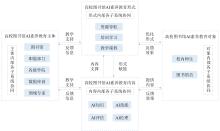
Fig.1

The collaborative framework for AI literacy education in Chinese university libraries from the perspective of collaborative theory"

Table1

The implementation status of AI literacy education by the main bodies of libraries in China's “Double First-Class” universities"

主体开展类别 高校名称
独立开展 南开大学、天津大学、大连理工大学、中南大学、西安交通大学、西北农林科技大学
合作开展 与数据库商 中国人民大学、清华大学、北京航空航天大学、北京理工大学、中国农业大学、北京师范大学、吉林大学、哈尔滨工业大学、复旦大学、同济大学、上海交通大学、南京大学、东南大学、中国科学技术大学、厦门大学、山东大学、武汉大学、华中科技大学、中山大学、华南理工大学、重庆大学、电子科技大学、西北工业大学、兰州大学、国防科技大学、东北大学、郑州大学、湖南大学、云南大学、新疆大学
与领域专家 北京大学、北京理工大学、北京师范大学、吉林大学、复旦大学、同济大学、南京大学、中国科学技术大学、厦门大学、中国海洋大学、武汉大学、中山大学、重庆大学、郑州大学、湖南大学
与各级学院 北京大学、同济大学、浙江大学、武汉大学、上海交通大学、华东师范大学、中国科学技术大学
与职能部门 中国农业大学、中央民族大学、南京大学、厦门大学、山东大学、四川大学

Table2

The construction situation of AI resource navigation in the libraries of China's “Double First-Class” universities"

序号 高校名称 AI资源导航名称
1 清华大学 GenAI专题资源导航
AI+工作坊
2 中国农业大学 生成式人工智能专题
3 北京师范大学 生成式AI专题指南
4 大连理工大学 AI素养专题
5 吉林大学 AI学习中心
6 武汉大学 人工智能资源导航
7 四川大学 生成式人工智能专题
8 电子科技大学 生成式AI专题
9 西北工业大学 生成式人工智能专题
10 兰州大学 AI工具库

Table 3

The AI literacy-related teaching courses in the libraries of China's “Double First-Class” universities"

序号 高校名称 课程名称 课程类型
1 清华大学 文献检索与利用(社科类) 公共选修
2 中国农业大学 文献检索 公共选修
3 大连理工大学 科技文献检索与利用 公共选修
4 同济大学 科技文献检索与利用 公共选修
5 上海交通大学 信息素养与实践 公共选修
6 南京大学 人工智能素养教育 通识选修
7 浙江大学 实用信息检索 公共选修
8 武汉大学 数据素养与数据利用 公共选修
信息素养与实践
9 四川大学 人工智能素养课程 通识核心

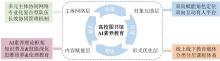
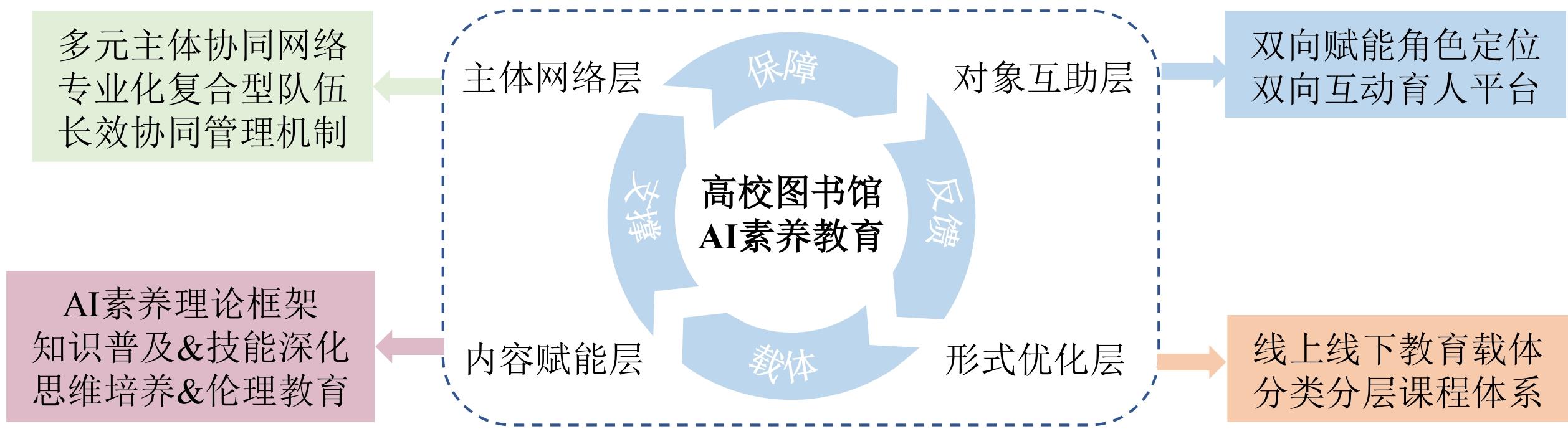
Fig.2

The collaborative development path of AI literacy education in the libraries of China's “Double First-Class” universities"

[1]
国务院关于深入实施“人工智能+”行动的意见[EB/OL]. [2026-03-23].
[2]
教育强国建设规划纲要( 2024-2035年)[EB/OL]. [2026-03-23].
[3]
UNESCO.Ethics of artificial intelligence[EB/OL]. [2026-03-23].
[4]
Commission European. White paper on artificial intelligence[EB/OL]. [2026-03-23].
[5]
世界经济论坛. 人工智能素养正在成为教育体系的核心[EB/OL]. [2026-03-23].
[6]
刘琼, 刘星, 刘桂锋. “人工智能+高等教育”应用场景下的AI素养框架研究[J]. 农业图书情报学报, 2024, 36(8): 43-55.
Liu Qiong, Liu Xing, Liu Guifeng. Framework of AI literacy for multi-role capabilities in future education: Based on typical cases of "AI+Higher education" application scenarios[J]. Journal of Library and Information Science in Agriculture, 2024, 36(8): 43-55.
[7]
储节旺, 詹佳怡, 张子芳. 智能化驱动的高校图书馆AI素养教育研究: 协同机制、实践模式与实施路径[J/OL]. 高校图书馆工作, 1-8[2026-03-23].
Chu Jiewang, Zhan Jiayi, Zhang Zifang. Research on AI literacy education in university libraries driven by intelligence: Collaborative mechanism,practice model and implementation path[J/OL]. Library Work in Colleges and Universities, 1-8[2026-03-23].
[8]
IFLA statement on libraries and artificial intelligence[EB/OL]. [2026-03-06].
[9]
IFLA. Artificial intelligence special interest group[EB/OL]. [2026-03-06].
[10]
2024 top trends in academic libraries [EB/OL]. [2026-03-06].
[11]
Leo-S Lo, Cynthia-Hudson V. Evolving AI strategies in libraries: Insights from two polls of ARL member representatives over nine months[R]. Washington: Association of Research Libraries, 2024.
[12]
Hossain Z, Biswas M S, Khan G. AI literacy of library and information science students: A study of Bangladesh, India and Pakistan[J]. Journal of Librarianship and Information Science, 2026, 58(1): 285-299.
[13]
Montesi M, Bornstein B Á, Puig N B, et al. AILIS 1.0: A new framework to measure AI literacy in library and information science (LIS)[J]. The Journal of Academic Librarianship, 2025, 51(5): 103118.
[14]
Khan Z I, Hossain Z, Biswas M S, et al. Mapping AI literacy among library professionals: A cross-regional study of South Asia and the Middle East[J]. Journal of Web Librarianship, 2025, 19(3/4): 189-220.
[15]
Schmidt L, Fruehauf E, Beman-Cavallaro A. Becoming a leader in AI literacy instruction by not reinventing the wheel[J]. The Journal of Academic Librarianship, 2025, 51(5): 103117.
[16]
Tsakalerou M, Lukhmanov Y. The ethical frontier: ChatGPT's cultural impact on academic practices[J]. Innovations in Education and Teaching International, 2026: 1-18.
[17]
张淼. 我国高校图书馆AI素养教育实践调研[J]. 图书情报工作, 2025, 69(18): 98-108.
Zhang Miao. Research on the practice of AI literacy education in university libraries in China[J]. Library and Information Service, 2025, 69(18): 98-108.
[18]
徐军华, 文杏儿. 数智时代147所“双一流”高校图书馆AI素养教育的探索和对策[J]. 图书馆, 2025(7): 61-70.
Xu Junhua, Wen Xinger. Exploration and countermeasures of AI literacy education in 147 double first-class university libraries in the digital-intelligent era[J]. Library, 2025(7): 61-70.
[19]
吴丹, 孙昕玦. 以人为本的人工智能素养教育探究: UNESCO教师和学生人工智能能力框架的解读与启示[J]. 农业图书情报学报, 2024, 36(8): 4-19.
Wu Dan, Sun Xinjue. Exploring human-centered AI literacy education: Interpretation and insights from UNESCO's AI competency framework for teachers and students[J]. Journal of Library and Information Science in Agriculture, 2024, 36(8): 4-19.
[20]
龚芙蓉. ChatGPT类生成式AI对高校图书馆数字素养教育的影响探析[J]. 图书情报知识, 2023, 40(5): 97-106, 156.
Gong Furong. The impact of generative AI like ChatGPT on digital literacy education in university libraries[J]. Document, Information & Knowledge, 2023, 40(5): 97-106, 156.
[21]
李白杨, 孙榕. 基于“知识-技能”导航的人工智能素养通识教育课程构建[J]. 农业图书情报学报, 2024, 36(8): 34-42.
Li Baiyang, Sun Rong. Construction of an AI literacy general education curriculum based on "knowledge-skills" navigation[J]. Journal of Library and Information Science in Agriculture, 2024, 36(8): 34-42.
[22]
宰冰欣, 叶兰, 胡燕菘. 国外高校图书馆人工智能素养教育调查研究——基于人工智能LibGuide的分析[J]. 大学图书馆学报, 2024, 42(4): 58-68.
Zai Bingxin, Ye Lan, Hu Yansong. Investigation on the AI literacy education in foreign universities libraries - Based on the analysis of AI LibGuide[J]. Journal of Academic Libraries, 2024, 42(4): 58-68.
[23]
江语蒙. 北欧高校图书馆人工智能素养教育现状调研及启示[J]. 农业图书情报学报, 2025, 37(7): 19-34.
Jiang Yumeng. An investigation and enlightenment on the current status of AI literacy education in Nordic University libraries[J]. Journal of Library and Information Science in Agriculture, 2025, 37(7): 19-34.
[24]
杜瑾. 美国高校图书馆人工智能素养教育服务实践研究及其启示[J]. 图书情报工作, 2025, 69(14): 135-148.
Du Jin. Research on the artificial intelligence literacy education services in American university libraries and its implications[J]. Library and Information Service, 2025, 69(14): 135-148.
[25]
常定姁, 樊国萍, 杨蕾. 高校图书馆生成式人工智能资源指南建设研究: 结构化框架及内容创建策略[J/OL]. 图书馆理论与实践, 1-18[2026-03-06].
Chang Dingxu, Fan Guoping, Yang Lei. Research on the construction of generative artificial intelligence resource guide in university libraries: Structured framework and content creation strategies[J/OL]. [2026-03-06]. Library Theory and Practice, 1-18[2026-03-06].
[26]
叶兰, 周文琦, 张谙宁, 等. 人工智能素养能力框架比较研究[J]. 图书情报工作, 2025, 69(21): 142-153.
Ye Lan, Zhou Wenqi, Zhang Anning, et al. Comparative research on artificial intelligence literacy frameworks[J]. Library and Information Service, 2025, 69(21): 142-153.
[27]
惠澜, 张路路, 顾烨青. 高校图书馆员人工智能素养提升路径研究[J]. 图书馆, 2025(11): 28-35, 42.
Hui Lan, Zhang Lulu, Gu Yeqing. Research on the enhancement paths of AI literacy for university librarians[J]. Library, 2025(11): 28-35, 42.
[28]
李鹏, 程川生, 马赛, 等. 基于布鲁姆分类法高校图书馆员AI素养培育框架构建[J/OL]. 图书馆杂志, 1-14[2026-03-07].
Li Peng, Cheng Chuansheng, Ma Sai, et al. Construction of an AI Literacy cultivation framework for university librarians based on Bloom's Taxonomy[J/OL]. Library Journal, 1-14[2026-03-07].
[29]
德)赫尔曼·哈肯, 著. 凌复华, 译. 协同学——大自然构成的奥秘[M]. 上海: 上海译文出版社, 2013: 9-11.
Hermann H. Erfolgsgeheimnisse der natur synergetik: Die lehre vom zusammenwirken[M]. Shanghai: Shanghai Translation Publishing House, 2013: 9-11.
[30]
侯征, 刘星, 程结晶. 协同理论视角下公民数字素养教育协同策略研究[J]. 图书馆学研究, 2024(3): 71-77.
Hou Zheng, Liu Xing, Cheng Jiejing. A study of collaborative strategies for civic digital literacy education from the perspective of synergy theory[J]. Research on Library Science, 2024(3): 71-77.
[31]
陈珊珊, 弓越, 王晓光. 英国高校人工智能素养教育框架与启示[J]. 图书馆论坛, 2025, 45(9): 83-92.
Chen Shanshan, Gong Yue, Wang Xiaoguang. The framework and implications of AI literacy education in UK universities[J]. Library Tribune, 2025, 45(9): 83-92.
[32]
宰冰欣, 叶兰, 林伟明, 等. AIGC背景下国内外高校图书馆AI素养教育实践模式研究——基于对60所世界一流高校图书馆的调研[J]. 图书馆杂志, 2024, 43(12): 89-102.
Zai Bingxin, Ye Lan, Lin Weiming, et al. Research on AI literacy education practice models in university libraries in the context of AIGC: Based on the investigation of 60 world-class university libraries[J]. Library Journal, 2024, 43(12): 89-102.
[33]
张静蓓, 虞晨琳, 蔡迎春. 人工智能素养教育: 全球进展与展望[J]. 图书情报知识, 2024, 41(3): 15-26.
Zhang Jingbei, Yu Chenlin, Cai Yingchun. Artificial intelligence literacy education: Global progress and prospects[J]. Document, Information & Knowledge, 2024, 41(3): 15-26.
[34]
杨峰, 朱梨, 胡琳. 构建人工智能素养教育的融合模式: 国外高校图书馆的响应启示[J]. 图书馆论坛, 2025, 45(4): 139-148.
Yang Feng, Zhu Li, Hu Lin. An integration model for AI literacy education: Insights from the responses of foreign university libraries[J]. Library Tribune, 2025, 45(4): 139-148.
[35]
胡安琪. 高校学生AI素养能力框架及培训体系建设[J]. 农业图书情报学报, 2026, 38(2): 42-55.
Hu Anqi. Construction of an artificial intelligence literacy ability framework and training system for college students[J]. Journal of Library and Information Science in Agriculture, 2026, 38(2): 42-55.
[36]
Guidelines for the use of generative AI tools at Harvard[EB/OL]. [2026-03-24].
[37]
Statement on guidance for the University of Pennsylvania community on use of generative artificial intelligence[EB/OL]. [2026-03-24].
[38]
上海交通大学. 上海交通大学关于在教育教学中使用AI的规范(试行版)[EB/OL]. [2025-12-30].
[39]
吴飞, 李艳, 陈静远, 等. 大学生人工智能素养红皮书(2024版)[J]. 科教发展研究, 2024, 4(2): 71-96.
Wu Fei, Li Yan, Chen Jingyuan, et al. Red book on artificial intelligence literacy of college students(2024 edition)[J]. Journal of Science, Technology and Education Studies, 2024, 4(2): 71-96.
[40]
Teaching in the context of generative AI[EB/OL]. [2026-03-24].
[41]
四川大学. 关于开展2025届本科毕业论文(设计)学术不端行为检测工作的通知[EB/OL]. [2025-12-30].
[42]
上海交通大学. 规范学生使用人工智能工具的教师指南[EB/OL]. [2025-12-30].
[43]
从理念到实践: 人工智能赋能下的高等教育创新探索[EB/OL]. [2025-12-30].
[44]
CRAFT[EB/OL]. [2026-03-24].
[45]
Module overview[EB/OL]. [2026-03-24].
[46]
Tools Future. AI tools database[EB/OL]. [2026-03-24].
[47]
Generative AI product tracker[EB/OL]. [2026-03-24].
[48]
Creating multimedia with AI tools[EB/OL]. [2026-03-24].
[49]
人工智能通识核心课程体系选课通知[EB/OL]. [2025-12-30].
[50]
AI pedagogy project[EB/OL]. [2026-03-24].
[51]
Clarity platform[EB/OL]. [2026-03-24].
[52]
UNESCO教师和学生人工智能能力框架[EB/OL]. [2025-12-26]. 教师和学生人工智能能力框架/.
[53]
AI literacy[EB/OL].[2025-11-25].
[54]
A framework for AI literacy[EB/OL]. [2025-11-25].
[55]
Generative AI in legal research, education, and practice[EB/OL]. [2026-03-24].
[56]
Using AI-powered tools for literature reviews[EB/OL]. [2026-03-24].
[1] JIANG Yumeng. An Investigation and Enlightenment on the Current Status of AI Literacy Education in Nordic University Libraries [J]. Journal of library and information science in agriculture, 2025, 37(7): 19-34.
[2] DAI Xinwei, LI Feng. Enlightenment of AI Literacy Educational Designs and Practices at Japanese MDASH Literacy-level Approved Universities [J]. Journal of library and information science in agriculture, 2025, 37(5): 86-101.
[3] Dan WU, Xinjue SUN. Exploring Human-centered AI Literacy Education: Interpretation and Insights from UNESCO's AI Competency Framework for Teachers and Students [J]. Journal of library and information science in agriculture, 2024, 36(8): 4-19.
[4] HUANG Chun-yan, YANG Ling. Reference Embedded Academic Library Reference Services Under Synergy theory [J]. Journal of library and information science in agriculture, 2015, 27(4): 186-189.
Viewed
Full text


Abstract

Cited

  Shared   
  Discussed   
No Suggested Reading articles found!