中文    English

Journal of library and information science in agriculture


Model Construction and Empirical Study of a Three-Dimensional Spiral Model for GAI-Enhanced Information Literacy Education

SUN Xiaoyu1, MENG Wenjie1, ZHANG Xuesong1, SHI Jinhua2, LU Husheng3   

  1. 1. Library, China University of Petroleum (East China), Qingdao 266580
    2. Academic Affairs Office, China University of Petroleum (East China), Qingdao 266580
    3. School of Petroleum Engineering, China University of Petroleum (East China), Qingdao 266580
  • Received:2026-01-30 Online:2026-04-20

Abstract:

[Purpose/Significance] The rapid advancement of Generative Artificial Intelligence (GAI) is fundamentally reshaping the landscape of knowledge production and dissemination, propelling information literacy education into a critical phase of paradigm reconstruction. However, contemporary university-level information literacy programs are often constrained by structural impediments, including pedagogical homogenization that fails to address individual learner differences, fragmented multimodal resources that hinder holistic cognitive development, and the "suspension" of ethical education, where abstract moral principles are difficult to internalize into concrete practice. These challenges severely restrict the transition of information literacy education from static skill transmission to dynamic, value-oriented cultivation. Therefore, exploring a novel educational model deeply empowered by GAI is theoretically significant for reconstructing the theoretical framework of "Cognition-Competence-Value" synergy framework and is imperative for cultivating responsible digital citizens who can think critically and make ethical decisions in the intelligent era. [Method/Process] To address these challenges, this study synthesizes three core theoretical pillars: Multimodal Cognitive Construction, Human-Computer Collaborative Evolution, and Value-Sensitive Design. This model, called the Three-Dimensional Spiral Model (3DSM), is centered on "Cognition-Competence-Value." This model posits a dynamic, mutually reinforcing mechanism in which these three dimensions spiral upward through continuous interaction. To empirically validate the model's efficacy, a rigorous 8-week quasi-experiment was conducted at China University of Petroleum (East China). The study involved 120 participants who were randomly assigned to experimental and control groups. The experimental group participated in an intervention based on the 3DSM that utilized advanced GAI technologies, including an improved CLIP model for multimodal alignment, a dynamic knowledge graph for personalized path planning, and a "value sandbox" for ethical simulations. The teaching design followed a spiral curriculum, progressing from "Multimodal Information Deconstruction" to "Human-Computer Collaborative Innovation," and finally to "Ethical Internalization." In contrast, the control group followed a traditional "lecture plus practice" model. A mixed-methods approach was employed for the evaluation. This approach combined quantitative metrics, such as retrieval efficiency logs and Jaccard similarity coefficients for accuracy, with the CTIC standardized test, which measures information awareness, tool application, and ethical cognition. The evaluation also included a qualitative analysis of learning artifacts and behavioral trajectories. [Results/Conclusions] The empirical findings demonstrate that the 3DSM significantly enhances learners' comprehensive information literacy. Statistically, the experimental group exhibited a 53% improvement in information retrieval efficiency compared to the control group, with a retrieval accuracy (Jaccard similarity) increase of 0.68 to 0.89. Furthermore, the accuracy rate of technical ethical decision-making reached 89.2%, and the effect size was substantial (Cohen's d=1.37), indicating a large practical impact. Mechanism analysis revealed three key drivers of this success. First, the improved cross-modal alignment optimized cognitive efficiency by enabling accurate deconstruction of heterogeneous resources. Second, the dynamic knowledge graph facilitated capability evolution through personalized, adaptive learning paths. Third, the "Ethical Pre-regulation" mechanism, where ethical constraints are applied at the onset of cognitive tasks, effectively resolved the "ethical suspension" problem by calibrating cognitive paths and preventing algorithmic bias. This research contributes to the field by providing a systematic, theoretical framework for the synergistic development of cognition, competence, and value in the GAI era. It offers libraries and educational institutions a replicable, evidence-based implementation pathway for deeply integrating GAI into their curricula, thereby transforming information literacy education into a dynamic ecosystem of human-machine symbiosis and value co-creation.

Key words: Generative Artificial Intelligence (GAI), information literacy education, AI literacy, multimodal fusion, three-dimensional spiral model, human-computer collaboration, empirical research

CLC Number: 

  • G251.5

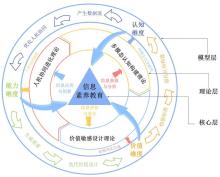
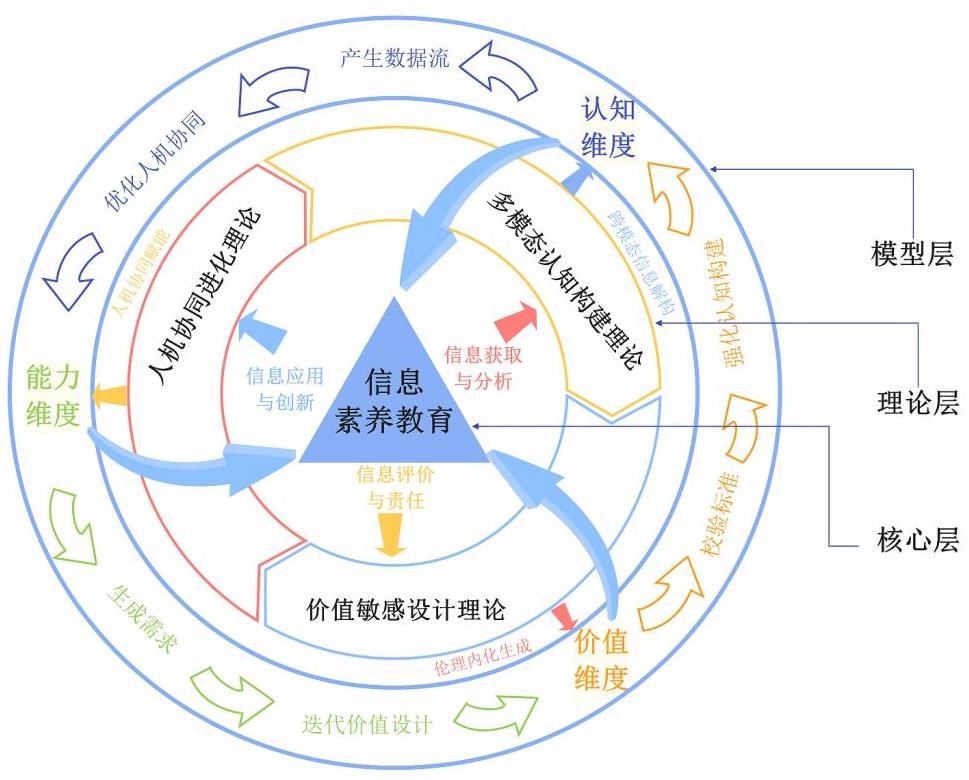
Fig.1

A multidimensional theoretical framework for GAI-driven information literacy education"

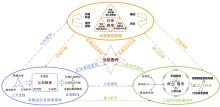
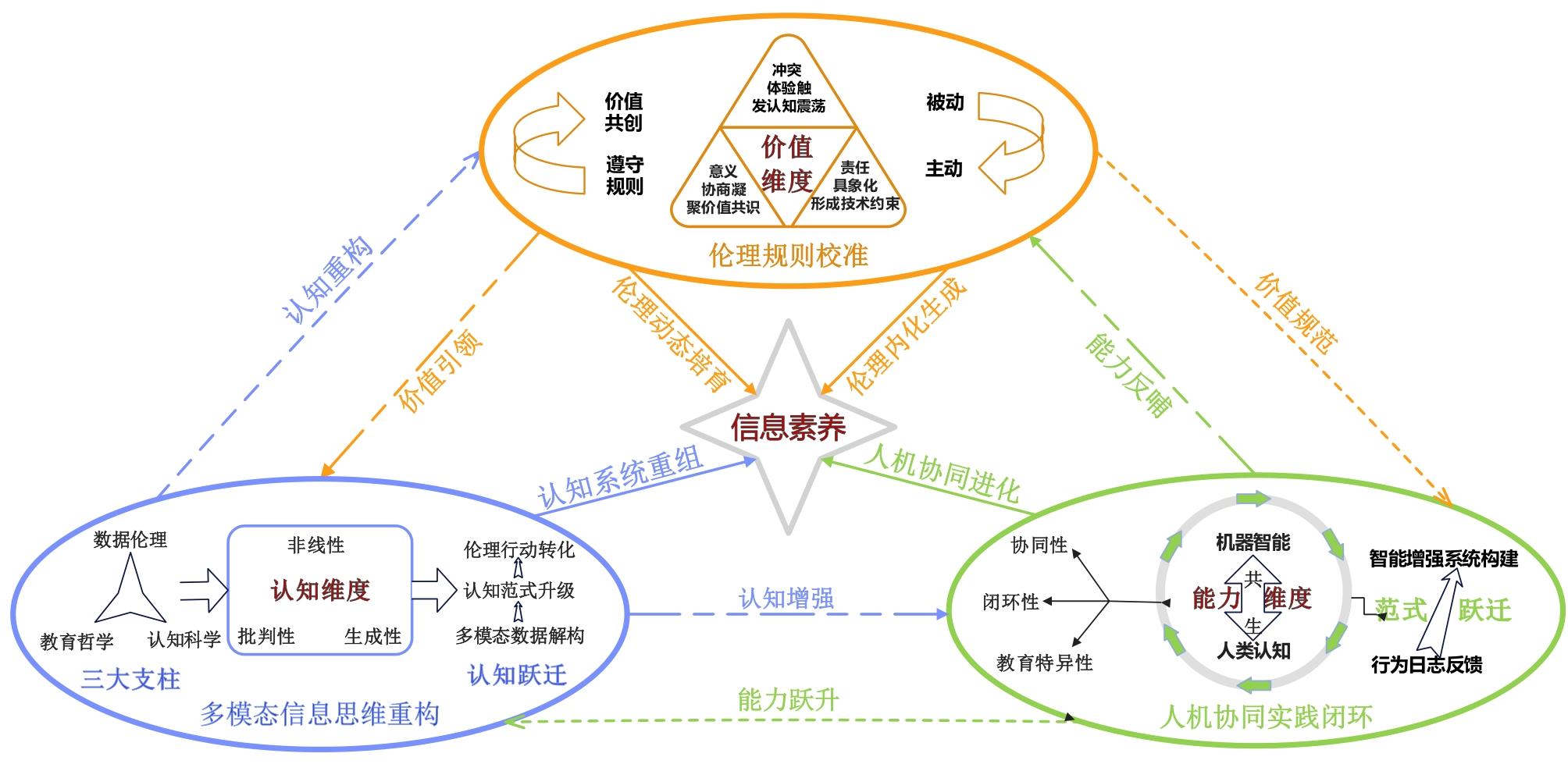
Fig.2

The design framework of the "cognition-competence-value" three-dimensional spiral model"

Table 1

The interdimensional mutual-driving mechanism of the three-dimensional spiral model"

维度 核心作用 驱动关联路径 技术实现载体 说明
认知维度 信息解构,思维奠基 →价值引领→认知重构 改进型跨模态模型 用于图文语义对齐
能力维度 人机协同,实践转化 →能力反哺→价值重塑 动态知识图谱 适配学科知识
价值维度 伦理内化,行为引领 →价值规范→能力约束 伦理协议生成工具 生成算法公平性约束规则

Table 2

The 8-week teaching task design for the experimental group: A case study of petroleum engineering"

周次 核心任务主题 三维螺旋模型阶段与焦点 技术赋能路径与教学目的 核心学习产出与评估证据 价值融入与伦理审视要点
第1~3周(认知解构与重构)

多模态工程信息的解构与检索方案设计

任务:围绕“页岩气储层可压性评价”主题,解构学术论文、专利、工程报告、测井曲线图、压裂施工视频等异构资源,制定综合检索策略,以及对抗性生成与幻觉识别

认知维度:多模态信息解构、批判性评估

能力维度:跨库检索策略构建、智能工具初步协同

价值维度:确立数据源权威性评估与学术诚信底线

概念图谱辅助:利用知识图谱引擎,自动构建“可压性评价”核心概念(如脆性指数、地应力)的关系网络,辅助学生建立系统性知识框架

跨模态检索增强:借助跨模态语义关联模型,实现“测井曲线图”与“岩性描述文本”的关联检索,以提升信息查全率与关联发现能力

批判性思维训练:用GAI生成对立观点及包含逻辑漏洞的文本,引导学生进行批判性辨析

《页岩气储层可压性多模态信息资源解构报告》,包含专利、核心期刊、行业标准、工程数据的综合检索策略书(含具体检索式)

要求标注并论证所选数据源(如企业技术报告)的使用合规性与保密边界

在方案中明确区分开源数据与受限数据,强化知识产权意识

第4~6周

(能力实践与迭代)

工程数据的验证、分析与可视化呈现

任务:对检索到的多源数据进行清洗、验证与整合,利用数据分析工具完成初步分析并生成可视化图表,通过多轮迭代进行优化,以及生成基于多模态资源的创新方案设计与小组互评

认知维度:数据交叉验证、逻辑链构建

能力维度:人机协同数据分析、可视化设计、A/B测试

价值维度:实践负责任的数据处理与结果解读

数据分析迭代支持:基于检索增强生成技术的智能辅助系统,可针对学生提交的数据分析代码提供实时调试建议与算法优化策略

可视化设计启发:依据结构化数据,生成储层物性参数三维分布的初步可视化草图,为学生提供设计参考与优化起点

多模态创作创新及协作共享:提供多模态生成工具辅助创新表达,搭建知识共享平台支持小组互评与协作优化

《多源数据驱动的储层可压性分析迭代报告》、一套交互式可视化仪表盘,以及多模态创新方案(如科普视频、创新实验方案)和小组互评反馈报告

在报告中必须设立“数据局限性”章节,诚实地讨论样本偏差、测量误差对结论的影响

对智能工具生成的可视化草图进行人工校验与修正,并在成果中明确说明人工干预部分与工具辅助的贡献

第7~8周

(综合迁移与闭环)

工程决策模拟与综合成果答辩

任务:基于前期分析,模拟完成一份“某区块压裂方案优先顺序”决策建议书,并进行公开答辩,接受综合性质询

认知维度:综合决策思维、知识迁移应用

能力维度:复杂问题系统求解、成果规范化表达

价值维度:技术决策的伦理评估、主体责任闭环

成果规范化辅助:智能工具辅助检查报告格式、参考文献著录的规范性,帮助学生生成符合学科写作规范的初稿

决策伦理情境模拟:在虚拟仿真环境中,预设“经济效益最大化”与“水资源消耗最小化”等冲突目标,让学生在权衡与论证中体验技术决策的伦理复杂性

《XX区块压裂方案优先顺序决策建议书》,答辩展示材料及针对伦理与社会维度质询的回应记录

在决策建议书中,需明确阐述方案排序所依据的多元价值准则(如环境可持续性、经济效益、技术可行性)

答辩环节专门设置“利益相关者视角”提问(如环保部门、社区居民),训练学生在技术沟通中展现社会责任意识

Table 3

Comparative assessment of the teaching experiment outcomes based on the three-dimensional spiral model"

评估维度 核心指标 实验组表现 对照组/基准表现 统计分析结果

技术效能

(定量指标)

检索准确率 Jaccard相似度 0.89 0.68 提升显著,技术效能核心指标
检索效率 单位时间有效结果数(项/小时) 32.6±5.4 较对照组提升53% 效率实现突破性提升
系统响应性 反馈响应周期

<8小时

(储层建模场景)

传统模式约72小时 响应速度提升近9倍,基于毫秒级日志分析
学科场景查全/查准率 查全率(Recall)/查准率(Precision)

0.91/0.83

(石油工程场景)

验证模型在复杂专业任务中的优越性

教育价值

(质性评价)

综合素养水平 CTIC标准化测试(信息意识、工具应用、伦理认知) 三大模块得分显著提升 高阶能力(如复杂检索、证据链整合)提升尤为突出
创新能力分布 创新应用水平标准差 6.5 4.2 标准差扩大54.8%,表明差异化、创造性培养效果显著
学习者满意度 Likert 5级评分问卷

动态案例生成:4.82

即时反馈:4.76

关键教学功能获高度认可
学习激励认可度 91.7%学生认可 个性化适配机制有效提升学习动机
系统与算法效能 可持续性与迁移 跨场景迁移平均适配准确率 82.5%(跨领域) 知识图谱自更新率1.2%/日,系统具备进化与泛化能力
算法公平性 跨学科术语语义误解率 3.2% 优化前6.8% 误解率降低53%;学科分布通过卡方检验(χ²=7.34,p=0.12)
错误类型分析 AI助教响应错误(混淆矩阵分析) 语义误解率≤3.2% 用于持续优化算法可靠性
整体实验显著性 组间差异检验 独立样本t检验 主要定量与质性指标均呈现显著差异 对照组 证实模型干预的有效性
效应量 Cohen's d 1.37 大效应量,佐证实践成效的显著性与实际价值
深层机制验证 认知解构效率 提升比例 +42%(CLIP改进模型驱动) 验证认知维度技术路径的有效性
高阶能力培养周期 缩短比例 -60%(RAG技术驱动) 验证能力维度赋能路径的有效性
价值观内化效率 提升倍数 3.8倍(伦理沙盒具身化实践驱动) 验证价值维度培育机制的有效性
数据与伦理合规 隐私保护 行为日志处理 采用差分隐私加密(ε=0.1) 常规处理 确保实验全过程符合《个人信息保护法》要求
[1]
中华人民共和国教育部办公厅. 国家智慧教育平台数字教育资源入库出库管理规范[EB/OL]. [2025-12-30].
[2]
中华人民共和国教育部. 义务教育信息科技课程标准(2022年版)[EB/OL]. [2025-12-30].
[3]
中华人民共和国教育部. 中国教育现代化2035[EB/OL]. [2025-12-30].
[4]
中共中央国务院. 《教育强国建设规划纲要(2024-2035年)》[EB/OL]. [2025-12-30].
[5]
刘琼, 刘星, 刘桂锋. “人工智能+高等教育”应用场景下的AI素养框架研究[J]. 农业图书情报学报, 2024, 36(8): 43-55.
Liu Qiong, Liu Xing, Liu Guifeng. Framework of AI literacy for multi-role capabilities in future education: Based on typical cases of "AI+Higher education" application scenarios[J]. Journal of Library and Information Science in Agriculture, 2024, 36(8): 43-55.
[6]
朱莎, 杨洒, 韵俏丽, 等. 信息科技课程教学实施困境、归因与突围[J]. 中国电化教育, 2024(8): 25-32.
Zhu Sha, Yang Sa, Yun Qiaoli, et al. The dilemma, attribution, and breakthrough of information science and technology curriculum teaching implementation[J]. China Educational Technology, 2024(8): 25-32.
[7]
Crompton H, Burke D. Artificial intelligence in higher education: The state of the field[J]. International Journal of Educational Technology in Higher Education, 2023, 20(1): 22.
[8]
王晶莹, 杜蕾, 张登博. GAI赋能教育变革: 哲学审视、国际比较与未来进路[J]. 中国电化教育, 2025(3): 51-60.
Wang Jingying, Du Lei, Zhang Dengbo. GAI empowering educational transformation: Philosophical examination, international comparison, and future pathways[J]. China Educational Technology, 2025(3): 51-60.
[9]
闫宇娥. 基于学科核心素养的信息技术课程建设研究[J]. 数字通信世界, 2025(1): 244-246.
Yan Yu'e. Research on the construction of information technology courses based on core competencies[J]. Digital Communication World, 2025(1): 244-246.
[10]
孙晓瑜, 孟文杰, 张雪松, 等. 生成式人工智能赋能信息素养个性化教育模式研究[J]. 中国信息技术教育, 2025(15): 100-104.
Sun Xiaoyu, Meng Wenjie, Zhang Xuesong, et al. Research on personalized education mode of generative artificial intelligence empowering information literacy[J]. China Information Technology Education, 2025(15): 100-104.
[11]
吴云志, 于洋, 那春光. 高校数字信息素养教育的内涵、目标与对策[J]. 图书情报工作, 2023, 67(24): 3-12.
Wu Yunzhi, Yu Yang, Na Chunguang. The connotation, goals and countermeasures of digital information literacy education in colleges and universities[J]. Library and Information Service, 2023, 67(24): 3-12.
[12]
郭蕾蕾. 生成式人工智能驱动教育变革: 机制、风险及应对——以DeepSeek为例[J]. 重庆高教研究, 2025, 13(3): 38-47.
Guo Leilei. The mechanisms, risks and responses of generative artificial intelligence driving educational transformation: Taking DeepSeek as an example[J]. ChongQing Higher Education Research, 2025, 13(3): 38-47.
[13]
施栩婕, 袁帆, 李佳. 生成式人工智能环境下的搜索即学习: 技术路径、行为演化与伦理挑战[J]. 农业图书情报学报, 2025, 37(5): 40-57.
Shi Xujie, Yuan Fan, Li Jia. Searching as learning in the context of generative artificial intelligence: Technological pathways, behavioral evolution, and ethical challenges[J]. Journal of Library and Information Science in Agriculture, 2025, 37(5): 40-57.
[14]
Roberts D, Smith L J, Chen H, et al. Enhancing creativity through multimodal AI tools in digital storytelling[J]. Creativity and Education Journal,2023. 18(4): 501-517.
[15]
Smith P, Johnson L A, Adebayo K, et al. Impact of GPT-4 on accelerated learning outcomes in Nigerian classrooms[J]. Journal of Educational Technology, 2023.57(2): 210-225.
[16]
Martinez C, Rodriguez M, Schmidt L, et al. Ethical frameworks for mitigating bias in generative AI for education[J]. Ethics in Technology and Education, 2023, 15(1): 45-62.
[17]
Radford A, Kim J W, Hallacy C, et al. Learning transferable visual models from natural language supervision[C]//Proceedings of the 38th International Conference on Machine Learning(Virtual Only). The International Conference on Machine Learning (ICML), 2021: 8748-8763.
[18]
Barbosa P L S, do Carmo R A F, Gomes J P P, et al. Adaptive learning in computer science education: A scoping review[J]. Education and Information Technologies, 2024, 29(8): 9139-9188.
[19]
黄志南, 李根, 郑娅峰. 多模态大模型赋能科学教育高质量发展: 潜能、挑战与应用探索[J]. 中国电化教育, 2025(6): 60-69.
Huang Zhinan, Li Gen, Zheng Yafeng. Multimodal large models empower high-quality development of science education: Potential, challenges, and application exploration[J]. China Educational Technology, 2025(6): 60-69.
[20]
吴丹, 孙昕玦. 以人为本的人工智能素养教育探究: UNESCO教师和学生人工智能能力框架的解读与启示[J]. 农业图书情报学报, 2024, 36(8): 4-19.
Wu Dan, Sun Xinjue. Exploring human-centered AI literacy education: Interpretation and insights from UNESCO's AI competency framework for teachers and students[J]. Journal of Library and Information Science in Agriculture, 2024, 36(8): 4-19.
[21]
朱莎, 李嘉源, 况秀林, 等. 生成式人工智能何以赋能学生数字素养培育——基于信息科技课程的实证研究[J]. 中国电化教育, 2025(2): 75-83.
Zhu Sha, Li Jiayuan, Kuang Xiulin, et al. How can generative artificial intelligence enable students' digital literacy cultivation: - An empirical study based on information science and technology curriculum[J]. China Educational Technology, 2025(2): 75-83.
[22]
王换超, 郑燕林, 马芸. 技术支持下批判性思维培养研究的主题谱系与发展趋势——基于HistCite和VOSviewer的文献可视化分析[J]. 现代教育技术, 2022, 32(9): 46-54.
Wang Huanchao, Zheng Yanlin, Ma Yun. Thematic pedigree and development trend of critical thinking cultivation research supported by technology - Literature visualization analysis based on HistCite and VOSviewer[J]. Modern Educational Technology, 2022, 32(9): 46-54.
[23]
陈晓宇, 王赟, 王春悦. I-model理论视角下人工智能驱动的信息资源管理研究[J]. 情报资料工作, 2025, 46(3): 5-12.
Chen Xiaoyu, Wang Bin, Wang Chunyue. Research on information resource management driven by artificial intelligence from the perspective of I-model theory[J]. Information and Documentation Services, 2025, 46(3): 5-12.
[24]
Zhou Cong, Ren Tefu, Lang Lin. The impact of AI-Based adaptive learning technologies on motivation and engagement of higher education students[J]. Education and Information Technologies, 2025, 30(16): 22735-22752.
[25]
Chan C K Y, Hu Wenjie. Students' voices on generative AI: Perceptions, benefits, and challenges in higher education[J]. International Journal of Educational Technology in Higher Education, 2023, 20(1): 43.
[26]
UNESCO. Ethics of artificial intelligence in education[EB/OL]. [2025-12-30].
[27]
Noble S U. Algorithms of oppression: How search engines reinforce racism[M]. New York: NYU Press, 2018.
[28]
卢新元, 徐安琪, 张进澳. 探寻可解释人工智能(XAI)的“解释奇点”: 基于AIGC信息采纳视角[J]. 数据分析与知识发现, 2026, 10(1): 76-87.
Lu Xinyuan, Xu Anqi, Zhang Jin'ao. Exploring the "explanatory singularity" of explainable artificial intelligence (XAI): From the perspective of AIGC information adoption[J]. Data Analysis and Knowledge Discovery, 2026, 10(1): 76-87.
[29]
Martínez A R, García M A, Romero C. An ethical framework for data-driven education[J]. Learning Media and Technology, 2022, 47(3): 281-295.
[30]
UNESCO. Recommendation on the ethics of artificial intelligence[M]. Paris: UNESCO Publishing, 2021.
[31]
Wang Shutao, Yan Ru, Hu Wenjing. Thorough exploration or superficial engagement: Relationship between generative artificial intelligence acceptance and college students' learning outcomes in different use contexts[J]. Education and Information Technologies, 2026, 31(3): 647-673.
[32]
乐颖, 刘永贵, 张义兵, 等. 基于GAI的对话驱动人机协同知识建构模式构建与实践研究[J]. 中国电化教育, 2025(6): 28-36.
Le Ying, Liu Yonggui, Zhang Yibing, et al. Research on the construction and practice of a dialogue-driven human-machine collaborative knowledge construction model based on GAI[J]. China Educational Technology, 2025(6): 28-36.
[33]
荆洲, 杨启光. 生成式人工智能赋能教育研究范式变革: 机理、风险与对策[J]. 中国电化教育, 2024(3): 68-75.
Jing Zhou, Yang Qiguang. AIGC enabling paradigm change in educational research: Mechanisms, risks and countermeasures[J]. China Educational Technology, 2024(3): 68-75.
[1] JIANG Jingze, ZHOU Tianmin, LI Mei, CHENG Cheng, CHEN Haiyan. A study of the Core Competence Model of Compound AI Librarians in the Intelligent Transformation of University Libraries [J]. Journal of library and information science in agriculture, 2025, 37(9): 97-109.
[2] SHEN Hongjie, SHEN Hongwei, WANG Junli. Generative AI Empowering Information Literacy Education in Digital Libraries: Path Exploration, Challenge Analysis, and Response Strategies [J]. Journal of library and information science in agriculture, 2025, 37(7): 50-60.
[3] ZHANG Tao, WU Sihang. How Achievement Goal Orientation Influences College Students' Usage Behaviors of AI Tutoring Tools: An Empirical Study Based on Dual Mediation [J]. Journal of library and information science in agriculture, 2025, 37(7): 91-105.
[4] JIANG Yumeng. An Investigation and Enlightenment on the Current Status of AI Literacy Education in Nordic University Libraries [J]. Journal of library and information science in agriculture, 2025, 37(7): 19-34.
[5] ZHAI Jun, MENG Zihan, LI Fangsu, SHEN Lixin. AI Guides in Research Libraries of North America under the AI4S Context: Based on the Survey of 125 ARL Libraries [J]. Journal of library and information science in agriculture, 2025, 37(7): 35-49.
[6] DAI Xinwei, LI Feng. Enlightenment of AI Literacy Educational Designs and Practices at Japanese MDASH Literacy-level Approved Universities [J]. Journal of library and information science in agriculture, 2025, 37(5): 86-101.
[7] ZHANG Weichong, XU Chen, ZHU Yiran. Cultivation Path of AI Literacy for Grassroots Civil Servants Based on the Integrated TAM-IDT Model [J]. Journal of library and information science in agriculture, 2025, 37(5): 72-85.
[8] SUN Lijuan. Exploring the Transition of Public Librarians to "Prompt Librarians" from the Perspective of New Quality Productive Forces [J]. Journal of library and information science in agriculture, 2025, 37(1): 17-32.
[9] LUO Guofeng, YI Tong, YAN Zhouzhou. Critical Information Literacy Education in University Libraries from the Perspective of AIGC Application [J]. Journal of library and information science in agriculture, 2025, 37(1): 47-58.
[10] Huimin HE. Reader Knowledge Construction in Public Library Information Literacy Education based on the MOA Model [J]. Journal of library and information science in agriculture, 2024, 36(9): 58-69.
[11] Fan YUAN, Jia LI. Opportunities, Challenges, and Future Directions for Generative Artificial Intelligence in Library Information Literacy Education: A Scoping Review [J]. Journal of library and information science in agriculture, 2024, 36(9): 44-57.
[12] Qiong LIU, Xing LIU, Guifeng LIU. Framework of AI Literacy for Multi-role Capabilities in Future Education: Based on Typical Cases of "AI + Higher Education" Application Scenarios [J]. Journal of library and information science in agriculture, 2024, 36(8): 43-55.
[13] Shuyi WANG, Wen ZENG, Weishi ZHANG, Junjie LI. Addressing the Knowledge Worker AI Literacy Gap with AI Technology [J]. Journal of library and information science in agriculture, 2024, 36(8): 20-33.
[14] Baiyang LI, Rong SUN. Construction of an AI Literacy General Education Curriculum Based on "Knowledge-Skills" Navigation [J]. Journal of library and information science in agriculture, 2024, 36(8): 34-42.
[15] Dan WU, Xinjue SUN. Exploring Human-centered AI Literacy Education: Interpretation and Insights from UNESCO's AI Competency Framework for Teachers and Students [J]. Journal of library and information science in agriculture, 2024, 36(8): 4-19.
Viewed
Full text


Abstract

Cited

  Shared   
  Discussed   
No Suggested Reading articles found!