中文    English

Journal of library and information science in agriculture


Construction and Application of Complex Historical Event Evolution Graph Enabled by AI

KOU Leilei1,2, ZHU Zhongming1,2, WANG Sili3()   

  1. 1. Data Intelligence Laboratory of Tibetan Plateau Humanistic Environment, Lanzhou 730000
    2. Institute of Tibetan Plateau Humanistic Environment, Lanzhou University, Lanzhou 730000
    3. Northwest Institute of Eco-Environment and Resources, Lanzhou 730000
  • Received:2026-01-20 Online:2026-04-22
  • Contact: WANG Sili

Abstract:

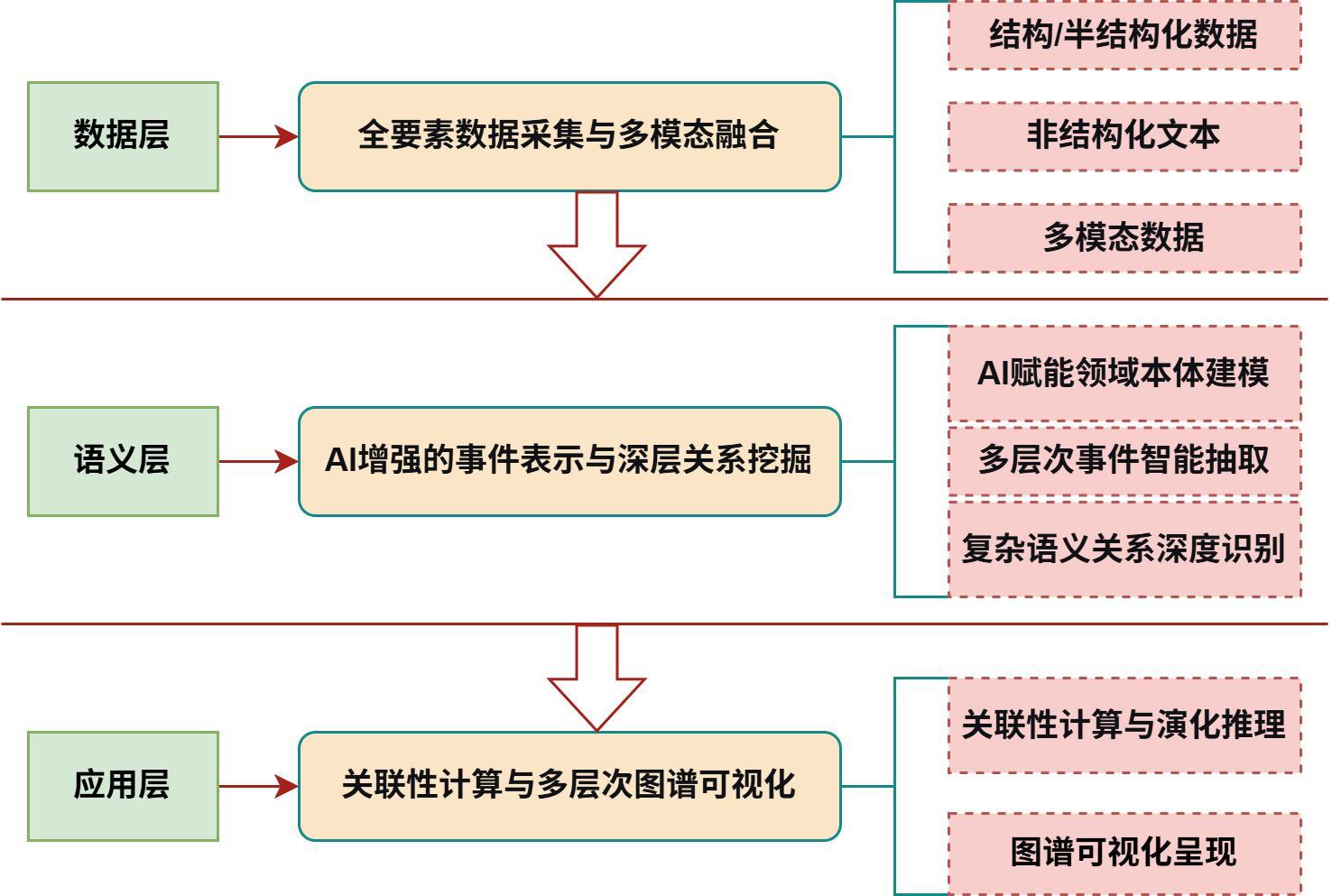
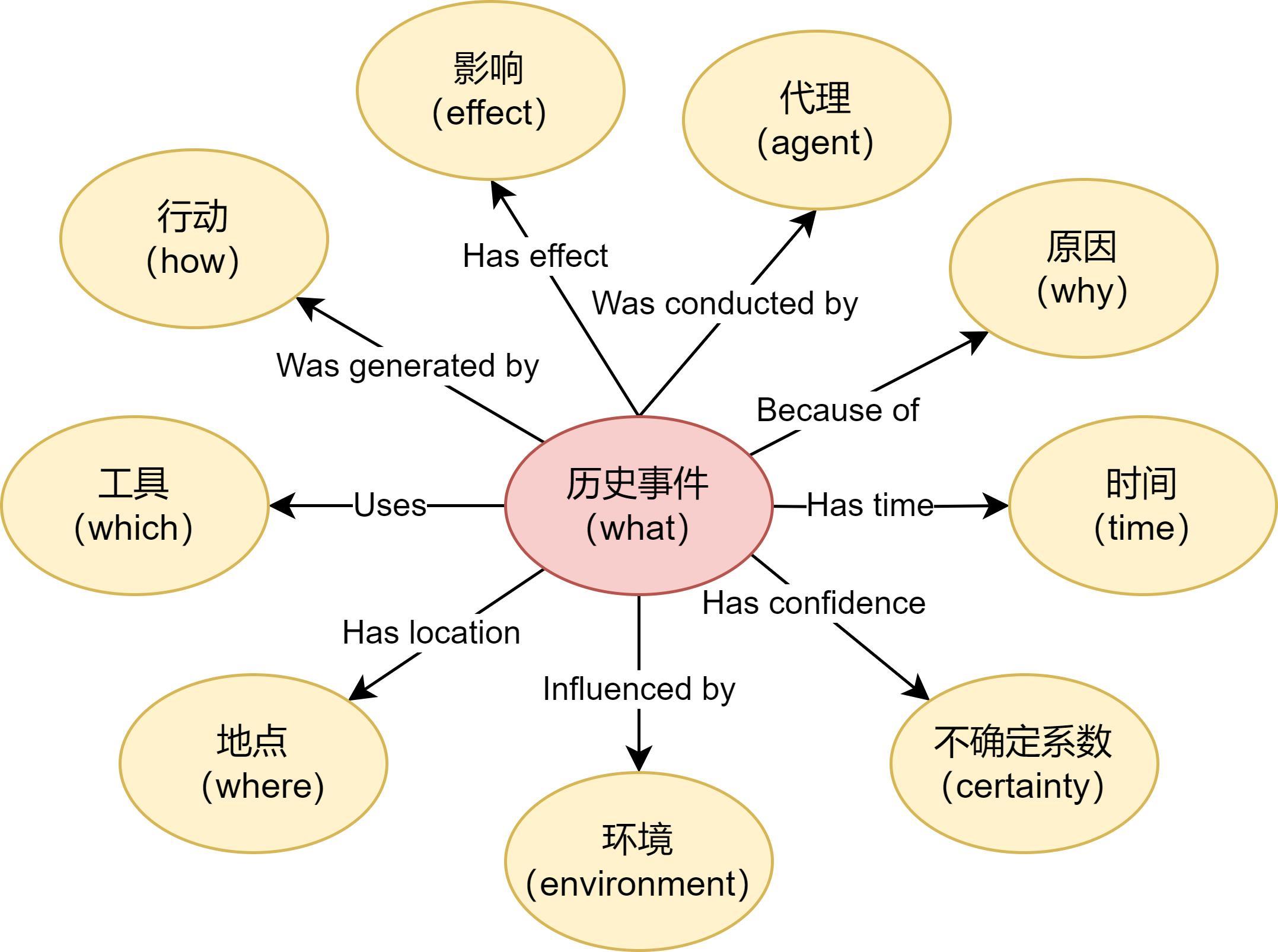
[Purpose/Significance] To address the issues of knowledge dispersion, redundancy, and fragmentation within the organization of complex historical events, this study employs the event evolution graph method. It explores their potential applications in the semantic organization of historical events and the structured representation of historical knowledge. The aim is to enhance the discoverability, reusability, and semantic relevance of historical data, while broadening the theoretical framework and practical approaches of the event evolution graph in historical research. [Method/Process] First, we constructed a three-layer framework for complex historical event, consisting of a data layer, a semantic layer, and an application layer. The data layer enables the collection of all event elements and supports multimodal integration, including text, images, and maps. The semantic layer implements AI-enhanced event representation and deep relationship mining. The application layer performs correlation calculation and multi-level graph visualization, allowing users to interactively explore event structures and semantic pathways. On this basis, three key tasks were carried out. First, AI-enhanced methods for representing and extracting complex historical events were designed. In particular, a dynamic ontology model for AI understanding was constructed based on the W7 model, formally represented as:e = {what, why, who, how, which, when, where, environment, effect, certainty}. This formalization systematically depicts event elements and their semantic relationships, capturing not only basic event components but also contextual factors, causal consequences, and the degree of historical certainty. Second, AI-enhanced methods for calculating the correlation of complex historical events were proposed. These methods combine rule-based reasoning with machine learning classifiers to identify and quantify semantic relationships such as causality, temporality, correlation, and hierarchy among events. A case study on a representative complex historical event was conducted to validate the proposed framework and methods. [Results/Conclusions] The study demonstrates that AI can improve the accuracy of extracting event elements and analyzing semantic relationships. This provides a feasible technical pathway for organizing historical knowledge computationally and providing intelligent services. The case study results show that the generated event evolution graph captures multi-level event structures and reveals previously implicit causal and evolutionary patterns. However, research in this field still faces challenges, including the scarcity of high-quality historical corpora, subjectivity when generalizing and decomposing events, and insufficient integration of multimodal information. In the future, we will focus on three directions: developing weakly supervised learning and transfer learning methods tailored to scenarios with sparse historical data; designing human-computer collaborative tools for event decomposition and relationship annotation to balance automation with scholarly interpretability; and constructing multimodal event evolution graph for complex historical events by incorporating visual, spatial, and audio data.

Key words: artificial intelligence, complex historical events, event evolution graph, 18th Army

CLC Number: 

  • G250

Fig.1

AI-enabled framework for constructing event evolution graph of complex historical events"

Fig.2

Conceptual model of complex historical events for AI understanding"

Table 1

The core classes of the HEO model"

名称 标签 描述
heo:event 历史事件 单个历史事件
prov:activity 活动 历史事件活动信息
heo:category 类别 历史事件的主题类型
schema:organization 组织 历史事件关联的机构或组织
foaf:person 人物 历史事件相关的人物
schema:place 地点 历史事件的地点信息
dct:date 时间 历史事件的时间信息
heo:instrument 举措 历史事件的政策或举措
heo:effect 影响 历史事件产生的社会影响
heo:cause 原因 历史事件发生的原因
heo:environment 环境 历史事件的环境信息
heo:collection 事件集合 复杂事件包含的相关子事件集合

Table 2

The core object property definitions of the HEO model"

属性 描述 定义域 值域
heo:has_subevent 有子事件 heo:event heo:subevent
heo:has_effect 产生…影响 heo:event heo:effect
heo:conducted _by 通过…实施 heo:event heo:instrument
heo:because _of 发生原因 heo:event heo:cause
heo:has_time 发生时间 heo:event dct:date
heo:influenced _by 受…影响 heo:event heo:environment
heo:has_location 发生地点 heo:event schema:place
prov:was generated by 由…生成 heo:event prov:activity
heo:has_certainty 关系置信度 heo:event [0,1]

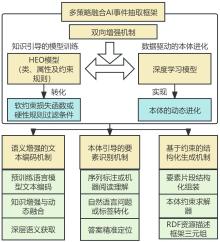
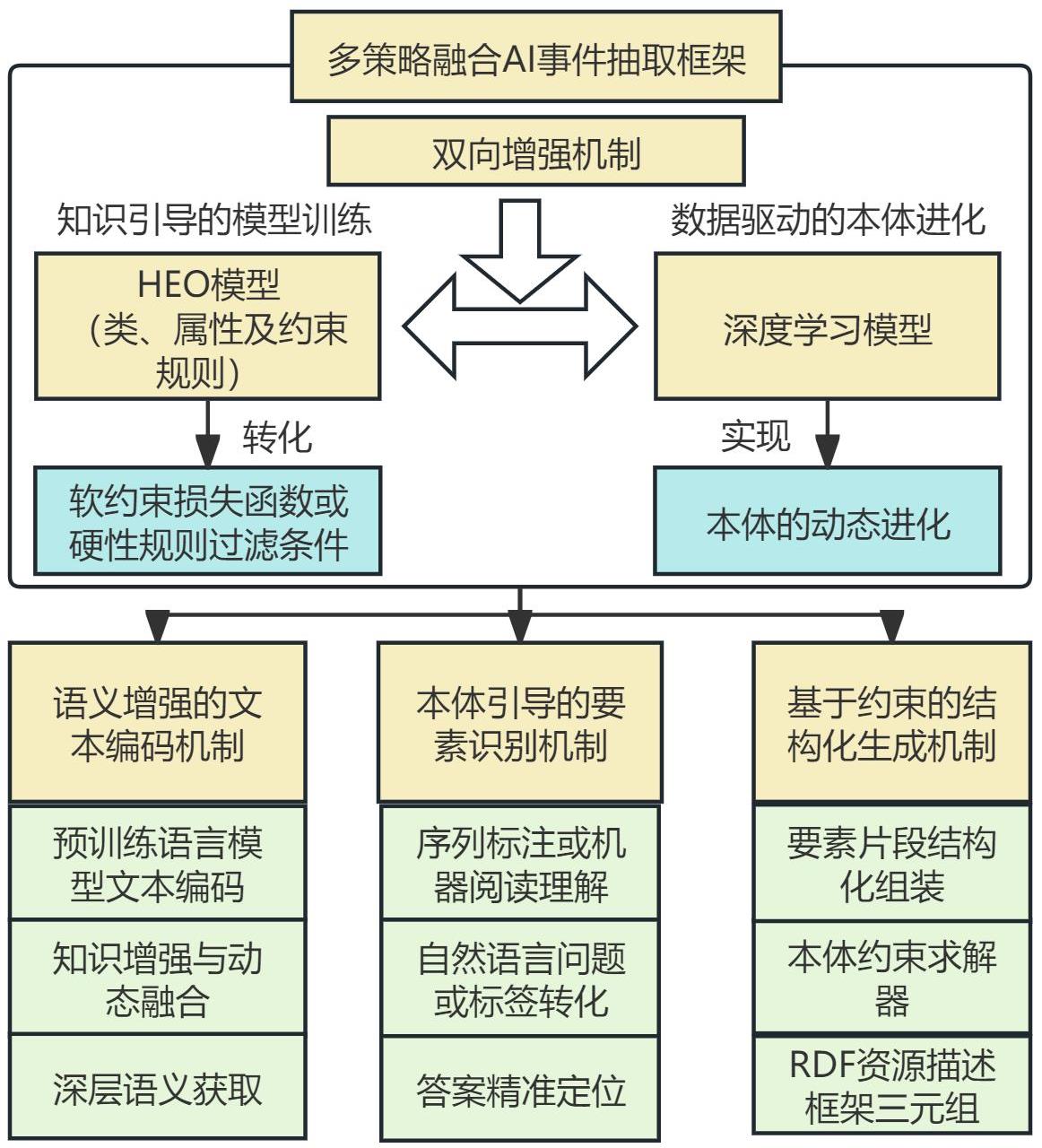
Fig.3

Framework of multi-strategy fusion AI event extraction"

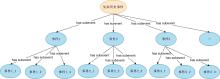
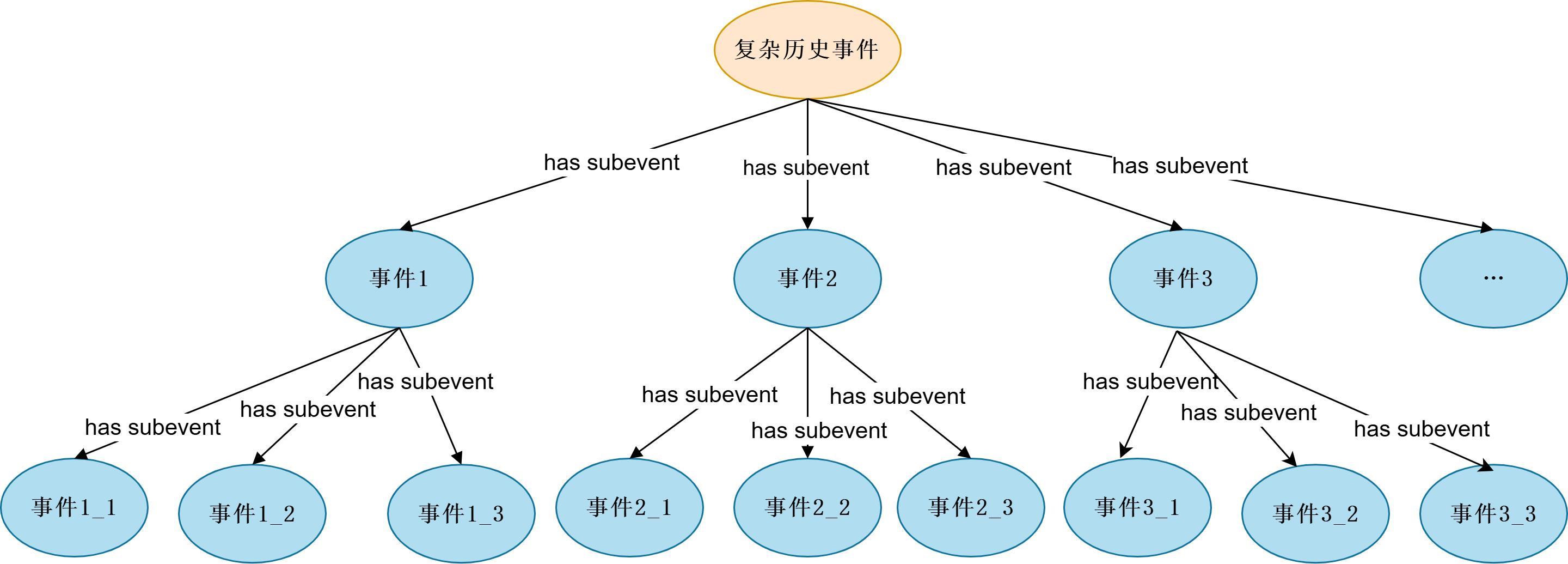
Fig.4

Example of hierarchical relationships in complex historical events"

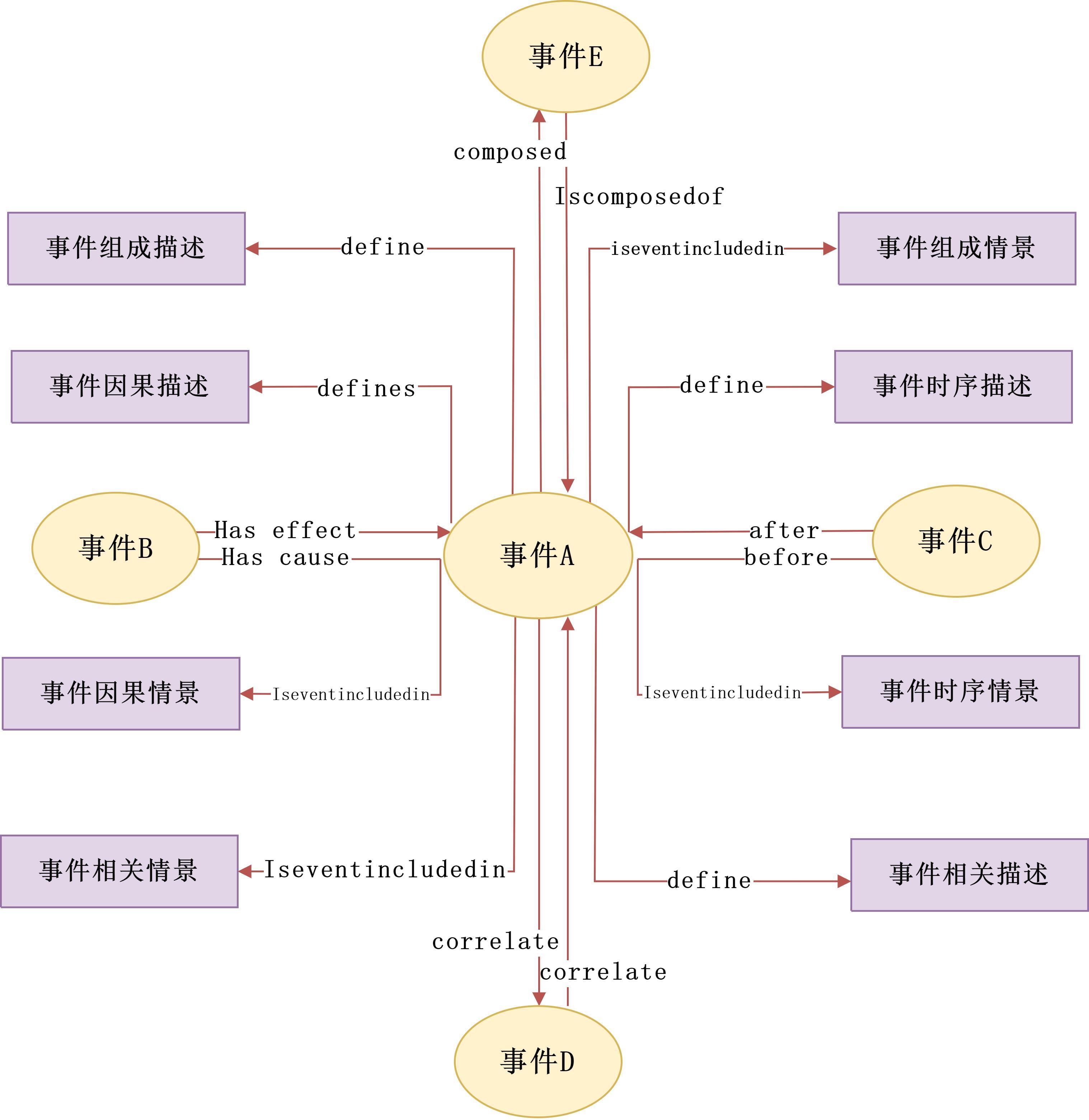
Fig.5

Examples of non-classification relationships in complex historical events"

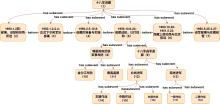
Fig.6

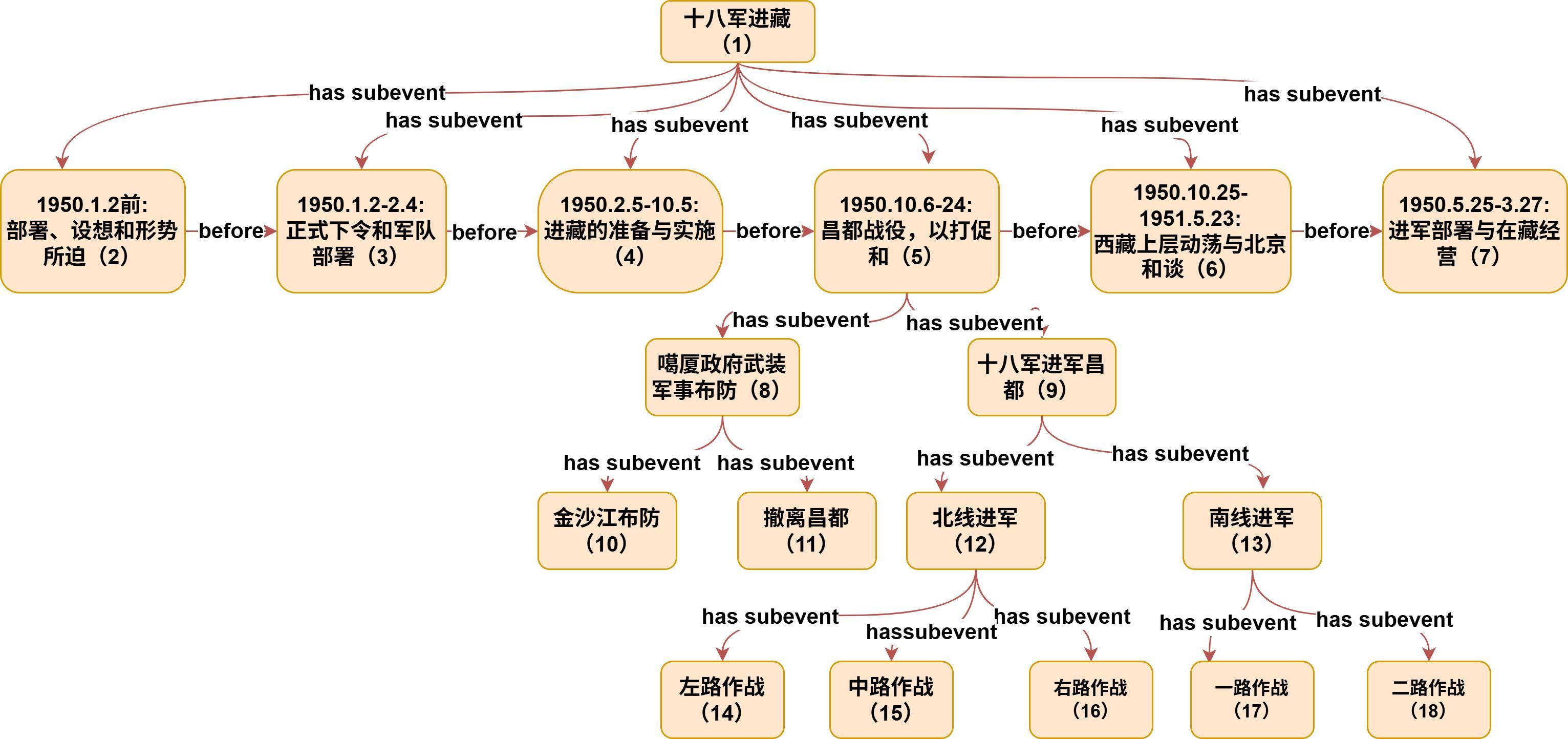
Example of the hierarchical relationship in the 18th Army's Entry into Xizang"

Fig.7

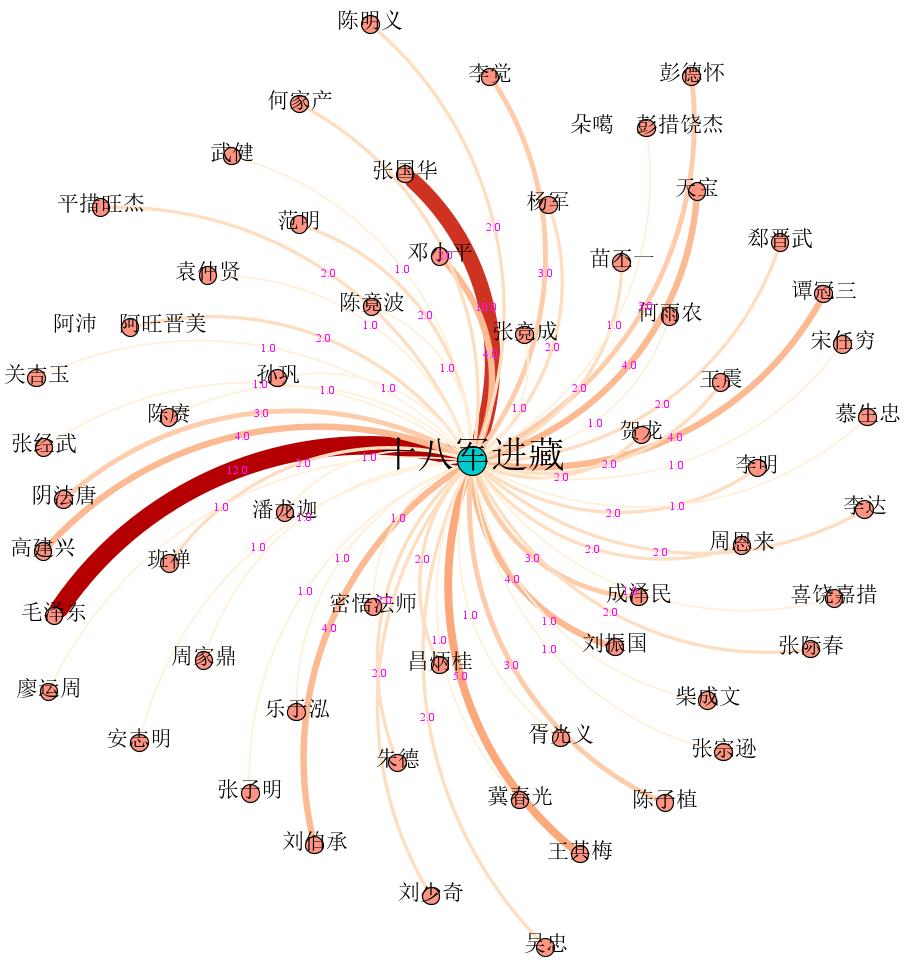
The figures associated with the 18th Army's Entry into Xizang"

[1]
陈海玉, 王聪, 陈雨, 等. 民间历史文献知识图谱构建——以徽州文书为例[J]. 图书馆论坛, 2022, 42(11): 141-150.
Chen Haiyu, Wang Cong, Chen Yu, et al. Building knowledge graphs for folk historical documents - Taking Huizhou documents for example[J]. Library Tribune, 2022, 42(11): 141-150.
[2]
仇婷. 基于知识图谱的红色档案资源关联挖掘[J]. 山西档案, 2025(12): 66-68.
Qiu Ting. Association mining of red archives resources based on knowledge map[J]. Shanxi Archives, 2025(12): 66-68.
[3]
Ding X, Li Z, Liu T, et al. ELG: An event logic graph[PP/OL]. arXiv(2019)[2026-04-10].
[4]
Schlieder C, Koho M, Ikkala E, et al. WarSampo knowledge graph: Finland in the Second World War as linked open data[J]. Semantic Web, 2021, 12(2): 265-278.
[5]
Goy A, Magro D, Rovera M. On the role of thematic roles in a historical event ontology[J]. Applied Ontology, 2018, 13(1): 19-39.
[6]
杨海慈, 王军. 宋代学术师承知识图谱的构建与可视化[J]. 数据分析与知识发现, 2019, 3(6): 109-116.
Yang Haici, Wang Jun. Visualizing knowledge graph of academic inheritance in song dynasty[J]. Data Analysis and Knowledge Discovery, 2019, 3(6): 109-116.
[7]
徐惠惠, 朱苏阳, 刘正涛. 事理图谱研究综述[J/OL]. 计算机工程与应用, 1-22[2026-03-11].
Xu Huihui, Zhu Suyang, Liu Zhengtao. A review of research on event evolution graph[J/OL]. Computer Engineering and Applications, 1-22[2026-03-11].
[8]
Ram S, Liu Jun. A semantic foundation for provenance management[J]. Journal on Data Semantics, 2012, 1(1): 11-17.
[9]
Lagoze C, Hunter J. The ABC Ontology and Model[J]. Journal of Digital Information, 2001, 2(2): 160-176.
[10]
van Hage W R, Malaisé V, Segers R, et al. Design and use of the simple event model (SEM)[J]. Journal of Web Semantics, 2011, 9(2): 128-136.
[11]
Scherp A, Franz T, Saathoff C, et al. f-a model of events based on the foundational ontology dolce+dns ultralite[J]. Journal of Web Semantics, 2017, 15(9): 182-196.
[12]
W3C. Geospatial ontologies[EB/OL]. [2025-10-24].
[13]
W 3C. PROV-O:The PROV ontology[EB/OL]. [2025-10-25].
[14]
DCMI metadata terms[EB/OL]. [2025-10-31].
[15]
上海图书馆. 人名规范库本体(shlnames)[EB/OL]. [2025-10-18].
[16]
中国历代人物(CBDB)[EB/OL]. [2025-10-20].
[17]
拉巴平措. 西藏通史-上-当代卷[M]. 北京: 中国藏学出版社, 2016.
[18]
张小康. 雪域长歌——西藏1949-1960[M]. 2版. 成都: 四川人民出版社, 2015.
[19]
第二野战军战史编委会. 第二野战军战史[M]. 北京: 解放军出版社, 2017.
[20]
降边嘉措. 第二次长征——进军西藏、解放西藏纪实[M]. 北京: 作家出版社, 2016.
[21]
魏克. 进军西藏日记[M]. 北京: 中国藏学出版社, 2011.
[22]
蔡文青. 喜马拉雅风云[M]. 北京: 华文出版社, 2012.
[23]
杨一真. 进军西藏日志——1950-1951[M]. 北京: 学苑出版社, 2016.
[24]
廖祖桂. 西藏的和平解放[M]. 北京: 中国藏学出版社, 1991.
[25]
黄可. 和平解放西藏重大事件实录[M]. 北京: 学苑出版社, 2013.
[26]
顾草萍. 解放西藏史[M]. 北京: 中共党史出版社, 2008.
[1] AN Lin. Governance of Personal Information Security in the Iteration of Generative AI: From the Perspective of the Technological Evolution of Large Models [J]. Journal of library and information science in agriculture, 2026, 38(4): 61-70.
[2] LI Baiyang, REN Shangsheng. Technical Evolution and Application Scenarios of Open-Source Agents:A Case Study of "OpenClaw" [J]. Journal of library and information science in agriculture, 2026, 38(4): 23-35.
[3] HU Anqi. Construction of an Artificial Intelligence Literacy Ability Framework and Training System for College Students [J]. Journal of library and information science in agriculture, 2026, 38(2): 42-55.
[4] HUANG Xiaotang, YAO Qibin. Collaborative Development Path of GLAM Institutions Based on AIGC Technology Application [J]. Journal of library and information science in agriculture, 2026, 38(2): 66-78.
[5] YI Chenhe, ZHANG Yuting. Risk Assessment and Early Warning of Generative Artificial Intelligence Impact on Network Public Opinion Based on Optimized BP Neural Network [J]. Journal of library and information science in agriculture, 2026, 38(2): 30-41.
[6] GUO Hailing, ZENG Meiyun, FENG Yuxi. Model Construction and Strategies for AI-enabled University Library Services to Facilitate Scientific and Technological Achievement Transformation [J]. Journal of library and information science in agriculture, 2026, 38(2): 56-65.
[7] ZHANG Ling. Integrating Digital Humanities and Agricultural Knowledge Services A Simulation Modeling Perspectives [J]. Journal of library and information science in agriculture, 2026, 38(2): 79-89.
[8] JIANG Jingze, ZHOU Tianmin, LI Mei, CHENG Cheng, CHEN Haiyan. A study of the Core Competence Model of Compound AI Librarians in the Intelligent Transformation of University Libraries [J]. Journal of library and information science in agriculture, 2025, 37(9): 97-109.
[9] SHEN Hongjie, SHEN Hongwei, WANG Junli. Generative AI Empowering Information Literacy Education in Digital Libraries: Path Exploration, Challenge Analysis, and Response Strategies [J]. Journal of library and information science in agriculture, 2025, 37(7): 50-60.
[10] DONG Ke, SONG Yuchen, WU Jiachun. Layout and Characteristics of European AI Data Governance Policy [J]. Journal of library and information science in agriculture, 2025, 37(7): 4-18.
[11] ZHAI Jun, MENG Zihan, LI Fangsu, SHEN Lixin. AI Guides in Research Libraries of North America under the AI4S Context: Based on the Survey of 125 ARL Libraries [J]. Journal of library and information science in agriculture, 2025, 37(7): 35-49.
[12] SHI Xujie, YUAN Fan, LI Jia. Searching as Learning in the Context of Generative Artificial Intelligence: Technological Pathways, Behavioral Evolution, and Ethical Challenges [J]. Journal of library and information science in agriculture, 2025, 37(5): 40-57.
[13] CHEN Jiayong, GONG Jiaoteng, WANG Yuyi. Research of Interdisciplinary Comparison and Collaborative Paradigm on the Concept of Agent in Library Science [J]. Journal of library and information science in agriculture, 2025, 37(5): 27-39.
[14] ZHANG Li, WANG Bo, JING Shui. Generative AI-Driven Resource Discovery in Public Libraries: Service Optimization Based on a Dynamic Evaluation Model [J]. Journal of library and information science in agriculture, 2025, 37(5): 58-71.
[15] GOU Ruike, LUO Wei. Influencing Factors of Continuous Use Intention of "Generation Z" Users of an AIGC Platform [J]. Journal of library and information science in agriculture, 2025, 37(3): 66-80.
Viewed
Full text


Abstract

Cited

  Shared   
  Discussed   
No Suggested Reading articles found!