中文    English

Journal of library and information science in agriculture


Behavioral Pathways and Influencing Factors of UGC Community Users' Content Update Prompting Behavior

ZHANG Xintong1, DENG Xiaozhao2()   

  1. 1. College of Business and Trade, Southwest University, Chongqing 402460
    2. College of Computer and Information Science, Southwest University, Chongqing 400715
  • Received:2025-11-06 Online:2026-03-18
  • Contact: DENG Xiaozhao

Abstract:

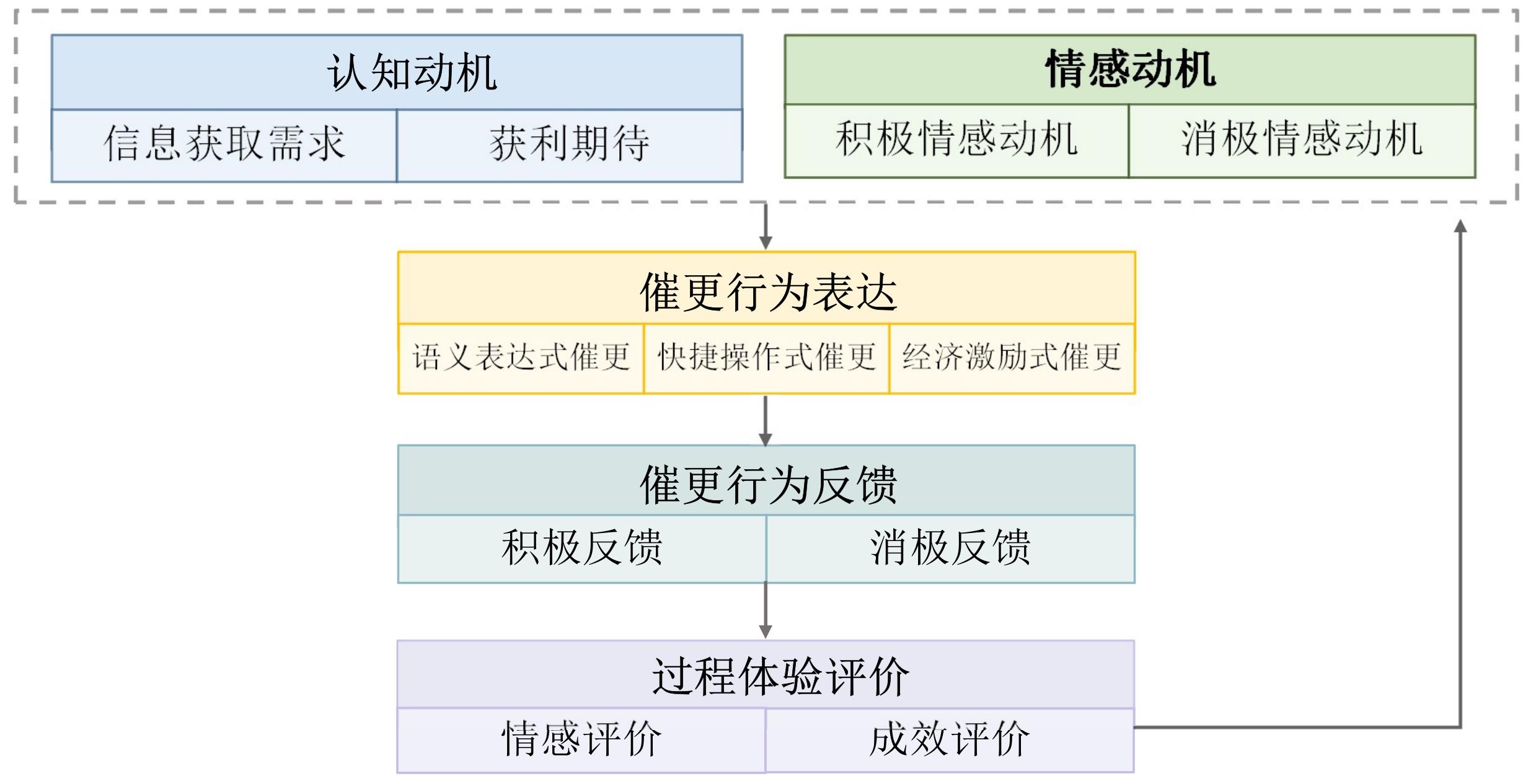
[Purpose/Significance] With the expansion of user-generated content (UGC) communities, users have increasingly engaged in interaction behaviors that go beyond passive consumption. Among these behaviors, urging creators to update content has emerged as a distinctive form of user participation. Unlike conventional feedback behaviors that respond to existing content, urging behavior is future-oriented and directly intervenes in the content production process, reflecting users' expectations, motivations, and relational orientations toward creators. Despite its growing visibility, research in the field of library and information science (LIS) rarely examines urging behavior as an independent object of analysis. Theoretical investigation of its behavioral logic and formation mechanisms remains deficient. This study aims to systematically explore how urging behavior emerges and evolves, and how it is shaped by multiple influencing factors. This will contribute to a deeper understanding of how users interact with information in UGC communities. [Method/Process] This study adopts the grounded theory approach, conducting in-depth interviews with 20 active users in the UGC communities. Data were collected and analyzed using Nvivo11 software through a three-level coding process, including open coding, axial coding, and selective coding. [Results/Conclusions] The study constructs two interrelated analytical models. First, a dynamic behavioral pathway model is developed, revealing urging behavior as a cyclical process. The process is initially triggered by either cognitive motivations or emotional motivations. These motivations drive users to engage in three distinct types of urging behavior: semantic expression-based urging, quick operation-based urging, and economic incentive-based urging. Users then receive positive or negative feedback from creators or the community, which leads them to conduct subjective evaluations of their urging experience in terms of emotional responses and perceived effectiveness. These evaluations subsequently influence users' future motivations, forming a continuous feedback loop. Second, a comprehensive influencing-factor model is established, identifying five categories of core factors: user characteristics, content attributes, creator attributes, platform characteristics, and situational factors. The study further clarifies the complex interactions among these factors. User-related factors and content-related factors exert direct effects on urging behavior. Content factors and creator factors also generate indirect effects through the mediating role of user factors. In contrast, platform characteristics and situational factors function as moderating variables that shape the strength of the relationship between user factors and urging behavior. Together, these findings provide a nuanced explanation of why and how users engage in urging behavior. The study discusses the theoretical contributions of integrating the behavioral pathway model with the influencing-factor model and offers preliminary practical implications for platform governance and creator strategies. Limitations include the qualitative nature of the study and the relatively small sample size. Future research is encouraged to conduct quantitative validation and cross-platform comparative analyses to further extend these findings.

Key words: UGC community, content update prompting behavior, grounded theory, behavioral pathways, AI dependence, internet addiction, information behavior

CLC Number: 

  • G252

Table 1

Basic information of the interviewees"

编号 性别 年龄/岁 学历 是否有过催更行为
a1 18 高中
a2 50 中专
a3 34 本科
a4 44 本科
a5 24 本科
a6 22 本科
a7 25 初中
a8 22 本科
a9 24 硕士研究生
a10 25 硕士研究生
a11 34 本科
a12 27 本科
a13 41 高中
a14 36 大专
a15 21 本科
a16 23 本科
a17 23 硕士研究生
a18 29 大专
a19 28 本科
a20 30 中专

Table 2

Open coding and categorization"

编号 范畴化 初始概念
A1 信息获取需求 a15知识获取;a3生活技巧获取;a4娱乐信息获取;a16决策信息获取;a7满足好奇心
A2 获利期待 a17参与抽奖;a2获得优惠券
A3 积极情感动机 a14表达对博主的热爱;a3与社区成员互动;a9提供情绪价值;a6谋求认同
A4 消极情感动机 a5更新不及时;a7比较其他创作者;a17情节发展拖沓
A5 语义表达式催更 a7评论区玩梗;a3私信;a2弹幕评论
A6 快捷操作式催更 a5、a17使用催更按键;a2一键催更
A7 经济激励式催更 a8买催更票、a5打赏催更
A8 积极反馈 a2、a17收到积极回复
A9 消极反馈 a18、a11从未收到回应
A10 情感评价 a6收到回复高兴;a1与他人交流很满足;a12获得成就感;a2未接收反馈失望
A11 成效评价 a12催更有效;a11催更无效;a15获得知识
A12 用户性格 a17性格冲动;a1比较耐心;a13乐于表达;a2性格外向
A13 情感依赖度 a4喜欢特定博主;a17每天必看;a2社交媒体依赖
A14 网络道德意识 a4避免过度催更的自我约束;a9对创作者的自主性尊重
A15 自我印象管理 a9催更太幼稚;a13催更不理智;a7留下好印象
A16 内容类型 a11催更连载型视频;a7催更未完结小说;a8催更生活vlog
A17 内容品质 a4内容有趣;a11内容深刻;a15专业性强;a16内容质量好
A18 更新特征 a1更新速度变慢;a2更新不稳定;a15公开创作进度
A19 情绪感染力 a4引起共鸣;a3内容合胃口;a11兴趣一致
A20 期待引导力 a11内容预告吸引人;a17引导用户参与创作;a13提高用户期待值
A21 创作者反馈 a13乐于接受催更;a2反馈态度冷淡;a11和粉丝积极互动;a8互动态度积极
A22 创作者口碑 a11对创作者个人品牌的信任;a1对创作者更新速度的了解信任;a12受众认可度信任
A23 创作者形象 a6性格随和;a16性格虚心包容;a17人设高冷
A24 技术便利性 a13催更便捷按键;a17互动程序繁琐
A25 同质内容数量 a13同质内容太多;a16同类竞品很多
A26 现有催更数量 a17催更数量多;a5点赞催更评论
A27 催更情境 a1用户时间;a10用户心境;a15外界干扰
A28 社区环境 a1社区氛围;a11文化定位;a14平台规则

Table 3

Axial coding results"

主范畴 子范畴 子范畴内涵
B1认知动机 A1 信息需求 用户出于对信息的不满足感或满足感而产生的对创作者更新内容的渴望与要求
A2 获利期待 用户对于创作者更新可能带来抽奖机会、红包奖励或其他形式的经济利益的心理预期
B2情感动机 A3 积极情感动机 由正向情感体验所激发的催更行为驱动力
A4 消极情感动机 由负向情感体验所激发的催更行为驱动力
B3催更行为表达 A5 语义表达式催更 用户通过评论、弹幕或者私信等方式发送具有催更意图的文字、图像或语音等内容向创作者催更
A6 快捷操作式催更 用户通过平台提供的快捷功能,仅需点击一个按钮或进行简单的一步操作,即可快速发送催更请求给创作者
A7 经济激励式催更 用户通过平台提供的经济支持功能,向创作者提供直接或间接的经济支持以激励创作者更快地完成更新
B4催更行为反馈 A8 积极反馈 用户催更后收到的正面回应,包括创作者对用户催更的积极回应或社区用户间的良性互动
A9 消极反馈 用户催更后遭遇的负面回应,包括创作者的忽视、拒绝或社群的冷漠。
B5过程体验评价 A10 情感评价 用户对催更行为过程产生的情感体验进行评价
A11 成效评价 用户对催更过程产生的效果或收获进行评价
B6用户因素 A12 用户性格 用户的人格特质
A13 情感依赖度 用户在情感上对特定社区或创作者及其内容的依恋程度
A14 自我印象管理 用户对自身网络形象进行塑造与维护的行为倾向
A15 网络道德意识 用户在网络环境中所遵循的道德规范或价值观,包括避免过度催更的自我约束以及对创作者的自主性尊重等
B7内容因素 A16 内容类型 根据创作者发布内容的形式、结构、风格或目的等特征划分的内容类别
A17 内容品质 创作者发布内容的质量,包括内容的创新性、启发性、趣味性和实用性等
A18 更新特征 更新内容过程中展现出的属性,包括更新速度、更新频率的稳定性,以及创作者创作进度的公开透明度
A19 情绪感染力 创作者发布内容激发用户产生与内容情绪相关的情绪体验的能力
A20 期待引导力 创作者所发布的内容所具备的引导用户对后续内容产生期待感的能力
B8创作者因素 A21 创作者反馈 创作者对读者催更行为的回应频率、态度以及与粉丝的互动程度
A22 创作者口碑 创作者的个人品牌、创作能力在受众群体中获得的综合评价和认可度
A23 创作者形象 创作者的性格特质或其在公开场合展现出的人设特点
B9平台因素 A24 技术便利性 平台提供的工具和功能在用户执行催更行为时的易用性
A25 同质内容数量 平台上由不同创作者发布的内容要素相似、缺乏独特性和创新性的内容总量
A26 现有催更数量 平台上针对同一位创作者的催更行为的现有数量
B10情境因素 A27 催更情境 用户所处的即时外部环境或个人临时状态
A28 社区环境 UGC社区的氛围、文化定位以及社区规范

Table 4

Selective coding results"

关系 关系结构 关系内涵
认知动机→UGC社区用户催更行为 构建关系 认知动机、情感动机、催更行为表达、催更行为反馈、过程体验评价构成了UGC社区用户催更行为的各阶段
情感动机→UGC社区用户催更行为
催更行为表达→UGC社区用户催更行为
催更行为反馈→UGC社区用户催更行为
过程体验评价→UGC社区用户催更行为
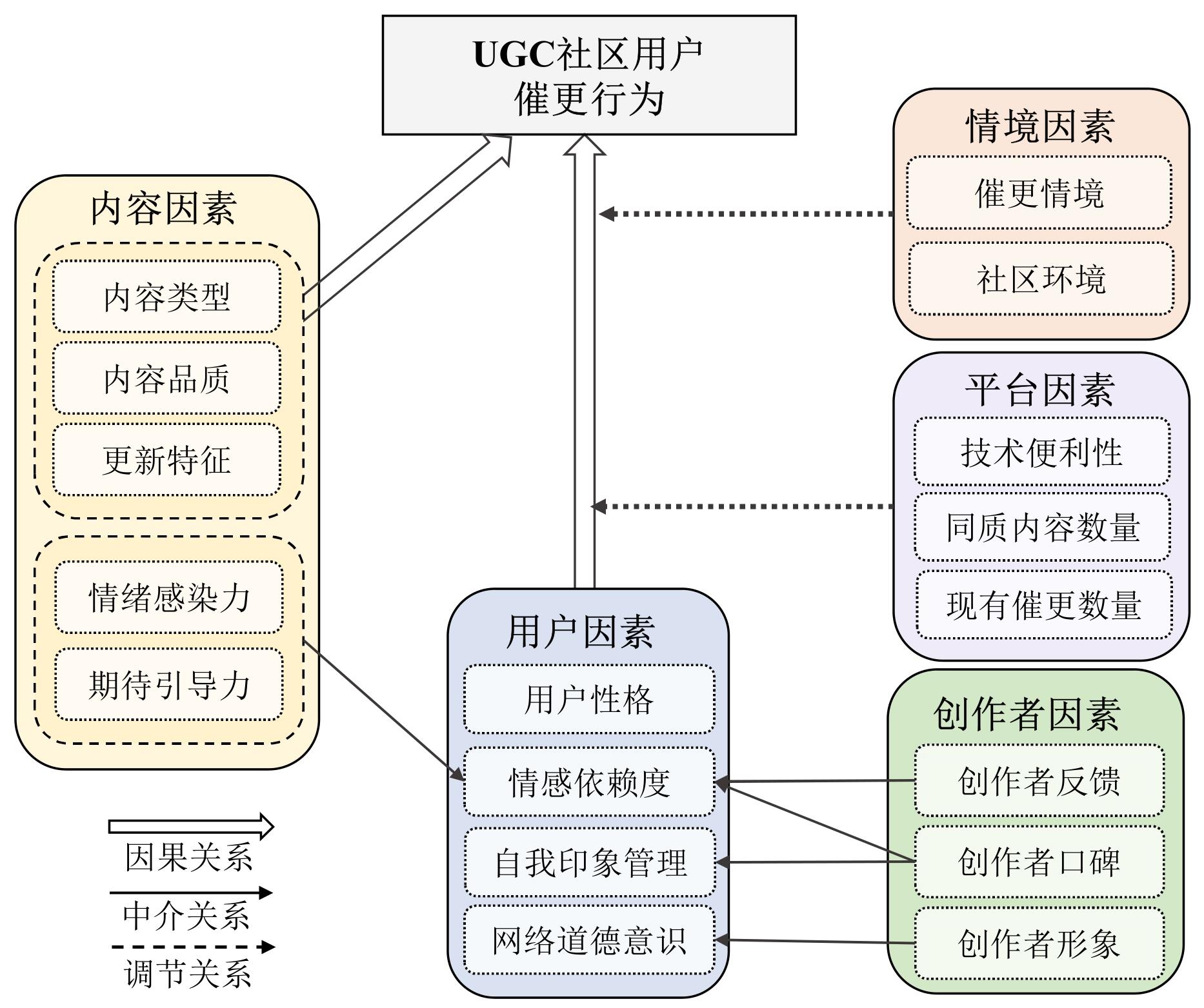
用户因素→UGC社区用户催更行为 因果关系 用户维度的相关变量会直接影响UGC社区用户的催更行为
内容因素→UGC社区用户催更行为 因果关系 内容维度的相关变量会直接影响UGC社区用户的催更行为
内容因素→用户因素→UGC社区用户催更行为 中介关系 内容维度的相关变量会影响用户维度的相关变量,进而影响UGC社区用户的催更行为
创作者因素→用户因素→UGC社区用户催更行为 中介关系 创作者维度的相关变量会影响用户维度的相关变量,进而影响UGC社区用户的催更行为
用户因素*平台因素→UGC社区用户催更行为 调节关系 平台维度的相关变量在用户因素对UGC社区用户的催更行为的影响中起调节作用
用户因素*情境因素→UGC社区用户催更行为 调节关系 情境维度的相关变量在用户因素对UGC社区用户的催更行为的影响中起调节作用

Fig.1

Theoretical model of user content update prompting behavior pathways in UGC communities"

Fig.2

Theoretical model of factors influencing user content updates prompting behavior in UGC communities"

[1]
赵宇翔, 范哲, 朱庆华. 用户生成内容(UGC)概念解析及研究进展[J]. 中国图书馆学报, 2012, 38(5): 68-81.
Zhao Yuxiang, Fan Zhe, Zhu Qinghua. Conceptualization and research progress on user-generated content[J]. The Journal of the Library Science in China, 2012, 38(5): 68-81.
[2]
van Dijck J. Users like you? Theorizing agency in user-generated content[J]. Media, Culture & Society, 2009, 31(1): 41-58.
[3]
Desanctis G. Who is the user Individuals, groups, communities[J]. Human-Computer Interaction and Management Information Systems: Foundations, 2006, 6: 48-57.
[4]
商务印书馆. 现代汉语词典[M]. 第7版. 北京: 商务印书馆, 2016: 223-444.
[5]
Wiktionary. 催更(cuīgēng)[EB/OL]. [2025-11-06].
催更.
[6]
张怡然. 新媒介语境下网络文学的主体间性研究[D]. 太原: 山西大学, 2023.
Zhang Yiran. Research on Intersubjectivity of Network Literature in the Context of New Media[D]. Taiyuan: Shanxi University, 2023.
[7]
蔡雯, 伊俊铭. 技术与加速: 新闻时间的数字变革、风险与规避路径[J]. 青年记者, 2023(14): 26-30.
Cai Wen, Yi Junming. Technology and acceleration: Digital change, risk and avoidance path of news time[J]. Youth Journalist, 2023(14): 26-30.
[8]
吴茜. UGC视频社区知识共享行为研究[D]. 成都: 四川大学, 2022: 41-42.
Wu Qian, Xi. Research on Knowledge Sharing Behavior of UGC Video Community[D]. Chengdu: Sichuan University, 2022: 41-42.
[10]
盛小平, 唐筠杰. 社会网络视角下虚拟学术社区用户交互特征及规律分析[J]. 现代情报, 2022, 42(1): 64-71.
Sheng Xiaoping, Tang Jun, YunJie. Analysis of user interaction characteristics and rules in virtual academic community from the perspective of social network[J]. Modern Information, 2022, 42(1): 64-71.
[11]
卢恒, 张向先, 吴雅威, 等. 基于扎根理论的学术APP用户信息交互行为影响因素研究[J]. 情报杂志, 2021, 40(4): 170-178.
Lu Heng, Zhang Xiangxian, Wu Yawei, et al. Research on influencing factors of academic APP user information interaction behavior based on grounded theory[J]. Journal of Intelligence, 2021, 40(4): 170-178.
[12]
Zhao Haichuan, Zhang Mingyue. The role of Guanxi and positive emotions in predicting users' likelihood to click the like button on WeChat[J]. Frontiers in Psychology, 2020, 11: 1736.
[13]
Sumner E M, Ruge-Jones L, Alcorn D. A functional approach to the Facebook Like button: An exploration of meaning, interpersonal functionality, and potential alternative response buttons[J]. New Media & Society, 2018, 20(4): 1451-1469.
[14]
孙悦, 黄微. 社交媒体平台用户参与的行为谱与行为层级模型构建[J]. 图书情报工作, 2022, 66(9): 40-52.
Sun Yue, Huang Wei. Construction of behavior spectrum and behavior hierarchy model of user participation on social media platforms[J]. Library and Information Service, 2022, 66(9): 40-52.
[15]
胡媛, 廖文涛, 艾欣怡, 等. 突发事件社交媒体用户观点变化研究——基于多层级微博评论视角[J]. 数字图书馆论坛, 2024, 20(8): 29-38.
Hu Yuan, Liao Wentao, Ai Xinyi, et al. Changing user perspectives on social media during sudden events: Based on multilevel weibo comments[J]. Digital Library Forum, 2024, 20(8): 29-38.
[16]
Li Ran, Lu Yaobin, Ma Jifeng, et al. Examining gifting behavior on live streaming platforms: An identity-based motivation model[J]. Information & Management, 2021, 58(6): 103406.
[17]
龚鸣川, 赵宇翔. 用户慷慨之谜: 基于实时行为数据的直播打赏动因实证研究[J/OL]. 现代情报, 1-18[2026-01-04].
Gong Mingchuan, Zhao Yuxiang. The puzzle of user generosity: An empirical study on the motivation of live streaming tipping based on real-time behavioral data[J/OL]. Journal of Modern Information, 1-18[2025-11-06].
[18]
翁慧芬. 参与自由与底层控制: 平台化视域下数字阅读平台研究[D]. 上海: 华东政法大学, 2023: 33-34.
Weng Huifen. Freedom of Participation and Logic of Control: A Study of Digital Reading Platform from the Perspective of Platformization[D]. Shanghai: East China University of Political Science and Law, 2023: 33-34.
[19]
林雅茹. 读者社交评论与网络文学的相互影响研究[D]. 苏州: 苏州大学, 2021.
Lin Yaru. A Study on the Interaction Betweenreaders' Social Comments and Internet Literature[D]. Suzhou: Soochow University, 2021.
[20]
蒋述卓, 林俊敏. 网络小说读者的三种消费行为[J]. 小说评论, 2018(6): 137-146.
Jiang Shuzhuo, Lin Junmin. Three consumption behaviors of readers of on-line novels[J]. Novel Review, 2018(6): 137-146.
[21]
Gallagher J R. Update culture and the afterlife of digital writing[M]. Logan: Utah State University Press, 2019.
[22]
范玉仙, 王晨. 平台经济下的劳动控制与抵抗——以网络文学平台的田野调研为例[J]. 当代经济研究, 2023(6): 26-35, F0003.
Fan Yuxian, Wang Chen. Labor control and resistance under the platform economy - A case study of the field research on online literature platforms[J]. Contemporary Economic Research, 2023(6): 26-35, F0003.
[23]
Wang Yao, Majeed A. How do users' feedback influence creators' contributions: An empirical study of an online music community[J]. Behaviour & Information Technology, 2023, 42(9): 1357-1373.
[24]
李之茵. 移动短视频应用的用户社交行为影响因素研究[D]. 成都: 电子科技大学, 2020: 28-29.
Li Zhiyin. Research on Influencing Factors of Users' Social Behaviors in Mobile Short Video Application[D]. Chengdu: University of Electronic Science and Technology of China, 2020: 28-29.
[25]
马志浩, 葛进平. 日本动画的弹幕评论分析: 一种准社会交往的视角[J]. 国际新闻界, 2014, 36(8): 116-130.
Ma Zhihao, Ge Jinping. Analysis of Japanese animation's overlaid comment (Danmu): A perspective of parasocial interaction[J]. Journal of International Communication, 2014, 36(8): 116-130.
[26]
沈军威, 倪峰, 郑德俊. 移动图书馆平台的用户体验测评[J]. 图书情报工作, 2014, 58(23): 54-60.
Shen Junwei, Ni Feng, Zheng Dejun. The measurement and analysis of user experience in mobile library platform[J]. Library and Information Service, 2014, 58(23): 54-60.
[27]
Goldberg L R. The development of markers for the Big-Five factor structure[J]. Psychological Assessment, 1992, 4(1): 26-42.
[28]
Ha Y W, Kim J, Libaque-Saenz C F, et al. Use and gratifications of mobile SNSs: Facebook and KakaoTalk in Korea[J]. Telematics and Informatics, 2015, 32(3): 425-438.
[29]
Na'in N, Husin M H, Baharudin A S. Online crowdsourcing platform continuous participation during COVID-19: A low-income group perspective in Malaysia[J]. The Journal of Asian Finance, Economics and Business, 2021, 8(10): 317-326.
[30]
谭春辉, 易亚, 李莉. 学术微信公众号用户持续使用意愿影响因素研究[J]. 现代情报, 2021, 41(1): 50-59, 77.
Tan Chunhui, Yi Ya, Li Li. Research on the influential factors of users' continuance intention towards academic WeChat public account[J]. Journal of Modern Information, 2021, 41(1): 50-59, 77.
[31]
朱玲, 张薇薇. 知识付费情境下在线用户参与行为影响因素研究综述[J]. 图书馆学研究, 2021(2): 9-18, 8.
Zhu Ling, Zhang Weiwei. Review on online users' participation behavior in the context of knowledge payment[J]. Research on Library Science, 2021(2): 9-18, 8.
[32]
代宝, 刘业政. SNS用户信息行为的影响因素研究综述[J]. 情报科学, 2016, 34(6): 170-176.
Dai Bao, Liu Yezheng. Review on the influence factors of SNS users' information behavior[J]. Information Science, 2016, 34(6): 170-176.
[33]
李宝库, 祁晓楠. 组态视角下企业生成内容用户参与行为影响因素研究[J]. 情报探索, 2024(9): 37-43.
Li Baoku, Qi Xiaonan. Research on the influencing factors of user participation behavior of enterprise generated content in the perspective of configuration[J]. Information Research, 2024(9): 37-43.
[34]
周瑶瑶. 社会化公共危机信息交互行为的影响因素研究[D]. 南昌: 南昌大学, 2022.
Zhou Yaoyao. Research on Information Interaction Behavior and Influencing Factors of Socialized Public Crisis[D]. Nanchang: Nanchang University, 2022.
[35]
贺红梅. 喜马拉雅平台用户知识分享行为影响因素研究[J]. 黑龙江八一农垦大学学报, 2023, 35(3): 128-134.
He Hongmei. Research on influencing factors of knowledge sharing behavior of users in Himalayan platform[J]. Journal of Heilongjiang Bayi Agricultural University, 2023, 35(3): 128-134.
[36]
李丽滢, 朱雪慧. 信息生态视角下直播电商平台用户信息交互行为影响因素研究[J]. 大学图书情报学刊, 2023, 41(6): 71-80.
Li Liying, Zhu Xuehui. Research on influencing factors of user information interaction behavior in live streaming commerce from the perspective of information ecology[J]. Journal of Academic Library and Information Science, 2023, 41(6): 71-80.
[37]
陆颖颖, 易明, 李梓奇, 等. 基于人类动力学的微博用户评论行为研究[J]. 情报科学, 2023, 41(2): 157-168.
Lu Yingying, Yi Ming, Li Ziqi, et al. Microblog users' comment behavior based on human dynamics[J]. Information Science, 2023, 41(2): 157-168.
[38]
Lin L C. Virtual gift donation on live streaming apps: The moderating effect of social presence[J]. Communication Research and Practice, 2021, 7(2): 173-188.
[1] REN Fubing, LUO Ya. Evolution Mechanism of User's Network Cluster Behavior from the Perspective of Cognitive Bias [J]. Journal of library and information science in agriculture, 2025, 37(9): 18-31.
[2] ZHAO Yajing. A Study of the Factors Influencing Participation Behavior among Users with Depression on User-Generated Content (UGC) Platforms [J]. Journal of library and information science in agriculture, 2025, 37(6): 70-86.
[3] GOU Ruike, LUO Wei. Influencing Factors of Continuous Use Intention of "Generation Z" Users of an AIGC Platform [J]. Journal of library and information science in agriculture, 2025, 37(3): 66-80.
[4] LI Xiao, QU Jiansheng. Influencing Factors of User Participation Intention of Crowdsourcing in Evidence Synthesis [J]. Journal of library and information science in agriculture, 2025, 37(3): 92-105.
[5] SHI Qin, XIE Jing, WU Shang. Influencing Factors and Correlations of User Satisfaction with Mobile Health Applications [J]. Journal of library and information science in agriculture, 2025, 37(1): 33-46.
[6] YOU Ge, LI Jielin, ZHANG Fangshun. Generating Mechanism of Online Public Opinion Heat in Public Emergencies from the Perspective of Information Ecology: Fuzzy Set Qualitative Comparative Analysis Based on 50 Cases [J]. Journal of library and information science in agriculture, 2025, 37(1): 86-99.
[7] Guowei GAO, Shanshan ZHANG, Jialan YU. A Review of Health Information Behaviors of Older People from the Perspective of Topic Differentiation [J]. Journal of library and information science in agriculture, 2024, 36(7): 34-49.
[8] Liqin YAO, Hai ZHANG. Model Construction and Empirical Research on the Influencing Factors of AIGC User Dropout Behavior [J]. Journal of library and information science in agriculture, 2024, 36(5): 79-92.
[9] Chunling GAO, Liyuan JIANG. Elderly People's Online Health Information Seeking Behavior Based on Evolutionary Dynamics [J]. Journal of library and information science in agriculture, 2024, 36(5): 65-78.
[10] LIU Yang, LYU Shuyue, LI Ruojun. Concept, Task, and Application of Social Robots in Information Behavior Research [J]. Journal of library and information science in agriculture, 2024, 36(3): 4-20.
[11] ZHOU Xin. Machine Functionalism and the Digital-Intelligence Divide: Evolutionary Pathways, Generative Logic and Regulatory Strategies [J]. Journal of library and information science in agriculture, 2024, 36(3): 59-71.
[12] SHI Yanqing, LI Lu, SHI Qin. Impact of User Heterogeneity on Knowledge Collaboration Effectiveness from a Network Structure Perspective [J]. Journal of library and information science in agriculture, 2024, 36(3): 72-82.
[13] WANG Yueying. Exploring the Causes of Low Health Information Literacy Among Rural Middle-Aged and Elderly Adults and its Improvement Strategies [J]. Journal of library and information science in agriculture, 2024, 36(2): 81-93.
[14] WANG Weizheng, QIAO Hong, LI Xiaojun, WANG Jingjing. User Willingness to Use Generative Artificial Intelligence Based on AIDUA Framework [J]. Journal of library and information science in agriculture, 2024, 36(2): 36-50.
[15] Jia XU. The Optimization Path of VR Red Resource Reading Style under the Embodied Cognition: An Exploratory Study Based on Grounded Theory [J]. Journal of library and information science in agriculture, 2024, 36(11): 33-46.
Viewed
Full text


Abstract

Cited

  Shared   
  Discussed   
No Suggested Reading articles found!