中文    English

Journal of library and information science in agriculture ›› 2026, Vol. 38 ›› Issue (10): 4-14.doi: 10.13998/j.cnki.issn1002-1248.26-0594

    Next Articles

From Shared Risks to Governance Cooperation: Policy Issue Structure and Cooperation Pathways in China-U.S. AI Safety Governance

YU Haiyan1, CUI Wenbo1,2()   

  1. 1. School of Economics and Management, East China Normal University, Shanghai 200062
    2. National Education Macro Policy Research Institute, East China Normal University, Shanghai 200062
  • Received:2026-08-28 Online:2026-10-05 Published:2026-11-10
  • Contact: CUI Wenbo

Abstract:

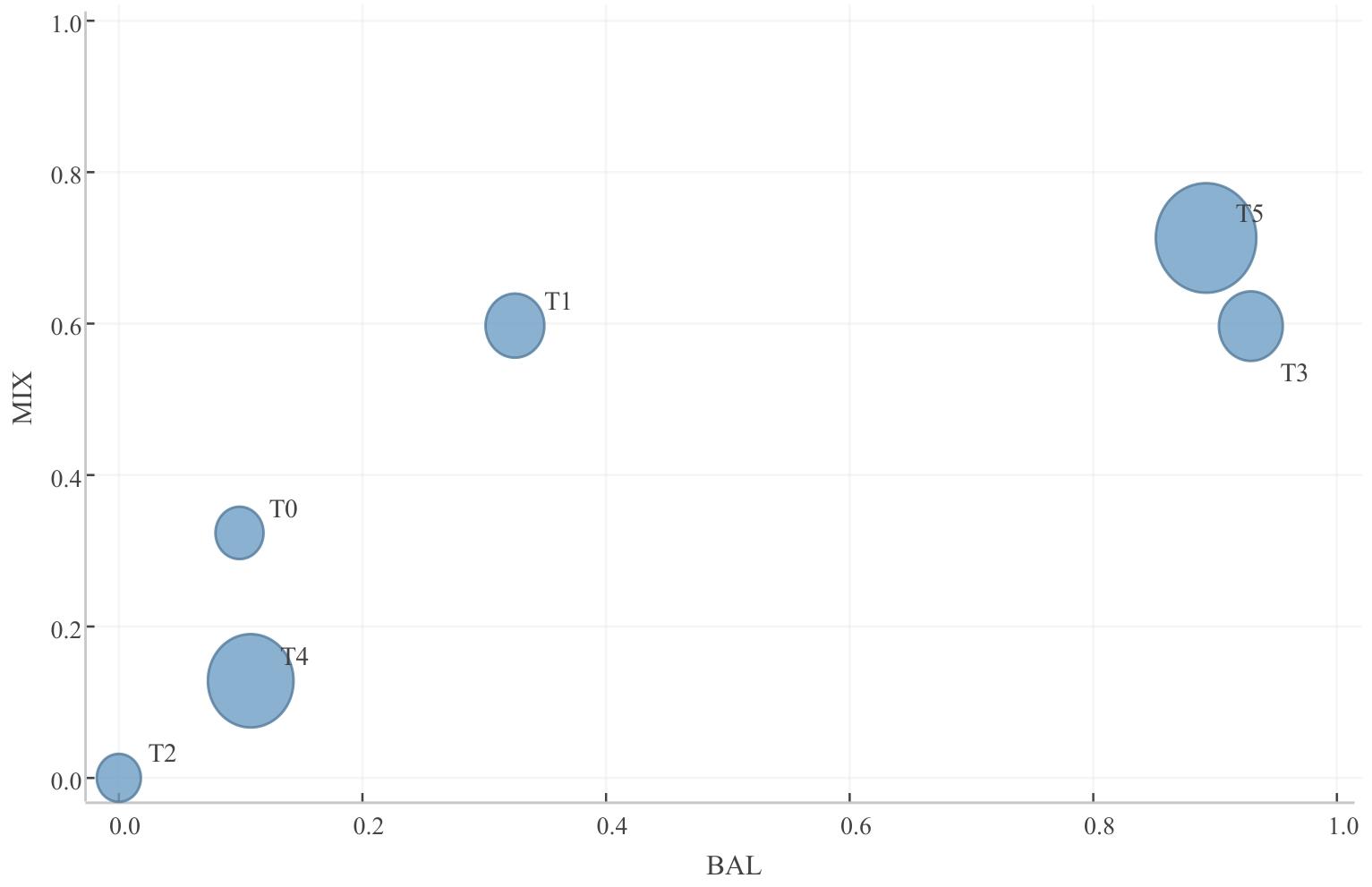
[Purpose/Significance] Artificial intelligence (AI) safety risks increasingly exhibit cross-border spillover effects, and the governance choices of China and the United States have important implications for global AI safety governance. This study aims to identify the policy issue structure and cross-national relationships in China-U.S. on this basis, AI safety governance and, on this basis, examine potential areas of cooperation under conditions of strategic competition. Compared with studies that mainly focus on broad governance models or individual policy differences, this study analyzes the relative position and cross-national relationship of specific AI safety governance issues within a unified policy framework and links the empirical comparison of policy issues with differentiated cooperation pathways. [Method/Process] Based on 50 AI governance policy documents issued by China and the United States between 2020 and 2026, 4 188 governance propositions were extracted through text screening and pre-processing. These propositions were treated as the basic units of analysis. To support cross-national semantic comparison, Chinese-language propositions were converted into English semantic representations, while policy texts originally written in English were retained. BGE-M3 was used to generate semantic embeddings, and BERTopic was applied for joint topic identification. To reduce the influence of differences in document length and proposition volume between the two countries, a country–document balanced topic discovery strategy was adopted, with repeated runs under different random seeds used to assess clustering consistency. The final model identified six governance topics. For cross-national comparison, document-weighted attention was calculated, together with MIX, BAL, and CAI. MIX measures the extent to which a topic contains policy content from both countries, BAL reflects the relative balance of policy attention between the two countries, and CAI captures the actual intensity of shared attention. [Results/Conclusions] The results identify six major governance topics. AI risk identification, assessment, and lifecycle governance, together with data security, privacy protection, and rights protection, receive relatively high bilateral attention. Standardization, testing, and evaluation show a certain degree of overlap in governance tools, but their policy weights remain asymmetric. By contrast, transparency and compliance responsibility, governance capacity building, and national-security-oriented AI infrastructure display more pronounced differences in policy priorities. These findings indicate that China-U.S. AI safety governance is characterized by the coexistence of shared risk concerns, limited technical overlap, and differentiated policy priorities. Based on the characteristics of different issues, cooperation may first focus on shared risks with clear cross-border effects and relatively low strategic sensitivity, including professional exchanges, risk evidence sharing, and comparative assessment. Standards, testing, and evaluation can serve as technical coordination interfaces because they offer relatively comparable governance tools and procedures. Issues closely associated with frontier capabilities, critical infrastructure, and national security are more suitable for limited communication, risk-control arrangements, and crisis-management mechanisms. The depth of cooperation should therefore be determined by cross-border spillover effects, the coordinability of governance tools, and strategic sensitivity, with government communication channels, scientific and expert networks, standards and technical organizations, multilateral mechanisms, and Track II networks assuming corresponding functions. This study is limited to formal central- and federal-level policy documents, so the findings reflect policy issue structures and potential cooperation space rather than implementation outcomes. Future research may incorporate bilateral dialogues, international organization documents, expert networks, and concrete cooperation cases to examine how shared policy attention can be translated into sustained governance cooperation.

Key words: AI safety, China-U.S. relations, policy text analysis, governance cooperation, global AI governance

CLC Number: 

  • G203

Table 1

Topic identification and manual labeling results for China-U.S. AI safety governance policies"

Topic 主题名称 中国政策Top10关键词 美国政策Top10关键词 主题内涵
T0 透明披露、内容标识与合规责任 服务提供者;安全;法律;用户;算法;算法推荐;气象;拟人化交互;推荐;交互 human; registration; material; work; copyright; authorship; applicants; oversight; automated; ai-generated 围绕AI活动中的信息披露、内容标识、用户告知、备案监督和主体责任,强化AI应用的透明性、可识别性与责任可追溯性
T1 标准化、测试与评估 标准;安全;规范;研制;语音;标准研制;计算;框架;基础;测试 standards; training; research; performance; technical; software; automated; developing; benchmarks; testing 通过技术标准、测试方法、性能指标和评价基准等形成AI技术与安全治理的共同尺度
T2 国家安全导向的AI基础设施与联邦协调 — security; infrastructure; energy; sites; consultation; committee; frontier; defense; standards; law 围绕前沿AI基础设施、能源与算力保障、国防安全及联邦跨部门协调,构建国家安全导向的治理体系
T3 数据安全、隐私保护与权利保障 安全;风险;个人信息;权益;权利;保护;影响;隐私;知识产权;安全风险 privacy; rights; sensitive; access; civil; risks; security; domains; safety; protections 重点规范AI开发和应用中的数据处理活动,并保护个人隐私、敏感信息及相关基本权利
T4 治理能力建设、创新应用与多方协作 治理;安全;安全治理;框架;全球;治理框架;全球治理;共识;合作;国际 security; research; risk; infrastructure; responsible; governance; innovation; framework; training; practices 通过制度、组织、人才、研发以及国内外多主体协同,提高AI发展应用与安全治理能力
T5 AI风险识别、评估与全周期治理 安全;伦理;风险;科技;科技伦理;治理;应用;社会;安全治理;影响 risks; automated; human; research; algorithmic; rights; safety; bias; potential; privacy 围绕AI生命周期开展风险识别、评估、审查、监测、人工监督与风险缓释,实现持续性风险治理

Table 2

Cross-national comparison of AI safety governance topics in China and the United States"

Topic 主题名称 P CN P US BAL MIX CAI
T0 透明披露、内容标识与合规责任 0.388 0.020 0.099 0.324 0.038
T1 标准化、测试与评估 0.165 0.032 0.325 0.597 0.054
T2 国家安全导向的AI基础设施与联邦协调 0.000 0.127 0.000 0.000 0.000
T3 数据安全、隐私保护与权利保障 0.104 0.120 0.929 0.597 0.112
T4 治理能力建设、创新应用与多方协作 0.021 0.367 0.108 0.128 0.040
T5 AI风险识别、评估与全周期治理 0.242 0.195 0.893 0.713 0.216

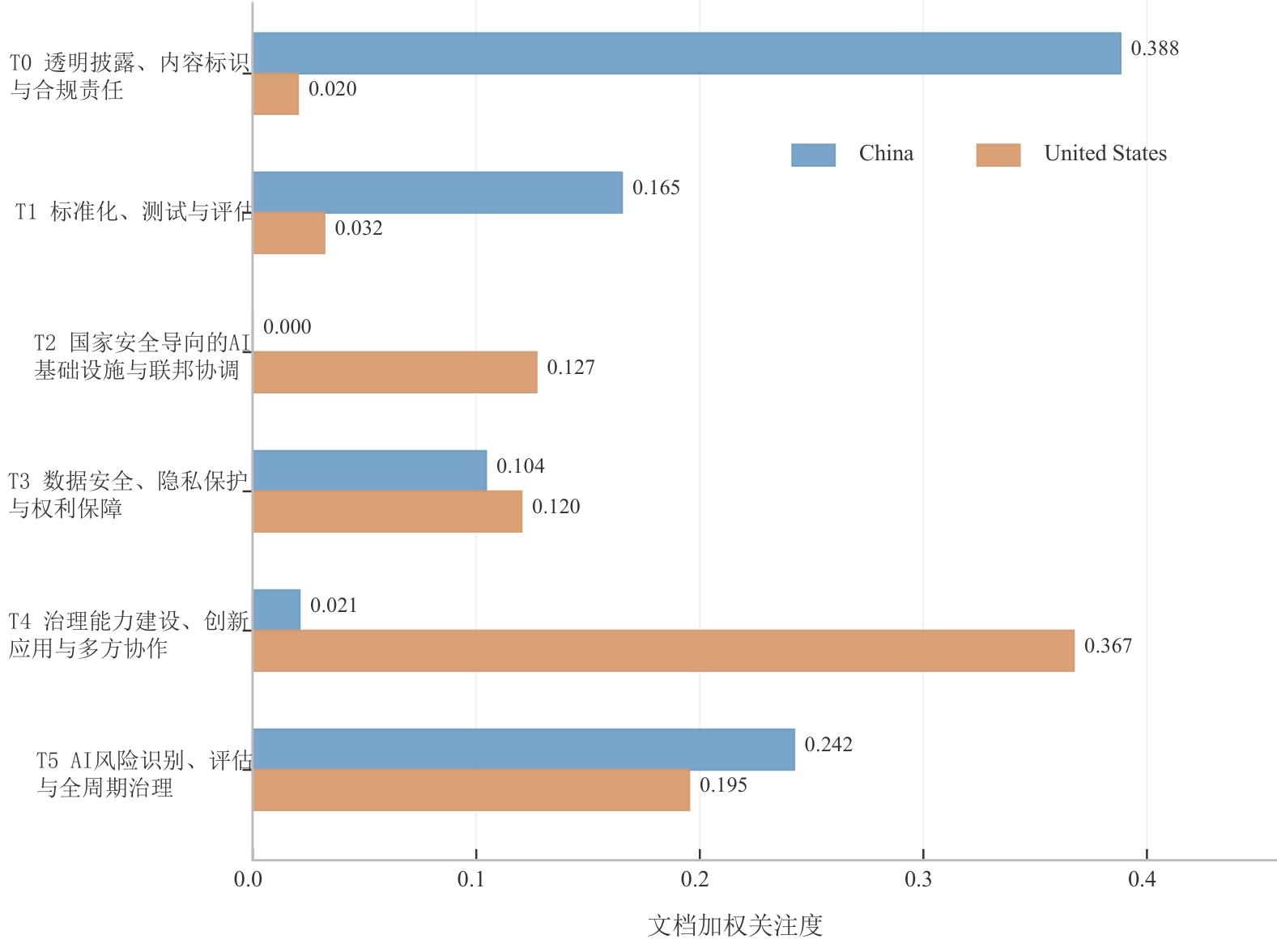
Fig.1

Document-weighted attention to AI safety governance topics in China and the United States"

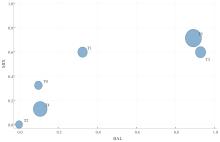
Fig.2

Cross-national relationship patterns of AI safety governance topics in China and the United States"

Table 3

Tiered cooperation pathways for AI safety governance issues between China and the United States"

合作层级 分层依据 对应议题 合作重点 主要执行主体
基础合作层 跨境外溢性较强,共同关注程度较高,战略敏感程度相对较低 T3、T5 风险事件记录、案例交流、风险分类、公开安全评估、数据与权利保护经验 高校科研机构、专业协会、专家网络、多边平台
技术协调层 治理工具具有较强可比性和程序化特征,但政策权重及制度安排存在差异 T1 术语映射、测试方法、评价指标、风险报告和技术标准 标准组织、测试机构、专业技术组织
审慎沟通层 与前沿能力、关键基础设施和国家安全联系紧密,战略敏感程度较高 T2及T4部分议题 风险外溢控制、基本安全边界、危机沟通、有限信息交换 政府部门、授权专家机制、多边安全对话平台
制度比较层 主要体现国内监管工具和治理体系差异,跨国规则统一需求较低 T0及T4部分议题 政策比较、治理经验交流、政策效果研究 高校科研机构、智库、二轨政策网络
[1]
宁琪, 尹建国. 人工智能场景化应用中的风险生成及治理[J]. 改革, 2026(7): 120-130.
Ning Qi, Yin Jianguo. Risk generation and its governance in scenario-based applications of artificial intelligence[J]. Reform, 2026(7): 120-130.
[2]
祁昊天. 超越二元论: 跨国人工智能竞合关系的风险理论[J]. 国际政治研究, 2025, 46(3): 56-79.
Qi Haotian. Beyond dualism: A risk-based theory of transnational AI coopetition relations[J]. International Politics Quarterly, 2025, 46(3): 56-79.
[3]
习近平. 携手构建公正合理的全球人工智能治理体系——在2026世界人工智能大会暨人工智能全球治理高级别会议开幕式上的主旨讲话[EB/OL]. [2026-08-26].
[4]
Cai Cuihong. Shared safety responsibility[EB/OL]. [2026-08-27].
[5]
The bletchley declaration by countries attending the AI safety summit, 1-2 November 2023[EB/OL]. [2026-08-26].
[6]
中美举行人工智能政府间对话首次会议[EB/OL]. [2026-08-26].
[7]
韩啸. 人工智能大国治理何以不同?——基于中美欧的元治理解释[J]. 当代亚太, 2026(3): 62-91, 186.
Han Xiao. Why do major powers' AI governance differ? - A metagovernance explanation based on China, the United States, and the European union[J]. Journal of Contemporary Asia-Pacific Studies, 2026(3): 62-91, 186.
[8]
Jobin A, Ienca M, Vayena E. The global landscape of AI ethics guidelines[J]. Nature Machine Intelligence, 2019, 1(9): 389-399.
[9]
褚松燕, 孙幼龄. 中国人工智能伦理治理的政策规制: 图景与逻辑[J]. 中国行政管理, 2026, 42(4): 35-46.
Chu Songyan, Sun Youling. Regulation of AI ethical governance in China: Landscape and logic[J]. Chinese Public Administration, 2026, 42(4): 35-46.
[10]
王少. 全球人工智能伦理治理的实现进路——以人工智能科技竞争为视角[J]. 科学管理研究, 2026, 44(1): 101-107.
Wang Shao. The pathway to global artificial intelligence ethics governance: From the perspective of artificial intelligence technology competition[J]. Scientific Management Research, 2026, 44(1): 101-107.
[11]
Bengio Y, Hinton G, Yao A, et al. Managing extreme AI risks amid rapid progress[J]. Science, 2024, 384(6698): 842-845.
[12]
郭继荣, 张倩. 中美欧AI伦理政策的安全化话语对比研究[J]. 外语电化教学, 2026(2): 67-71, 86, 117.
Guo Jirong, Zhang Qian. A comparative study of securitization discourse in AI ethics policies: China, the US, and the EU[J]. Technology Enhanced Foreign Language Education, 2026(2): 67-71, 86, 117.
[13]
Siddiqui S, Ibrahim L, Loke K, et al. Promising topics for US-China dialogues on AI risks and governance[C]//Proceedings of the 2025 ACM Conference on Fairness, Accountability, and Transparency. New York: ACM, 2025: 1211-1223.
[14]
Cihon P, Maas M M, Kemp L. Fragmentation and the future: Investigating architectures for international AI governance[J]. Global Policy, 2020, 11(5): 545-556.
[15]
Tallberg J, Erman E, Furendal M, et al. The global governance of artificial intelligence: Next steps for empirical and normative research[J]. International Studies Review, 2023, 25(3): 1-23.
[16]
Roberts H, Hine E, Taddeo M, et al. Global AI governance: Barriers and pathways forward[J]. International Affairs, 2024, 100(3): 1275-1286.
[17]
王净宇, 梁正. 风险类型与国际公共产品供给模式——全球人工智能安全治理的分析框架[J]. 中国社会科学, 2026(6): 94-113.
Wang Jingyu, Liang Zheng. Risk types and modes of international public goods provision - An analytical framework for global AI safety governance[J]. Social Sciences in China, 2026(6): 94-113.
[18]
Wasil A R, Barnett P, Gerovitch M, et al. Governing dual-use technologies: Case studies of international security agreements and lessons for AI governance[PP/OL]. arXiv (2024-09-04)[2026-08-26].
[19]
Arnold Z, Schiff D S, Schiff K J, et al. Introducing the AI governance and regulatory archive (AGORA): An analytic infrastructure for navigating the emerging AI governance landscape[C]//Proceedings of the 2024 AAAI/ACM Conference on AI, Ethics, and Society. New York: ACM, 2025: 39-48.
[20]
国家新一代人工智能治理专业委员会. 《新一代人工智能伦理规范》发布[EB/OL]. [2026-08-26].
[21]
Blueprint for an AI bill of rights[EB/OL]. [2026-08-21].
[22]
Praveen Gujjar J, Prasanna Kumar H R. Text similarity technique using BGE-M3[C]//2025 International Conference on Advances in Modern Age Technologies for Health and Engineering Science (AMATHE). Piscataway, New Jersey: IEEE, 2025: 1-7.
[23]
Grootendorst M. BERTopic: Neural topic modeling with a class-based TF-IDF procedure[PP/OL]. arXiv (2022-03-11)[2026-08-26].
[24]
Naser M Z, Naser A Z. SPINEX-clustering: Similarity-based predictions with explainable neighbors exploration for clustering problems[J]. Cluster Computing, 2025, 28(5): 335.
[25]
全国网络安全标准化技术委员会, 国家计算机网络应急技术处理协调中心. 《人工智能安全治理框架》2.0版发布[EB/OL]. [2026-08-26].
[26]
全国网络安全标准化技术委员会. 《人工智能应用伦理安全指引1.0》发布[EB/OL]. [2026-08-26].
[27]
Select committee on artificial intelligence of the national science and technology council. national artificial intelligence research and development strategic plan 2023 update[EB/OL]. [2026-08-26].
[28]
国家标准化管理委员会, 中央网信办, 国家发展改革委, 等. 国家新一代人工智能标准体系建设指南[EB/OL]. [2026-08-21].
[29]
工业和信息化部, 中央网络安全和信息化委员会办公室, 国家发展和改革委员会. 国家人工智能产业综合标准化体系建设指南(2024版)[EB/OL]. [2026-08-26].
[30]
Department of state compliance plan for OMB memorandum M-25-21[EB/OL]. [2026-08-26].
[31]
Bommasani R, Arora S, Chayes J, et al. Advancing science- and evidence-based AI policy[J]. Science, 2025, 389(6759): 459-461.
[32]
全国网络安全标准化技术委员会. 《人工智能安全治理框架3.0》发布[EB/OL]. [2026-09-20].
[33]
Bengio Y, Clare S, Prunkl C, et al. International AI safety report 2026[PP/OL]. arXiv (2026-02-24)[2026-08-26].
[1] SUN Yan, ZHANG Shanshan. Formation Logic, Practical Manifestations, and Governance Strategies of Data Bias in Large Language Model-Assisted Academic Research: A Grounded Theory Study in the Humanities and Social Sciences [J]. Journal of library and information science in agriculture, 2026, (): 1-15.
[2] LIU Siyi, LIU Guifeng, LIU Qiong, HAN Muzhe. Construction of a Data Element Value Release Model from the Perspective of Value Co-creation: A Grounded Analysis Based on Typical Application Scenarios of "Data Element ×" [J]. Journal of library and information science in agriculture, 2026, 38(9): 4-15.
[3] CHEN Xiying, TANG Qiong. Evaluation of Provincial Public Data Resource Development and Utilization Policies: From the Perspective of the PMC Index Model [J]. Journal of library and information science in agriculture, 2026, (): 1-16.
[4] LV Kun, YU Linrong, WEN Yuzhu, Li Beiwei. Deconstructing the "Data Protection-Sharing Utilization" Paradox: Research on the Evolutionary Game of Health Medical Data Sharing from a Multi-Agent Collaborative Perspective [J]. Journal of library and information science in agriculture, 2026, 38(8): 49-66.
[5] LIU Pubin, ZHANG Dandan, WANG Penglong. Empirical Analysis of Supply and Demand in the Employment Market for Doctoral Graduates in Information Resource Management: A Perspective on Disciplinary Transformation [J]. Journal of library and information science in agriculture, 2026, (): 1-15.
[6] LI Jiawei, SUN Zhumo, JIANG Tingting. Enhancing User Engagement Intention in AI-Generated Short Videos: The Role of AI Disclosure [J]. Journal of library and information science in agriculture, 2026, 38(7): 32-45.
[7] PAN Yong, SUN Jing, WANG Jiandong. Data Quality Assessment and Improvement Strategies: A Diagnostic Analysis Based on the Public Basic Databases (Population and Legal Entity Databases) of a City [J]. Journal of library and information science in agriculture, 2026, 38(6): 59-69.
[8] HUANG Shuiqing, LIU Liu, ZHANG Wei. Data Resources and Data Intelligence: Origins, Value, and Application Domains [J]. Journal of library and information science in agriculture, 2026, 38(6): 4-16.
[9] HUANG Shuiqing, ZHANG Wei, LIU Liu. Construction and Development of an Autonomous Knowledge System for Computational Humanities [J]. Journal of library and information science in agriculture, 2026, 38(5): 16-34.
[10] ZHOU Wenjie. On the Theoretical Field of Information Resource Management in the Context of Autonomous Knowledge System Construction: A Systematic Inquiry into Indigenous Chinese Academic Discourse [J]. Journal of library and information science in agriculture, 2026, 38(5): 65-81.
[11] WU Dan, XU Hao. From Human-Computer Interaction to Human-AI Collaboration: A Frontier Perspective on Constructing an Independent Knowledge System for Information Resource Management in China [J]. Journal of library and information science in agriculture, 2026, 38(5): 55-64.
[12] NIU Chunhua, WANG Yaqi, SHA Yongzhong. Scenario-Adaptive Intelligent Knowledge Services in the Construction of China's Independent Knowledge System: Supporting Capabilities and Talent Cultivation in the Discipline of Information Resource Management [J]. Journal of library and information science in agriculture, 2026, 38(5): 82-93.
[13] AN Lin. Governance of Personal Information Security in the Iteration of Generative AI: From the Perspective of the Technological Evolution of Large Models [J]. Journal of library and information science in agriculture, 2026, 38(4): 61-70.
[14] TANG Feng, FANG Xiangming, WANG Yixin. On the Practical Needs, Theoretical Framework, and Implementation Strategies for Constructing a Trusted Data Space for Library Digital Special Collections [J]. Journal of library and information science in agriculture, 2025, 37(11): 47-61.
[15] LIU Ting, LIU Shuhan, LIU Zhenyan, ZENG Dequan, HU Yuan. Impact of Data Element Utilization Level on Enterprises' Supply Chain Discourse Power [J]. Journal of library and information science in agriculture, 2025, 37(9): 32-48.
Viewed
Full text


Abstract

Cited

  Shared   
  Discussed   
No Suggested Reading articles found!