中文    English

Journal of library and information science in agriculture


Open Sharing of Library Data Based on Large Language Models: Logic, Path and Strategy

WU Yuhao1, LIU Yihao2, LI Qingjun1(), HU Xu3   

  1. 1.Weifang University, Weifang 261061
    2.Qingdao Hiser Hospital Affiliated of Qingdao University, Qingdao 266033
    3.Agricultural Bank of China Limited Chongqing Shapingba Branch, Chongqing 400000
  • Received:2025-08-20 Online:2025-12-31
  • Contact: LI Qingjun E-mail:liqj@wfu.edu.cn

Abstract:

[Purpose/Significance] Under the background of the digital economy, problems such as the difficulty in integrating multi-source heterogeneous data, low efficiency in matching supply and demand, and imbalance between security and openness in library data opening and sharing have restricted traditional technologies and service models from breaking through the bottlenecks. Large language models (LLMs) offer a new path to break through this predicament. This study aims to improve the theoretical system of technology that empowers the open sharing of library data. It also aims to fill the gap in existing research, which mostly focuses on general technologies and lacks systematic adaptation to library scenarios. Additionally, this study aims to provide theoretical and practical support for libraries to transform from data custodians to knowledge enablers, which will support the high-quality development of the industry. [Method/Process] Based on the elaboration of the practical impact of LLMs on the open sharing of library data, this paper analyzed the connotation, essence and characteristics of library data open sharing empowered by LLMs Based on this, the internal logic of LLMs driving the open sharing of library data was discussed, and the implementation path was explored. [Results/Conclusions] The open sharing of library data based on LLMs is manifested as a hierarchical leap in the value of data elements from basic integration, demand matching to decision support. This process needs to be efficiently advanced through human-machine collaboration on the supply side, user participation on the demand side, and cross-domain linkage on the ecosystem side. It should run through the entire life cycle of data production, governance, circulation, and application. Based on this, four guarantee strategies were proposed. In terms of technical architecture, we should adopt the "general model + domain fine-tuning" mode to adapt to the characteristics of library data. Efforts should be devoted to establishing a full-process quality control and hierarchical desensitization mechanism in data governance. In terms of talent cultivation, we should build a "business + discipline + technology" compound team. In terms of ethical construction, a full-process review and user rights protection system should be established. In the future, it is possible to further explore the in-depth adaptation of LLMs with the special collection resources of libraries, as well as the construction of a dynamic and elastic security governance framework, to promote the ecological development of industry data openness and sharing.

Key words: open sharing of data, library, large language model, internal logic, implementation path, guarantee strategy

CLC Number: 

  • G250.7

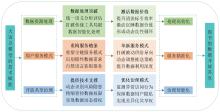
Fig.1

The practical impact of large language models on the library data open sharing"

Table 1

Comparison of the old and new paradigms of library data open sharing"

维度特征传统图书馆数据开放共享大语言模型赋能的图书馆数据开放共享
数据处理方式以结构化数据为主,依赖人工标引与格式转换,多源异构数据整合难度大支持多模态数据(文本、图像、音频等)语义解析,实现自动化清洗与关联挖掘
用户交互模式基于关键词检索的被动响应,用户需掌握专业检索技能自然语言对话式交互,支持模糊查询与上下文理解,适配零技术门槛用户
服务触达范围局限于馆藏目录等基础资源,个性化服务依赖人工定制覆盖科研数据、用户行为等深度资源,通过智能推荐实现“千人千面”服务
开放效率与成本数据审核流程繁琐,更新滞后,人力与时间成本高自动化合规性校验与动态更新,显著降低运营成本,提升开放时效性
安全管控机制静态权限划分,难以平衡开放与隐私保护动态风险识别与精细化脱敏,基于场景智能调整数据开放粒度
价值转化路径以数据供给为核心,价值实现依赖用户自主挖掘嵌入知识生成环节,提供数据洞察报告与决策支持,直接驱动价值创造
技术支撑体系依赖关系型数据库与基础检索工具,扩展性有限基于分布式算力与预训练模型,支持跨库关联与深度知识推理

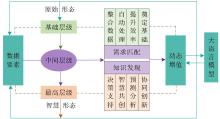
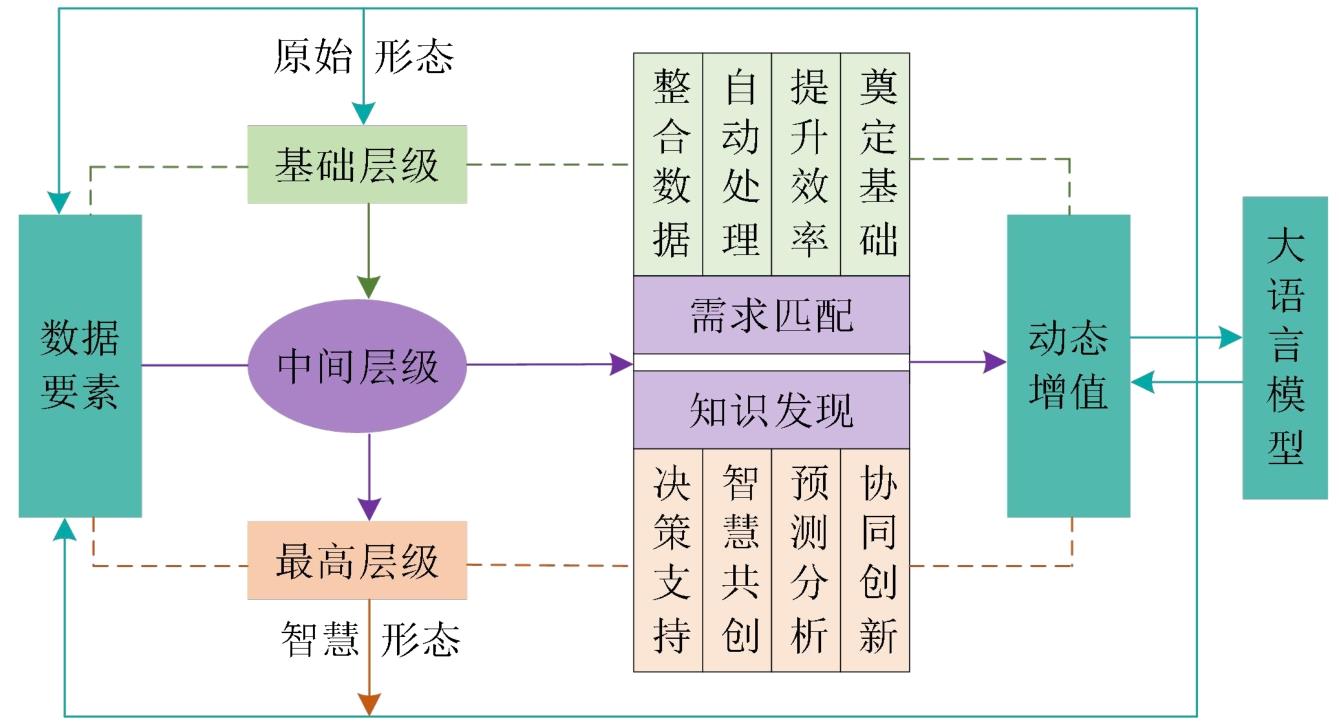
Fig.2

The hierarchical leap in the value transformation of data elements based on large language models"

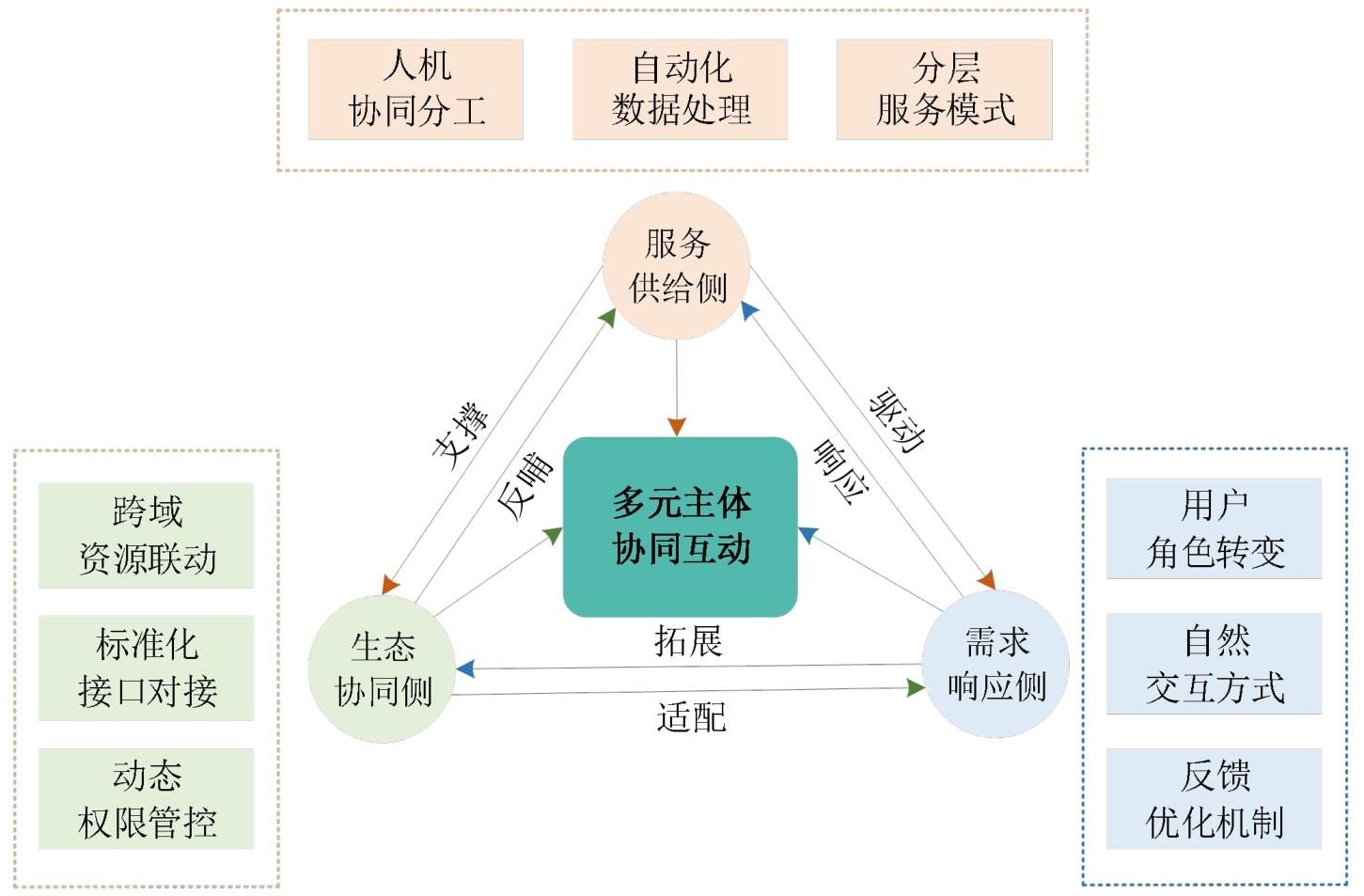
Fig.3

Analysis of the mechanism of collaborative interaction among multiple subjects"

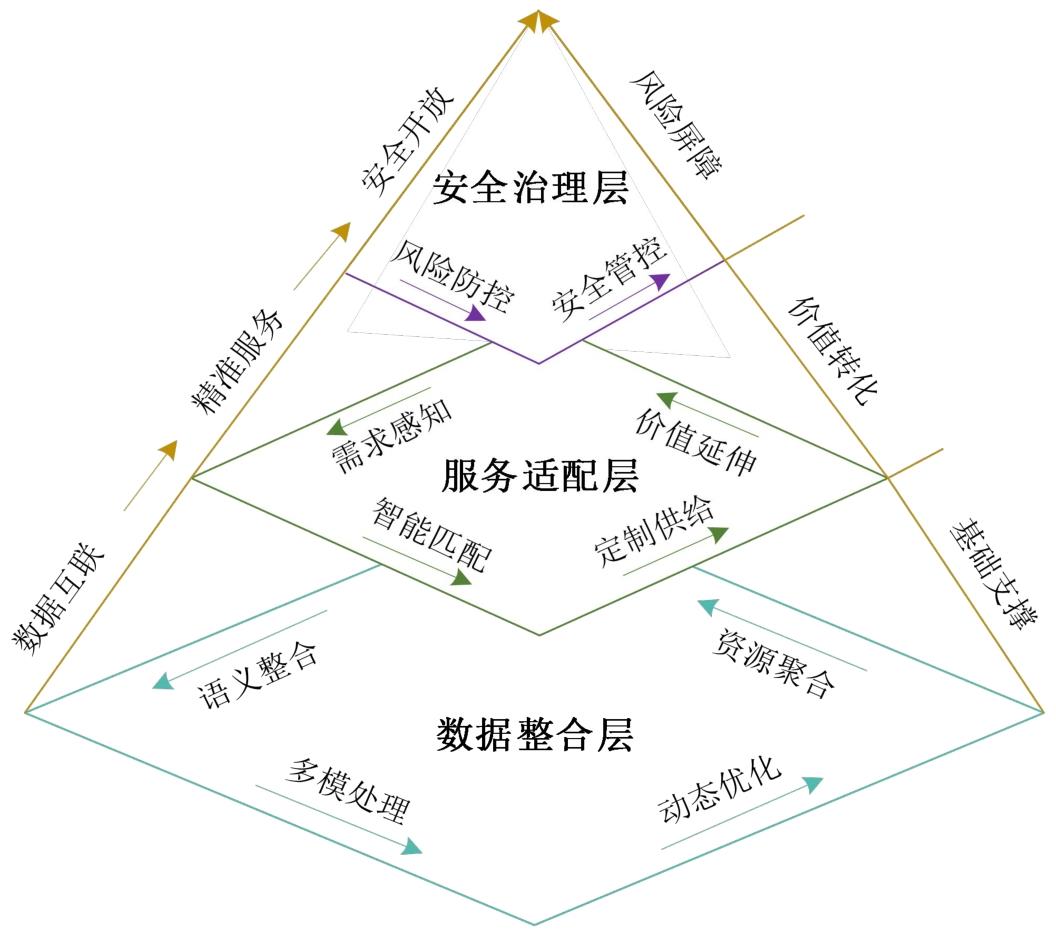
Fig.4

The implementation mechanism of library data open sharing based on large language models"

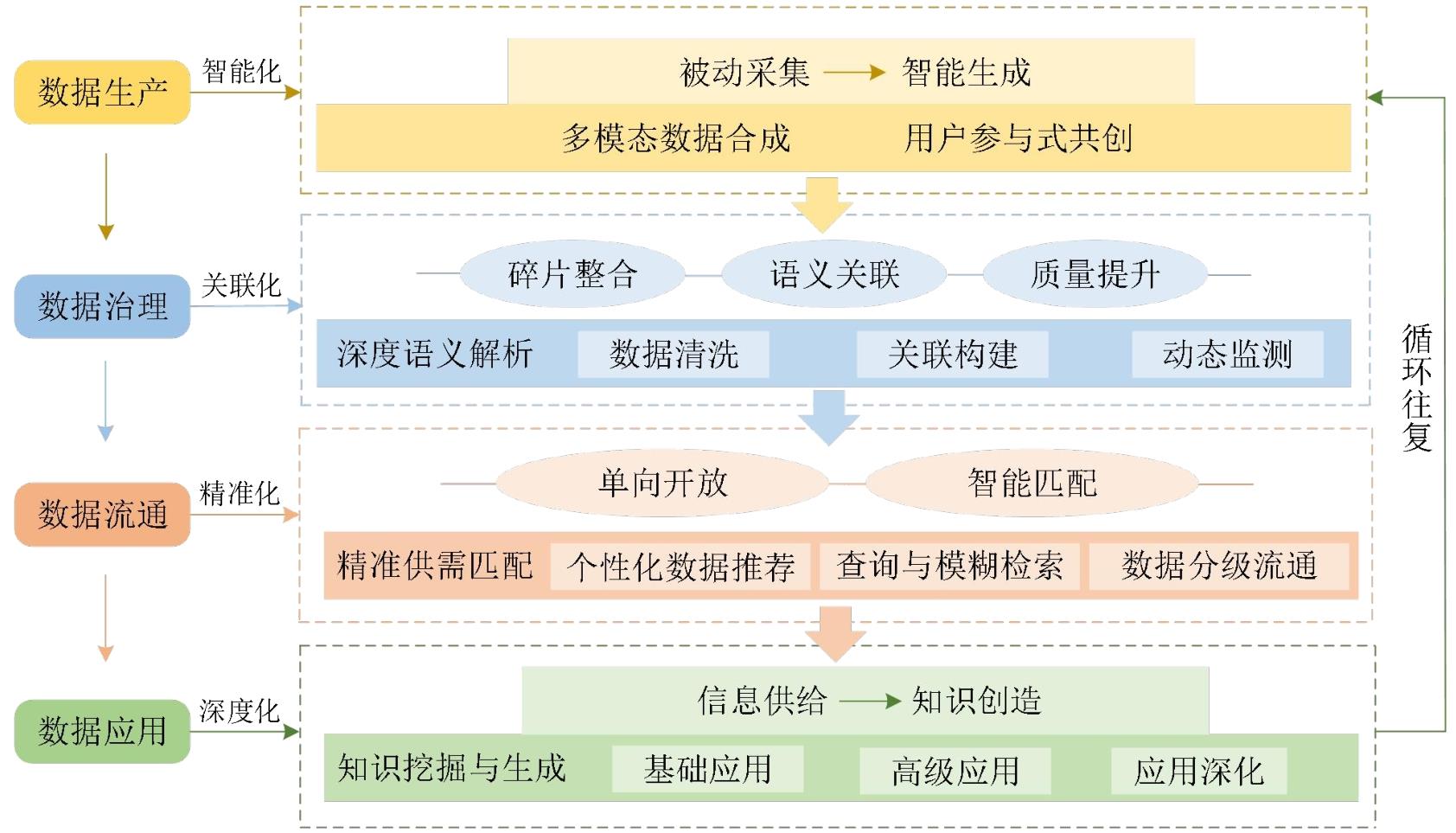
Fig.5

The implementation path of library data open sharing based on large language models"

[1] 邢文明,刘我.高校图书馆推进FAIR数据管理原则实施的服务调研[J].农业图书情报学报,2022,34(7):65-75.
XING W M, LIU W. An Investigation on university libraries' service in promoting the implementation of FAIR data management principles[J]. Journal of library and information science in agriculture, 2022, 34(7): 65-75.
[2] 孔晔晗,张潇月,李宜展.美国高校图书馆促进数据重用的服务实践及启示[J].图书与情报,2023,(4):78-89.
KONG Y H, ZHANG X Y, LI Y Z. Service practices and implications of American academic libraries in promoting data reuse[J]. Library and information, 2023(4): 78-89.
[3] 陆康, 刘慧, 任贝贝, 等. 我国图书馆数据治理框架: 价值、维度与路径[J]. 图书馆理论与实践, 2022(4): 121-125.
LU K, LIU H, REN B B, et al. Data governance framework of Chinese libraries: Value, dimension and path[J]. Library theory and practice, 2022(4): 121-125.
[4] 魏明媛, 罗坤明, 汤明, 等. 大语言模型(LLM)嵌入智慧图书馆场景化服务的应用研究[J]. 图书馆理论与实践, 2025(1): 83-94.
WEI M Y, LUO K M, TANG M, et al. Research on the application of large language model (LLM) embedded in scene service of smart library[J]. Library theory and practice, 2025(1): 83-94.
[5] 王戈非. 基于大语言模型的高校图书馆智能咨询服务发展策略[J]. 图书馆工作与研究, 2025(7): 80-87.
WANG G F. Development strategies of intelligent consulting service of university library based on large language model[J]. Library work and study, 2025(7): 80-87.
[6] 王正超. 科学数据开放共享中的大模型应用: 前景、风险与治理[J]. 现代情报, 2025, 45(7): 167-177.
WANG Z C. The application of large models in open sharing of scientific data: Prospects, risks, and governance[J]. Journal of modern information, 2025, 45(7): 167-177.
[7] 朱兰兰, 高玉婷, 霍婕, 等. AIGC视域下科学数据开放共享风险及对策: 基于WSR理论分析框架[J]. 档案管理, 2024(4): 18-21, 26.
ZHU L L, GAO Y T, HUO J, et al. Risks and countermeasures of open sharing of scientific data from the perspective of AIGC: Based on WSR theoretical analysis framework[J]. Archives management, 2024(4): 18-21, 26.
[8] 秦小林, 古徐, 李弟诚, 等. 大语言模型综述与展望[J]. 计算机应用, 2025, 45(3): 685-696.
QIN X L, GU X, LI D C, et al. Overview and prospect of large language models[J]. Journal of computer applications, 2025, 45(3): 685-696.
[9] 赵铁军, 许木璠, 陈安东, 等. 自然语言处理研究综述[J]. 新疆师范大学学报(哲学社会科学版), 2025, 46(2): 89-111, 封2.
ZHAO T J, XU M F, CHEN A D, et al. A review of natural language processing research[J]. Journal of Xinjiang normal university (edition of philosophy and social sciences), 2025, 46(2): 89-111, 封2.
[10] 龚为纲, 黄思源. 大语言模型与计算社会科学: 工具、议题与挑战[J]. 求索, 2025(3): 137-148.
GONG W G, HUANG S Y. Large language models and computational social science: Tools, issues and challenges[J]. Seeker, 2025(3): 137-148.
[11] 陶泽华, 司徒凌云, 沈固朝. 面向细分领域的大语言模型微调构建综述[J/OL]. 情报杂志, 2025: 1-10. .
TAO Z H, SITU L Y, SHEN G C. A review of fine-tuning based domain large language model construction[J/OL]. Journal of intelligence, 2025: 1-10. .
[12] 张贞港, 余传明, 王静楠, 等. 面向学术文本的语义增强自然语言推理模型[J]. 现代情报, 2025, 45(8): 18-30.
ZHANG Z G, YU C M, WANG J N, et al. Semantic enhanced natural language reasoning model for academic text[J]. Journal of modern information, 2025, 45(8): 18-30.
[13] 颜士刚, 胡修磊, 李文光, 等. 生成式大语言模型能有效实现对话式教学吗[J]. 现代远程教育研究, 2025, 37(2): 52-61, 72.
YAN S G, HU X L, LI W G, et al. Can generative large language model effectively realize dialogue teaching? [J]. Modern distance education research, 2025, 37(2): 52-61, 72.
[14] 赵宣凯, 宝恩德尔, 左从江, 等. 大语言模型在经济金融领域的应用: 研究评述、学术应用及未来展望[J]. 金融评论, 2025, 17(1): 69-93, 156, 157.
ZHAO X K, BAO E, ZUO C J, et al. A survey of large language models in economics and finance: Model evolution, academic applications, and future prospects[J]. Chinese review of financial studies, 2025, 17(1): 69-93, 156, 157.
[15] 吕佩安. 数字政府大语言模型应用的风险及其调适路径——以风险社会理论为视角[J]. 湖南社会科学, 2025(4): 87-96.
LV P A. The risks and adaptation paths of applying large language models in digital government: From the perspective of risk society theory[J]. Social sciences in Hunan, 2025(4): 87-96.
[16] 李非燕. 大语言模型司法应用的安全困境与治理路径[J]. 人民论坛·学术前沿, 2025(7): 108-111.
LI F Y. Security dilemmas and governance approaches for large language models in judicial applications[J]. Frontiers, 2025(7): 108-111.
[17] 孙坦, 张智雄, 周力虹, 等. 人工智能驱动的第五科研范式(AI4S)变革与观察[J]. 农业图书情报学报, 2023, 35(10): 4-32.
SUN T, ZHANG Z X, ZHOU L H, et al. The transformation and observations of AI for Science (AI4S) driven by artificial intelligence[J]. Journal of library and information science in agriculture, 2023, 35(10): 4-32.
[18] 蔡祎然, 胡正银, 刘春江. 大语言模型赋能科技文献数据挖掘进展分析[J]. 农业图书情报学报, 2025, 37(2): 4-22.
CAI Y R, HU Z Y, LIU C J. Analysis of progress in data mining of scientific literature using large language models[J]. Journal of library and information science in agriculture, 2025, 37(2): 4-22.
[19] 王文瑾, 李昀昊, 张寅, 等. 大语言模型文档图像智能问答指令设计与微调方法实证研究[J]. 数字图书馆论坛, 2025, 21(1): 11-21, 32.
WANG W J, LI Y H, ZHANG Y, et al. An empirical study on the design and fine-tuning method of intelligent question-and-answer instructions for large language model document images[J]. Digital library forum, 2025, 21(1): 11-21, 32.
[20] 刘静羽,贾毓洁,黄金霞,等.开放科学创新生态构建中的数据处理伦理准则框架研究[J].农业图书情报学报,2022,34(9):29-43.
LIU J Y, JIA Y J, HUANG J X. Ethics principle framework of data handling for open scientific innovation ecology[J]. Journal of library and information science in agriculture, 2022, 34(9): 29-43.
[21] 周文杰, 杨阳. 数据要素管理[M]. 北京: 知识产权出版社, 2025.
ZHOU W J, YANG Y. Data element management[M]. Beijng: Intellectual Property Publishing House, 2025.
[22] 凌霄娥. 数字人文下的图书馆开放数据服务机制分析[J]. 图书馆, 2021(5): 68-73.
LING X E. Analysis of open data service mechanism of library under digital humanities[J]. Library, 2021(5): 68-73.
[23] 葛燕君. 图书馆数据开放的内涵、价值、实施与隐私保护[J]. 情报杂志, 2019, 38(7): 166-170, 183.
GE Y J. The connotation, value, implementation and privacy protection of library data opening[J]. Journal of intelligence, 2019, 38(7): 166-170, 183.
[24] KELOTH V K, HU Y, XIE Q Q, et al. Advancing entity recognition in biomedicine via instruction tuning of large language models[J]. Bioinformatics, 2024, 40(4): btae163.
[25] 孙建军, 李阳. 数智时代人文社科数据资源开发利用的跃迁: 从观念到行动[J]. 中国图书馆学报, 2024, 50(1): 45-57.
SUN J J, LI Y. The leap of the data resources development and utilization in humanities and social sciences in data intelligence era: From concept to action[J]. Journal of library science in China, 2024, 50(1): 45-57.
[26] 邢文明, 邓孝庆, 秦顺. 科学数据开放共享中的数据可用性影响因素研究[J]. 图书情报知识, 2025, 42(1): 135-145.
XING W M, DENG X Q, QIN S. Influencing factors of data availability in open sharing of scientific data[J]. Documentation, information & knowledge, 2025, 42(1): 135-145.
[27] 范炜. 技术赋能下图书情报的知识组织研究[J/OL]. 图书馆杂志, 2025: 1-9. .
FAN W. Research on knowledge organization with technological empowerment in library and information studies[J/OL]. Library journal, 2025: 1-9. .
[28] KIM J. Determining research data services maturity: The role of library leadership and stakeholder involvement[J]. Library & information science research, 2021, 43(2): 101092.
[29] 唐睿, 罗孟儒, 崔永. 基于数据生命周期的高校图书馆数据资源本地化服务策略研究[J]. 图书馆学研究, 2025(7): 104-114.
TANG R, LUO M R, CUI Y. Research on the strategies for data localization services in university libraries based on the data lifecycle[J]. Research on library science, 2025(7): 104-114.
[30] 陈氢, 李承濠. 融合智慧数据的图书馆数智服务平台研究[J]. 图书馆, 2025(6): 45-52.
CHEN Q, LI C H. Research on library digital intelligent service platform integrating smart data[J]. Library, 2025(6): 45-52.
[31] LIU C M, DOU T F, ZHOU H, et al. Library service innovation based on new information technology: Taking the interactive experience space "Tsinghua Impression"as an example[J]. International journal of library and information services, 2021, 10(1): 71-81.
[1] JIANG Jingze, ZHOU Tianmin, LI Mei, CHENG Cheng, CHEN Haiyan. A study of the Core Competence Model of Compound AI Librarians in the Intelligent Transformation of University Libraries [J]. Journal of library and information science in agriculture, 2025, 37(9): 97-109.
[2] WANG Xiaoyu, HU Jingyuan, WU Ruoyu, WANG Shu, ZHAI Yujia. An LLM-based Data Augmentation Method for Constructing Science & Technology Topic Linkages: Taking the Energy Conservation Field as an Example [J]. Journal of library and information science in agriculture, 2025, 37(9): 63-81.
[3] SONG Yaping, LIAN Kangping. Pathways for Public Library Study Tour Services in the Context of Cultural and Tourism Integration [J]. Journal of library and information science in agriculture, 2025, 37(8): 92-103.
[4] HUO Ruijuan, ZHANG Hai. Connotations and Influencing Factors of the Professionalization of Library Reading Promoters [J]. Journal of library and information science in agriculture, 2025, 37(8): 29-39.
[5] SHEN Hongjie, SHEN Hongwei, WANG Junli. Generative AI Empowering Information Literacy Education in Digital Libraries: Path Exploration, Challenge Analysis, and Response Strategies [J]. Journal of library and information science in agriculture, 2025, 37(7): 50-60.
[6] JIANG Yumeng. An Investigation and Enlightenment on the Current Status of AI Literacy Education in Nordic University Libraries [J]. Journal of library and information science in agriculture, 2025, 37(7): 19-34.
[7] GAO Dan, CUI Bin. Value Co-Creation Mechanism of Cultural Heritage Data Resources: An Analysis Based on the “Stage-Subject-Scenario” Framework [J]. Journal of library and information science in agriculture, 2025, 37(7): 61-72.
[8] LIU Wei, ZHANG Lei, JI Ting, CHEN Xiaoyang. Shaping the Smart Libraries with AI: An Agent-based, Next-Generation Library Service Platform [J]. Journal of library and information science in agriculture, 2025, 37(5): 15-26.
[9] CHEN Jiayong, GONG Jiaoteng, WANG Yuyi. Research of Interdisciplinary Comparison and Collaborative Paradigm on the Concept of Agent in Library Science [J]. Journal of library and information science in agriculture, 2025, 37(5): 27-39.
[10] QIAN Li, WANG Qianying, LIU Yi, ZHANG Yuanzhe, CHANG Zhijun. Agent Technology and Its Applications in Scientific Research [J]. Journal of library and information science in agriculture, 2025, 37(5): 5-14.
[11] ZHANG Li, WANG Bo, JING Shui. Generative AI-Driven Resource Discovery in Public Libraries: Service Optimization Based on a Dynamic Evaluation Model [J]. Journal of library and information science in agriculture, 2025, 37(5): 58-71.
[12] LIU Han. Interdisciplinary Integration and Curricular Innovation in Data Science Degree Programs: An Empirical Study of Eight U.S. iSchools [J]. Journal of library and information science in agriculture, 2025, 37(4): 94-107.
[13] XIAO Keyi, LI Yunfan, CHEN Yingying, PENG Xi. User Experience of Public Library Intelligent Service from the Perspective of Actor Network Theory [J]. Journal of library and information science in agriculture, 2025, 37(4): 51-65.
[14] SANG Yuanyuan. Multimodal Learning Technology Aimed at Exploring the Innovative Path of Library Intelligence Service [J]. Journal of library and information science in agriculture, 2025, 37(3): 42-52.
[15] LIU Jie, YUAN Yongxu, WU Juan. Strategies for Enhancing Intellectual Property Literacy Education in Academic Libraries from the Perspective of New Quality Productive Forces [J]. Journal of library and information science in agriculture, 2025, 37(3): 32-41.
Viewed
Full text


Abstract

Cited

  Shared   
  Discussed   
No Suggested Reading articles found!