

• •
汪梓旭1, 郑兴2, 马金凤1, 王语嫣3
收稿日期:2026-05-29
出版日期:2026-09-08
作者简介:汪梓旭(1993- ),男,硕士研究生,知识产权师,研究方向为知识组织与图书情报、知识产权与科学评价基金资助:WANG Zixu1, ZHENG Xing2, MA Jinfeng1, WANG Yuyan3
Received:2026-05-29
Online:2026-09-08
摘要:
[目的/意义] 为揭示知识复用行为对科研产出的微观影响机制,本研究从知识类型视角出发,以图书情报学科高产学者为对象,系统探究不同功能类型知识复用与科研产出效率之间的关系,为高端学术人才培养与科研管理提供实证依据。 [方法/过程] 结合深度学习、大语言模型等方法进行词汇功能识别与文献知识聚类,在此基础上通过赫芬达尔指数量化学者知识复用行为,并结合相关性分析、多元线性回归分析系统探究知识复用行为对科研产出的影响。 [结果/结论] 以图书情报学科的高产学者为对象展开实证研究,发现高产学者普遍存在知识复用行为,其中96.5%的学者在背景类知识上呈现高度复用。此外,通过知识聚集度反映学者知识复用强度后,发现其与发文频次呈显著正相关,其中背景类知识的影响最强(相关系数=0.657),对象类知识次之(相关系数=0.325)。多元回归结果显示,各类知识复用均对发文频次具有显著正向净效应,且方法与背景类知识复用间存在显著的协同效应(交互系数=94.460),二者共同提升时对科研产出的促进效果尤为突出。
中图分类号: G252
汪梓旭, 郑兴, 马金凤, 王语嫣. 词汇功能视角下高产学者知识复用对科研产出的影响分析[J/OL]. 农业图书情报学报. https://doi.org/10.13998/j.cnki.issn1002-1248.26-0360.
WANG Zixu, ZHENG Xing, MA Jinfeng, WANG Yuyan. Knowledge Reuse and Research Output among Prolific Scholars: An Impact Analysis from the Perspective of Lexical Functions[J/OL]. Journal of library and information science in agriculture. https://doi.org/10.13998/j.cnki.issn1002-1248.26-0360.
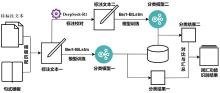
图1
词汇功能识别流程"
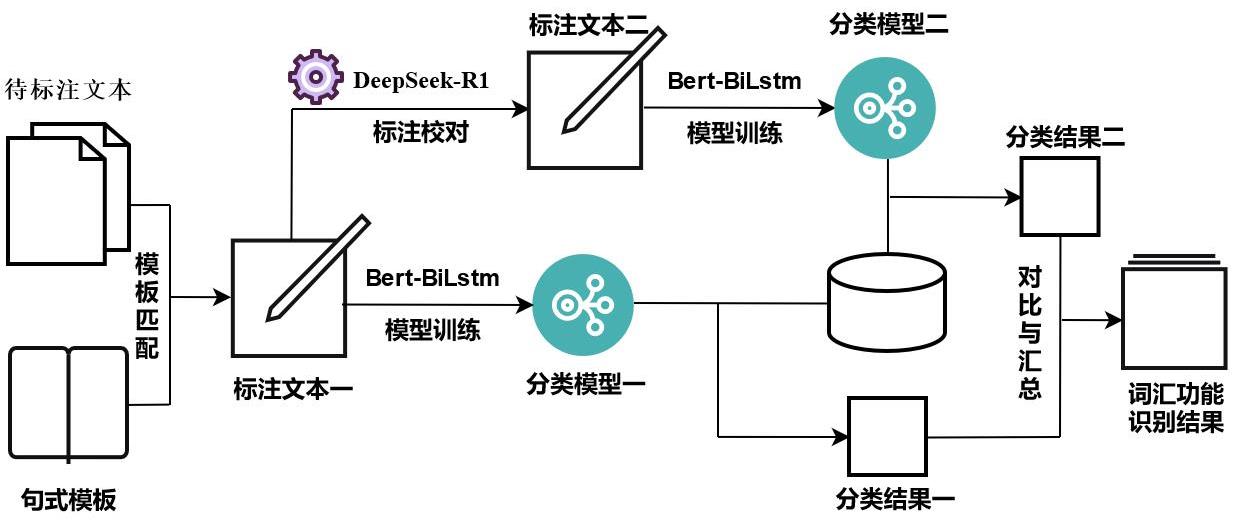
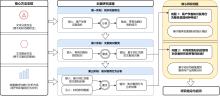
图2
研究框架图"
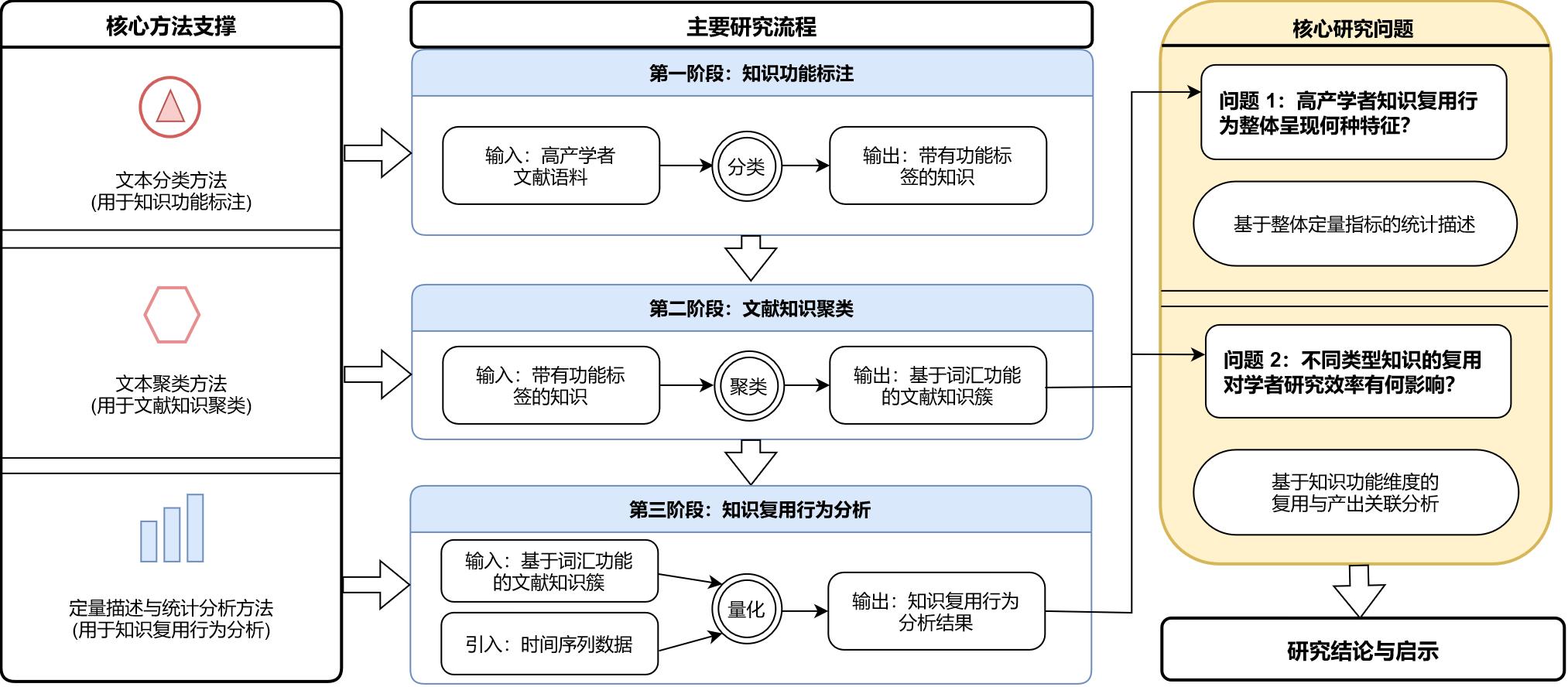
表1
词汇功能分类准则"
| 功能类别 | 划分依据 |
|---|---|
| 问题 | 研究旨在解决的问题或提出的研究动机 |
| 方法 | 达到目的所使用的算法、模型、实验手段或工具 |
| 背景 | 研究的应用场景、行业领域或理论背景 |
| 对象 | 研究的具体实体、数据集或特定研究群体 |
表2
知识特征表示示例"
| 知识 | 问题类知识a | 背景类知识b | … | 对象类知识c |
|---|---|---|---|---|
| 方法类知识k1 | 特征值 | 特征值 | … | 特征值 |
| 方法类知识k2 | 特征值 | 特征值 | … | 特征值 |
| … | … | … | … | … |
| 方法类知识kn | 特征值 | 特征值 | … | 特征值 |
表3
作者发文数量统计结果"
| 序号 | 作者 | 发文数/篇 |
|---|---|---|
| 1 | 俞立平 | 62 |
| 2 | 王晰巍 | 47 |
| 3 | 柯平 | 46 |
| 4 | 王秉 | 43 |
| 5 | 储节旺 | 39 |
| 6 | 马海群 | 38 |
| 7 | 冉从敬 | 36 |
| 8 | 肖鹏 | 35 |
| … | … | … |
| 7112 | 雷兵 | 1 |
表4
关键词共现矩阵"
| 关键词 | 高校图书馆 | 公共图书馆 | 图书馆 | 影响因素 | … | 技术评价 |
|---|---|---|---|---|---|---|
| 高校图书馆 | 0 | 0 | 2 | 8 | … | 0 |
| 公共图书馆 | 0 | 0 | 2 | 10 | … | 0 |
| 图书馆 | 2 | 2 | 0 | 1 | … | 0 |
| 影响因素 | 8 | 10 | 1 | 0 | … | 0 |
| … | … | … | … | … | … | … |
| 技术评价 | 0 | 0 | 0 | 0 | … | 0 |
表5
“作者-关键词”拼接结果"
| 作者 | 关键词 |
|---|---|
| 相丽玲 | 美国;英国;欧盟;澳大利亚;中国;政府数据开放;运行机制;平台建设;CKAN |
| 赵一鸣 | 搜索引擎;问答系统;自然语言问答能力;搜索引擎评价 |
| 程秀峰 | 知识融合;科研数据管理;用户行为;数据采集;数据共享 |
| … | … |
| 赵聪 | 系统三基元;农民数字素养;数字技术;数字乡村;培育策略 |
表6
模型效果(F1值)"
| 知识类型 | 分类模型一 | 分类模型二 |
|---|---|---|
| 方法类知识 | 0.853 | 0.862 |
| 目的类知识 | 0.920 | 0.919 |
| 背景类知识 | 0.858 | 0.840 |
| 对象类知识 | 0.879 | 0.896 |
| 均值 | 0.877 | 0.879 |
表7
知识标注结果示例"
| 知识名称 | 类型 | 知识名称 | 类型 | 知识名称 | 类型 | 知识名称 | 类型 |
|---|---|---|---|---|---|---|---|
| 扎根理论 | 方法 | 影响因素 | 问题 | 数字人文 | 背景 | 高校图书馆 | 对象 |
| 知识图谱 | 方法 | 用户画像 | 问题 | 人工智能 | 背景 | 公共图书馆 | 对象 |
| 深度学习 | 方法 | 情报分析 | 问题 | 网络舆情 | 背景 | 图书馆 | 对象 |
| LDA | 方法 | 学术评价 | 问题 | 智慧图书馆 | 背景 | 美国 | 对象 |
| 社会网络分析 | 方法 | 评价指标 | 问题 | 阅读推广 | 背景 | ChatGPT | 对象 |
表8
方法类知识特征向量"
| 方法类知识 | 情感分析 | 用户画像 | 情报分析 | 学术评价 | … | 对外情报工作 |
|---|---|---|---|---|---|---|
| 扎根理论 | 2 | 2 | 0 | 1 | … | 0 |
| 知识图谱 | 0 | 1 | 0 | 0 | … | 0 |
| 深度学习 | 8 | 0 | 0 | 0 | … | 0 |
| LDA | 3 | 1 | 0 | 1 | … | 0 |
| … | … | … | … | … | … | 0 |
| 全局指针网络 | 0 | 0 | 0 | … | … | 0 |
表9
各类知识聚类效果"
| 知识类型 | 聚类前知识数/个 | 聚类后知识簇数/个 | 平均中心距离 | 离群点数/个 | 知识簇规模分布/个 | 迭代聚类次数/次 |
|---|---|---|---|---|---|---|
| 方法类 | 1 666 | 45 | 1.281 | 34 | 11~384 | 3 |
| 问题类 | 785 | 10 | 1.499 | 27 | 14~386 | 4 |
| 背景类 | 3 665 | 23 | 0.968 | 0 | 12~1 192 | 9 |
| 对象类 | 1 245 | 18 | 1.055 | 13 | 23~554 | 9 |
表10
方法类知识聚类结果"
| 簇序 | 知识数/个 | 簇中知识类型 | 簇中知识 |
|---|---|---|---|
| 1 | 13 | 科学评价类 | SOR;动态主题模型;信息计量;科学知识图谱… |
| 2 | 68 | 智能计算类 | 文本分类;图神经网络;SVM;特征提取… |
| 3 | 57 | 行为建模类 | 元分析;层次分析法;结构方程模型;眼动实验… |
| 4 | 24 | 管理评估类 | 情报感知;数据质量;风险评估;实现路径… |
| … | … | … | |
| 45 | 11 | 质性研究与多维模型类 | 政策文本计算;质性分析;跨理论模型;物元可拓模型… |
表11
“学者-方法类”知识矩阵"
| 学者 | 簇1 | 簇2 | 簇3 | 簇4 | … | 簇45 |
|---|---|---|---|---|---|---|
| 俞立平 | 0 | 0 | 1 | 0 | … | 0 |
| 王晰巍 | 0 | 0 | 1 | 1 | … | 0 |
| 柯平 | 1 | 0 | 0 | 2 | … | 0 |
| 王秉 | 4 | 0 | 0 | 4 | … | 0 |
| … | … | … | … | … | … | … |
| 刘桂锋 | 0 | 0 | 1 | 1 | … | 0 |
表12
方法类知识复用行为量化结果"
| 作者 | HHI | Effective Keywords | Actual Keywords Used |
|---|---|---|---|
| 俞立平 | 0.151 | 6.639 | 77 |
| 王晰巍 | 0.165 | 6.050 | 22 |
| 柯平 | 0.250 | 4.000 | 8 |
| 王秉 | 0.180 | 5.556 | 20 |
| 储节旺 | 0.109 | 9.143 | 16 |
| 马海群 | 0.156 | 6.400 | 24 |
| … | … | … | … |
| 陈峰 | 0.500 | 2.000 | 12 |
| … | … | … | … |
| 刘桂锋 | 0.250 | 4.000 | 4 |
表13
各类知识聚集度结果"
| 学者 | 方法知识聚集度 | 问题知识聚集度 | 背景知识聚集度 | 对象知识聚集度 |
|---|---|---|---|---|
| 俞立平 | 0.914 | 0.883 | 0.875 | 0.924 |
| 王晰巍 | 0.725 | 0.593 | 0.944 | 0.364 |
| 柯平 | 0.500 | 0.762 | 0.924 | 0.802 |
| 王秉 | 0.722 | 0.000 | 0.943 | 0.889 |
| … | … | … | … | … |
| 刘桂锋 | 0.000 | 0.600 | 0.871 | 0.400 |
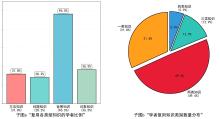
图3
描述性统计结果"
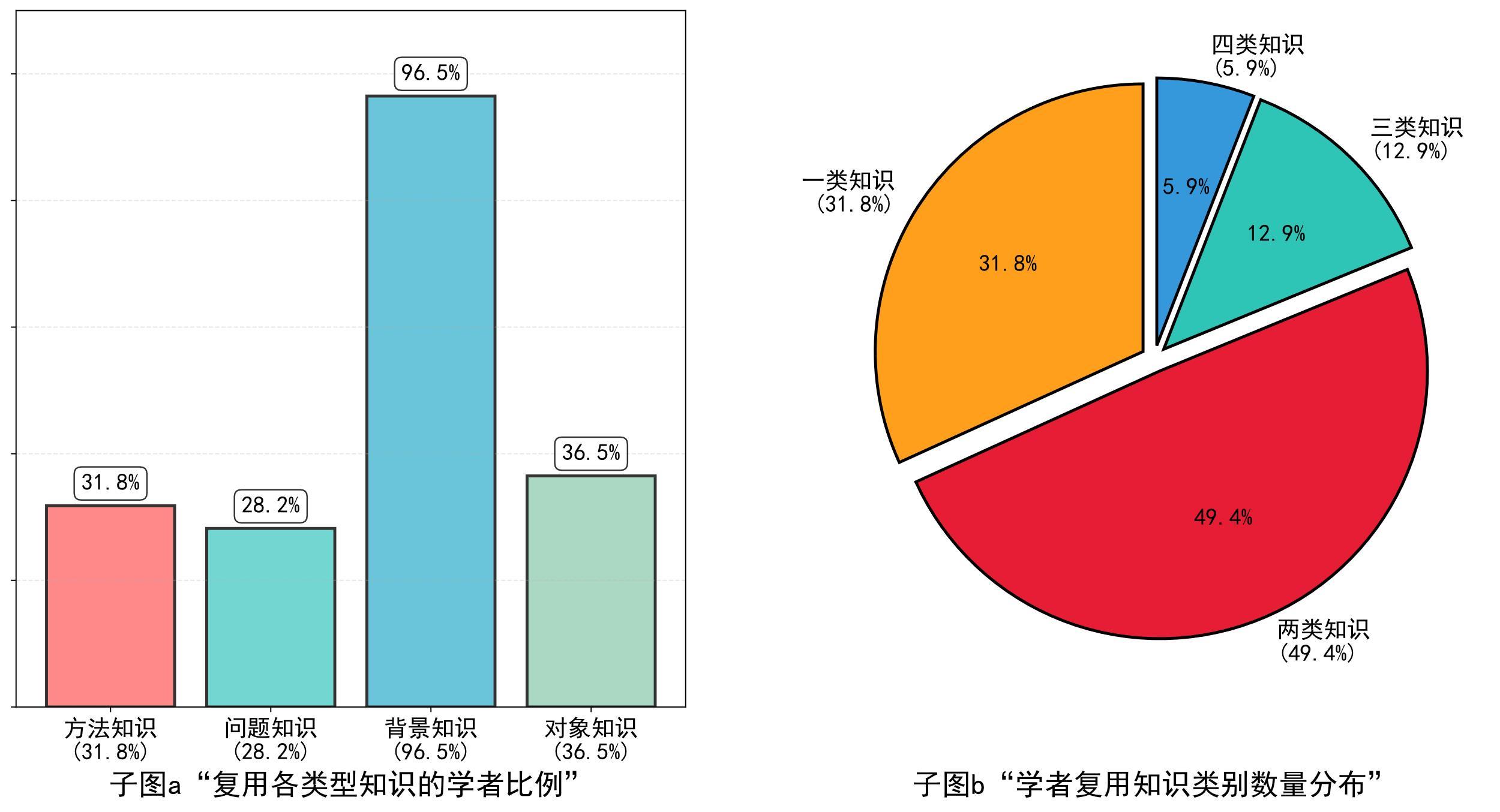
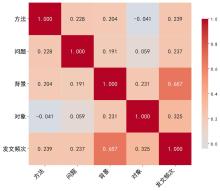
图4
相关性分析结果热力图"
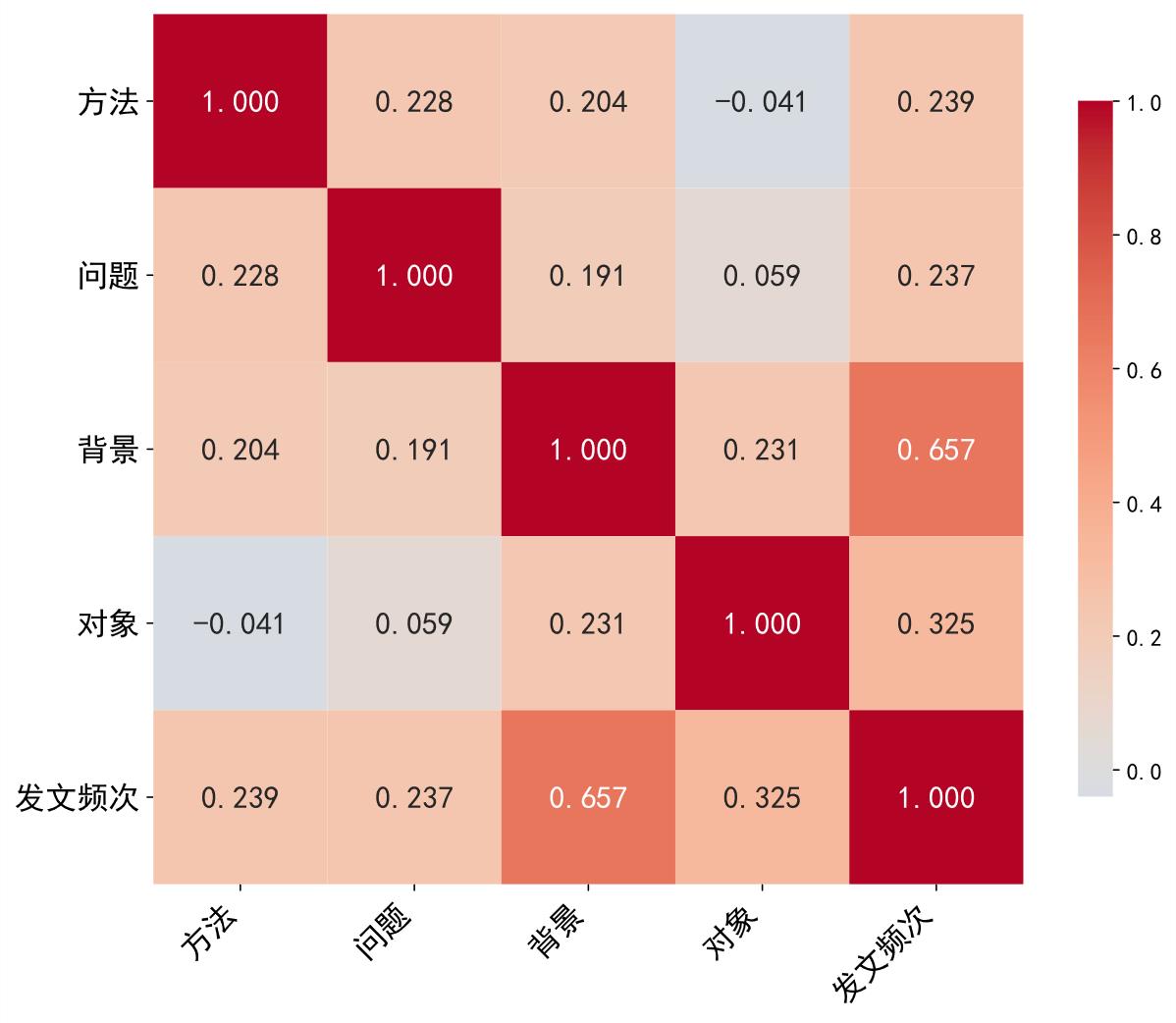
表14
多元线性模型回归系数结果"
| 变量 | 净效应系数 | p值 | 是否显著 |
|---|---|---|---|
| const | -14.037 | 0.027 | 是 |
| 方法 | 7.679 | 0.018 | 是 |
| 问题 | 6.447 | 0.030 | 是 |
| 背景 | 32.118 | 0.000 | 是 |
| 对象 | 13.345 | 0.000 | 是 |
表15
自变量交互作用结果"
| 交互项 | 交互系数 | p值 | 是否显著 |
|---|---|---|---|
| 方法×问题 | 30.648 | 0.019 | 是 |
| 方法×背景 | 94.460 | 0.001 | 是 |
| 方法×对象 | 20.666 | 0.161 | 否 |
| 问题×背景 | -22.110 | 0.529 | 否 |
| 问题×对象 | 22.425 | 0.090 | 否 |
| 背景×对象 | 9.251 | 0.845 | 否 |
| [1] | 习近平. 深入实施新时代人才强国战略 加快建设世界重要人才中心和创新高地[EB/OL]. (2021-12-15)[2026-01-12]. . |
| [2] | Bornmann L, Bauer J, Schlagberger E M. Characteristics of highly cited researchers 2015 in Germany[J]. Scientometrics, 2017, 111(1): 543-545. |
| [3] | 靳军宝, 曲建升, 吴新年, 等. 2014-2019年我国高被引科学家群体特征计量分析[J]. 科技管理研究, 2021, 41(3): 202-210. |
| Jin Junbao, Qu Jiansheng, Wu Xinnian, et al. Study on the Distribution characteristics of 2014-2019 ESI highly cited researchers of China[J]. Science and Technology Management Research, 2021, 41(3): 202-210. | |
| [4] | Batty M. The geography of scientific citation[J]. Environment and Planning A: Economy and Space, 2003, 35(5): 761-765. |
| [5] | 赵宁, 范巍, 张锐昕. 中国“全球高被引科学家”结构特征和成长规律分析——基于2014-2020年“全球高被引科学家”榜单数据[J]. 科技管理研究, 2022, 42(1): 208-214. |
| Zhao Ning, Fan Wei, Zhang Ruixin. Analysis on the distribution and growth law of global highly cited researchers in China and its enlightenment based on the list data of global highly cited researchers from 2014 to 2020[J]. Science and Technology Management Research, 2022, 42(1): 208-214. | |
| [6] | 张瑞红, 任晓亚, 谢黎, 等. ESI高被引科学家的分布研究[J]. 世界科技研究与发展, 2019, 41(3): 307-316. |
| Zhang Ruihong, Ren Xiaoya, Xie Li, et al. Study on distribution of ESI highly cited researchers[J]. World Sci-Tech R & D, 2019, 41(3): 307-316. | |
| [7] | 盖赢钊, 黄启蒙, 王宁, 等. 基于高被引论文的期刊热点指数构建及实证研究[J/OL]. 农业图书情报学报, 2026-03-24. . |
| Gai Yingzhao, Huang Qimeng, Wang Ning, et al. Construction and empirical study of periodical hotspot index based on highly cited papers[J/OL]. China Industrial Economics, 2026-03-24. | |
| [8] | 张亚莉, 张静文. 一种基于知识复用的利益相关者风险沟通模式[J]. 科技管理研究, 2009, 29(12): 393-395. |
| Zhang Yali, Zhang Jingwen. A risk communication model for stakeholders based on knowledge reuse[J]. Science and Technology Management Research, 2009, 29(12): 393-395. | |
| [9] | 张亚莉, 杨朝君. 多组织研发项目风险管理的模式分析及知识复用研究[J]. 工程管理学报, 2015, 29(3): 100-104. |
| Zhang Yali, Yang Zhaojun. Multi-organizational R & D project risk management based on knowledge reuse and pattern analysis[J]. Journal of Engineering Management, 2015, 29(3): 100-104. | |
| [10] | 刘颖, 胡海涛. 一种基于知识复用的动态服务组合方法[J]. 计算机科学, 2011, 38(3): 153-158. |
| Liu Ying, Hu Haitao. Approach to dynamic services composition based on knowledge reuse[J]. Computer Science, 2011, 38(3): 153-158. | |
| [11] | 卢艳秋, 宋昶, 王向阳. 基于工业互联网平台的企业间知识复用研究[J]. 情报科学, 2022, 40(2): 141-147, 161. |
| Lu Yanqiu, Song Chang, Wang Xiangyang. Knowledge reuse between enterprises based on industrial Internet platform[J]. Information Science, 2022, 40(2): 141-147, 161. | |
| [12] | 陈涛. 数字人文视域下图像知识复用语义模型研究[J]. 图书馆杂志, 2023, 42(2): 106-115. |
| Chen Tao. Research on semantic model of image knowledge reuse from the perspective of digital humanities[J]. Library Journal, 2023, 42(2): 106-115. | |
| [13] | 周林兴, 殷名. 知识发现、复用与再生产: 一种智慧档案馆的知识管理视角[J]. 档案管理, 2024(2): 42-47. |
| Zhou Linxing, Yin Ming. Knowledge discovery, reuse and reproduction: A perspective of knowledge management in smart archives[J]. Archives Management, 2024(2): 42-47. | |
| [14] | 张国标, 李鹏程, 陆伟, 等. 多特征融合的关键词语义功能识别研究[J]. 图书情报工作, 2021, 65(9): 89-96. |
| Zhang Guobiao, Li Pengcheng, Lu Wei, et al. Research on keyword semantic function recognition based on multi-feature fusion[J]. Library and Information Service, 2021, 65(9): 89-96. | |
| [15] | 罗卓然, 陆伟, 蔡乐, 等. 学术文本词汇功能识别——在论文新颖性度量上的应用[J]. 情报学报, 2022, 41(7): 720-732. |
| Luo Zhuoran, Lu Wei, Cai Le, et al. Application of lexical functions in novelty measurement of academic papers[J]. Journal of the China Society for Scientific and Technical Information, 2022, 41(7): 720-732. | |
| [16] | 常郝, 徐涛涛, 李峰. 多维特征文本复杂度框架与知识库增强模型[J]. 农业图书情报学报, 2025, 37(8): 61-77. |
| Chang Hao, Xu Taotao, Li Feng. A multi-dimensional feature text complexity framework and knowledge base augmentation model[J]. Journal of Library and Information Science in Agriculture, 2025, 37(8): 61-77. | |
| [17] | 樊超, 郭进利, 韩筱璞, 等. 人类行为动力学研究综述[J]. 复杂系统与复杂性科学, 2011, 8(2): 1-17. |
| Fan Chao, Guo Jinli, Han Xiaopu, et al. A review of research on human dynamics[J]. Complex Systems and Complexity Science, 2011, 8(2): 1-17. | |
| [18] | Gupta S, Manning C. Analyzing the dynamics of research by extracting key aspects of scientific papers[C]//Proceedings of 5th International Joint Conference on Natural Language Processing. Kerrville: Association for Computational Linguistics 2011: 1-9. |
| [19] | Heffernan K, Teufel S. Identifying problems and solutions in scientific text[J]. Scientometrics, 2018, 116(2): 1367-1382. |
| [20] | Wang Jiamin, Cheng Qikai, Lu Wei, et al. A term function-aware keyword citation network method for science mapping analysis[J]. Information Processing & Management, 2023, 60(4): 103405. |
| [21] | 吕璐成, 周健, 孙文君, 等. 微调大模型在专利文本挖掘中的应用效果研究[J]. 农业图书情报学报, 2026, 38(4): 36-46. |
| Lucheng Lyu, Zhou Jian, Sun Wenjun, et al. Performance of fine-tuned large language models in patent text mining[J]. Journal of Library and Information Science in Agriculture, 2026, 38(4): 36-46. | |
| [22] | 蔡祎然, 胡正银, 刘春江. 大语言模型赋能科技文献数据挖掘进展分析[J]. 农业图书情报学报, 2025, 37(2): 4-22. |
| Cai Yiran, Hu Zhengyin, Liu Chunjiang. Analysis of progress in data mining of scientific literature using large language models[J]. Journal of Library and Information Science in Agriculture, 2025, 37(2): 4-22. | |
| [23] | Hamers L, Hemeryck Y, Herweyers G, et al. Similarity measures in scientometric research: The Jaccard index versus Salton's cosine formula[J]. Information Processing & Management, 1989, 25(3): 315-318. |
| [24] | Leydesdorff L, Rafols I. Indicators of the interdisciplinarity of journals: Diversity, centrality, and citations[J]. Journal of Informetrics, 2011, 5(1): 87-100. |
| [25] | 彭俞超, 韩珣, 李建军. 经济政策不确定性与企业金融化[J]. 中国工业经济, 2018(1): 137-155. |
| Peng Yuchao, Han Xun, Li Jianjun. Economic policy uncertainty and corporate financialization[J]. China Industrial Economics, 2018(1): 137-155. | |
| [26] | Huang Shanshan, Wan Xiaojun. AKMiner: domain-specific knowledge graph mining from academic literatures[C]//Web Information Systems Engineering - WISE 2013. Berlin, Heidelberg: Springer, 2013: 241-255. |
| [27] | 李信, 程齐凯, 刘兴帮. 基于词汇功能识别的科研文献分析系统设计与实现[J]. 图书情报工作, 2017, 61(1): 109-116. |
| Li Xin, Cheng Qikai, Liu Xingbang. Design and implementation of scientific literature analysis system based on term function recognition[J]. Library and Information Service, 2017, 61(1): 109-116. | |
| [28] | 商宪丽. 基于多模主题网络的交叉学科知识组合模式研究——以数字图书馆为例[J]. 情报科学, 2018, 36(3): 130-137, 150. |
| Shang Xianli. The pattern of knowledge combination in cross-disciplines based on multi-mode topic network - An example of digital library[J]. Information Science, 2018, 36(3): 130-137, 150. | |
| [29] | Huang M H, Chang Y W. A comparative study of interdisciplinary changes between information science and library science[J]. Scientometrics, 2012, 91(3): 789-803. |
| [30] | Chang Y W, Huang M H. A study of the evolution of interdisciplinarity in library and information science: Using three bibliometric methods[J]. Journal of the American Society for Information Science and Technology, 2012, 63(1): 22-33. |
| [31] | De Solla Price D J. Little Science, Big Science[M]. New York: Columbia University Press, 1963. |
| [1] | 屠梓轩, 刘双媛, 陈思思, 沈丽宁. 三元交互理论视角下老年人网络健康信息接触对健康管理的影响机制研究[J]. 农业图书情报学报, 2026, (): 1-12. |
| [2] | 田冰洁, 刘倩, 彭旭丹. 链主数字素养对农村电商供应链韧性的影响机制研究[J]. 农业图书情报学报, 2026, (): 1-9. |
| [3] | 刘发军, 董容容, 黄凯. AI时代居民数字安全感知水平调查及提升策略研究[J]. 农业图书情报学报, 2026, (): 1-13. |
| [4] | 彭丽徽, 孙莹莹, 裴佳勇. 风险防护视角下短视频用户算法推荐服务风险应对行为研究[J]. 农业图书情报学报, 2026, (): 1-16. |
| [5] | 莫靖诗. AIGC时代下图书馆在提示素养培育中的角色定位与实践路径研究[J]. 农业图书情报学报, 2026, 38(7): 110-117. |
| [6] | 朱世琴, 吕佳霖, 顾秀伦. 高校学生数据安全素养评价指标体系构建与实证研究[J]. 农业图书情报学报, 2026, (): 1-12. |
| [7] | 王超, 陈洁, 侯辉. 公共图书馆健康信息服务空间的供给覆盖、体验障碍及供需适配研究[J]. 农业图书情报学报, 2026, (): 1-11. |
| [8] | 谢鹏飞, 李白杨. 大模型驱动的AI检索与传统信息检索比较研究[J]. 农业图书情报学报, 2026, (): 1-9. |
| [9] | 杨善茜. 人工智能驱动下图书馆个性化智慧服务模式构建:基于国内外多案例的整合性理论框架[J]. 农业图书情报学报, 2026, (): 1-12. |
| [10] | 杨天卓, 白阳. AIGC时代数字图书馆面向公共文化的知识服务功用研究[J]. 农业图书情报学报, 2026, (): 1-11. |
| [11] | 宋玲玲, 张杏辉. AI大模型驱动背景下国内外图书馆智能咨询服务效能研究[J]. 农业图书情报学报, 2026, 38(4): 99-111. |
| [12] | 张馨桐, 邓小昭. UGC社区用户催更行为路径与影响因素研究[J]. 农业图书情报学报, 2026, (): 1-17. |
| [13] | 王超, 陈洁, 侯辉. 国内外高校图书馆AI虚拟馆员部署与人机服务模式比较研究——基于“双一流”与U.S.News世界前100高校样本[J]. 农业图书情报学报, 2026, (): 1-11. |
| [14] | 李洁, 张兴旺, 钱国富, 罗宇舟. 英国国家数据图书馆建设规划的分析及其对中国的启示[J]. 农业图书情报学报, 2026, (): 1-10. |
| [15] | 郭海玲, 曾美云, 冯予希. AI赋能高校图书馆服务科技成果转化的模式构建与策略研究[J]. 农业图书情报学报, 2026, 38(2): 56-65. |
|
||