

农业图书情报学报 ›› 2026, Vol. 38 ›› Issue (5): 82-93.doi: 10.13998/j.cnki.issn1002-1248.26-0285
• 中国信息资源管理学科自主知识体系构建专刊 • 上一篇 下一篇
牛春华1,2, 王雅淇1, 沙勇忠1,2
收稿日期:2026-04-11
出版日期:2026-05-05
发布日期:2026-06-01
作者简介:基金资助:NIU Chunhua1,2, WANG Yaqi1, SHA Yongzhong1,2
Received:2026-04-11
Online:2026-05-05
Published:2026-06-01
摘要:
[目的/意义] 面对中国式现代化进程中复杂治理情境对知识适配性的新要求,本文探讨在中国自主知识体系背景下,推动知识服务向“场景适配”转型的重要价值,旨在通过构建场景适配型知识服务模型,探讨中国自主知识体系建设的知识服务支撑路径。 [方法/过程] 从知识生产场景逻辑出发,剖析中国自主知识体系建设的知识服务需求机制,在梳理知识服务、知识组织与智能服务相关研究的基础上,分析场景适配型智能知识服务的“问题层-场景层-知识层-服务层”运行模式与关键特征,并进一步提出信息资源管理学科的关键支撑能力与人才培养路径。 [结果/结论] 研究明确了中国自主知识体系建设需要场景适配型的智能知识服务的发展,信息资源管理学科在多源异构知识资源整合、场景知识配置和知识资源体系化治理方面为场景适配型的智能知识服务提供支撑。应进一步强化“技术-知识-场景”协同建设,推动面向数字智能时代的复合型知识服务人才培养。
中图分类号: G203
牛春华, 王雅淇, 沙勇忠. 中国自主知识体系建设中的场景适配型智能知识服务——信息资源管理学科的支撑能力与人才培养[J]. 农业图书情报学报, 2026, 38(5): 82-93.
NIU Chunhua, WANG Yaqi, SHA Yongzhong. Scenario-Adaptive Intelligent Knowledge Services in the Construction of China's Independent Knowledge System: Supporting Capabilities and Talent Cultivation in the Discipline of Information Resource Management[J]. Journal of library and information science in agriculture, 2026, 38(5): 82-93.
图1
中国自主知识体系建设对知识服务的需求"
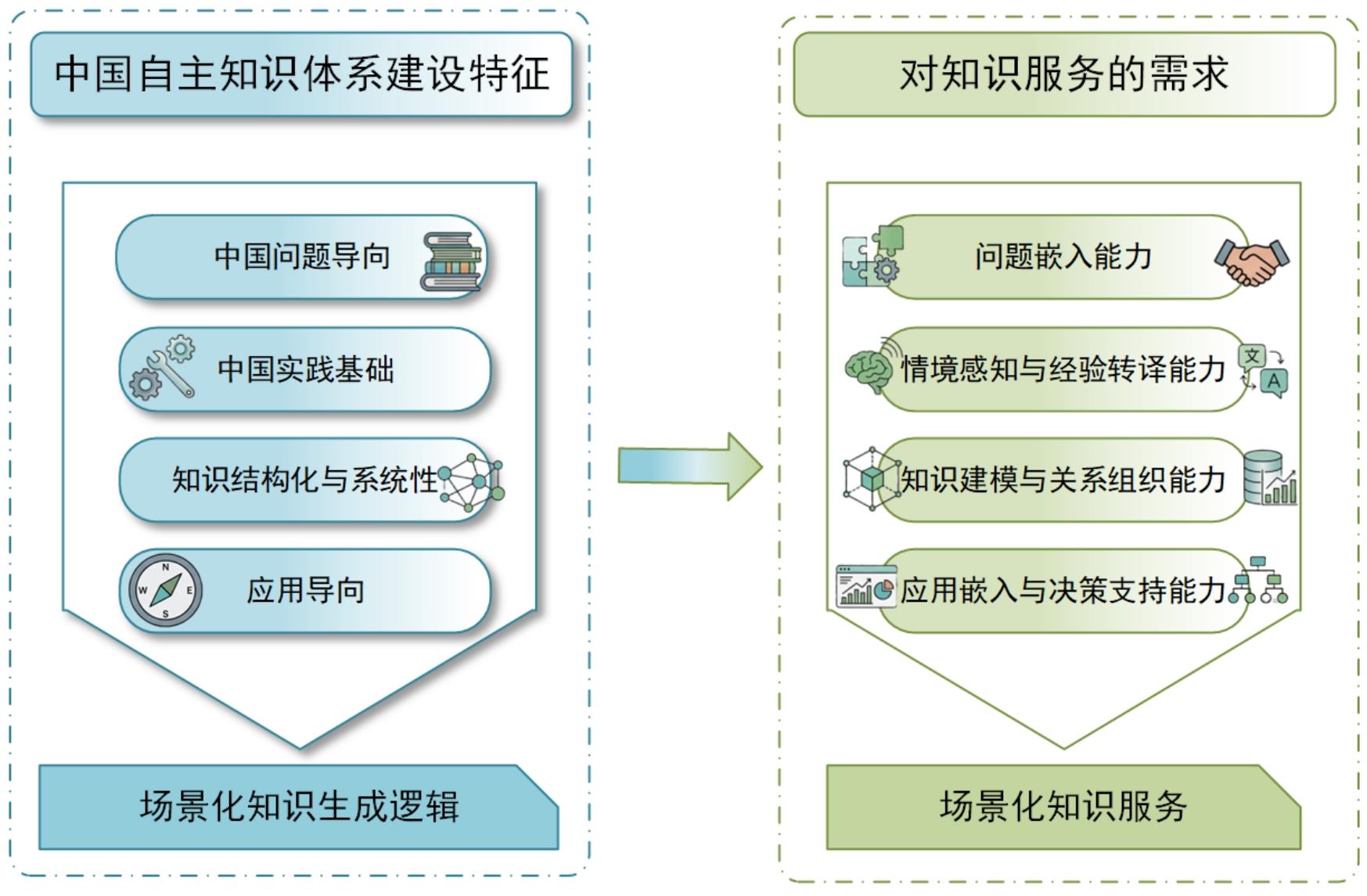
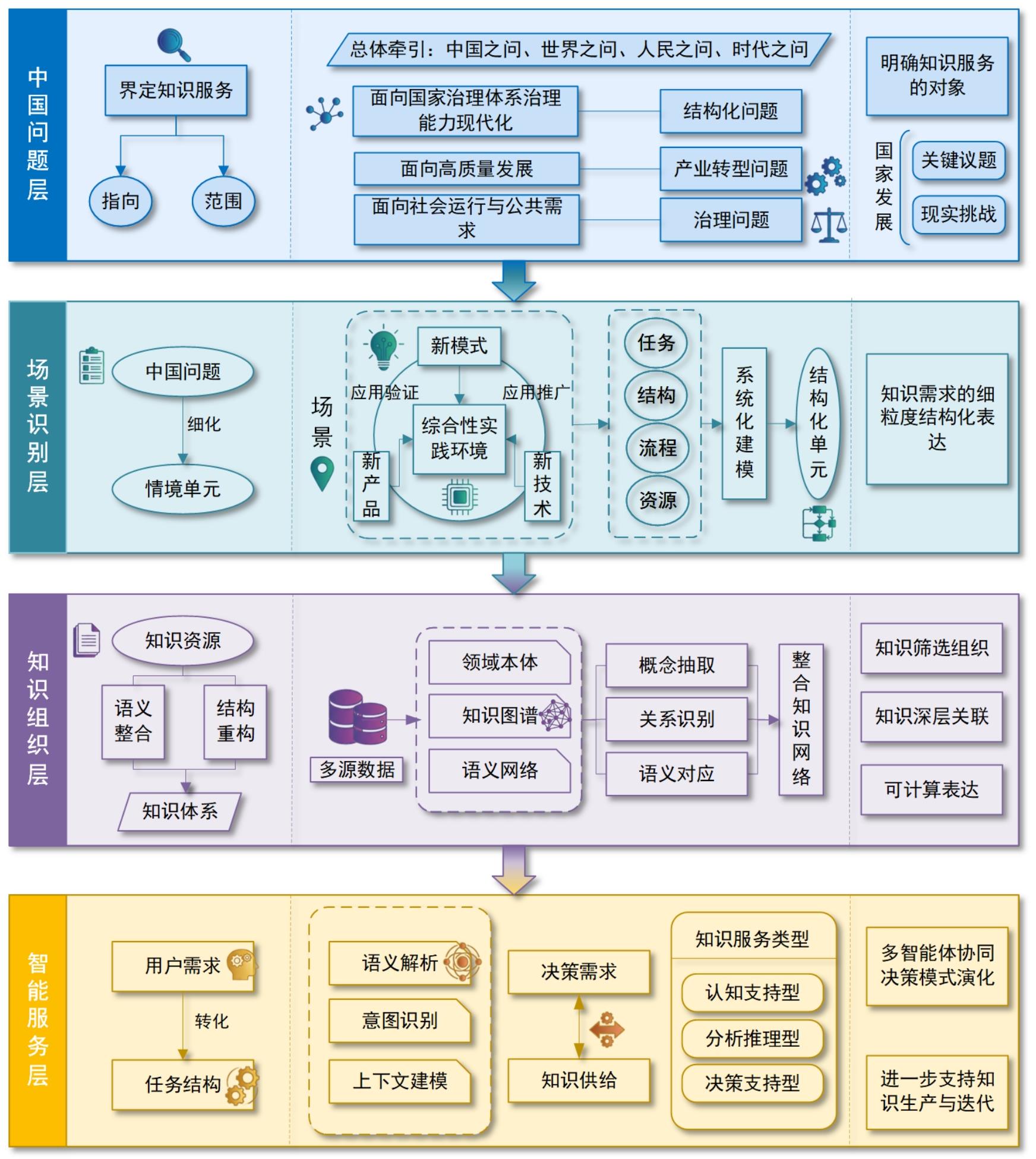
图2
场景适配型智能知识服务4层模型"
| [1] |
张冠梓. 努力构建中国式现代化自主知识体系[EB/OL]. (2026-01-19)[2026-04-09].
|
| [2] |
张文喜. 构建中国自主知识体系: 基于知识财产权知识体系创新的思考[J]. 浙江学刊, 2025(2): 12-20.
|
|
|
|
| [3] |
黄海. 把握构建中国特色哲学社会科学之“道”[N]. 光明日报, 2026-04-27(007).
|
| [4] |
孟照海. 中国教育学自主知识体系的生成逻辑[J]. 教育研究, 2024, 45(8): 46-58.
|
|
|
|
| [5] |
刘嗣方. 构建中国特色哲学社会科学的方向与路径[N]. 中国社会科学报, 2023-07-27(002).
|
| [6] |
鲍雅茹, 顾金喜. 构建中国特色哲学社会科学的方向与路径[J]. 浙江学刊, 2025(2): 12-20.
|
| [7] |
詹承豫, 徐明婧. 基于“情景应对-知识整合”的中国应急管理跨学科自主知识体系构建逻辑研究[J]. 公共管理与政策评论, 2024, 13(2): 1-12.
|
|
|
|
| [8] |
王俊秀. 社会心态理论——一种宏观社会心理学范式[M]. 北京: 社会科学文献出版社, 2014.
|
|
|
|
| [9] |
李培林. 社会学与中国社会巨变[M]. 北京: 社会科学文献出版社·群学出版分社, 2020.
|
|
|
|
| [10] |
张东刚. 建构中国自主的知识体系的若干思考[J]. 中国社会科学, 2024(5): 90-104.
|
|
|
|
| [11] |
栗元邦, 彭蓉, 季晶晶, 等. 经验研究中情景感知需求获取与建模系统文献综述[J]. 软件学报, 2018, 29(2): 320-339.
|
|
|
|
| [12] |
孙正聿. 原创性概念和标识性概念——建构中国自主知识体系的概念基础[J]. 中国社会科学, 2024(7): 38-51, 204-205.
|
|
|
|
| [13] |
王萌, 王昊奋, 李博涵, 等. 新一代知识图谱关键技术综述[J]. 计算机研究与发展, 2022, 59(9): 1947-1965.
|
|
|
|
| [14] |
陆锋, 诸云强, 张雪英. 时空知识图谱研究进展与展望[J]. 地球信息科学学报, 2023, 25(6): 1091-1105.
|
|
|
|
| [15] |
|
| [16] |
杨洪源. 以党的二十届四中全会精神为指引 构建中国自主知识体系的哲学基础[J]. 哲学研究, 2025(12): 5-13, 169.
|
|
|
|
| [17] |
浪潮科技. 数字峰会探新“智”|浪潮科技发布“知涌一体化知识服务平台”, 以体系化知识平台为底座,赋能政务智能化[EB/OL]. (2026-04-30)[2026-04-30].
|
| [18] |
韩普, 李雄, 刘森岭, 等. 基于大语言模型的医疗健康领域知识服务模式研究[J]. 西华大学学报(哲学社会科学版), 2025, 44(1): 24-35.
|
|
|
|
| [19] |
AI如何与企业法务和合规工作深度融合?[EB/OL]. (2025-07-17)[2026-04-07].
|
| [20] |
徐拥军, 杨红艳, 郭若涵. 中国自主知识体系建构背景下的主文献建设[J]. 中国人民大学学报, 2024, 38(1): 1-11.
|
|
|
|
| [21] |
中共中央. 中共中央关于坚持和完善中国特色社会主义制度 推进国家治理体系和治理能力现代化若干重大问题的决定[EB/OL]. (2019-11-05)[2026-03-09].
|
| [22] |
迟福林. 以结构转型推动高质量发展[EB/OL]. (2023-03-30)[2026-03-09].
|
| [23] |
刘伟. 以结构转型破解发展难题[EB/OL]. (2024-06-28)[2026-03-29].
|
| [24] |
国家发展改革委. 深入实施“人工智能+”行动 为高质量发展提供强大动能[EB/OL]. (2025-09-12)[2026-04-09].
|
| [25] |
孙美娟. 共探社会治理现代化新路径[EB/OL]. (2025-10-05)[2026-03-10].
|
| [26] |
陈一新. 加快推进社会治理现代化[N/OL]. 人民日报, 2019-05-21[2026-03-11].
|
| [27] |
郑国光, 吴佳. 构建中国自主的应急管理知识体系: 实践、问题与议程[J]. 中国应急管理科学, 2023(8): 1-9.
|
|
|
|
| [28] |
李晓华. 未来产业的内涵、特征、难点及进路[J]. 新疆师范大学学报(哲学社会科学版), 2025, 46(3): 71-80, 2.
|
|
|
|
| [29] |
李纲, 王施运, 毛进, 等. 面向态势感知的国家安全事件图谱构建研究[J]. 情报学报, 2021, 40(11): 1164-1175.
|
|
|
|
| [30] |
|
| [31] |
申姝婧, 杨建林, 刘明月. 情境化分析视角下的情报素养演化过程概念模型构建研究[J]. 情报学报, 2024, 43(2): 127-139.
|
|
|
|
| [32] |
章小童, 李月琳, 辛然. 用户健康信息搜索中交互感知、交互行为与交互质量的关系探究[J]. 情报学报, 2024, 43(11): 1349-1365.
|
|
|
|
| [33] |
求是网. 场景建设, 4个关键环节很重要[EB/OL]. (2026-01-12)[2026-02-08].
|
| [34] |
刘炜, 金家琴, 张宁, 等. 从分类主题到语义空间: 人工智能驱动下图书馆知识组织体系的转型与发展[J/OL]. 中国图书馆学报: 1-20[2026-04-10].
|
|
|
|
| [35] |
曾建勋, 林鑫, 吴茜. 产业链词表: 概念内涵、体系框架与应用场景[J/OL]. 中国图书馆学报: 1-14[2026-04-21].
|
|
|
|
| [36] |
蒋勋, 唐明伟. 基于多智能体的应急知识服务运行架构研究[J/OL]. 西华大学学报(哲学社会科学版): 1-10[2026-04-21].
|
|
|
|
| [37] |
刘轩琦, 褚伟, 王晓玉, 等. 数智化环境下人机协同的中医药语义知识组织与知识服务研究[J]. 图书与情报, 2025(6): 11-24.
|
|
|
|
| [38] |
刘晓轩, 李慧强, 陈伟. 生成式人工智能驱动图书馆知识服务研究现状分析[J]. 山东图书馆学刊, 2025(6): 22-28.
|
|
|
|
| [39] |
张海涛, 于文慧, 苏欣宇, 等. 情报决策的内涵阐释、科学价值与实现路径[J]. 情报科学, 2026, 44(3): 1-9.
|
|
|
|
| [40] |
任剑, 叶珂廷, 张威威, 等. 社会网络下基于大语言模型属性挖掘与TSK模型的应急决策方法[J/OL].中国管理科学, 1-25[2026-04-08].
|
|
|
|
| [41] |
董学辉, 黄家铭, 郑吾昕, 等. AI驱动的国土空间规划多维协同决策创新及应用[J/OL]. 自然资源信息化, 1-9[2026-04-16].
|
|
|
|
| [42] |
苏维. 基于知识图谱与自然语言处理的生态环境政策智能分析与决策支持系统研究[J]. 科技与创新, 2026(4): 176-178, 185.
|
|
|
|
| [43] |
韩厢君. 融合大数据的农村劳动力信息集成与决策支持平台[J]. 数字经济, 2026(S1): 47-48.
|
|
|
|
| [44] |
张思静. 财务决策支持系统的数据挖掘应用[J]. 数字经济, 2026(S1): 88-89.
|
|
|
|
| [45] |
吴畑, 胡宜君, 郑冰. 基于大语言模型的图书馆知识服务多智能体协作模型研究[J]. 图书情报工作, 2026, 70(10): 108-121.
|
|
|
|
| [46] |
赵瑞雪, 李甜, 关陟昊, 等. 知识服务与新质生产力: 双向赋能机制与实践路径[J]. 农业图书情报学报, 2024, 36(2): 4-14.
|
|
|
|
| [47] |
龙跃, 陈启浩. 基于多源数据融合与知识关联聚合的战略性新兴产业关键技术识别研究[J]. 科技进步与对策, 2026, 43(5): 60-71.
|
|
|
|
| [48] |
储节旺, 张子芳. 多源异构空间数据融合的情报挖掘和知识发现研究[J]. 情报理论与实践, 2025, 48(11): 112-121, 179.
|
|
|
|
| [49] |
夏义堃, 刘博文, 田聪. 情报分析中多源多模态数据融合的逻辑思路与技术路径研究[J]. 情报资料工作, 2025, 46(5): 5-15.
|
|
|
|
| [50] |
窦路遥. 基于纵向联邦学习和大模型增强的跨机构数据融合优化[J/OL]. 现代情报, 1-12[2026-04-03] .
|
|
|
|
| [51] |
胡锡晟, 付强, 黄晓林, 等. 基于多模态数据驱动的情报智能体模型构建[J/OL]. 情报杂志, 1-9[2026-01-15].
|
|
|
|
| [52] |
任萍萍, 方锐, 赵宁, 等. AI4S驱动下智慧图书馆知识服务范式重构及生态系统构建研究[J/OL]. 图书馆杂志, 1-9[2026-03-03].
|
|
|
|
| [53] |
陈凯华, 王硕, 张超, 等. 加强面向场景需求的公共治理信息技术预见[J]. 中国科学院院刊, 2025, 40(10): 1653-1662.
|
|
|
|
| [54] |
孙雨生, 范颖, 祝博. 国内大数据赋能的智慧推荐资源管理技术研究进展[J]. 农业图书情报学报, 2023, 35(12): 4-17.
|
|
|
|
| [55] |
黄飞燕. 新型研究型大学图书馆纸电图书协同建设实践探索——以南方科技大学图书馆为例[J]. 农业图书情报学报, 2024, 36(11): 92-103.
|
|
|
|
| [56] |
史忠艳, 雷洁, 孙坦, 等. DeepSeek赋能领域知识图谱低成本构建研究[J]. 农业图书情报学报, 2025, 37(3): 4-17.
|
|
|
|
| [57] |
柳亚, 毛谦昂, 颜嘉麒, 等. 面向用户动态偏好的科技论文推荐: 一种基于注意嵌入的知识图谱方法[J]. 信息资源管理学报, 2025, 15(1): 113-125.
|
|
|
|
| [58] |
田兆雪, 任奕, 王媛, 等. 用户需求导向的交叉学科专题信息资源导航建设实践——以清华大学双碳信息导航为例[J]. 图书情报工作, 2024, 68(2): 41-49.
|
|
|
|
| [59] |
陈文珺, 杨佳佳. 基于共享知识迁移学习的跨领域推荐研究[J]. 情报科学, 2020, 38(6): 126-132.
|
|
|
|
| [60] |
王金凤, 杨慧琳, 赵伟宇, 等. 知识迁移下基于融合知识网络与链路预测的技术机会识别[J]. 情报杂志, 2025, 44(5): 165-173, 198.
|
|
|
|
| [61] |
陈欣, 周应冉. 基于数据生命周期管理阶段的社会科学数据开放平台数据标准建设研究[J]. 图书馆理论与实践, 2026(1): 90-103.
|
|
|
|
| [62] |
刘晓峰. 因何治、治什么、如何治: 图书馆数据治理“元问题”研究[J]. 图书馆工作与研究, 2026(3): 37-45.
|
|
|
|
| [63] |
李旭青, 沙武田. 数据治理时代的图书馆资源建设与管理指南——评《数据和数字资源标准规范》[J/OL]. 图书情报工作, 1-4[2026-04-08].
|
|
|
|
| [64] |
公蓓, 朱明龙. 可信数据空间建设背景下档案数据安全治理研究: 基本特点、内在逻辑及实施路径[J/OL]. 档案与建设, 1-8[2026-05-06].
|
|
|
|
| [65] |
赵慧, 陈璟浩, 郭沙, 等. 人工智能国际合作机制中的跨境数据治理范式构建[J]. 农业图书情报学报, 2025, 37(11): 6-29.
|
|
|
|
| [66] |
胡安琪. 生成式人工智能背景下智慧图书馆数据治理体系构成、现实困境与变革路径[J]. 图书馆工作与研究, 2026(2): 51-60, 79.
|
|
|
|
| [67] |
崔文波, 蔚海燕. 人工智能环境下多模态数据治理问题与路径研究[J/OL]. 图书馆杂志, 1-12[2025-11-03].
|
|
|
|
| [68] |
刘静, 袁莉. 数据要素驱动的信息资源管理学科人才培养体系重构探索[J/OL]. 现代情报, 1-13[2026-03-25].
|
|
|
|
| [69] |
杨海娟, 王淼, 刘坤锋. 智向未来: “十五五”信息资源管理学科发展与人才培养前瞻[J]. 档案管理, 2025(6): 109-110, 115.
|
|
|
|
| [70] |
杨冠灿, 张滋荷. 面向人才供需适配的动态感知体系构建: 理论框架与实现路径[J]. 农业图书情报学报, 2025, 37(9): 4-17.
|
|
|
|
| [71] |
张洋, 吴婷婷, 李晶. 交叉学科视角下的信息资源管理创新人才培养[J]. 信息资源管理学报, 2024, 14(3): 21-29, 55.
|
|
|
|
| [72] |
李猛力, 王颖, 钱力, 等. 面向新质生产力发展的科技人才数据底座建设[J]. 农业图书情报学报, 2024, 36(2): 15-25.
|
|
|
|
| [73] |
张艳丰, 罗心晨. OBE-CDIO理念下信息资源管理学科人才培养与社会需求适配研究[J]. 图书馆学研究, 2025(12): 27-38.
|
|
|
|
| [74] |
钱明辉, 刘越男. 双数计划: 面向国家数字化转型的信息资源管理本科人才培养改革探索[J]. 中国人民大学教育学刊, 2023(2): 43-57.
|
|
|
| [1] | 吴丹, 许浩. 从人机交互到人智协同:中国信息资源管理学科自主知识体系建构的前沿视角[J]. 农业图书情报学报, 2026, 38(5): 55-64. |
| [2] | 周文杰. 自主知识体系构建语境中的信息资源管理理论场域论析——一项面向中国本土学术话语的系统性考察[J]. 农业图书情报学报, 2026, 38(5): 65-81. |
| [3] | 周亚, 刘宇轩. 目录学:中国自主知识体系建构的基本方法[J]. 农业图书情报学报, 2026, 38(5): 103-112. |
| [4] | 刘洋, 田慧溢. 脑电技术在信息资源管理学科的应用:现状与展望[J]. 农业图书情报学报, 2024, 36(4): 63-71. |
| [5] | 夏义堃, 蒋洁, 张夏恒, 王建冬, 周文杰, 杨新涯, 李阳. 发展新质生产力的信息资源管理学科回应与思考[J]. 农业图书情报学报, 2024, 36(1): 4-32. |
| [6] | 李甜, 赵瑞雪, 鲜国建, 寇远涛. 农业智能知识服务赋能乡村振兴:内在机理与困境纾解[J]. 农业图书情报学报, 2023, 35(8): 43-54. |
| [7] | 孙坦, 张智雄, 周力虹, 王东波, 张海, 李白杨, 勇素华, 左旺孟, 杨光磊. 人工智能驱动的第五科研范式(AI4S)变革与观察[J]. 农业图书情报学报, 2023, 35(10): 4-32. |
| [8] | 赵瑞雪, 黄永文, 马玮璐, 董文佳, 鲜国建, 孙坦. ChatGPT对图书馆智能知识服务的启示与思考[J]. 农业图书情报学报, 2023, 35(1): 29-38. |
| [9] | 王文婷. 中国信息政策研究现状及热点分析[J]. 农业图书情报学刊, 2018, 30(9): 75-80. |
| [10] | . 基于共词聚类分析法的国内信息资源管理研究探析[J]. 农业图书情报学刊, 2018, 30(3): 48-52. |
| [11] | 关芳, 卢琳, 尹瑾, 高珑. 高校教育信息资源管理研究进展综述[J]. 农业图书情报学刊, 2015, 27(9): 28-32. |
| [12] | 汪春芳. 区域图书馆集群知识治理研究[J]. 农业图书情报学刊, 2014, 26(10): 78-80. |
|
||