中文    English

Journal of library and information science in agriculture


Large Language Model-Assisted Retrieval Reduces College Students' Cognitive Load: A Behavioral and Eye-Tracking Experiment Based on DeepSeek

HOU Liqin   

  1. Library of Shanxi University of Finance and Economics, Taiyuan 030006
  • Received:2026-06-15 Online:2026-09-20

Abstract:

[Purpose/Significance] In the digital intelligence era, the way college students seek academic information is shaped by two distinct pressures: the continuously growing volume of information, and the high cognitive investment required for querying, screening, verifying and integrating sources. The advent of large language models (LLMs), such as DeepSeek, in academic information retrieval has transformed the ways users acquire information, allowing users to bypass part of the conventional retrieval process and to access the model's integrated textual output directly. However, whether the efficiency gains commonly attributed to such tools are genuinely accompanied by a reduction in cognitive load cannot be judged from self-report alone, because subjective ratings are susceptible to social desirability and post hoc rationalization. This study therefore sets out to examine whether LLM-assisted retrieval reduces the cognitive load experienced by college students experience across academic search tasks of varying complexity, from both subjective and objective perspectives. [Method/Process] A two-factor mixed experimental design was adopted, crossing tool type (DeepSeek versus a conventional academic database, a between-subjects factor) and task complexity (low versus high, a within-subjects factor). Sixty college students, balanced across disciplines and gender, were recruited. Each completed both a low-complexity fact-finding task and a high-complexity review-type task, with task order counterbalanced to control for practice and fatigue effects. Subjective load was measured with the NASA-TLX scale, and objective load with a set of eye-tracking indicators, including baseline-corrected pupil diameter, total fixation time, fixations per unit time, regression rate, and dwell proportion in the target area of interest. Retrieval report quality was scored by two blind raters and further decomposed into model-output quality, student-processing quality and student-verification quality, so that any reduction in verification effort could be observed separately. The data were analyzed with a 2 × 2 mixed-design analysis of variance, with partial η² as the effect-size index and simple-effect analyses following significant interactions. [Results/Conclusions] Compared to the conventional database, retrieval with DeepSeek produced statistically significant reduction in subjective load (tool main effect F(1,58)=14.0, p<0.001, partial η²=0.19), a significantly smaller baseline-corrected pupil diameter, a shorter total fixation time, a lower regression rate, and a higher proportion of time spent in the target area of interest. Retrieval report quality did not decline. The moderating effect of task complexity was statistically significant for total fixation time and regression rate (interaction F=13.9 and 5.7, respectively), where DeepSeek's advantage was larger in high-complexity tasks, but was not statistically significant for subjective load or pupil diameter. Notably, although model-output quality was higher in the DeepSeek group, student verification quality was about three points lower than in the conventional group, indicating that the reduction in load was accompanied by a contraction of verification effort. LMMs help to relieve part of the extraneous cognitive load in academic information retrieval, mainly at the stages of information screening, repeated comparison and cross-text integration, while leaving largely unchanged the intrinsic load of comprehending content. The benefit is double-edged: cognitive offloading may weaken memory retention and critical verification. The paper discusses the measurement validity of eye-tracking indicators and offers suggestions for tool design and information literacy education, arguing that the evaluation of retrieval tools should extend beyond efficiency and load to encompass knowledge retention, source verification and critical processing.

Key words: large language model (LLM), DeepSeek, cognitive load, eye-tracking, information retrieval

CLC Number: 

  • G252.0

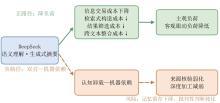
Fig.1

The double-edged mechanism through which DeepSeek reduces cognitive load"

Table 1

Cell means (M±SD) of the main indicators under each experimental condition"

指标 传统·低 传统·高 DeepSeek·低 DeepSeek·高
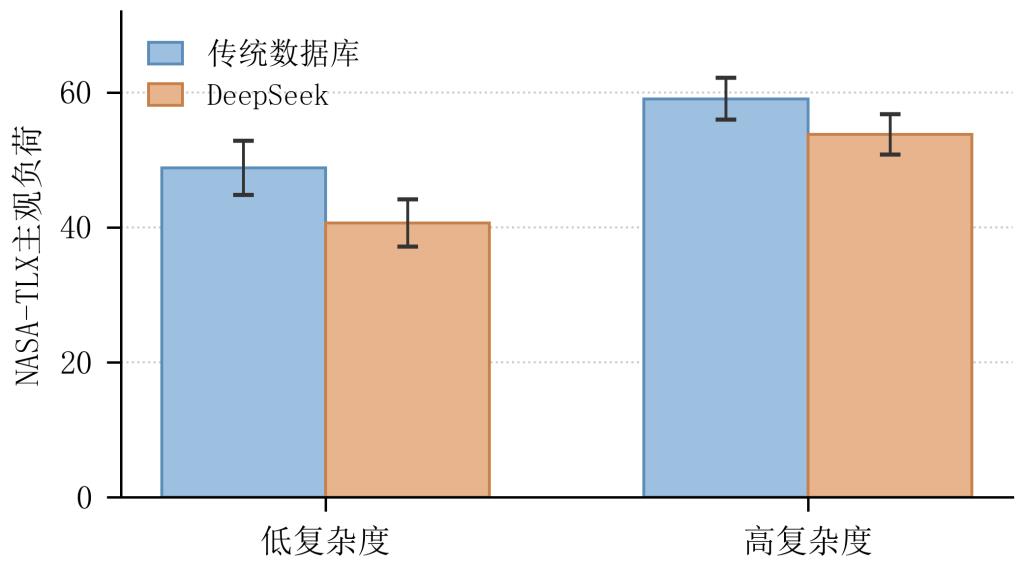
NASA-TLX主观负荷 48.81±11.2 59.06±8.7 40.68±9.8 53.78±8.4
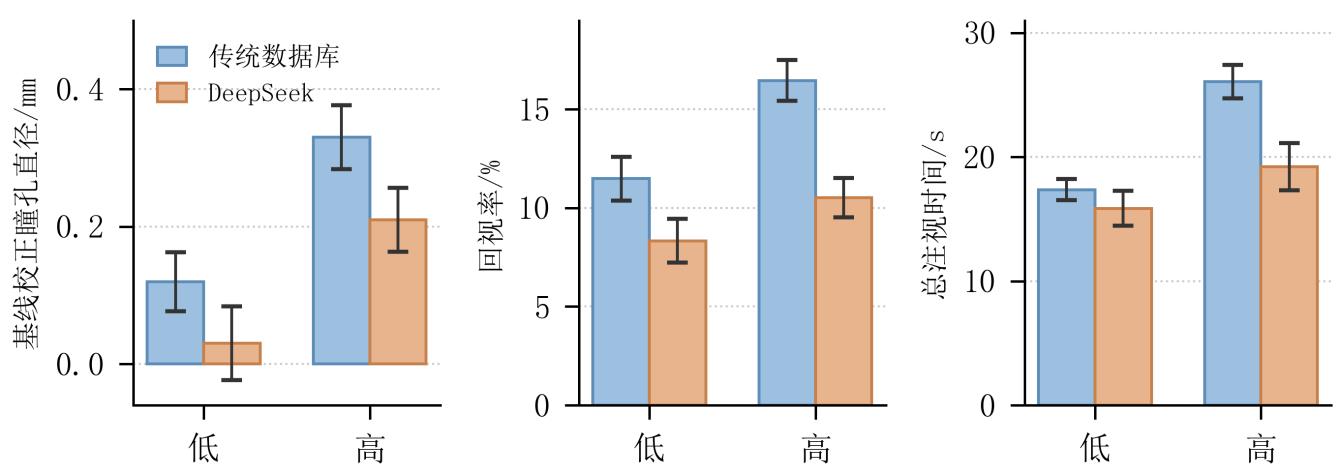
基线校正瞳孔直径/mm 0.12±0.12 0.33±0.13 0.03±0.15 0.21±0.13
总注视时间/s 17.37±2.4 26.07±3.8 15.86±3.9 19.23±5.3
回视率/% 11.48±3.1 16.46±2.9 8.33±3.1 10.52±2.8
目标AOI停留比例/% 56.30±4.7 53.46±4.6 62.86±4.5 64.19±4.5
检索报告质量 76.00±5.6 71.73±5.6 80.83±5.5 79.75±5.4

Table 2

Results of the 2×2 mixed-design ANOVA(F values, partial η²)"

被解释变量 工具主效应 任务主效应 工具×任务交互
NASA-TLX 14.0***(0.19) 44.8*** 0.7(0.01)
基线校正瞳孔直径 15.7***(0.21) 85.4*** 0.6(0.01)
总注视时间 24.2***(0.29) 58.2*** 13.9***(0.19)
回视率 73.0***(0.56) 35.0*** 5.7*(0.09)
目标AOI停留比例 50.1***(0.46) 0.3(0.01) 2.3(0.04)
检索报告质量 19.8***(0.25) 4.2*(0.07) 1.5(0.03)

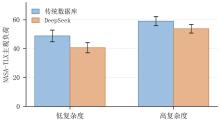
Fig.2

Subjective cognitive load by tool×task(error bars: 95%CI)"

Fig.3

Objective eye-tracking indicators by tool×task (error bars: 95%CI)"

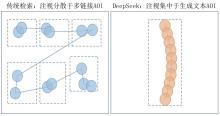
Fig.4

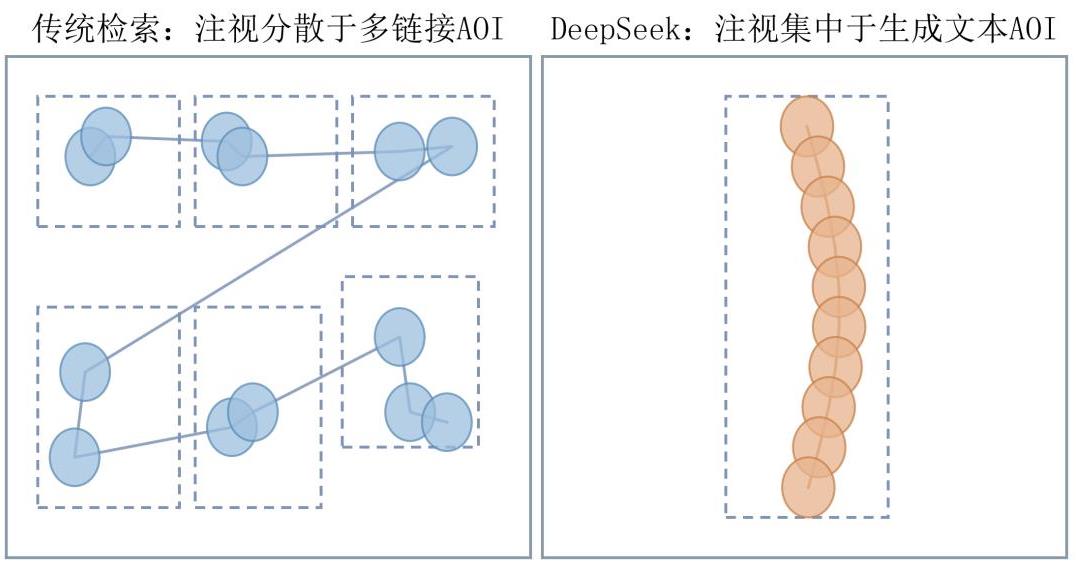
Fixation heat maps and area of interest (AOI) distributions of two representative participants from each group"

[1]
袁静, 李柯. 移动社交媒体环境下用户信息焦虑行为研究进展[J]. 图书情报工作, 2020, 64(11): 133-144.
Yuan Jing, Li Ke. Research progress of user's information anxiety behavior in mobile social media environment[J]. Library and Information Service, 2020, 64(11): 133-144.
[2]
童云海, 陈建龙. DeepSeek热潮下的双重变革: 大模型的技术革新与高校图书馆服务范式的重构[J]. 大学图书馆学报, 2025, 43(1): 66-70.
Tong Yunhai, Chen Jianlong. Dual transformation under the DeepSeek wave: Technological innovation in large models and the restructuring of service paradigms in academic libraries[J]. Journal of Academic Libraries, 2025, 43(1): 66-70.
[3]
Sweller J. Cognitive load during problem solving: Effects on learning[J]. Cognitive Science, 1988, 12(2): 257-285.
[4]
Sweller J, van Merriënboer J J G, Paas F. Cognitive architecture and instructional design: 20Years later[J]. Educational Psychology Review, 2019, 31(2): 261-292.
[5]
李月琳, 肖雪, 胡蝶. 信息检索实验中的任务设计——真实与模拟仿真工作任务的比较研究[J]. 图书情报工作, 2014, 58(16): 5-12.
Li Yuelin, Xiao Xue, Hu Die. Task design in information retrieval experiment: A comparative study on real and simulated work tasks[J]. Library and Information Service, 2014, 58(16): 5-12.
[6]
王琳, 王海伦, 赵丽. 大学生创业团队合作信息搜寻行为的影响因素研究[J]. 文献与数据学报, 2020, 2(3): 70-84.
Wang Lin, Wang Hailun, Zhao Li. Research on influence factors of collaborative information seeking behavior of college students' entrepreneurial team[J]. Journal of Library and Data, 2020, 2(3): 70-84.
[7]
Hart S G, Staveland L E. Development of NASA-TLX (task load index): Results of empirical and theoretical research[M]//Human Mental Workload. Amsterdam: Elsevier, 1988: 139-183.
[8]
Wittek P, Liu Y H, Darányi S, et al. Risk and ambiguity in information seeking: Eye gaze patterns reveal contextual behavior in dealing with uncertainty[J]. Frontiers in Psychology, 2016, 7: 1790.
[9]
许洁, 王豪龙. 阅读行为眼动跟踪研究综述[J]. 出版科学, 2020, 28(2): 52-66.
Xu Jie, Wang Haolong. A review of studies on behavioral eye tracking in reading[J]. Publishing Journal, 2020, 28(2): 52-66.
[10]
Gorin H, Patel J, Qiu Qinyin, et al. A review of the use of gaze and pupil metrics to assess mental workload in gamified and simulated sensorimotor tasks[J]. Sensors, 2024, 24(6): 1759.
[11]
Kim N, Ji Yong gu. Exploratory search with generative AI: An empirical study on the impact of interaction design strategies on information exploration and cognitive load[J]. International Journal of Human-Computer Studies, 2026, 210: 103771.
[12]
Risko E F, Gilbert S J. Cognitive offloading[J]. Trends in Cognitive Sciences, 2016, 20(9): 676-688.
[13]
Sparrow B, Liu J, Wegner D M. Google effects on memory: Cognitive consequences of having information at our fingertips[J]. Science, 2011, 333(6043): 776-778.
[14]
郑昊敏, 温忠麟, 吴艳. 心理学常用效应量的选用与分析[J]. 心理科学进展, 2011, 19(12): 1868-1878.
Zheng Haomin, Wen Zhonglin, Wu Yan. The appropriate effect sizes and their calculations in psychological research[J]. Advances in Psychological Science, 2011, 19(12): 1868-1878.
[15]
龚芙蓉. ChatGPT类生成式AI对高校图书馆数字素养教育的影响探析[J]. 图书情报知识, 2023, 40(5): 97-106, 156.
Gong Furong. The impact of generative AI like ChatGPT on digital literacy education in university libraries[J]. Document, Information & Knowledge, 2023, 40(5): 97-106, 156.
[16]
王盛, 汪聪, 刘雅琼, 等. 基于生成式人工智能应用的批判性信息素质教育设计[J]. 大学图书馆学报, 2024, 42(4): 69-76.
Wang Sheng, Wang Cong, Liu Yaqiong, et al. Critical information literacy instruction design for generative artificial intelligence applications[J]. Journal of Academic Libraries, 2024, 42(4): 69-76.
[17]
中共中央, 国务院. 教育强国建设规划纲要(2024-2035年)[Z]. 北京: 人民出版社, 2025.
[18]
中央网络安全和信息化委员会. 提升全民数字素养与技能行动纲要[Z]. 2021‑11‑05.
[1] LIU Fen. Application Scenarios and Efficiency Improvement of DeepSeek in Library Intelligent QA and Service Consultation [J]. Journal of library and information science in agriculture, 2026, 38(7): 70-81.
[2] LYU Lucheng, ZHOU Jian, SUN Wenjun, ZHAO Yajuan, HAN Tao. Performance of Fine-Tuned Large Language Models in Patent Text Mining [J]. Journal of library and information science in agriculture, 2026, 38(4): 36-46.
[3] AN Lin. Governance of Personal Information Security in the Iteration of Generative AI: From the Perspective of the Technological Evolution of Large Models [J]. Journal of library and information science in agriculture, 2026, 38(4): 61-70.
[4] JIANG Jingze, ZHOU Tianmin, LI Mei, CHENG Cheng, CHEN Haiyan. A study of the Core Competence Model of Compound AI Librarians in the Intelligent Transformation of University Libraries [J]. Journal of library and information science in agriculture, 2025, 37(9): 97-109.
[5] SHI Zhongyan, LEI Jie, SUN Tan, ZHAO Ruixue, LI Jiao, HUANG Yongwen, XIAN Guojian. Research on DeepSeek-Empowered Low-Cost Construction of Domain-Specific Knowledge Graphs [J]. Journal of library and information science in agriculture, 2025, 37(3): 4-17.
[6] ZHANG Xingwang, LI Jie, LI Sifan, WANG Xiaopei. Theoretical Model, Model Innovation, and Important Implications of DeepSeek Empowering Library Knowledge Services [J]. Journal of library and information science in agriculture, 2025, 37(1): 4-16.
[7] JIANG Peng, REN Yan, ZHU Beiling. Exploration and Practice of Classification Indexing Combined with Large Language Models [J]. Journal of library and information science in agriculture, 2024, 36(5): 32-42.
[8] SHOU Jianqi. Towards Known Unknowns: GPT Large Language Models Empower Human-Centered Information Retrieval [J]. Journal of library and information science in agriculture, 2023, 35(5): 16-26.
[9] GUO Pengrui, WEN Tingxiao. Research of the Impact of LLMs on Information Retrieval Systems and Users' Information Retrieval Behavior [J]. Journal of library and information science in agriculture, 2023, 35(11): 13-22.
[10] FAN Zhixuan, WANG Jian, SA Xu, ZHANG Guilan. Structure-Utility of Descriptive Information of Agricultural Scientific Data from the Perspective of Users [J]. Journal of library and information science in agriculture, 2022, 34(10): 57-69.
[11] ZHANG Juan. Practice Research on Information Literacy Education Mode of University Based on "Staged-teaching" [J]. Journal of library and information science in agriculture, 2018, 30(7): 125-128.
[12] BAI Jianhua. Information Literacy Education Program Based on the Whole Teaching Process of Information Retrieval Course [J]. Journal of library and information science in agriculture, 2017, 29(9): 132-135.
[13] ZHOU Jian, ZHAO Jianguo. The Overall Conception and Project Design of Military Information Retrieval Language Management and Service System [J]. Journal of library and information science in agriculture, 2017, 29(5): 75-79.
[14] ZHENG Yuanyuan, LI Bo, FAN Lina. Information Retrieval Textbook Construction under Blended Learning Model [J]. Journal of library and information science in agriculture, 2017, 29(1): 108-111.
[15] LIU Ru-jian, TIAN Xin-ling. The Exploration and Practice on the Topic-oriented Teaching Mode of Information Retrieval Course Based on Problem-solving Model [J]. Journal of library and information science in agriculture, 2016, 28(9): 124-126.
Viewed
Full text


Abstract

Cited

  Shared   
  Discussed   
No Suggested Reading articles found!