中文    English

Journal of library and information science in agriculture


Health Information Service Quality Evaluation of Public Libraries under the Healthy China Strategy Using DeepSeek

HAN Shu   

  1. Party School of the CPC Jinzhong Municipal Committee, Jinzhong 036600
  • Received:2026-01-08 Online:2026-04-02

Abstract:

[Purpose/Significance] As part of the Healthy China strategy, public libraries are expected to serve as accessible hubs for health knowledge dissemination and community health literacy improvement. However, health information services are inherently high stakes: users' perceived credibility does not necessarily guarantee medical accuracy, and outdated or poorly contextualized information may lead to serious consequences. Evaluations in existing library settings still rely heavily on surveys and experience-based summaries. While these are useful for describing satisfaction, they are often insufficient for identifying process bottlenecks, explaining why specific dimensions perform poorly, or supporting the accountable governance of high-risk content. This study aims to develop an evidence-oriented and interpretable evaluation approach for public library health information services, and to demonstrate how DeepSeek can enhance the measurability and actionability of quality assessment beyond conventional questionnaire-and-interview approaches. [Method/Process] We selected 32 public libraries in Shanxi Province for our empirical study. A four-dimension, sixteen-indicator framework was established (Professionalism, Ease of Use, Timeliness, and Personalization) through literature consolidation, service-process decomposition, and expert consultation. Multi-source data were collected and aligned, including 1 842 valid questionnaires, approximately 2.4 million service log records, and about 5.6 million platform behavior records. DeepSeek was employed to transform unstructured service texts (online consultations, user feedback, activity reviews, and staff response summaries) into structured evidence: it consolidates theme–intent patterns, extracts reason-oriented points that explain dissatisfaction, and maps those textual cues to specific secondary indicators. In parallel, process features such as zero-result search rate, path length, response time, and repeated consultation rate were derived from logs to represent observable friction and efficiency. An intervention validation was conducted using a quasi-experimental pre-post design with matched experimental and control libraries over six months, applying evidence-driven improvements linked to low-performing indicators. [Results/Conclusions] The overall mean score of health information service quality was 3.43 out of 5, indicating a medium level across the sample. Structural analysis shows that professionalism and ease of use exert stronger effects on overall quality, implying that trustworthy content governance and accessible service pathways form the foundational layer of health information services. Personalization receives the lowest average score and the largest between-library variation, suggesting that differentiated entry design and feedback closure mechanisms are the main sources of divergence. Update frequency is positively associated with satisfaction, highlighting the practical importance of routine maintenance rather than campaign-style updates. In the intervention study, the experimental group achieved a 17.5% improvement in overall quality, significantly higher than the control group. The findings indicate that aligning perceived evaluations with behavioral evidence and text-based explanatory cues can improve both interpretability and implementability of quality assessment. Limitations include regional sampling and potential differences in logging completeness. Future work should expand cross-regional validation and incorporate outcome-oriented indicators that more accurately reflect problem resolution.

Key words: public library, healthy China, health information services, DeepSeek, service quality assessment, data mining

CLC Number: 

  • G250.2

Table 1

Evaluation index system for public library health information service quality"

一级指标 二级指标 指标内涵(评估要点)

专业度

(PE)

内容准确性 信息科学性、错误率、表述严谨性
资源权威性 来源透明、权威出处、引用可追溯
内容全面性 主题覆盖范围与深度、关键主题缺口
更新及时性 内容发布时间与维护周期、过期内容占比

易用性

(RC)

检索便捷性 检索效率、检索结果可用性、零结果控制
导航清晰度 分类逻辑清晰、路径短、入口可见性
界面友好性 页面可读性、交互负担、表单与流程复杂度
可访问性 无障碍与适老化支持、跨终端可用性

时效性

(SC)

响应速度 咨询受理到首次响应时间
更新频率 专题与资源维护频次、更新间隔稳定性
热点跟进 公共健康热点响应能力与专题上线速度
处理效率 咨询闭环效率、重复咨询控制
个性化(MM) 推荐精准度 推荐相关性、命中用户需求的比例
需求适配度 分人群/分场景的内容供给与呈现适配
交互便利性 提交咨询/反馈的便捷程度与引导清晰度
反馈处理度 反馈受理、纠错改进与结果告知

Table 2

Service content structure of library health information services"

服务内容类别 占比/% 典型呈现形态
健康科普类资源 34.8 科普文章/短视频、主题书单、健康问答
疾病防治信息 28.3 常见病预防与康复、就医提示、风险识别
健康生活方式 18.6 饮食与运动、睡眠管理、控烟限酒
医疗资源导航 10.2 医院/科室/医保信息、挂号流程、机构链接
其他健康相关信息 8.1 政策与活动、公益讲座、健康日专题

Table 3

Relative distribution of topic coverage in health information services"

覆盖水平 主题领域(举例) 主要表现
覆盖较高 慢性病管理、营养健康、常见疾病预防 条目量大、栏目稳定、检索命中率高
覆盖中等 运动健康、母婴与儿童基础保健、传染病基础知识 有内容但入口分散,更新不均衡
覆盖不足 精神健康、特殊人群健康、前沿医学研究 条目偏少或缺少权威标注,触达率低

Table 4

Distribution of users' health information needs (session/ticket based)"

需求类型 占比/%
常见疾病信息 32.6
健康生活指导 27.4
药物使用指南 15.8
其他(就医流程、检验解读、政策咨询等) 24.2

Table 5

User segments identified by clustering under the DeepSeek framework"

用户群体类型 占比/% 主要需求特征(概括)
健康知识普及型 36.2 常识科普、风险提示、可理解的解读
疾病信息查询型 24.8 症状与疾病对应、防治与就医建议
健康生活方式型 17.5 饮食运动、作息管理、体重与慢病预防
专业知识需求型 12.3 指南共识、研究进展、专业数据库入口
健康监测管理型 9.2 慢病随访、指标管理、个体化干预建议

Table 6

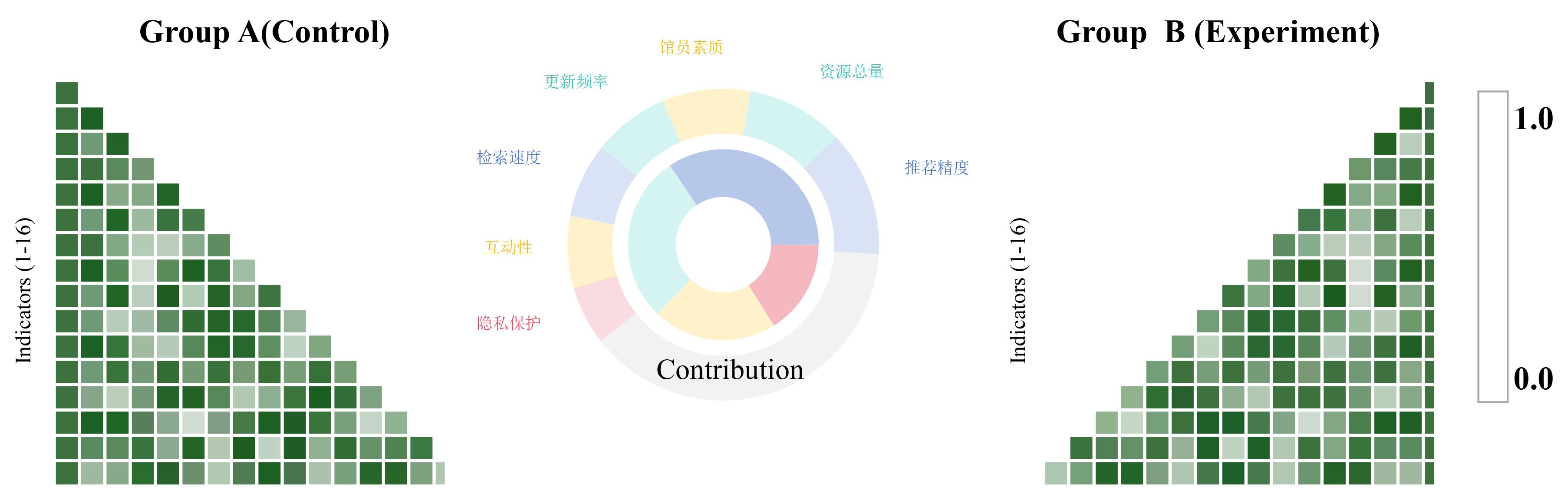
Weights of the four primary dimensions"

一级指标 记号 权重
专业度 PE 0.35
易用性 RC 0.27
时效性 SC 0.22
个性化 MM 0.16

Fig.1

Weights and correlation structure of the evaluation indicator system"

Table 7

Performance of key modules in the DeepSeek-based framework"

模块 任务 指标 结果
NLP模块(BERT变体) 反馈/咨询文本主题与情感识别 F1 0.89
行为分析模块(MLP+LSTM) 用户满意度预测 准确率 82.40%
多源融合模块(注意力融合) 综合评分回归 RMSE 0.086
线性融合(对照) 综合评分回归 RMSE 0.142
深度学习综合判别 质量等级判别 准确率 87.60%
传统机器学习(对照) 质量等级判别 最高准确率 76.80%

Table 8

Scores of health information service quality (1~5)"

指标维度 均值 标准差
专业度(PE) 3.62 0.43
易用性(RC) 3.52 0.38
时效性(SC) 3.38 0.51
个性化(MM) 3.19 0.57
综合得分 3.43 -

Table 9

Comparison of service quality scores by library type (mean, 1~5)"

类型 专业度(PE) 易用性(RC) 时效性(SC) 个性化(MM) 主要特征概括
大型/省级馆 4.08 - 3.42 - 专业资源集中,响应与更新链条较长
中型/地市级馆 3.28~3.56 3.28~3.56 3.28~3.56 3.28~3.56 各维度相对均衡但整体中等
县区级馆 3.15 3.63 - - 流程较简洁,专业资源相对不足
特色馆 - - - 3.82 个性化机制突出,维度间差异较大

Table 10

Differences in dimension ratings across typical user groups (mean, 1~5)"

群体 易用性(RC) 专业度(PE) 时效性(SC) 个性化(MM) 评价侧重点
儿童与老年用户 4.26 - 3.12 -

更看重

“好找、好懂、少步骤”

医疗专业背景用户 - 3.85 3.67 -

更强调

“权威来源、更新速度”

教师群体 - 3.73 - 3.43 兼顾教育价值与推荐能力

Table 11

Pre-post comparison of intervention results (experimental vs. control)"

指标 实验组(前→后) 变化幅度/% 对照组(前→后) 变化幅度/%
综合服务质量 - 17.50 - 3.20
个性化(MM) - 24.80 - -
时效性(SC) - 18.30 - -
总体满意度 3.46→4.12 66.00 3.42→3.53 11.00

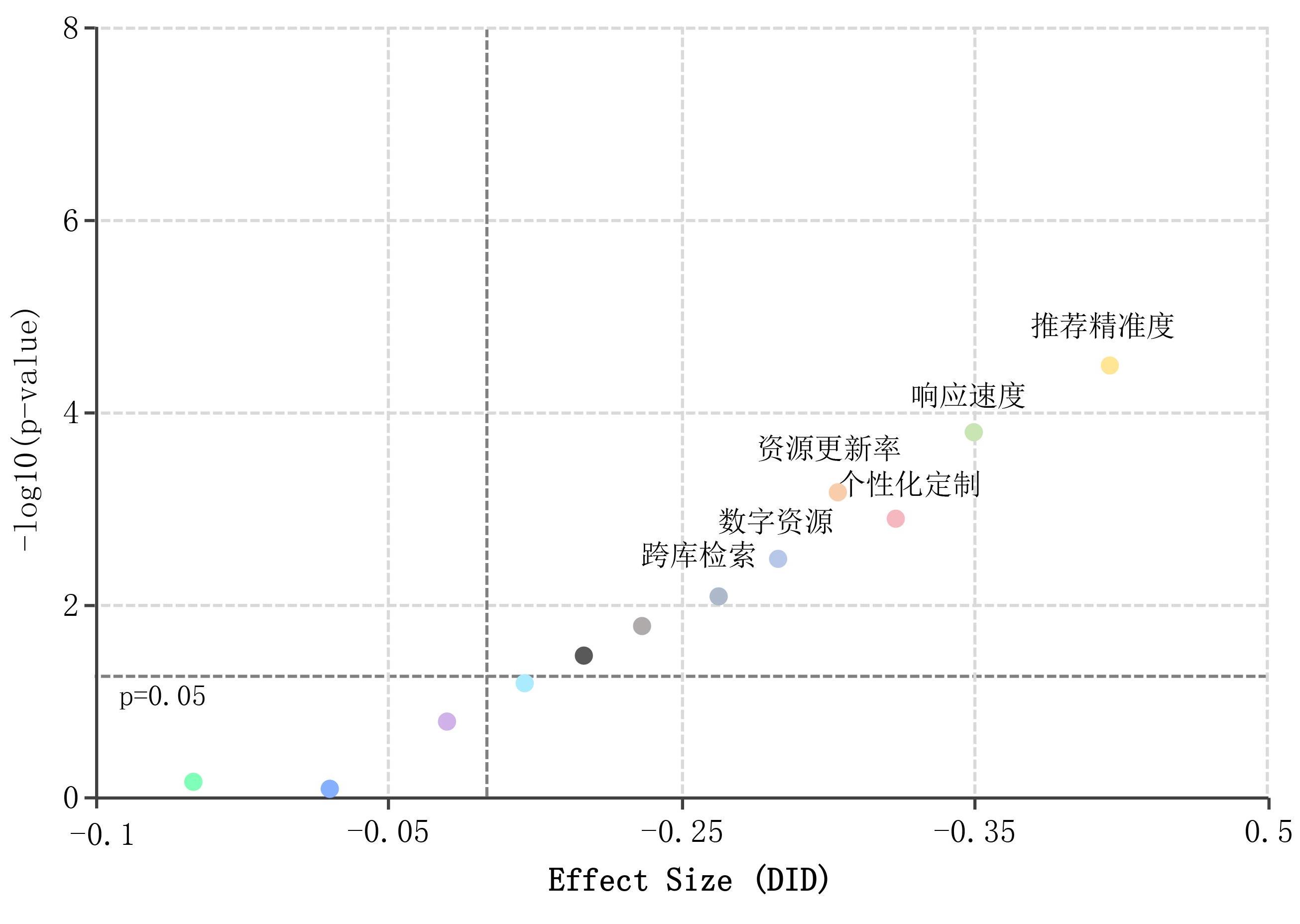
Fig.2

Improvements in service indicators before and after the intervention"

Table 12

Standardized path coefficients of the structural equation model"

路径 标准化系数β 显著性
专业度(PE)→服务质量 0.42 p<0.001
易用性(RC)→服务质量 0.37 p<0.001
时效性(SC)→服务质量 0.28 p<0.001
个性化(MM)→服务质量 0.24 p<0.001

Table 13

Key factors influencing service quality (evidence summary)"

关键因素 数据证据来源 主要结果(按本研究统计口径)
信息更新频率 日志特征+满意度 与满意度正相关r=0.68,p<0.001;事件期作用更突出
检索系统用户友好性 行为路径特征 简洁入口与更短路径对应更高满意度(提升幅度在多馆对比中稳定出现)
专业性与可理解性平衡 NLP主题/情感+访谈 “看不懂”“术语多”“缺少解释”与低评分高度同现
个性化推荐精度 推荐点击/回访+问卷 推荐更贴合时,满意度显著上升(与MM维度一致)
社区互动性 互动次数+反馈闭环 互动与评价提升相关(β=0.32,p<0.01)
[1]
王国凯. 基于模糊DANP的公共图书馆健康信息服务质量影响因素识别研究[J]. 农业图书情报学报, 2022, 34(10): 33-43.
Wang Guokai. Identification of influencing factors of health information service quality in public libraries based on fuzzy DANP[J]. Journal of Library and Information Science in Agriculture, 2022, 34(10): 33-43.
[2]
周晓英, 于小宁. 公共图书馆健康服务的价值认知和实践探索[J]. 中国图书馆学报, 2022, 48(4): 90-103.
Zhou Xiaoying, Yu Xiaoning. Value cognition and practice exploration of public library health service[J]. Journal of Library Science in China, 2022, 48(4): 90-103.
[3]
刘聪. 公共图书馆健康服务框架研究——基于国内外健康服务实践的分析[J]. 图书与情报, 2020(4): 92-100.
Liu Cong. Public library health service research - Analysis based on domestic and foreign health service practice[J]. Library and Information, 2020(4): 92-100.
[4]
倪伟宸. 公共图书馆健康信息服务用户满意度影响因素研究[J]. 图书馆研究与工作, 2023(2): 16-24.
Ni Weichen. A study on the factors influencing user satisfaction of health information services in public libraries[J]. Library Science Research & Work, 2023(2): 16-24.
[5]
刘一鸣, 吴壮波. 基于老年人获得感的公共图书馆适老化健康信息服务研究[J]. 图书馆研究与工作, 2023(5): 5-12, 57.
Liu Yiming, Wu Zhuangbo. Research on elderly-oriented health information services in public libraries based on a sense of gain of the elderly[J]. Library Science Research & Work, 2023(5): 5-12, 57.
[6]
唐鹏宇. 国外图书馆健康信息素养研究述评[J]. 图书馆研究与工作, 2021(2): 37-42.
Tang Pengyu. A research review of health information literacy in foreign libraries[J]. Library Science Research & Work, 2021(2): 37-42.
[7]
Parasuraman A, Zeithaml V A, Berry L L. SERVQUAL: A multiple-item scale for measuring consumer perceptions of service quality[J]. Journal of Retailing, 1988, 64(1): 12-40.
[8]
Delone W H, McLean E R. The DeLone and McLean model of information systems success: A ten-year update[J]. Journal of Management Information Systems, 2003, 19(4): 9-30.
[9]
豆淑云. LibQUAL+图书馆服务质量评价研究综述[J]. 知识管理论坛, 2013(9): 45-51.
Dou Shuyun. A summary of service quality evaluation of LibQUAL+ library[J]. Knowledge Management Forum, 2013(9): 45-51.
[10]
Cook C, Thompson B. Psychometric properties of scores from the web-based LibQUAL+ study of perceptions of library service quality[J]. Library Trends, 2001, 49(4): 585-604.
[11]
Thompson B, Cook C, Heath F M. How many dimensions does it take to measure users' perceptions of libraries?: A LibQUAL+Study[J]. portal: Libraries and the Academy, 2001, 1(2): 129-138.
[12]
Charnock D, Shepperd S, Needham G, et al. DISCERN: An instrument for judging the quality of written consumer health information on treatment choices[J]. Journal of Epidemiology and Community Health, 1999, 53(2): 105-111.
[13]
Eysenbach G, Powell J, Kuss O, et al. Empirical studies assessing the quality of health information for consumers on the world wide web: A systematic review[J]. JAMA, 2002, 287(20): 2691-2700.
[14]
Sun Yalin, Zhang Yan, Gwizdka J, et al. Consumer evaluation of the quality of online health information: Systematic literature review of relevant criteria and indicators[J]. Journal of Medical Internet Research, 2019, 21(5): e12522.
[1] JIANG Jingze, ZHOU Tianmin, LI Mei, CHENG Cheng, CHEN Haiyan. A study of the Core Competence Model of Compound AI Librarians in the Intelligent Transformation of University Libraries [J]. Journal of library and information science in agriculture, 2025, 37(9): 97-109.
[2] SONG Yaping, LIAN Kangping. Pathways for Public Library Study Tour Services in the Context of Cultural and Tourism Integration [J]. Journal of library and information science in agriculture, 2025, 37(8): 92-103.
[3] XIAO Keyi, LI Yunfan, CHEN Yingying, PENG Xi. User Experience of Public Library Intelligent Service from the Perspective of Actor Network Theory [J]. Journal of library and information science in agriculture, 2025, 37(4): 51-65.
[4] SHI Zhongyan, LEI Jie, SUN Tan, ZHAO Ruixue, LI Jiao, HUANG Yongwen, XIAN Guojian. Research on DeepSeek-Empowered Low-Cost Construction of Domain-Specific Knowledge Graphs [J]. Journal of library and information science in agriculture, 2025, 37(3): 4-17.
[5] CAI Yiran, HU Zhengyin, LIU Chunjiang. Analysis of Progress in Data Mining of Scientific Literature Using Large Language Models [J]. Journal of library and information science in agriculture, 2025, 37(2): 4-22.
[6] ZHANG Xingwang, LI Jie, LI Sifan, WANG Xiaopei. Theoretical Model, Model Innovation, and Important Implications of DeepSeek Empowering Library Knowledge Services [J]. Journal of library and information science in agriculture, 2025, 37(1): 4-16.
[7] SUN Lijuan. Exploring the Transition of Public Librarians to "Prompt Librarians" from the Perspective of New Quality Productive Forces [J]. Journal of library and information science in agriculture, 2025, 37(1): 17-32.
[8] Huimin HE. Reader Knowledge Construction in Public Library Information Literacy Education based on the MOA Model [J]. Journal of library and information science in agriculture, 2024, 36(9): 58-69.
[9] WANG Yueying. Exploring the Causes of Low Health Information Literacy Among Rural Middle-Aged and Elderly Adults and its Improvement Strategies [J]. Journal of library and information science in agriculture, 2024, 36(2): 81-93.
[10] XIE Yanjie. Review of Public Library Services to the Elderly in China [J]. Journal of library and information science in agriculture, 2023, 35(7): 18-26.
[11] SUN Yusheng, FAN Ying, ZHU Bo. Research Advances in Resource Management Technology of Smart Recommendation Enabled by Big Data in China [J]. Journal of library and information science in agriculture, 2023, 35(12): 4-17.
[12] HUANG Peifang. From Activating Books to Activating Reading: Professional Ideas and Practical Models from the Neighborhood Library Project to Strengthen Reading Promotion [J]. Journal of library and information science in agriculture, 2023, 35(10): 72-79.
[13] LIU Yiming, LONG Jialin. Application of VR Technology in the Elderly Reader Service of Public Libraries [J]. Journal of library and information science in agriculture, 2022, 34(5): 21-30.
[14] YANG Xinmei, WANG Zheng, LI Shanshan. Activity-based Innovation and Operation Practice of Popular Science Education in Libraries: A Case Study of Summer Science Project in Overseas Libraries [J]. Journal of library and information science in agriculture, 2022, 34(3): 81-91.
[15] CHEN Wen, WANG Dongliang, XU Yunhao, CHEN Yuping, YANG Youqing. The Construction of Metadata Model for Digital Resources of Cultural Creativity Works [J]. Journal of library and information science in agriculture, 2022, 34(12): 77-86.
Viewed
Full text


Abstract

Cited

  Shared   
  Discussed   
No Suggested Reading articles found!