
农业图书情报学报

• •    

协同治理、知识接口与流动闭环:乡村阅读空间作为农业知识扩散节点的机制研究

王键   

  1. 江阴职业技术学院 图书馆,江阴 214400
  • 收稿日期:2025-12-09 出版日期:2026-01-20
  • 作者简介:王键(1980- ),男,硕士,江阴职业技术学院图书馆,馆长,研究方向为乡村知识服务与图书馆管理
  • 基金资助:
    江苏省哲学社会科学基金项目“乡村全面振兴背景下的乡村图书馆读者满意度调查与研究”(2022SJYB1097)

Collaborative Governance, Knowledge Interfaces, and Flow Closed-Loop: A Mechanism Study on Rural Reading Spaces as Agricultural Knowledge Diffusion Nodes

WANG Jian   

  1. Library of Jiangyin Polytechnic College, Jiangyin 214400
  • Received:2025-12-09 Online:2026-01-20

摘要:

[目的/意义] 为推动乡村公共文化服务高质量发展,基层阅读空间需从静态“设施”转型为动态“知识节点”。本研究旨在揭示其内部协同治理机制如何通过塑造“知识接口”,影响农业知识在乡土社会的流动效能,为优化乡村知识服务提供机制解释与实践路径。 [方法/过程] 首先,构建“节点属性-接口特征-流动效能”理论框架,阐明“治理模式→接口→流动”的逻辑。进而,选取江阴(深度契约型)、连城(行政主导型)、余杭(社会协作型)3个案例,采用问卷调研(N=438)与深度访谈(38人)相结合的混合方法进行实证比较与机制检验。 [结果/结论] 研究发现,深度契约型的“嵌入式接口”通过制度保障与信任衍生,显著驱动了高复杂性知识的深度闭环流动;社会协作型的“网络化接口”则通过激活社区网络,更有效地促进了隐性知识的横向共享。基于此,研究提出应从“接口能力”认证、培育“知识经纪人”、建设“乡土知识库”3方面,构建响应式乡村知识节点,为实现从“文化惠民”到“知识赋能”的转型提供具体方案。

关键词: 乡村阅读空间, 知识节点, 协同治理, 知识接口, 知识流动, 阅读推广, 公共文化服务

Abstract:

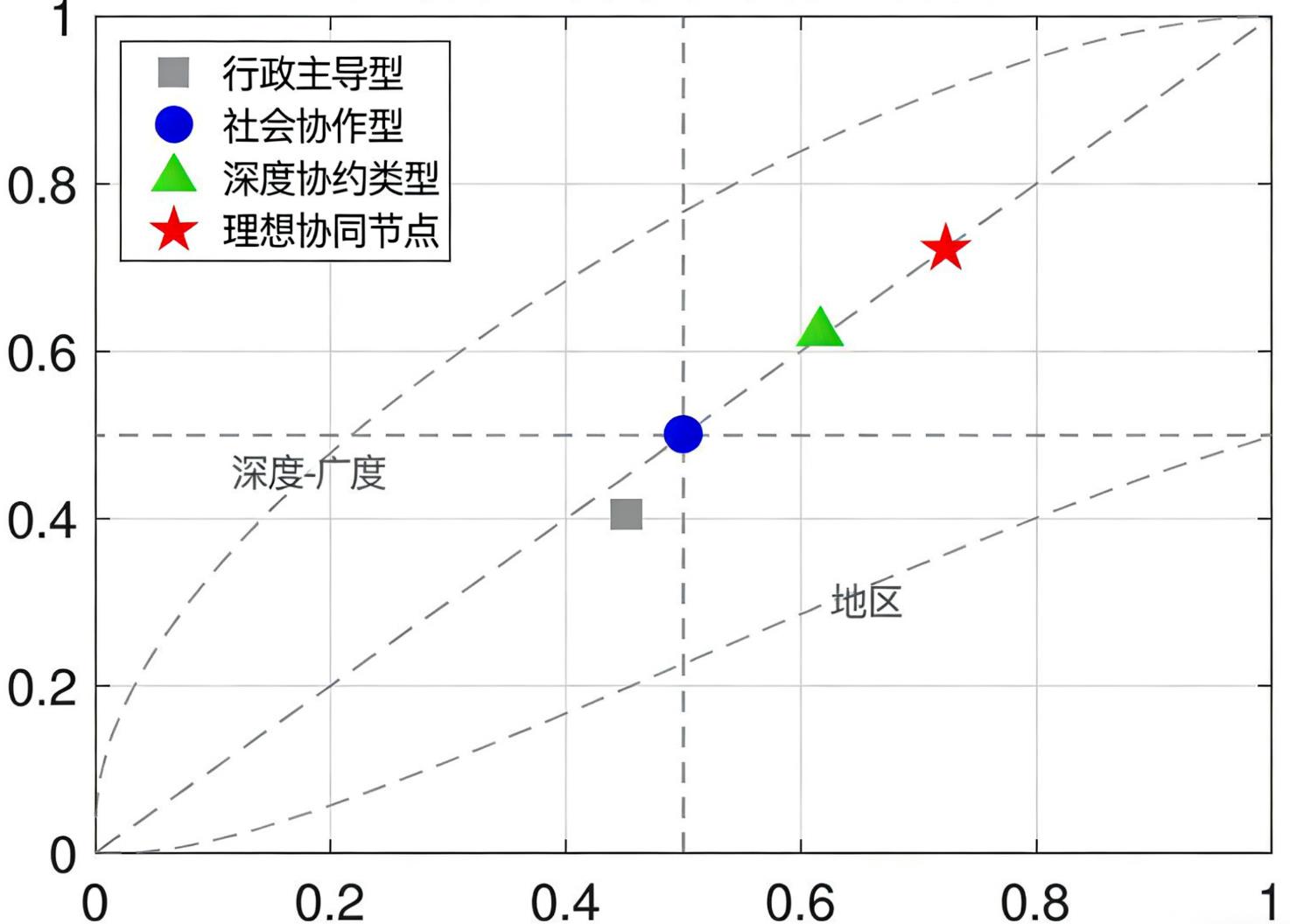
[Purpose/Significance] The effective flow of agricultural knowledge from innovation sources to fields is a core component of agricultural modernization. However, a persistent "structural knowledge gap" exists between macro-level knowledge supply and the micro-level needs of farmers, which traditional top-down extension systems often fail to bridge due to issues such as information decay, a lack of feedback, and poor contextual adaptation. In the context of promoting the high-quality development of rural public cultural services, grassroots reading spaces (e.g., rural libraries and village reading rooms) face a critical imperative to evolve beyond their traditional role as static repositories of books. This study reimagines grassroots reading spaces as dynamic "knowledge nodes" within rural socio-information ecosystems. The primary significance of this research lies in its innovative integration of public governance and knowledge management theories to construct a novel "node-interface-flow" analytical framework. It moves the discourse forward from predominant concerns with resource allocation or technology access to a deeper investigation of how internal governance mechanisms fundamentally shape these spaces' capacity to process and diffuse knowledge. By doing so, it positions the study at the intersection of rural studies, public administration, and knowledge science, offering a refined theoretical lens to understand and design rural knowledge infrastructure. Its practical importance stems from providing evidence-based, mechanistic explanations and actionable pathways for transforming these ubiquitous facilities from venues of "cultural provision" into active agents of "knowledge empowerment" for rural communities. [Method/Process] To uncover the mechanisms through which collaborative governance influences knowledge flow, this study employed a sequential explanatory mixed-methods design (QUAN → QUAL). The research was empirically grounded in a comparative case study of three rural reading spaces in China, deliberately selected through theoretical sampling to represent three distinct ideal-typical governance models: Jiangyin (exemplifying a deep contractual model involving long-term institutional agreements between local government and a vocational college), Liancheng (representing an administrative-dominant model operating within a standardized county-branch library system), and Yuhang (illustrating a social collaborative model based on government-purchased services from local social organizations). The methodological appropriateness of this multi-case comparative approach lies in its capacity to maximize variation in the key independent variable (governance model) while controlling for contextual factors, thereby allowing for clearer causal inference regarding the model's impact. Data were collected from March to August of 2024. The quantitative phase involved a structured questionnaire survey administered to 438 farmers across the villages served by the three case spaces (from 480 distributed, 91.3% valid response rate). The survey instrument was designed to measure key variables derived from the theoretical framework, including perceived interface quality (e.g., resource relevance, expert accessibility), knowledge acquisition, community knowledge sharing, and technology adoption intention. Reliability and validity tests (e.g., Cronbach's α, K-R20) confirmed the robustness of the measures. The subsequent qualitative phase comprised 38 in-depth, semi-structured interviews with space managers, active farmers, and key partners, supplemented by participatory observation and archival analysis. This phase aimed to provide rich, contextual insights into the operational mechanisms linking governance rules, interface functioning, and knowledge flow patterns. Quantitative data were analyzed using SPSS for ANOVA and regression analysis to test performance differences and mediation effects, while qualitative data were thematically coded using NVivo to elucidate underlying processes. [Results/Conclusions] The findings confirm the proposed "governance model → interface characteristics → flow efficacy" mechanism. The deep contractual model, through its "embedded interface," successfully couples strong formal institutional guarantees (e.g., mandated expert deployment, resource co-selection) with derived informal trust relationships from long-term embeddedness. This combination significantly drives the deep, closed-loop flow of highly complex, codified knowledge, completing cycles from external input to local application and feedback. In contrast, the social collaborative model's "networked interface," characterized by vibrant informal community networks activated by skilled social organizers, proves far more effective in stimulating the horizontal sharing, exchange, and co-creation of tacit knowledge within the community. The administrative-dominant model, with its standardized formal interface and underdeveloped informal connections, demonstrates limited efficacy, often resulting in interrupted, one-way knowledge flow. Based on these insights, the study proposes a two-dimensional model of "institutional depth" versus "networked breadth" to describe the unique effectiveness of different governance models. Based on these empirical results, three concrete policy and management recommendations have been proposed to foster responsive rural knowledge nodes: 1) shifting performance evaluation and resource allocation from static input metrics towards a focus on dynamic "interface capability"; 2) designing and institutionalizing specialized "knowledge broker" programs to staff these interfaces with trusted, skilled intermediaries; and 3) initiating collaborative "local knowledge repository" projects to systematically capture, digitize, and valorize indigenous community wisdom. The study acknowledges limitations regarding the generalizability of findings from a three-case comparison and suggests future research directions, including longitudinal studies to observe interface evolution, social network analysis to precisely map relational structures, and exploration of how digital "smart interfaces" might integrate with the social interfaces examined here to create new paradigms for rural knowledge service.

Key words: rural reading space, knowledge node, collaborative governance, knowledge interface, knowledge flow, reading promotion, public pultural services

中图分类号:  G252

引用本文

王键. 协同治理、知识接口与流动闭环:乡村阅读空间作为农业知识扩散节点的机制研究[J/OL]. 农业图书情报学报. https://doi.org/10.13998/j.cnki.issn1002-1248.25-0708.

WANG Jian. Collaborative Governance, Knowledge Interfaces, and Flow Closed-Loop: A Mechanism Study on Rural Reading Spaces as Agricultural Knowledge Diffusion Nodes[J/OL]. Journal of library and information science in agriculture. https://doi.org/10.13998/j.cnki.issn1002-1248.25-0708.