中文    English

Journal of library and information science in agriculture


Impact of the Construction of National Big Data Comprehensive Pilot Zones on Rural Residents' Consumption Potential: Evidence from CFPS Data

LIANG Xiaodong, WANG Ru, WANG Shuaijin, XU Dongmei()   

  1. College of Agricultural Economics and Management, Shanxi Agricultural University, Jinzhong 030800
  • Received:2025-11-18 Online:2026-02-03
  • Contact: XU Dongmei E-mail:Xdmlh2018@sxau.edu.cn

Abstract:

[Purpose/Significance] Unleashing the consumption potential of rural residents plays a pivotal role in expanding domestic demand and cultivating new economic growth points. The digital economy, driven by data elements as the core force, is gradually becoming a key engine to activate the consumption potential of urban and rural areas in China and promote consumption upgrading. National Big Data Comprehensive Pilot Zones (NBDCPZs), with their "agglomeration of data elements, cross-domain collaborative empowerment, and precise service matching", continuously meet the personalized and diversified consumption demands of rural residents, and have unique value in unleashing the consumption potential of rural residents. [Method/Process] After conducting a theoretical analysis of the impact of the NBDCPZs on the consumption potential of rural residents, this study formulates corresponding research hypotheses. This study uses data from the China Family Panel Studies (CFPS) from 2010 to 2022 and considers the "National Big Data Comprehensive Pilot Zones" policy as a quasi-natural experiment. On the basis of measuring rural residents' consumption potential using the propensity score matching (PSM) method, the difference-in-differences (DID) method is employed to evaluate the impact of NBDCPZs construction on rural residents' consumption potential. [Results/Conclusions] The research findings are as follows: 1) After balancing the endowment characteristics of urban and rural households via the PSM method, the per capita consumption expenditure of rural residents was found to be 2 255.23 yuan less than that of urban residents. This indicates that rural areas still have enormous untapped consumption potential. 2) The construction of NBDCPZs significantly promotes the release of rural residents' consumption potential, and this conclusion remains robust after undergoing the parallel trend test, placebo test, counterfactual test, addition of fixed effects, and exclusion of the impacts of other policies. 3) An analysis of heterogeneity across sample household and regional characteristics reveals that the effect of NBDCPZs construction on unlocking rural residents' consumption potential is particularly prominent in eastern China, and is more salient in rural households with a male household head, low income, and middle-aged composition. 4)The mechanism of action indicates that the "National Big Data Comprehensive Pilot Zones" policy releases the consumption potential of rural residents by increasing their income levels and enhancing technological progress in rural areas. Furthermore, household debt exerts a positive moderating effect on the process of releasing rural residents' consumption potential through the construction of the National Big Data Comprehensive Pilot Zones. Based on the research conclusions, the following countermeasures and suggestions are put forward: 1) Advance the differentiated layout and integrated application of rural digital infrastructure; 2) Establish a long-term mechanism for enhancing rural residents' digital literacy; 3) Optimize the income increase system for rural residents and consolidate the foundation for consumption upgrading.

Key words: digital economy, National Big Data Comprehensive Pilot Zones (NBDCPZs), rural residents' consumption, consumption potential, difference-in-differences (DID), propensity score matching (PSM)

CLC Number: 

  • F328

Table 1

Descriptive statistics"

变量定义及赋值均值标准差最小值最大值
消费潜力PSM匹配城乡居民消费差值的自然对数-0.1851.095-4.3654.320
DIDTreatPost所构成的交互项0.3030.46001
户主年龄实际年龄/岁49.37012.0901675
性别男=1,女=00.6100.48801
受教育年限受教育的实际年限6.8054.102019
婚姻状况已婚=1,未婚=00.8950.30601
健康状况不健康=1,一般健康=2,比较健康=3,很健康=4,非常健康=53.0611.27615
医疗保险购买医保=1,未购买医保=00.9370.24301
家庭总收入对数农户家庭总收入取自然对数10.471.124016.590
是否自有住房有自有住房=1,无自有住房=00.9090.28801
家庭人均支出农户家庭人均消费支出取自然对数9.1730.8955.39712.750
家庭人口抚养比家庭少儿老年人口数/家庭成年劳动人口数0.5100.61906
经济发展水平地区人均GDP取自然对数10.6700.4219.46412.100
城乡收入差距地区城镇居民人均可支配收入/农村居民人均可支配收入2.7050.4631.8863.735
人力资本水平地区高等学校在校生人数/总人口0.0200.0040.0090.034
城乡物价差距地区城市居民消费价格指数-农村居民消费价格指数-0.0460.443-1.3001.400
家庭人均收入农户家庭人均收入(万元)1.5842.8240266.667
科技创新投入科技创新投入取自然对数14.6051.20312.46017.287
家庭负债非房贷的金融负债取自然对数2.3914.634014.914

Table 2

Per capita consumption potential of rural residents"

地区匹配前城乡居民人均消费匹配后城乡居民人均消费
农村居民城镇居民消费潜力农村居民城镇居民消费潜力
东部地区17 235.8335 143.29-17 907.4617 235.8319 318.71-2 082.88
中部地区14 703.8226 895.67-12 191.8514 703.8216 814.29-2 110.47
西部地区12 964.8425 776.67-12 811.8312 964.8515 477.36-2 512.51
平均14 897.3430 675.08-15 777.7414 897.3417 152.57-2 255.23

Table 3

Benchmark regression results"

变量消费潜力消费潜力消费潜力消费潜力
(1)(2)(3)(4)
DID-0.092***-0.082**-0.059**-0.065**
(0.034)(0.033)(0.027)(0.028)
户主年龄0.0080.0030.003
(0.006)(0.005)(0.005)
性别0.3270.0680.069
(0.321)(0.120)(0.118)
受教育年限-0.053***-0.059***-0.058***
(0.006)(0.005)(0.005)
婚姻状况-0.0650.099**0.098**
(0.061)(0.048)(0.048)
健康状况0.0070.015**0.015**
(0.009)(0.007)(0.007)
医疗保险0.280***0.258***0.255***
(0.039)(0.031)(0.031)
家庭总收入对数-0.048***-0.048***
(0.009)(0.009)
是否自有住房-0.047-0.050
(0.031)(0.031)
家庭人均支出0.962***0.963***
(0.011)(0.011)
家庭抚养比0.060***0.062***
(0.015)(0.015)
经济发展水平-0.093-0.253**
(0.095)(0.106)
城乡收入差距-0.286*
(0.150)
人力资本水平13.720*
(7.030)
城乡物价差距0.012
(0.018)
时间固定效应
个体固定效应
常数项-0.732***-1.103***-7.699***-5.442***
(0.025)(0.315)(1.013)(1.326)
样本量/个24 56624 56624 56624 566
R20.0410.0510.4020.403

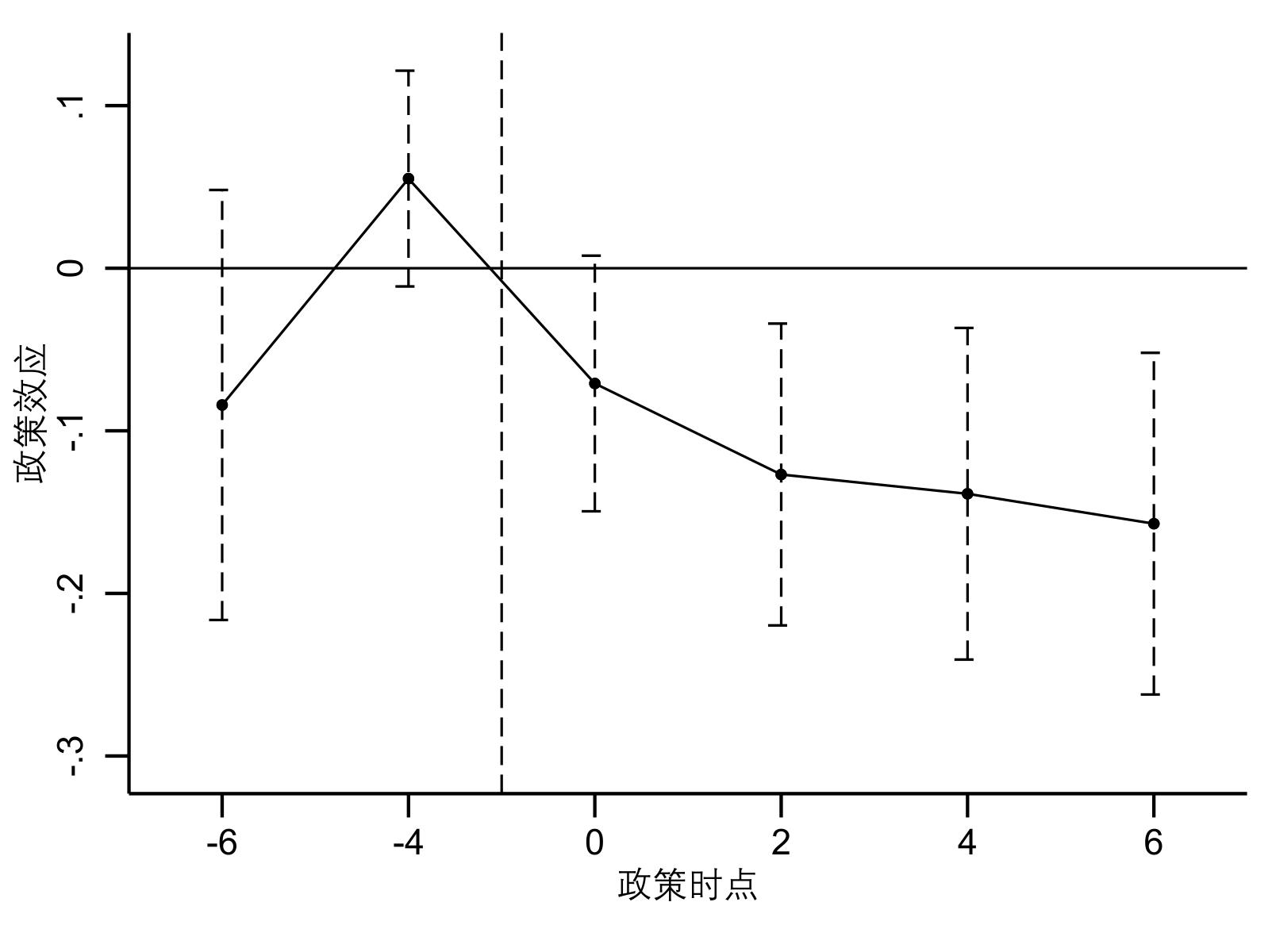
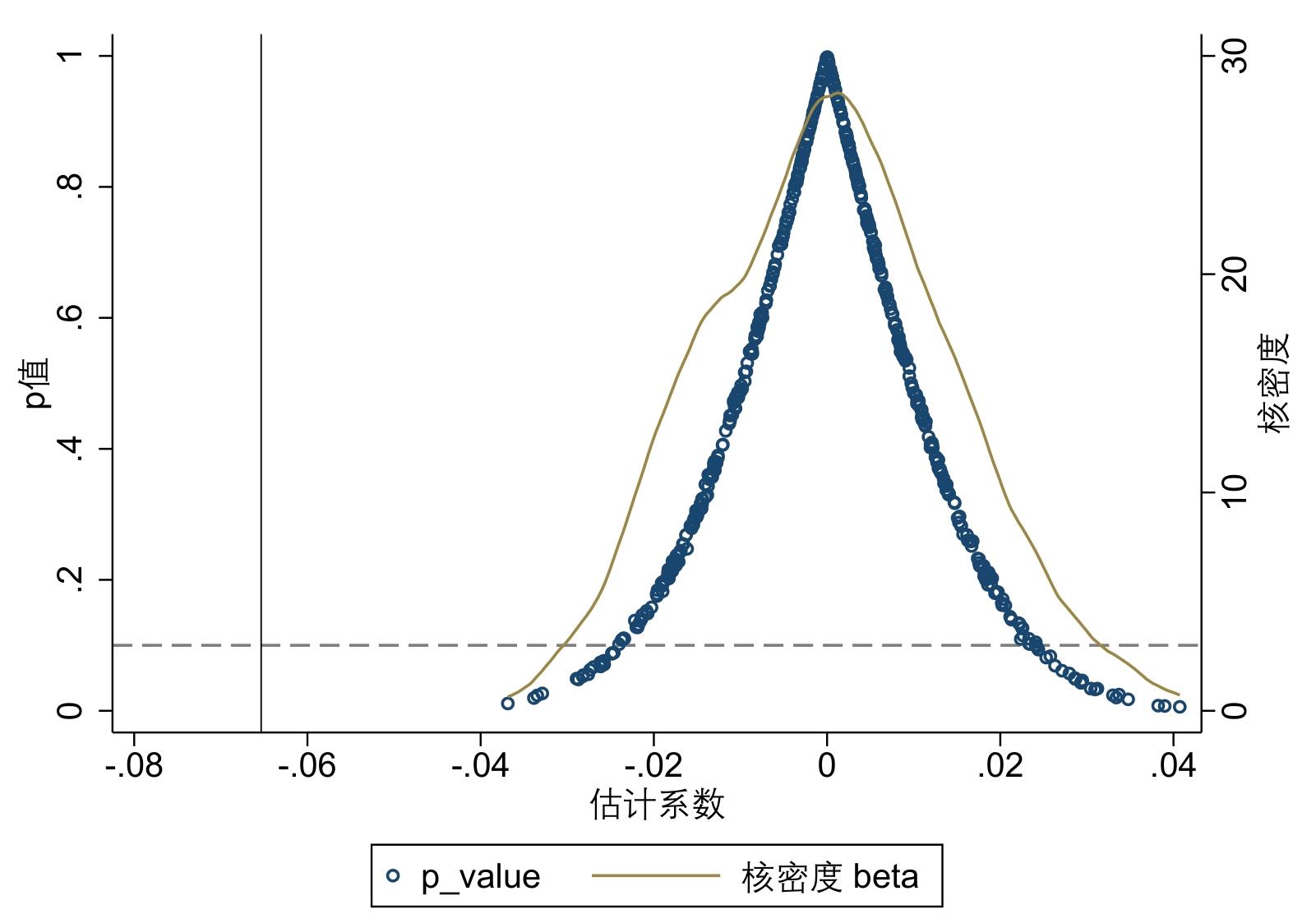
Fig.1

Parallel trend test"

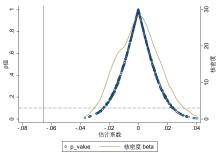
Fig.2

Placebo test"

Table 4

Robustness tests"

变量(1)(2)(3)(4)(5)
虚构政策时间为2014年虚构政策时间为2012年增加地区固定效应缩尾回归排除“宽带中国”政策影响
DID-0.057-0.030-0.070**-0.069**-0.077***
(-1.545)(-0.656)(0.028)(0.027)(0.029)
控制变量
家庭固定效应
年份固定效应
常数项-5.394***-5.653***-5.626***-5.121***
(-3.985)(-4.155)(1.330)(1.352)
样本量/个24 56624 56619 93224 56624 566
R20.4020.4020.6440.4010.403

Table 5

Heterogeneity analysis results"

变量(1)(2)(3)(4)(5)(6)(7)(8)(9)(10)
女性户主家庭男性户主家庭低收入家庭高收入家庭青年家庭中年家庭老年家庭东部地区中部地区西部地区
DID-0.026-0.079**-0.140***0.0340.057-0.092**-0.020-0.070**0.023-0.017
(0.047)(0.035)(0.044)(0.046)(0.081)(0.038)(0.088)(0.035)(0.040)(0.077)
控制变量
个体固定效应
时间固定效应
常数项-5.878***-5.366***-6.809***-2.770-2.381-3.930**-13.00**-6.438***-5.346***-5.902**
(2.228)(1.671)(2.071)(2.174)(3.951)(1.912)(5.349)(1.896)(1.710)(2.531)
样本量/个9 58914 97712 56312 0035 25613 9135 3978 2466 8549 466
R20.4090.4010.4110.3830.3640.4130.3810.3880.3980.420

Table 6

Mechanism analysis results"

变量(1)(2)(3)
收入效应技术溢出效应调节效应
DID0.108**0.032***-0.069**
(0.046)(0.008)(0.028)
家庭负债0.002
(0.002)
DID×家庭负债-0.013***
(0.004)
控制变量
个体固定效应
时间固定效应
常数项-15.39***-4.570***-5.533***
(3.175)(0.762)(1.326)
样本量/个24 56624 56624 566
R20.2950.8550.403
[1] 单德朋, 宋书山. 数字普惠金融赋能城镇居民消费潜力释放——来自CHFS的微观证据[J]. 价格理论与实践, 2024(11): 202-207.
Shan Depeng, Song Shushan. Digital financial inclusion empowering urban dwellers' consumption potential release - Microscopic evidence from CHFS data[J]. Price (Theory & Practice), 2024(11): 202-207.
[2] 龚志民, 李可欣, 李婵. 再论中国最优消费率: 累计消费视角[J]. 消费经济, 2021, 37(5): 11-22.
Gong Zhimin, Li Kexin, Li Chan. Optimal consumption rate reexamined: From the perspective of cumulative consumption[J]. Consumer Economics, 2021, 37(5): 11-22.
[3] 孙豪, 项计豪, 宋明月. 中国居民消费潜力: 规模估算与释放路径[J]. 经济学家, 2025(5): 37-46.
Sun Hao, Xiang Jihao, Song Mingyue. The household consumption potential in China: Scale estimation and activation pathways[J]. Economist, 2025(5): 37-46.
[4] 陈新娟, 袁持平. 最优消费率测算及其影响因素——基于2000-2018年数据的实证研究[J]. 商业经济研究, 2020(15): 41-43.
Chen Xinjuan, Yuan Chiping. Optimal consumption rate and its influencing factors - An empirical study based on the data from 2000 to 2018[J]. Journal of Commercial Economics, 2020(15): 41-43.
[5] 刘松, 楼嘉军. 城镇居民休闲消费潜力影响因素及其空间异质性[J]. 地域研究与开发, 2022, 41(2): 52-56, 83.
Liu Song, Lou Jiajun. Study on influencing factors and spatial heterogeneity of urban residents' leisure consumption potential[J]. Areal Research and Development, 2022, 41(2): 52-56, 83.
[6] 陈姝兴, 丁任重. 消费潜力与宏观经济增长: 基于社会再生产的理论和经验分析[J]. 政治经济学评论, 2023, 14(6): 71-101.
Chen Shuxing, Ding Renzhong. Consumption potential and macroeconomic growth: Theory and empirical analysis based on social reproduction[J]. China Review of Political Economy, 2023, 14(6): 71-101.
[7] Secondi L. Estimating household consumption expenditure at local level in Italy: The potential of the cokriging spatial predictor[J]. Social Indicators Research, 2021, 153(2): 651-674.
[8] Chen Furong, Wei Tongyang, Zhu Ning, et al. Determinants of consumption structure of livestock products among rural Chinese residents: Household characteristics and regional heterogeneity[J]. Agriculture, 2023, 13(9): 1839.
[9] 王小华, 温涛, 韩林松. 习惯形成与中国农民消费行为变迁: 改革开放以来的经验验证[J]. 中国农村经济, 2020(1): 17-35.
Wang Xiaohua, Wen Tao, Han Linsong. The evolvement of habit formation and farmers' consumption behavior: An empirical verification since China's reform and opening-up[J]. Chinese Rural Economy, 2020(1): 17-35.
[10] 魏滨辉, 罗明忠, 夏海龙, 等. 返乡创业能促进农村家庭消费增长吗?[J]. 南方经济, 2023(10): 145-160.
Wei Binhui, Luo Mingzhong, Xia Hailong, et al. Can returning-home entrepreneurship improve rural household consumption?[J]. South China Journal of Economics, 2023(10): 145-160.
[11] 金春雨, 孙玉娇. 城乡不同收入阶层居民杠杆率对消费影响的异质性研究——来自CFPS的微观证据[J]. 经济体制改革, 2025(5): 26-34.
Jin Chunyu, Sun Yujiao. Heterogeneity in the impact of household leverage on consumption across urban-rural income groups: Micro evidence from CFPS[J]. Reform of Economic System, 2025(5): 26-34.
[12] 谷宇. 人口结构变动对居民休闲消费影响的实证研究[J]. 中国商论, 2025, 34(18): 59-62.
Gu Yu. An empirical study on the impact of changes in population structure on residents' leisure consumption[J]. China Journal of Commerce, 2025, 34(18): 59-62.
[13] 乔晓楠, 王奕. 家庭资产对消费的异质性影响——基于中国家庭追踪调查(CFPS)的经验分析[J]. 金融市场研究, 2025(7): 11-26.
Qiao Xiaonan, Wang Yi. The heterogeneous impact of household assets on consumption: An empirical analysis based on CFPS data[J]. Financial Market Research, 2025(7): 11-26.
[14] 王彦伟. 家庭资产选择、地区经济特征与居民消费水平[J]. 北京工商大学学报(社会科学版), 2020, 35(3): 113-126.
Wang Yanwei. Household asset selection, regional economic characteristics and residents' consumption level[J]. Journal of Beijing Technology and Business University (Social Sciences), 2020, 35(3): 113-126.
[15] 王胜利, 孙伊宁. 数字经济发展对消费升级的影响——基于城乡收入差距中介效应[J]. 大连理工大学学报(社会科学版), 2025, 46(4): 16-25.
Wang Shengli, Sun Yining. The impact of digital economy development on consumption upgrading: The mediating role of urban-rural income gap[J]. Journal of Dalian University of Technology (Social Sciences), 2025, 46(4): 16-25.
[16] 罗章权, 郭凯明. 劳动力市场化改革、价格结构性变化与城乡收入差距[J]. 中国农村经济, 2025(6): 60-80.
Luo Zhangquan, Guo Kaiming. Labor market reforms, structural change in prices, and urban-rural income gap[J]. Chinese Rural Economy, 2025(6): 60-80.
[17] 任铭时, 张勇, 王星欣. 数字经济对农村居民消费的影响研究——基于30个省际面板数据实证[J]. 南方农村, 2025, 41(5): 12-19.
Ren Mingshi, Zhang Yong, Wang Xingxin. Research on the impact of digital economy on rural residents' consumption - Empirical analysis based on 30 inter provincial panel data[J]. South China Rural Area, 2025, 41(5): 12-19.
[18] 刘金, 范雨婷. 数字技术应用促进家庭消费结构升级了吗?——来自中国社会状况综合调查数据库的证据[J]. 西南金融, 2025(9): 82-95.
Liu Jin, Fan Yuting. Has the application of digital technology promoted the upgrading of household consumption structure? - Evidence from the Chinese social survey database[J]. Southwest Finance, 2025(9): 82-95.
[19] 贾兴梅, 姜源露. 数字经济、农村人力资本与乡村产业质量变革[J]. 新疆财经大学学报, 2025(4): 21-32.
Jia Xingmei, Jiang Yuanlu. Digital economy, rural human capital and the quality transformation of rural industries[J]. Journal of Xinjiang University of Finance & Economics, 2025(4): 21-32.
[20] 王薇, 魏阳阳. 数字经济、消费升级与产业高质量发展[J]. 统计与决策, 2025, 41(14): 105-110.
Wang Wei, Wei Yangyang. Digital economy, consumption upgrading and high-quality development of industries[J]. Statistics & Decision, 2025, 41(14): 105-110.
[21] 肖素萍, 潘家栋. 数智政策、协同赋能与区域创新水平——来自国家大数据与人工智能“双试点”的经验证据[J]. 浙江学刊, 2026(1): 214-226, 240.
Xiao Suping, Pan Jiadong. Policy synergy, synergistic empowerment and regional innovation: Empirical evidence from China's big data and AI pilot programs[J]. Zhejiang Academic Journal, 2026(1): 214-226, 240.
[22] 郑威, 罗润风. 数据要素集聚能否促进产业链现代化?——基于数字金融发展与数字人才集聚的双重视角[J]. 产业经济研究, 2024(6): 43-55, 69.
Zheng Wei, Luo Runfeng. Can data element agglomeration promote modernization of the industrial chain? The dual perspective of digital finance development and digital talent agglomeration[J]. Industrial Economics Research, 2024(6): 43-55, 69.
[23] 张华平, 许家俊, 钱柯旭. 国家级大数据综合试验区对城乡融合发展的影响[J]. 统计与决策, 2025, 41(20): 97-102.
Zhang Huaping, Xu Jiajun, Qian Kexu. Influence of national big data comprehensive experimental zone on urban-rural integration and development[J]. Statistics & Decision, 2025, 41(20): 97-102.
[24] 王涛, 丁正, 裴硕. 国家大数据综合试验区试点政策对制造业企业绿色创新的影响——基于数字金融、数字化转型的中介效应[J]. 区域金融研究, 2024(9): 24-31.
Wang Tao, Ding Zheng, Pei Shuo. The impact of pilot policy of national big data comprehensive pilot zone on green innovation of manufacturing enterprises[J]. Journal of Regional Financial Research, 2024(9): 24-31.
[25] 杨军, 朱庆生. 国家大数据综合试验区设立对企业创新效率的影响[J]. 统计与决策, 2025, 41(18): 158-164.
Yang Jun, Zhu Qingsheng. Influence of national big data comprehensive experimental zone on enterprise innovation efficiency[J]. Statistics & Decision, 2025, 41(18): 158-164.
[26] 李治, 史锦文, 詹绍文, 等. 国家大数据综合试验区设立对文化企业数字化转型的影响[J]. 技术与创新管理, 2025, 46(5): 558-567.
Li Zhi, Shi Jinwen, Zhan Shaowen, et al. The effects of establishing the national big data integrated experimental zone on the digital evolution of cultural ventures[J]. Technology and Innovation Management, 2025, 46(5): 558-567.
[27] 李兰冰, 吴京洪. 数字经济与家庭收入包容性增长[J]. 广东财经大学学报, 2025, 40(4): 21-34.
Li Lanbing, Wu Jinghong. Digital economy and inclusive growth of household income[J]. Journal of Guangdong University of Finance & Economics, 2025, 40(4): 21-34.
[28] 陈明, 崔鹏. 数字经济政策可以提高居民幸福感吗?——基于国家级大数据综合试验区的准自然实验[J]. 济南大学学报(社会科学版), 2025, 35(2): 141-150.
Chen Ming, Cui Peng. Digital economy policy enhancing residents' sense of well-being: A quasi-natural experiment based on the national big data comprehensive pilot zones[J]. Journal of University of Jinan (Social Science Edition), 2025, 35(2): 141-150.
[29] 王文甫, 曾斌. 城乡二元结构、城市偏向性与居民消费[J]. 当代财经, 2025(4): 3-17.
Wang Wenfu, Zeng Bin. Dual urban-rural structure, urban bias, and resident consumption[J]. Contemporary Finance & Economics, 2025(4): 3-17.
[30] 黄永春, 宫尚俊, 邹晨, 等. 数字经济、要素配置效率与城乡融合发展[J]. 中国人口·资源与环境, 2022, 32(10): 77-87.
Huang Yongchun, Gong Shangjun, Zou Chen, et al. Digital economy, factor allocation efficiency, and integrated urban-rural development[J]. China Population Resources and Environment, 2022, 32(10): 77-87.
[31] 何骏, 连欣燕, 田锦萱. 数据要素集聚如何赋能新质生产力?——基于国家大数据综合试验区的准自然实验[J]. 上海经济研究, 2025(12): 58-72.
He Jun, Lian Xinyan, Tian Jinxuan. How does data aggregation empower new quality productivity? - A quasi-natural experiment based on China's national big data pilot zones[J]. Shanghai Journal of Economics, 2025(12): 58-72.
[32] 张宁. 大数据综合试验区建设对商贸流通业创新发展的影响效应——基于国家级大数据综合试验区试点政策的准自然实验[J]. 商业经济研究, 2024(20): 25-28.
Zhang Ning. The influence of the construction of big data comprehensive experimental zone on the innovation and development of commercial circulation industry - Quasi-natural experiment based on the pilot policy of national big data comprehensive experimental zone[J]. Journal of Commercial Economics, 2024(20): 25-28.
[33] 何颖. 数字金融、消费扩容与零售业高质量发展[J]. 商业经济研究, 2025(4): 44-47.
He Ying. Digital finance, consumption expansion and high-quality development of retail industry[J]. Journal of Commercial Economics, 2025(4): 44-47.
[34] 焦丽娜. 数字经济背景下中小企业市场营销数字化转型的策略与实践[J]. 商场现代化, 2025(23): 100-102.
Jiao Lina. Strategy and practice of digital transformation of marketing of small and medium-sized enterprises under the background of digital economy[J]. Market Modernization, 2025(23): 100-102.
[35] 盛亦男, 张猛, 陶涛. 早年贫困经历降低了老年消费福祉吗?[J]. 人口学刊, 2025, 47(1): 113-128.
Sheng Yinan, Zhang Meng, Tao Tao. Does the early poverty experience reduce elderly's consumption?[J]. Population Journal, 2025, 47(1): 113-128.
[36] 熊春林, 李漱, 刘俏. 农业农村大数据政策何以促进农民增收?[J]. 农业经济与管理, 2024(6): 131-143.
Xiong Chunlin, Li Shu, Liu Qiao. How can agricultural and rural big data policies promote farmers' income growth?[J]. Agricultural Economics and Management, 2024(6): 131-143.
[37] 郭慧龄. 国家大数据综合试验区对农民收入的影响研究[J]. 商展经济, 2025(14): 40-43.
Guo Huiling. Research on the impact of national big data comprehensive pilot zones on farmers' income[J]. Trade Fair Economy, 2025(14): 40-43.
[38] 孙伯驰, 尹含. 数字乡村发展能否促进农户共同富裕——基于收入增长与收入不平等的双重视角[J]. 华东经济管理, 2025, 39(6): 35-45.
Sun Bochi, Yin Han. Can the development of digital villages promote common prosperity among farmers: From the dual perspectives of income growth and income inequality[J]. East China Economic Management, 2025, 39(6): 35-45.
[39] 张兴元, 陈美玉, 章语嫣, 等. 市场竞争对林业上市企业科技创新投入的影响研究——基于融资约束理论的异质性分析[J]. 资源开发与市场, 2023, 39(12): 1653-1659.
Zhang Xingyuan, Chen Meiyu, Zhang Yuyan, et al. Research on the impact of market competition on the investment of science and technology innovation of listed forestry enterprises - Heterogeneity analysis based on financing constraint theory[J]. Resource Development & Market, 2023, 39(12): 1653-1659.
[40] 刘巨宏, 张卉. 数字服务贸易对居民消费质量的影响机制——基于对外开放水平的中介作用[J]. 商业经济研究, 2025(22): 144-148.
Liu Juhong, Zhang Hui. The influence mechanism of digital service trade on residents' consumption quality - Based on the intermediary role of opening-up level[J]. Journal of Commercial Economics, 2025(22): 144-148.
[41] 赵素燕. 电商下乡对农村家庭消费的影响分析——基于需求与供给的双重视角[J]. 商业经济研究, 2025(6): 68-71.
Zhao Suyan. Analysis on the Influence of E-commerce Going to the Countryside on Rural Household Consumption - Based on the dual perspectives of demand and supply[J]. Journal of Commercial Economics, 2025(6): 68-71.
[42] 陈泽文, 孙皓程. 促进老工业区城市消费结构升级的路径研究——基于鞍山CHFS微观数据的实证分析[J]. 中国市场, 2025(30): 13-16.
Chen Zewen, Sun Haocheng. Research on the path of promoting the upgrading of urban consumption structure in old industrial areas - An empirical analysis based on the micro-data of Anshan CHFS[J]. China Market, 2025(30): 13-16.
[43] 程雪军, 汪敏. 金融科技背景下消费金融助力乡村振兴的实现机制研究[J]. 兰州学刊, 2024(8): 131-145.
Cheng Xuejun, Wang Min. On consumer finance and rural revitalization under the background of financial technology[J]. Lanzhou Academic Journal, 2024(8): 131-145.
[44] 张雅淋, 吴义东, 姚玲珍. 数字金融素养、收入差距与消费不平等——基于中国家庭金融调查的实证研究[J]. 商业经济与管理, 2025(11): 5-21.
Zhang Yalin, Wu Yidong, Yao Lingzhen. Digital financial literacy, income gap, and consumption inequality: An empirical study based on the China household finance survey[J]. Journal of Business Economics, 2025(11): 5-21.
[45] 王文姬, 夏杰长. 数字平台渗透增强家庭消费韧性研究[J]. 经济科学, 2025(6): 198-222.
Wang Wenji, Xia Jiechang. The enhancement of household consumption resilience through digital platform penetration[J]. Economic Science, 2025(6): 198-222.
[46] 田莹莹, 齐金勃, 程京京. 农村居民消费潜力: 规模估算与释放路径[J]. 商业经济研究, 2025(8): 87-91.
Tian Yingying, Qi Jinbo, Cheng Jingjing. Consumption potential of rural residents: Scale estimation and release path[J]. Journal of Commercial Economics, 2025(8): 87-91.
[47] 尹志超, 郭沛瑶. 精准扶贫政策效果评估——家庭消费视角下的实证研究[J]. 管理世界, 2021, 37(4): 64-83.
Yin Zhichao, Guo Peiyao. The impact of targeted poverty alleviation policy on consumption: Evidence from China household finance survey[J]. Journal of Management World, 2021, 37(4): 64-83.
[48] 苗金芳, 马明瑞, 罗军林. 大数据促进农业生产效率的机制与效应研究——基于国家大数据综合试验区试点政策的准自然实验[J]. 农业大数据学报, 2025, 7(3): 331-342.
Miao Jinfang, Ma Mingrui, Luo Junlin. Research on the mechanisms and effects of big data in promoting agricultural production efficiency: A quasi-natural experiment of national-level big data comprehensive pilot zone policies[J]. Journal of Agricultural Big Data, 2025, 7(3): 331-342.
[49] 丁建军, 万航. 数字乡村发展与包容性增长: 基于多源数据的微观考察[J]. 湖南师范大学社会科学学报, 2025, 54(6): 89-98.
Ding Jianjun, Wan Hang. Digital rural development and inclusive growth: A micro examination with multi-source data[J]. Journal of Social Science of Hunan Normal University, 2025, 54(6): 89-98.
[50] 叶堂林, 刘华桢. 信息消费赋能城市数字技术创新研究——来自国家信息消费试点政策的经验证据[J]. 湖北民族大学学报(哲学社会科学版), 2025, 43(6): 121-133.
Ye Tanglin, Liu Huazhen. Research on information consumption empowering urban digital technology innovation - Empirical evidence from China’s national information consumption pilot policy[J]. Journal of Hubei Minzu University (Philosophy and Social Sciences), 2025, 43(6): 121-133.
[51] 辛冲冲, 董浩然. 公共数据开放对居民消费升级的影响及作用机制——基于政府数据平台上线的准自然实验[J]. 湖北民族大学学报(哲学社会科学版), 2025, 43(5): 122-133.
Xin Chongchong, Dong Haoran. The impact and mechanism of public data access on residents' consumption upgrading - Quasi-natural experiment based on government data platform[J]. Journal of Hubei Minzu University (Philosophy and Social Sciences), 2025, 43(5): 122-133.
[52] 张斌, 魏哲. 数字基础设施建设的消费增长与公平效应——基于供需匹配视角[J]. 经济问题探索, 2023(12): 1-20.
Zhang Bin, Wei Zhe. Consumption growth and fair effect of digital infrastructure construction - Based on the perspective of supply and demand matching[J]. Inquiry Into Economic Issues, 2023(12): 1-20.
[53] 孙妍, 刘浩. 夫妻权力、家务劳动与家庭消费——基于CFPS2022的实证分析[J]. 社会学评论, 2025, 13(5): 186-209.
Sun Yan, Liu Hao. Marital power, household labor, and consumption: An empirical analysis based on CFPS2022[J]. Sociological Review of China, 2025, 13(5): 186-209.
[54] 周一佳. 数字鸿沟与消费鸿沟——基于城乡居民消费不平等视角[J]. 商业经济研究, 2025(18): 46-50.
Zhou Yijia. Digital divide and consumption divide - Based on the perspective of urban and rural residents' consumption inequality[J]. Journal of Commercial Economics, 2025(18): 46-50.
[55] 石芳. 人口年龄结构与家庭消费选择——基于生命周期消费理论的新探讨[J]. 商业经济研究, 2020(4): 71-73.
Shi Fang. Population age structure and family consumption choice-a new discussion based on life cycle consumption theory[J]. Journal of Commercial Economics, 2020(4): 71-73.
[56] 雒敏, 董霞. 家庭养老、社会养老与老年人医疗消费关系研究[J]. 价格理论与实践, 2025(10): 228-234.
Luo Min, Dong Xia. Research on the relationship between family-based and social-based elderly care and medical consumption among the elderly[J]. Price (Theory & Practice), 2025(10): 228-234.
[57] 张温馨. 西部陆海新通道对沿线地区产业结构升级的影响研究[J]. 市场论坛, 2022(8): 46-52.
Zhang Wenxin. Study on the influence of the new land-sea passage in the west on the upgrading of industrial structure along the line[J]. Market Forum, 2022(8): 46-52.
[1] LIU Hao, JIN Xiaohe. Digital Economy and Household Consumption: Timely or Conservative Consumption: Evidence from the "Broadband Village" Pilot Policy [J]. Journal of library and information science in agriculture, 2025, 37(7): 73-90.
[2] ZHAO Anping, ZHANG Lin, WANG Cuncun, WANG Zengfei, ZHAO Haosen, WANG Xiaodong. The Method of Developing Agricultural Price Index [J]. Journal of library and information science in agriculture, 2023, 35(9): 91-99.
[3] ZHAO Youlin, PANG Hangyuan, LIN Yini, PAN Yigai. The Policy Direction, Practice Development and Research Focus of Digital Marketing Activities [J]. Journal of library and information science in agriculture, 2023, 35(2): 4-15.
[4] ZHANG Tianjiao, ZHANG Zichao, HUANG Kun, ZHAO Youlin, LIN Yini. Construction of Multimodal Assessment Model of Consumption Potential in the Digital Economy Integrating Association Rule Mining Algorithm with D-ANP [J]. Journal of library and information science in agriculture, 2023, 35(2): 16-29.
Viewed
Full text


Abstract

Cited

  Shared   
  Discussed   
No Suggested Reading articles found!