中文    English

Journal of library and information science in agriculture ›› 2025, Vol. 37 ›› Issue (10): 96-111.doi: 10.13998/j.cnki.issn1002-1248.25-0580

Previous Articles    

Construction of Efficiency Evaluation System for University Library Resource Construction under the Background of AI Era: Practical Exploration of Beijing Institute of Technology Library

HE Cong1, YANG Jing1,2, XIAO Xiong3(), SUN Wenwen1, LI Chenggang4   

  1. 1.Library of Beijing Institute of Technology, Beijing 100081
    2.School of Information and Electronics of BIT, Beijing 100081
    3.Party Committee Inspection of BIT, Beijing 100081
    4.BIT Office, Beijing 100081
  • Received:2025-08-28 Online:2025-10-05 Published:2025-12-16
  • Contact: XIAO Xiong E-mail:6120104073@bit.edu.cn

Abstract:

[Purpose/Significance] Artificial intelligence is reshaping the landscape of higher education, driving the transformation of university library resource development from a "resource supply-oriented" model to an "efficiency-driven" one. Traditional evaluation systems, constrained by single-dimensional indicators and manual data collection, fail to meet the demands of intelligent transformation. This study takes the Library of Beijing Institute of Technology (BIT), a research university library, as a case study to construct a three-dimensional efficiency evaluation system for resource development. Unlike previous studies that focus on theoretical model construction, this research integrates the practical experience of the BIT Library since 2021, combining team building, technological empowerment and institutional design to form an implementable evaluation system, which provides replicable references for the intelligent development of resource construction in domestic university libraries. [Method/Process] This study adopts a mixed research method combining case study and quantitative-qualitative analysis, with theoretical foundations in library science theories such as resource life cycle management and interdisciplinary theories including artificial intelligence application. The empirical data are derived from the operational data of the BIT Library from 2021 to 2025 (such as procurement records and user behavior data). The construction of the evaluation system consists of five links: 1) We establish a hierarchical training system covering all librarians, offering expert lectures and implementing the pairing model of "data analyst + subject librarian"; 2) We use the analytic hierarchy process (AHP) to determine indicator weights, adding the "interdisciplinary adaptability" indicator for emerging fields, and building a full-process evaluation model; 3) We construct an AI-empowered platform integrating multi-source data, which significantly shortens the duration of manual data processing; 4) We carry out in-depth research in collaboration with colleges and research teams, and conduct benchmarking analysis with top university libraries; 5) We establish a scientific decision-making mechanism linking evaluation data with the University Library Committee and various colleges of the university. [Results/Conclusions] The application of this system in the BIT Library has achieved remarkable results: the accuracy of library resource guarantee has been significantly improved, the efficiency of resource utilization has risen substantially, the capacity for scientific research support has been notably enhanced, and the service satisfaction has undergone a leapfrog improvement. However, the evaluation system still has limitations such as data privacy risks, insufficient AI literacy of some librarians, and lack of inter-library collaboration. Suggestions for targeted action include adopting federated learning technology to protect data privacy, carrying out hierarchical AI training, and establishing a regional evaluation alliance. Future research will explore the specific application of generative artificial intelligence in the evaluation system and establish a dynamic adjustment mechanism for indicators adapted to technological and disciplinary development.

Key words: university library, resource construction, efficiency evaluation, artificial intelligence

CLC Number: 

  • G253

Table 1

Functions of the library resource collection development department"

职能板块具体内容
资源建设方面

1. 负责制定全馆文献类资源的采访原则与政策,并负责各类文献资源的经费预算、项目规划以及组织订购

2. 负责各类资源的采访、订购、采访数据维护、相关统计等工作

3. 负责图书馆纸质资源(包括图书、期刊、论文)的书目数据库建设和维护工作

4. 负责图书馆电子资源的发布和维护工作

5. 负责学校博硕士毕业生学位论文电子版提交的审核工作

6. 负责图书馆现刊和过刊的所有管理工作

资源评估方面

7. 负责图书馆年度各项文献资源的使用统计和评估工作

8. 负责对现有资源及短缺资源进行综合评估,实时提出购买调整建议和意见

信息素养教育方面

9. 牵头统筹图书馆信息素养基础课程体系建设工作,以及学校“本-硕-博”三级人才信息、知识、数据素养教育与培训体系的建设

10. 信息素养课程改革与创新实践,与学校人才培养体系和综合改革进程相结合,为学生学习、科研活动和文化培育提供全阶段、全过程的信息服务支撑及保障

Fig.1

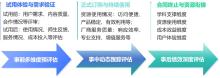
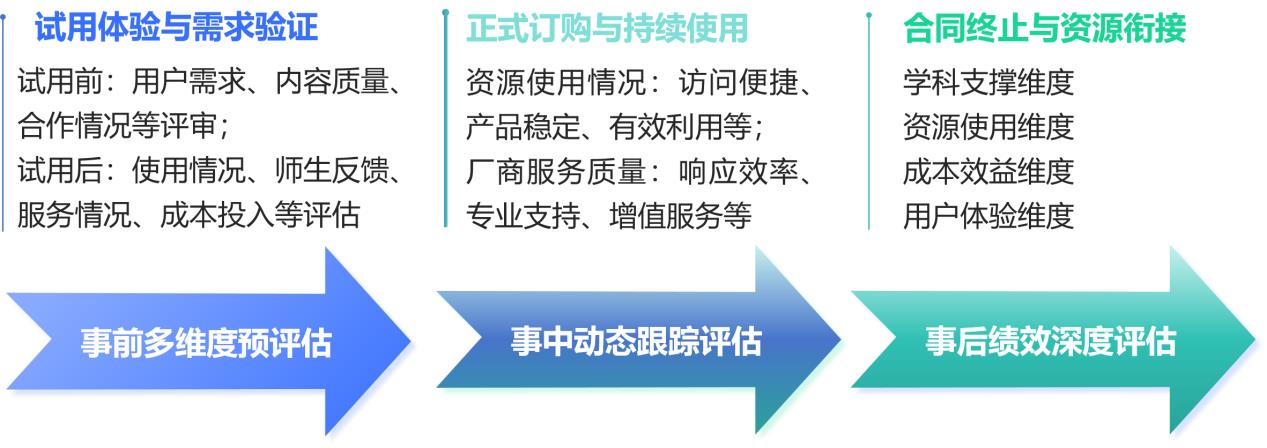
Efficiency evaluation model for the entire process of resource construction"

Table 2

Pre-acquisition trial evaluation metrics and details"

一级指标二级指标指标内容
资源内容与质量学科覆盖度与学校的学科设置和教学科研需求相匹配、学科核心保障率提升情况
资源权威性权威出版机构,内容经严格审核,真实、精准、可靠,具备较高的学术参考价值
内容新颖性具有一定的创新,避免与馆藏已有资源的同质化
检索系统及访问性突破校内校外地域界限,检索功能先进易用,访问便捷
用户需求情况师生荐购情况师生通过读者荐购平台、邮箱、电话等反馈的推荐情况
用户拒访情况未开通(试用)之前的数据库资源的拒访情况
以往合作情况本校合作情况综合考量厂商与本校过往已有合作成效、沟通情况
对标高校合作情况参考同类型高校相关资源试用或购买案例情况

Table 3

Evaluation dimensions and contents after the launch of resource trial"

评估维度评估内容
资源试用情况试用量包括检索量、下载量、访问量等,厂商辅助提供
资源可访问性校内校外访问是否顺畅,新用户是否可以正常注册使用等
厂商服务情况出现问题解决是否及时解决,统计数据是否及时反馈以及培训推广情况等
师生反馈情况问卷调研、读者通过邮箱或者电话的实时反馈等
资源成本投入报价、涨幅、付款方式等,厂商提供

Table 4

Selected resource promotional activities in 2024"

出版商协同开展的主要活动
Springer NatureAI赋能的学术图书写作与出版活动、电子书有奖问答活动、读书月在线培训讲座、定期发布Nature系列期刊发文情况
ClarivateWOS科研助手培训讲座、信息素养专题线下讲座、信息素养提升系列课程
知网(CNKI)AI系列产品、研学平台等讲座培训
Proquest EBCEBC平台有奖荐书活动
Elsevier“科研直行线”Scopus系列讲座、信息素养专题线下讲座、ScienceDirect读享社区积分挑战赛
CASCAS SciFinder检索技能大赛、2024秋季CAS SciFinder专题论坛
Wiley“汇聚学术大咖,点亮学术之路”线上系列讲座

Table 5

Resource utilization performance evaluation metrics"

评估维度评估指标指标说明
学科支撑维度资源内容与质量包括核心资源数量、更新频率、检索系统及功能等
核心期刊保障率

包括JCR核心保障率、ESI学科核心保障率等

计算方式:馆藏学科核心期刊总数/学科核心期刊总数

图书保障情况包括教育部学科保障情况、BKCI学科保障情况等
资源使用维度使用量包括下载量、检索量、访问量、借阅量等
引用情况

WOS发文引文期刊保障情况、SCOPUS发文引文期刊保障情况等

计算方式:馆藏期刊引文数量/总引文数量

数据库零使用量分析使用量、发文量和引用量为0的情况
成本效益维度使用成本根据订购价格和使用量计算使用成本,并计算近3年使用成本增幅
引用成本根据订购价格和引用量计算引用成本,并计算近3年年引用成本增幅
对标高校成本对比通过DRAA数据库订购高校使用成本均值与本校使用成本进行对比分析
用户体验维度文献资源需求满足度包括纸质资源的需求满足情况、电子资源的需求满足情况及对读者个性化需求的响应能力
文献资源服务满意度包括文献资源获取的便捷程度、平台访问的无障碍性、用户对服务响应速度及个性化服务等。

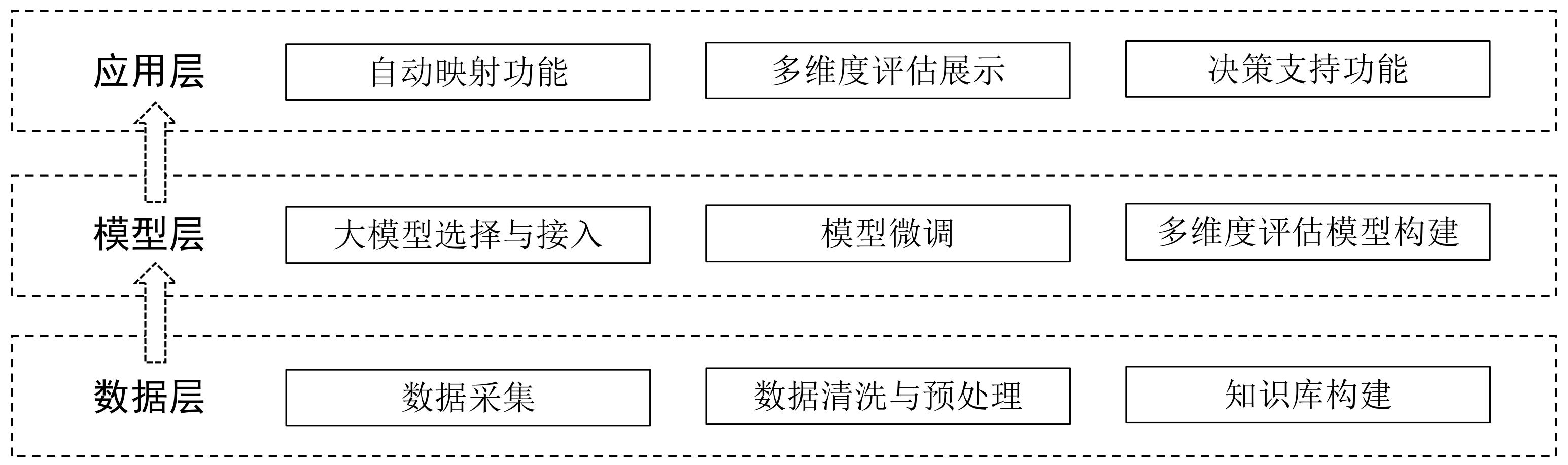
Fig.2

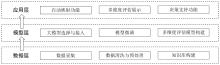
Logic architecture of the intelligent collection analysis platform"

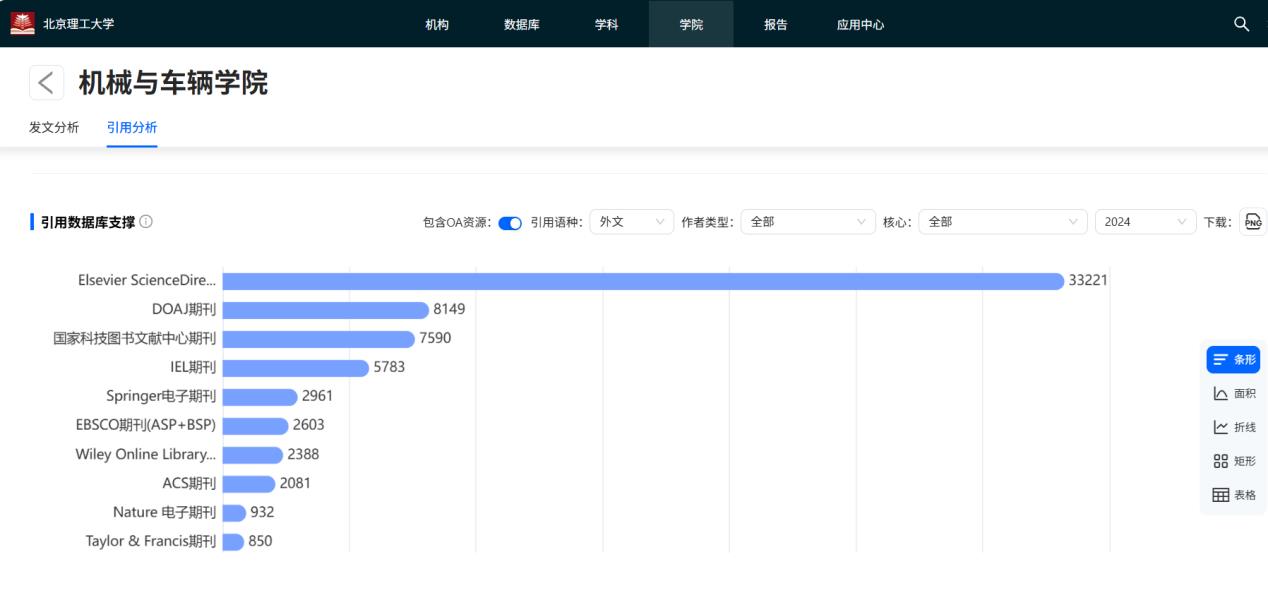
Fig.3

Dashboard for analyzing journal citations by school"

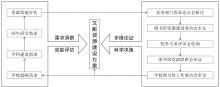
Fig.4

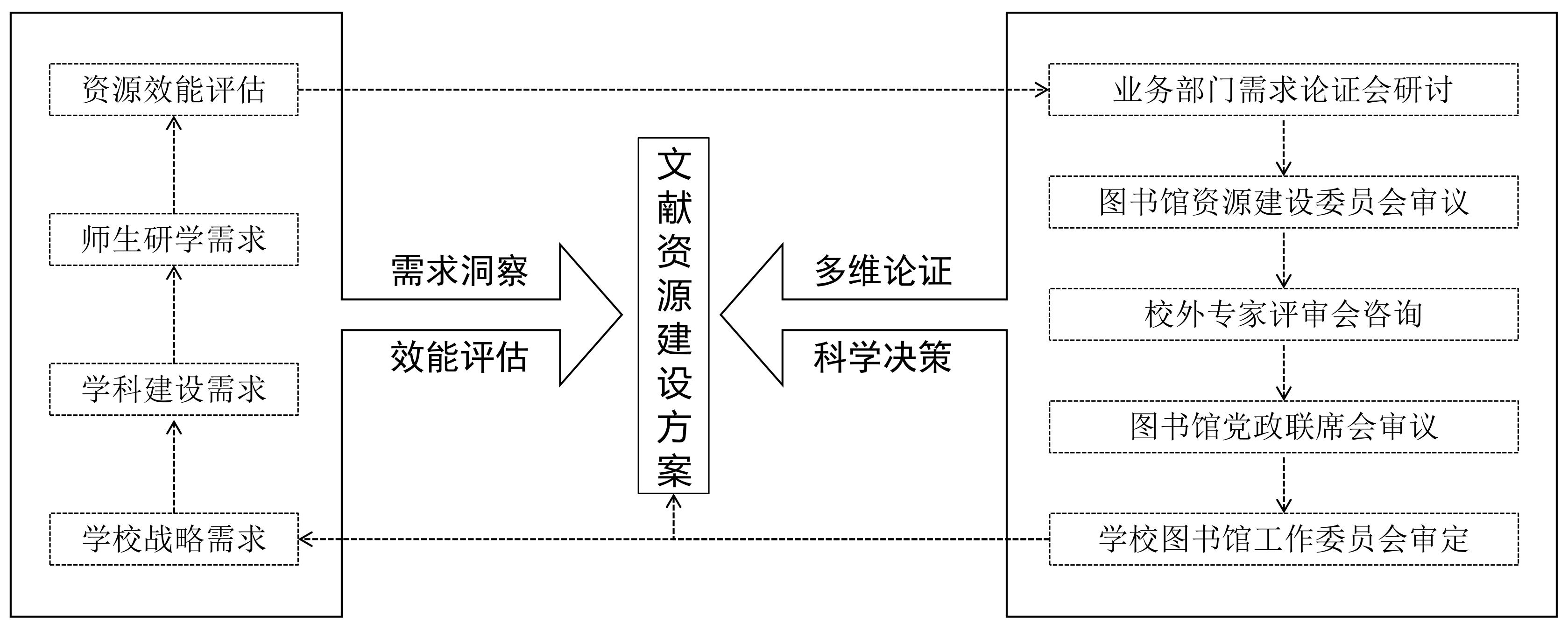
Workflow framework for collection development plans"

Fig.5

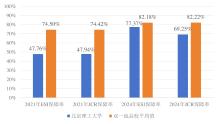
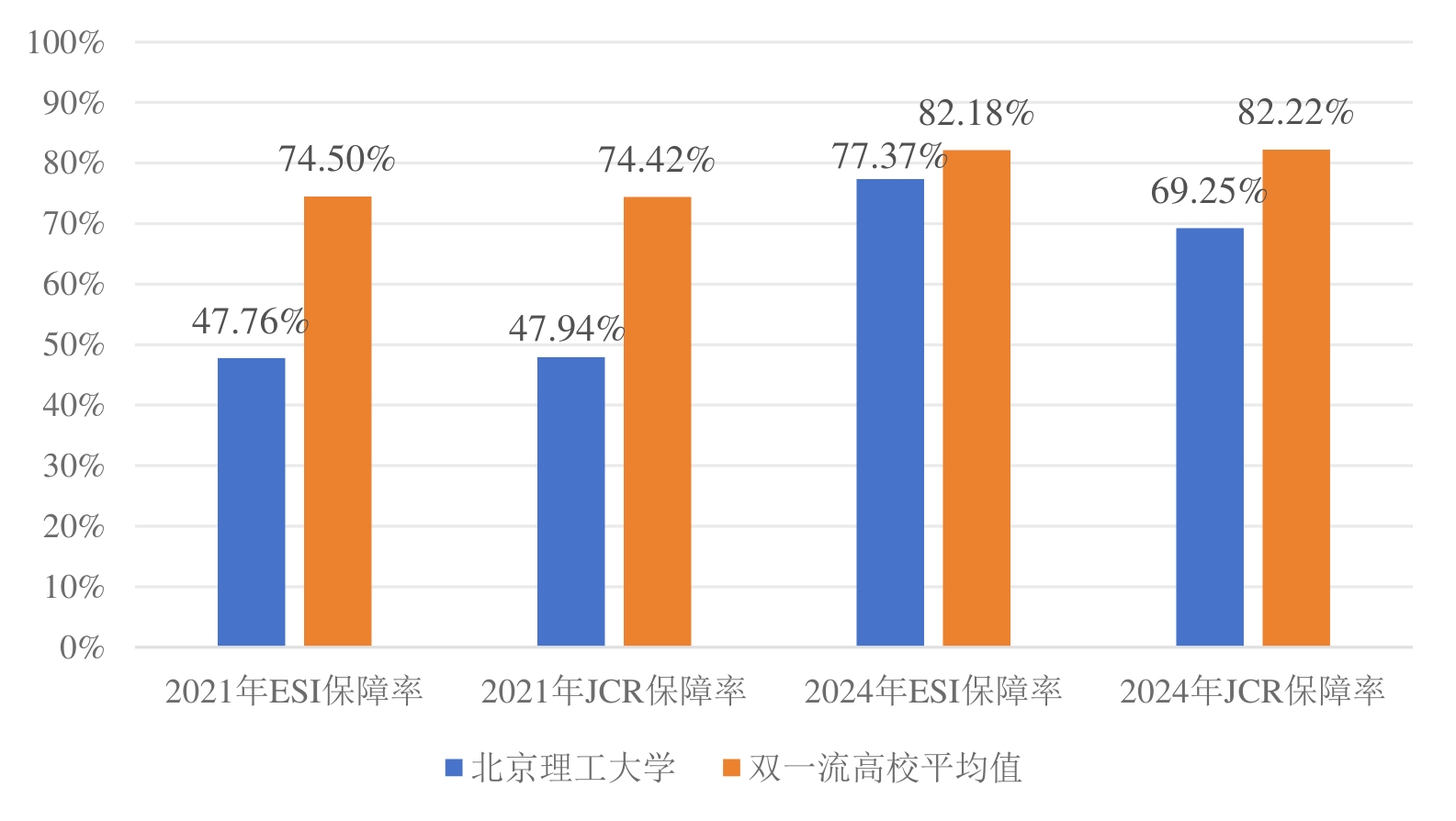
Journal coverage rates for ESI and JCR core disciplines at BIT: a comparison with the double first-class university average"

Fig.6

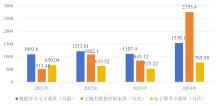
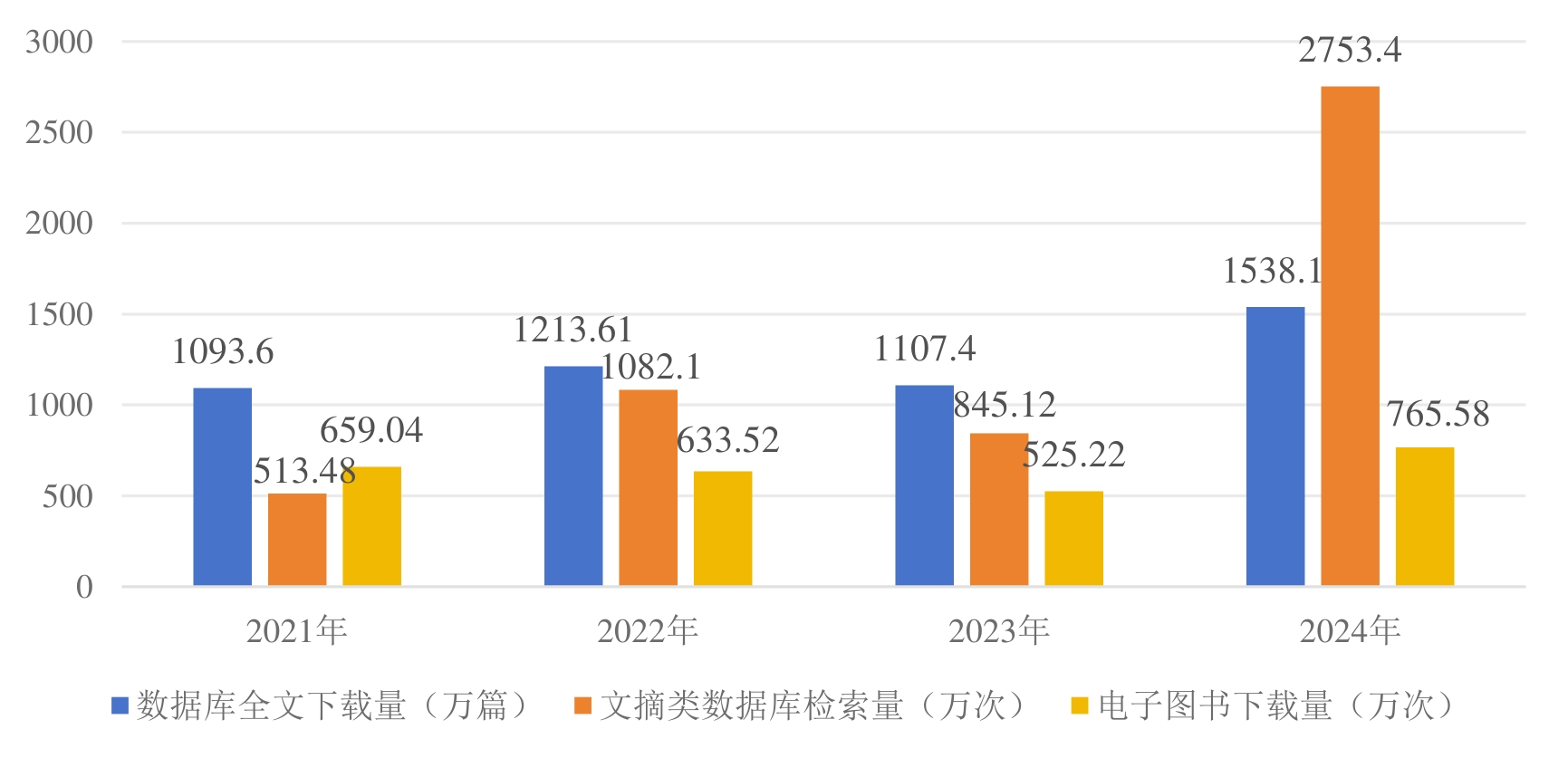
Annual downloads of library document resources"

Fig.7

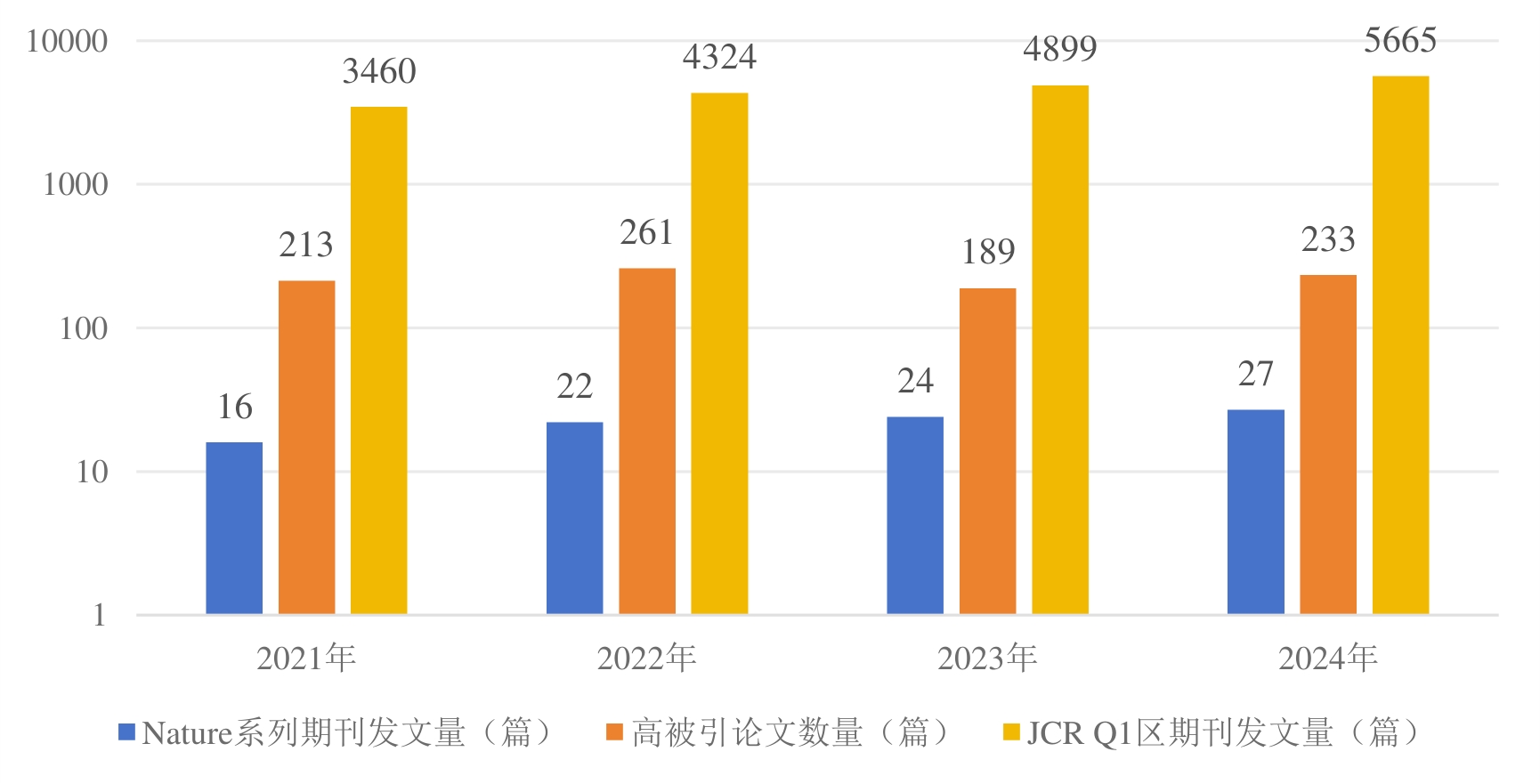
Annual publication volume of selected high-quality papers at BIT"

Fig.8

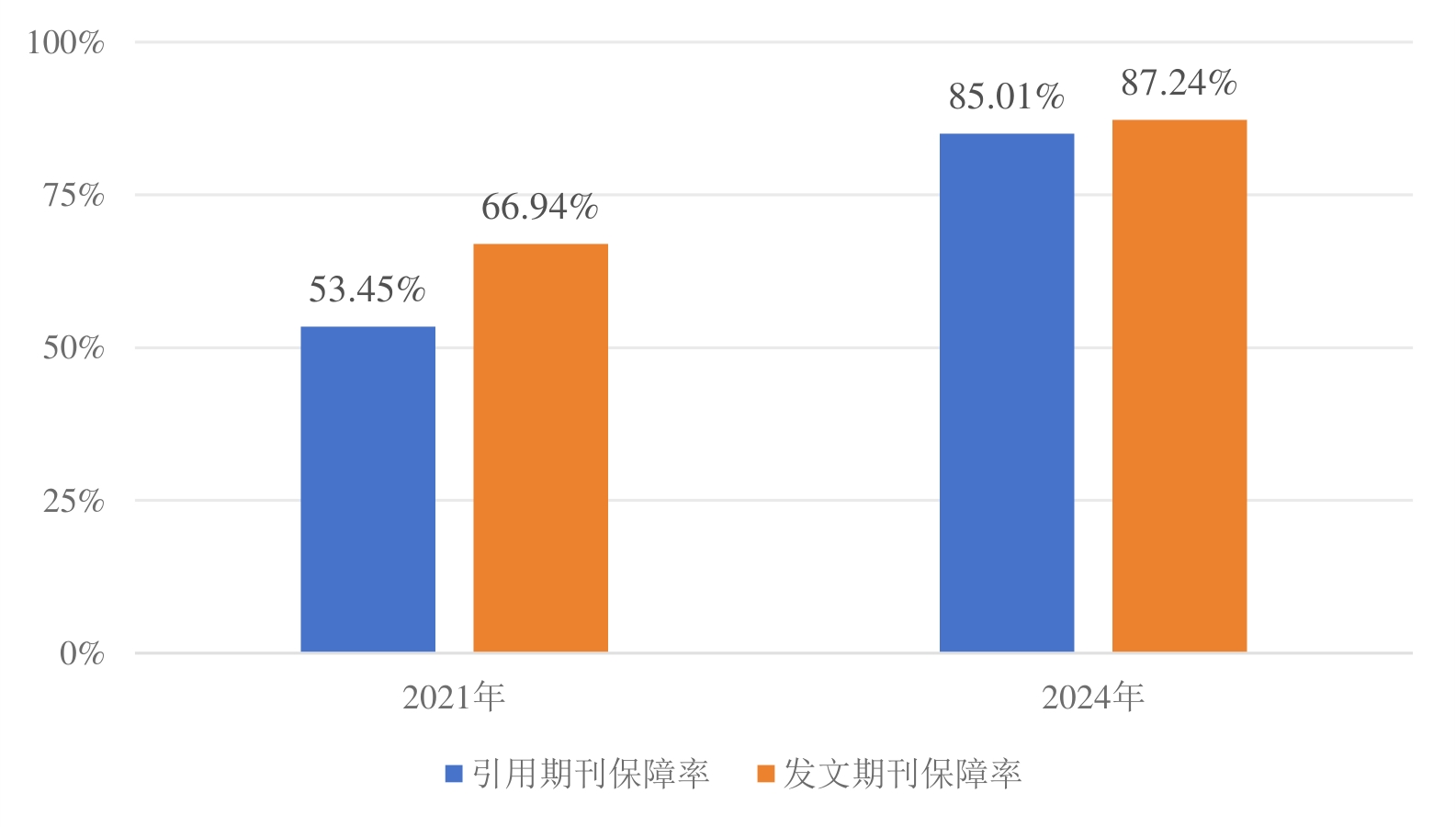
Coverage rates of journals cited in and journals published in WOS by BIT Library"

Fig.9

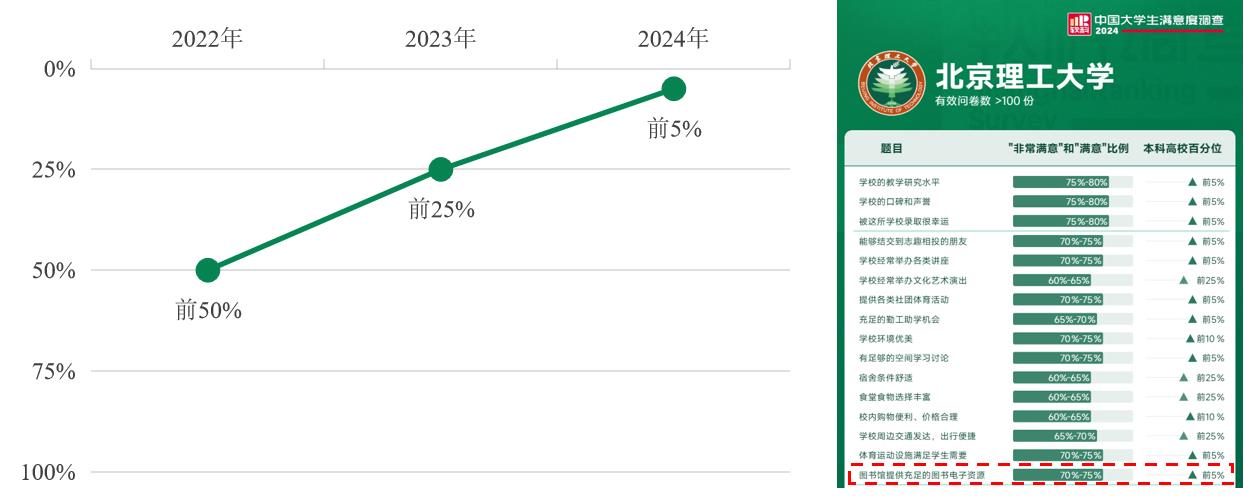
BIT's percentile rank for satisfaction with library resource adequacy among undergraduate universities"

[1] 吴英梅, 李书宁, 毛芸. 数据驱动的高校图书馆精准化资源建设保障机制研究[J]. 情报理论与实践, 2023, 46(3): 183-188.
WU Y M, LI S N, MAO Y. Research on the safeguard mechanism of data-driven precision resource construction of university libraries[J]. Information studies: Theory & application, 2023, 46(3): 183-188.
[2] 周迪. 从“馆藏求全”到“服务求专”: 华中农业大学图书馆资源服务一体化发展的探索与思考[J]. 大学图书馆学报, 2024, 42(6): 37-43.
ZHOU D. From "comprehensive collection orientation" to "professional service orientation": Exploration and reflection on the integrated development of resources and services of Huazhong agricultural university library[J]. Journal of academic libraries, 2024, 42(6): 37-43.
[3] 陈建龙, 别立谦, 童云海. 信息资源管理视角下的高校图书馆资源服务一体化新探[J]. 大学图书馆学报, 2024, 42(6): 5-15.
CHEN J L, BIE L Q, TONG Y H. A new exploration of resource-service integration in academic libraries from the perspective of information resource management[J]. Journal of academic libraries, 2024, 42(6): 5-15.
[4] 黄飞燕. 新型研究型大学图书馆纸电图书协同建设实践探索: 以南方科技大学图书馆为例[J]. 农业图书情报学报, 2024, 36(11): 92-103.
HUANG F Y. Practices for new research university's collaborative collection development of print and electronic books: A case study of SUSTech library[J]. Journal of library and information science in agriculture, 2024, 36(11): 92-103.
[5] 中共中央, 国务院. 教育强国建设规划纲要(2024-2035年)[N]. 人民日报, 2025-01-20(06).
[6] 关于加快推进教育数字化的意见[EB/OL]. [2025-04-19]. .
[7] 张谙宁, 叶兰, 周文琦, 等. AI生成元数据赋能图书馆资源建设的实践与启示: 基于国内外案例调查[J]. 大学图书馆学报, 2025, 43(4): 90-104.
ZHANG A N, YE L, ZHOU W Q, et al. AI-generated metadata enabling library collection development: A case study[J]. Journal of academic libraries, 2025, 43(4): 90-104.
[8] 赵美花. 人工智能在图书采分编领域的实践与展望: 以广东省立中山图书馆“采编图灵”为例[J]. 图书馆论坛, 2025, 45(8): 126-132.
ZHAO M H. Practice and prospect of artificial intelligence in the field of book acquisition, classification, and cataloging: Taking "Library Turing" as an example[J]. Library tribune, 2025, 45(8): 126-132.
[9] ENGEL J Y, DO D T, SALEM B, et al. Artificial intelligence in library cataloging: A review of literature[J]. Journal of library metadata, 2025, 25(4): 261-276.
[10] 储节旺, 朱爱瑜, 邹启峰. 资源服务一体化背景下高校图书馆文献资源建设: 问题剖析、理念构建、策略设计[J]. 大学图书馆学报, 2024, 42(6): 29-36.
CHU J W, ZHU A Y, ZOU Q F. University library resource development in the context of resource-service integration: Problem analysis, conceptual framework, and strategy design[J]. Journal of academic libraries, 2024, 42(6): 29-36.
[11] ZONDI N P, EPIZITONE A, NKOMO N, et al. A review of artificial intelligence implementation in academic library services[J]. South African journal of library and information science, 2024, 90(2):1-8.
[12] 涂佳琪, 杨新涯, 沈敏, 等. 需求与决策驱动的图书智能采访系统研究与实践: 以重庆大学图书馆为例[J]. 图书情报工作, 2020, 64(11): 28-34.
TU J Q, YANG X Y, SHEN M, et al. Research and practice of decision-driven book intelligent interview system - Taking Chongqing university as an example[J]. Library and information service, 2020, 64(11): 28-34.
[13] 王红, 雷菊霞. 人工智能图书采访模式设计及流程运维[J]. 图书馆学研究, 2018(5): 71-76, 57.
WANG H, LEI J X. The mode design and process operation of artificial intelligence (AI) book acquisition[J]. Research on library science, 2018(5): 71-76, 57.
[14] 夏立新, 龙存钰, 郭致怡, 等. 面向学科建设的我国文献资源保障评价研究综述[J]. 情报资料工作, 2023, 44(3): 6-13.
XIA L X, LONG C Y, GUO Z Y, et al. A review of research on the guarantee and evaluation of literature resources in China for discipline construction[J]. Information and documentation services, 2023, 44(3): 6-13.
[15] 张丽, 王博, 井水, 等. 生成式人工智能驱动公共图书馆资源发现: 基于动态评价模型的服务优化研究[J]. 农业图书情报学报, 2025, 37(5): 58-71.
ZHANG L, WANG B, JING S, et al. Generative AI-driven resource discovery in public libraries: Service optimization based on a dynamic evaluation model[J]. Journal of library and information science in agriculture, 2025, 37(5): 58-71.
[16] 季莹, 李君, 高雨, 等. AI赋能的高校图书馆馆藏资源服务效能评估探索: 以哈尔滨工业大学图书馆为例[J]. 大学图书馆学报, 2025, 43(4): 5-14.
JI Y, LI J, GAO Y, et al. AI-empowered evaluation of academic library collection service effectiveness: A case study of Harbin institute of technology library[J]. Journal of academic libraries, 2025, 43(4): 5-14.
[17] 白阳, 周子瑜, 尹熙, 等. 面向学科服务的我国文献信息资源保障研究综述[J]. 情报资料工作, 2023, 44(6): 44-52.
BAI Y, ZHOU Z Y, YIN X, et al. A review of research on the guarantee of subject services oriented literature and information resources in China[J]. Information and documentation services, 2023, 44(6): 44-52.
[18] 丁遒劲, 苏静. 面向生成式人工智能(AIGC)的图书馆信息资源建设优化策略研究[J]. 图书情报工作, 2024, 68(18): 23-31.
DING Q J, SU J. Research on the optimization strategies for library information resources construction oriented to the development of AIGC[J]. Library and information service, 2024, 68(18): 23-31.
[19] BEVARA R V K, MANNURU N R, LUND B D, et al. Beyond ChatGPT: How DeepSeek R1 may transform academia and libraries?[J]. Library hi tech news, 2025, 42(4): 4-8.
[20] ZEB A, REHMAN F U, OTHAYMAN M BIN, et al. Artificial intelligence and ChatGPT are fostering knowledge sharing, ethics, academia and libraries[J]. The international journal of information and learning technology, 2025, 42(1): 67-83.
[21] HUANG K L, LIU Y C, DONG M Q. Incorporating AIGC into design ideation: A study on self-efficacy and learning experience acceptance under higher-order thinking[J]. Thinking skills and creativity, 2024, 52: 101508.
[22] 曾燕. 2025年人工智能行业市场发展现状及未来发展前景趋势分析[EB/OL]. [2025-07-25]. .
[23] 中国互联网络信息中心. 第55 次《中国互联网络发展状况统计报告》[EB/OL]. [2025-07-25]. .
[24] MATHEW R, STEFANIAK J E. A needs assessment to support faculty members' awareness of generative AI technologies to support instruction[J]. TechTrends, 2024, 68(4): 773-789.
[25] EVMENOVA A S, BORUP J, SHIN J K. Harnessing the power of generative AI to support ALL learners[J]. TechTrends, 2024, 68(4): 820-831.
[26] JENSEN L X, BUHL A, SHARMA A, et al. Generative AI and higher education: A review of claims from the first months of ChatGPT[J]. Higher education, 2025, 89(4): 1145-1161.
[27] LIU S G, WU C W, ZHOU Y Y, et al. From ChatGPT to SORA- AIGC empowering the digital transformation in higher education[C]//Proceedings of the 2024 7th International Conference on Educational Technology Management. Changsha, China: ACM, 2025: 322-327.
[28] 教育部高等教育司. 教育部高等教育司关于公布首批“人工智能+高等教育”应用场景典型案例的通知[EB/OL]. [2025-07-25]. .
[29] 教育部高等教育司. 教育部高等教育司关于公布第二批“人工智能+高等教育”应用场景典型案例的通知[EB/OL]. [2025-07-25]. .
[30] 教育部高等教育司. 教育部高等教育司关于征集第三批“人工智能+高等教育”典型应用场景案例的通知[EB/OL]. [2025-07-25]. .
[31] 北京理工大学. 《焦点访谈》关注!智慧变革, 北理当先![EB/OL]. [2025-07-25]. .
[32] 李新碗, 张浩, 徐璟, 等. 面向未来学习需求的高校图书馆大信息服务探索[J]. 大学图书馆学报, 2024, 42(2): 15-22.
LI X W, ZHANG H, XU J, et al. The ubiquitous information service of future learning centers in university libraries[J]. Journal of academic libraries, 2024, 42(2): 15-22.
[33] 钱力, 刘志博, 胡懋地, 等. AI就绪的科技情报数据资源建设模式研究[J]. 农业图书情报学报, 2024(3): 32-45.
QIAN L, LIU Z B, HU M D, et al. Construction model of AI-ready for scientific and technological intelligence data resources[J]. Journal of library and information science in agriculture, 2024(3): 32-45.
[34] 马晨, 黄镝. 外文电子图书循证采购模式应用策略及实证研究[J]. 图书馆杂志, 2022, 41(12): 41-44.
MA C, HUANG D. Empirical study on the application strategy of the E-book evidence-based acquisition model[J]. Library journal, 2022, 41(12): 41-44.
[35] 孔令芳, 林如诗, 吴晶晶, 等. 基于循证采购的高校图书馆外文电子书采购模式实践研究: 以浙江大学图书馆为例[J]. 大学图书馆学报, 2023, 41(3): 36-41.
KONG L F, LIN R S, WU J J, et al. Practice and research on procurement mode of foreign e-books in university libraries based on evidence-based acquisition: Taking Zhejiang university library as an example[J]. Journal of academic libraries, 2023, 41(3): 36-41.
[36] XU X L, WU F, BILAL M, et al. XRL-SHAP-Cache: An explainable reinforcement learning approach for intelligent edge service caching in content delivery networks[J]. Science China information sciences, 2024, 67(7): 170303.
[37] 窦路遥, 何清, 冯宇, 等. 基于联邦学习和动态改进的多源数据融合方法研究[J]. 情报杂志, 2025, 44(8): 162-171.
DOU L Y, HE Q, FENG Y, et al. Research on multi-source data fusion method based on federated learning and dynamic improvement[J]. Journal of intelligence, 2025, 44(8): 162-171.
[38] 程乐. 我国高质量场景数据集的供给现状与发展策略[J]. 人民论坛, 2025(5): 68-72.
CHENG L. Current supply status and development strategies of high-quality scenario datasets in China[J]. People's tribune, 2025(5): 68-72.
[39] 江京泽, 周天旻, 李妹, 等. 高校图书馆智能化转型中的复合型AI馆员核心能力模型的探索与研究[J/OL]. 农业图书情报学报, 2025: 1-13. .
JIANG J Z, ZHOU T H, L M, et al. A study of the core competence model of compound AI librarians in the intelligent transformation of university libraries[J]. Journal of library and information science in agriculture, 2025: 1-13. .
[1] JIANG Jingze, ZHOU Tianmin, LI Mei, CHENG Cheng, CHEN Haiyan. A study of the Core Competence Model of Compound AI Librarians in the Intelligent Transformation of University Libraries [J]. Journal of library and information science in agriculture, 2025, 37(9): 97-109.
[2] SHEN Hongjie, SHEN Hongwei, WANG Junli. Generative AI Empowering Information Literacy Education in Digital Libraries: Path Exploration, Challenge Analysis, and Response Strategies [J]. Journal of library and information science in agriculture, 2025, 37(7): 50-60.
[3] DONG Ke, SONG Yuchen, WU Jiachun. Layout and Characteristics of European AI Data Governance Policy [J]. Journal of library and information science in agriculture, 2025, 37(7): 4-18.
[4] JIANG Yumeng. An Investigation and Enlightenment on the Current Status of AI Literacy Education in Nordic University Libraries [J]. Journal of library and information science in agriculture, 2025, 37(7): 19-34.
[5] ZHAI Jun, MENG Zihan, LI Fangsu, SHEN Lixin. AI Guides in Research Libraries of North America under the AI4S Context: Based on the Survey of 125 ARL Libraries [J]. Journal of library and information science in agriculture, 2025, 37(7): 35-49.
[6] SHI Xujie, YUAN Fan, LI Jia. Searching as Learning in the Context of Generative Artificial Intelligence: Technological Pathways, Behavioral Evolution, and Ethical Challenges [J]. Journal of library and information science in agriculture, 2025, 37(5): 40-57.
[7] CHEN Jiayong, GONG Jiaoteng, WANG Yuyi. Research of Interdisciplinary Comparison and Collaborative Paradigm on the Concept of Agent in Library Science [J]. Journal of library and information science in agriculture, 2025, 37(5): 27-39.
[8] ZHANG Li, WANG Bo, JING Shui. Generative AI-Driven Resource Discovery in Public Libraries: Service Optimization Based on a Dynamic Evaluation Model [J]. Journal of library and information science in agriculture, 2025, 37(5): 58-71.
[9] GOU Ruike, LUO Wei. Influencing Factors of Continuous Use Intention of "Generation Z" Users of an AIGC Platform [J]. Journal of library and information science in agriculture, 2025, 37(3): 66-80.
[10] SUN Zhimei, LIU Yan, LIU Wenyun, LI Ruiqin. Perception and Utilization of Digital Literacy Knowledge by University Library Users from Representational Pers Perspective [J]. Journal of library and information science in agriculture, 2025, 37(2): 23-36.
[11] QIAO Jinhua, MA Xueyun. Risks and Regulations for Application of the LLaMA Model in University Future Learning Centers [J]. Journal of library and information science in agriculture, 2025, 37(2): 37-48.
[12] GUO Wenli. The Five Laws of Library Science in the AIGC Era: Contextual Integration and Boundary Expansion [J]. Journal of library and information science in agriculture, 2025, 37(10): 22-36.
[13] SUN Lijuan. Exploring the Transition of Public Librarians to "Prompt Librarians" from the Perspective of New Quality Productive Forces [J]. Journal of library and information science in agriculture, 2025, 37(1): 17-32.
[14] LUO Guofeng, YI Tong, YAN Zhouzhou. Critical Information Literacy Education in University Libraries from the Perspective of AIGC Application [J]. Journal of library and information science in agriculture, 2025, 37(1): 47-58.
[15] Hecan ZHANG, Chengqi YI, Peng GUO, Qianqian HUANG, Xiaokun JIN. Copyright Data Dilemma of Building High-Quality Data System for AI: Present Situation, Coping Strategies, and Implementation Path [J]. Journal of library and information science in agriculture, 2024, 36(9): 32-43.
Viewed
Full text


Abstract

Cited

  Shared   
  Discussed   
No Suggested Reading articles found!