

农业图书情报学报 ›› 2026, Vol. 38 ›› Issue (5): 16-34.doi: 10.13998/j.cnki.issn1002-1248.26-0248
• 中国信息资源管理学科自主知识体系构建专刊 • 上一篇 下一篇
黄水清1,2, 张卫1,2, 刘浏1,2
收稿日期:2026-04-23
出版日期:2026-05-05
发布日期:2026-06-01
作者简介:基金资助:HUANG Shuiqing1,2, ZHANG Wei1,2, LIU Liu1,2
Received:2026-04-23
Online:2026-05-05
Published:2026-06-01
摘要:
[目的/意义] 建设计算人文自主知识体系,既是数据驱动与计算思维时代这一新兴交叉学科走向成熟的历史必然,也是对推进中国特色哲学社会科学建设国家战略的积极响应。 [方法/过程] 本文在提炼和厘清计算人文自主知识体系标识性概念的基础上,从学术体系、学科体系与话语体系3个维度考察其建设现状与发展态势。学术体系层面,计算人文已围绕“人类表达”这一研究对象逐步确立了其目标指引、方法路径与研究范式。学科体系层面,以“计算X”为基本构成逻辑,计算哲学、计算史学、计算文献学、计算文学、计算艺术学、计算档案学等分支学科先后产生并基本成形。话语体系层面,已逐渐完成从“数字”到“计算”的认识论转向,借助国家战略势能形成纵向层级与横向关联相统一的表达结构。 [结果/结论] 目前,计算人文已具备从分散实践走向体系化建设的战略机遇,未来需立足本土实际问题、深植中华文化语境,在概念提炼与理论创新的持续往返中推动自主知识体系的内生性完善与动态发展。
中图分类号: G203,TP3-05
黄水清, 张卫, 刘浏. 计算人文自主知识体系的建设与发展[J]. 农业图书情报学报, 2026, 38(5): 16-34.
HUANG Shuiqing, ZHANG Wei, LIU Liu. Construction and Development of an Autonomous Knowledge System for Computational Humanities[J]. Journal of library and information science in agriculture, 2026, 38(5): 16-34.
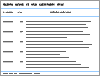
表1
国家社科基金立项项目标题中含“计算”的术语及其层次结构(重点/一般/青年项目)"
| 一级概念 | 二级概念 | 三级概念 |
|---|---|---|
| 计算人文 | 计算哲学 | 计算现象学、计算主义、计算创造力、计算学习理论、计算纲领 |
| 计算语言学 | 语用计算、认知计算、非字面义计算、情感计算、文学计算、计算神经机制 | |
| 计算社会科学 | 计算经济学 | 计算金融学、隐私计算、计算实验金融、经济损失计算、经济增长率计算 |
| 计算传播学 | 计算宣传、计算叙事、计算国际传播、计算广告 |
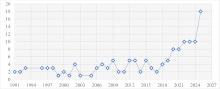
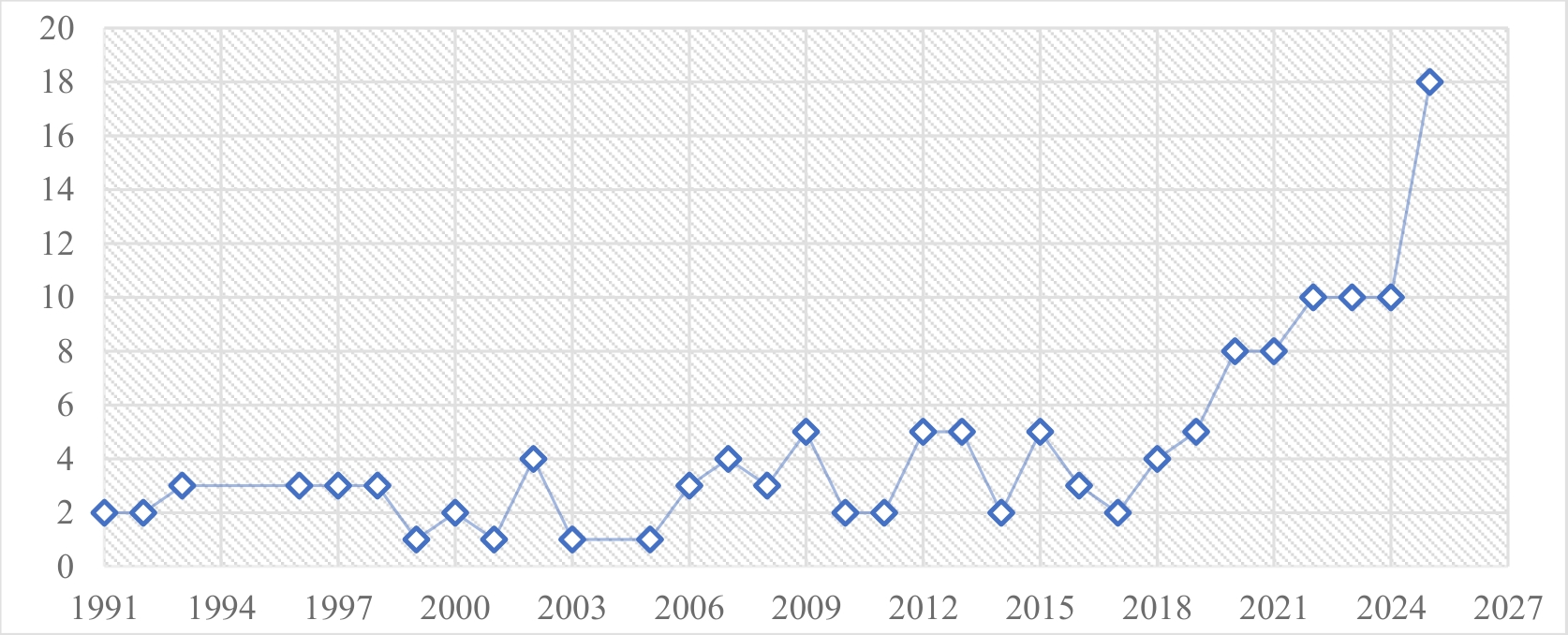
图1
国家社科基金立项项目标题中含“计算”的术语分布与演化轨迹(重点/一般/青年项目)"
| [1] |
黄水清. 回归人文: 从人文计算到计算人文[N]. 社会科学报, 2021-09-09.
|
| [2] |
黄水清. 人文计算与数字人文: 概念、问题、范式及关键环节[J]. 图书馆建设, 2019(5): 68-78.
|
|
|
|
| [3] |
黄水清, 刘浏, 王东波. 计算人文学科的内涵、体系及机遇[J]. 图书与情报, 2023(1): 1-11, 153, 145.
|
|
|
|
| [4] |
黄水清, 刘浏, 王东波. 计算人文的发展及展望[J]. 科技情报研究, 2021, 3(4): 1-12.
|
|
|
|
| [5] |
黄鑫宇, 魏向清. “数字人文”还是“计算人文”——汉译术语定名的学科建设视角[J]. 中国科技术语, 2026, 28(2): 23-31.
|
|
|
|
| [6] |
马晓娜, 图拉, 徐迎庆. 非物质文化遗产数字化发展现状[J]. 中国科学(信息科学), 2019, 49(2): 121-142.
|
|
|
|
| [7] |
张卫, 王东波, 刘浏. 基于大语言模型的成语隐喻式构词方法及其应用: 知识重组、回溯与发现[J]. 情报学报, 2025, 44(9): 1083-1098.
|
|
|
|
| [8] |
|
| [9] |
张小劲, 孟天广. 论计算社会科学的缘起、发展与创新范式[J]. 理论探索, 2017(6): 33-38.
|
|
|
|
| [10] |
陈加晋, 卢勇. 发现更真的历史: 中国计算史学的百年之路与时代使命[J]. 图书与情报, 2023(1): 21-30.
|
|
|
|
| [11] |
|
| [12] |
齐月, 刘雏菲, 李文祺, 等. 计算人文视域下的《史记》三家注引书知识标注与计量分析初探[J]. 大学图书馆学报, 2024, 42(5): 64-77.
|
|
|
|
| [13] |
王悦, 齐欣. “计算批评”透视下的情感世界: 通向残雪的另一种方式[J]. 天津师范大学学报(社会科学版), 2023(2): 101-107.
|
|
|
|
| [14] |
张迪, 沈雪琪, 伊晨, 等. 计算美学视角下的国画意境多标签分类方法[J]. 武汉大学学报(工学版), 2025, 58(11): 1816-1826.
|
|
|
|
| [15] |
李俊豪, 祁天娇. “馆藏即数据”: 计算范式驱动下的GLAM馆藏数据化[J/OL]. 中国图书馆学报, 1-20[2026-04-06].
|
|
|
|
| [16] |
|
| [17] |
刘洋, 余思琪. 文学计算的理论、方法及发展挑战——刘洋博士访谈[J]. 数字人文研究, 2023, 3(4): 37-48.
|
|
|
|
| [18] |
李阳. 算法批评视域下文学批评的分歧与融合[J]. 云南社会科学, 2023(5): 181-188.
|
|
|
|
| [19] |
梁继红, 李小静. 历史档案文本数据化的方法论基础: 面向文种的古文书学[J]. 档案学通讯, 2023(3): 106-112.
|
|
|
|
| [20] |
李敏瑜, 李永卉, 卢章平. 古方志历史名人资源知识图谱构建与知识发现研究[J]. 图书馆杂志, 2026, 45(1): 61-73.
|
|
|
|
| [21] |
潘俊, 刘宁. 网络分析与文本挖掘视角下的宋代士人交游研究——基于CBDB与《全宋诗》的分析[J]. 科技情报研究, 2026, 8(1): 66-75.
|
|
|
|
| [22] |
张卫, 王昊, 王东波, 等. 以数据关联促文学认知: 古诗隐喻文化图式的语义组织方法[J]. 图书情报工作, 2024, 68(4): 109-123.
|
|
|
|
| [23] |
贾诗威, 闫慧. 图书情报研究中民族志的应用与发展[J]. 农业图书情报学报, 2023, 35(6): 4-15.
|
|
|
|
| [24] |
黄水清, 齐月, 赵雪, 等. 大语言模型范式下的计算人文研究[J]. 图书情报工作, 2026, 70(3): 3-11.
|
|
|
|
| [25] |
吉云飞. 作为“计算批评”的“远读”——以网络小说“升级文”中的节奏与情绪为例[J]. 中国现代文学研究丛刊, 2020(8): 177-187.
|
|
|
|
| [26] |
李永卉, 周树斌, 周宇婷, 等. 基于图数据库Neo4j的宋代镇江诗词知识图谱构建研究[J]. 大学图书馆学报, 2021, 39(2): 52-61.
|
|
|
|
| [27] |
夏立新. 加快建构信息资源管理学科自主知识体系[J]. 农业图书情报学报, 2023, 35(10): 107.
|
|
|
|
| [28] |
范涛, 王昊, 陈玥彤. 基于深度迁移学习的地方志多模态命名实体识别研究[J]. 情报学报, 2022, 41(4): 412-423.
|
|
|
|
| [29] |
宋雪雁, 杨芳芳, 罗慧. 知识重组视域下《全唐诗》战争诗诗人社会网络关系研究[J]. 图书情报工作, 2023, 67(20): 34-44.
|
|
|
|
| [30] |
夏翠娟. 构建数智时代社会记忆的多重证据参照体系: 理论与实践探索[J]. 中国图书馆学报, 2022, 48(5): 86-102.
|
|
|
|
| [31] |
|
| [32] |
冯志伟. 计算语言学方法研究[M]. 上海: 上海外语教育出版社, 2023.
|
|
|
|
| [33] |
彭秋茹, 王东波, 黄水清. 面向新时代的人民日报语料中文分词歧义分析[J]. 情报科学, 2021, 39(11): 103-109.
|
|
|
|
| [34] |
王林旭, 黄水清. 计算人文高质量文本数据集建设: 理念、方法与应用[J/OL]. 图书情报知识, 1-12[2026-04-06].
|
|
|
|
| [35] |
吴梦成, 王东波, 黄水清. 古农书翻译与知识组织研究[J]. 中国农史, 2024, 43(2): 52-64.
|
|
|
|
| [36] |
|
| [37] |
|
| [38] |
胡蝶, 赵文华, 王希羽, 等. 《二十四史》引先秦诸子典籍内容自动识别与计量分析[J]. 图书情报工作, 2026, 70(5): 41-55.
|
|
|
|
| [39] |
李斌, 王东波. 计算文献学的概念、范畴及前景[J]. 图书与情报, 2023(1): 31-38.
|
|
|
|
| [40] |
刘浏, 齐月, 刘雏菲, 等. 计算人文下的古籍引书研究及全文本知识库的构建[J]. 情报学报, 2023, 42(12): 1498-1512.
|
|
|
|
| [41] |
张力元, 王军. 基于机器学习的古籍目录互著与别裁探析[J]. 中国图书馆学报, 2022, 48(2): 47-61.
|
|
|
|
| [42] |
张逸勤, 邓三鸿, 胡昊天, 等. 预训练模型视角下的跨语言典籍风格计算研究[J]. 数据分析与知识发现, 2023, 7(10): 50-62.
|
|
|
|
| [43] |
叶文豪, 胡蝶, 王东波, 等. 基于古籍大模型的无监督互文自动发现研究[J]. 图书情报工作, 2024, 68(23): 41-51.
|
|
|
|
| [44] |
|
| [45] |
|
| [46] |
郝雅立, 宋沂霏, 阿忠萍, 等. 基于情感计算的涉农突发事件网络舆情态势分析与引导策略[J]. 农业图书情报学报, 2025, 37(10): 37-52.
|
|
|
|
| [47] |
吴晔, 王琦. “碰撞”与“融合”: 计算传播学实验室建设与人才培养[J]. 青年记者, 2022(20): 33-35.
|
|
|
|
| [48] |
|
| [49] |
清华大学新雅书院. 探索哲学的“计算转向”: 第一届清华大学计算哲学学术会议顺利举行[EB/OL]. [2024-01-08].
|
| [50] |
庞珣. 全球秩序与人工智能对齐——超越技术问题的国际关系理论视角[J]. 人民论坛·学术前沿, 2025(9): 74-87.
|
|
|
|
| [51] |
资琳, 周旋. 类案推送系统的应用陷阱及其防范[J]. 云南大学学报(社会科学版), 2025, 24(2): 125-134.
|
|
|
|
| [52] |
程龙. 人工智能辅助量刑的证据化改造[J]. 现代法学, 2025, 47(2): 174-188.
|
|
|
|
| [53] |
邓矜婷, 沈蔚然. 论基于大模型的刑事司法裁判说理可计算化[J]. 社会科学研究, 2026(1): 51-63.
|
|
|
|
| [54] |
林喜芬, 李铮. 论计算法学的全球发展趋势[J]. 上海交通大学学报(哲学社会科学版), 2024, 32(6): 48-62.
|
|
|
|
| [55] |
|
| [56] |
常伟廷, 程永奇. 生成式AI与绘画艺术的共生范式: 技术赋权与人文价值的再平衡[J]. 美术观察, 2025(9): 130-134.
|
|
|
|
| [57] |
向勇. 传统艺术学的理论危机与计算艺术学的范式重构[J]. 中国艺术, 2025(4): 15-24.
|
|
|
|
| [58] |
聂珍钊. AI阅读与文学的计算分析批评[J]. 外国文学研究, 2025, 47(5): 22-32.
|
|
|
|
| [59] |
|
| [60] |
王乙婷, 冉启斌, 彭爽. 从语言距离计算看屯堡话的历史来源及其语言演变方向[J]. 中国语文, 2025(5): 592-606, 640.
|
|
|
|
| [61] |
王芳, 甘叠, 刘念. 认罪认罚量刑从宽实效研究——基于故意伤害罪轻罪的数据解读[J]. 山东大学学报(哲学社会科学版), 2022(3): 65-77.
|
|
|
|
| [62] |
中共中央办公厅, 国务院办公厅. 关于推进新时代古籍工作的意见[EB/OL]. (2022-04-11)[2026-04-16].
|
| [63] |
黄水清, 王晓光, 夏翠娟, 等. 推进新时代古籍工作,加快创新智能化发展[J]. 农业图书情报学报, 2022, 34(5): 4-20.
|
|
|
|
| [64] |
范文洁. 面向计算人文的史志目录知识库构建及应用研究[D]. 南京: 南京农业大学, 2023.
|
|
|
|
| [65] |
高元昊, 王小红, 科林·艾伦, 等. 主题建模辅助哲学研究的方法论探究——以《论语》《孟子》《荀子》的计算分析为例[J]. 数字人文研究, 2021, 1(2): 36-50.
|
|
|
| [1] | 周亚, 刘宇轩. 目录学:中国自主知识体系建构的基本方法[J]. 农业图书情报学报, 2026, 38(5): 103-112. |
| [2] | 周文杰. 自主知识体系构建语境中的信息资源管理理论场域论析——一项面向中国本土学术话语的系统性考察[J]. 农业图书情报学报, 2026, 38(5): 65-81. |
| [3] | 柯平, 李筱颖. 中国目录学自主知识体系的形成与发展[J]. 农业图书情报学报, 2026, 38(5): 4-15. |
| [4] | 石庆功. 从“译入”到“自塑”:中国图书馆学话语体系的百年建构逻辑及启示[J]. 农业图书情报学报, 2026, 38(5): 94-102. |
| [5] | 吴丹, 许浩. 从人机交互到人智协同:中国信息资源管理学科自主知识体系建构的前沿视角[J]. 农业图书情报学报, 2026, 38(5): 55-64. |
| [6] | 杨思洛, 杜佳语. 中国学术评价自主知识体系建构路径研究[J]. 农业图书情报学报, 2026, 38(5): 35-42. |
| [7] | 牛春华, 王雅淇, 沙勇忠. 中国自主知识体系建设中的场景适配型智能知识服务——信息资源管理学科的支撑能力与人才培养[J]. 农业图书情报学报, 2026, 38(5): 82-93. |
| [8] | 黄国彬, 周若涵. 马克思主义出版观赋能中国出版学自主知识体系构建的路径研究[J]. 农业图书情报学报, 2026, 38(5): 43-54. |
| [9] | 张玲. 数字人文与农业知识服务的融合创新:基于仿真模拟的视角[J]. 农业图书情报学报, 2026, 38(2): 79-89. |
| [10] | 王昊贤, 周子茗, 丁菲菲, 韦成府. 数字人文与大语言模型:古文献语义检索实践与探索[J]. 农业图书情报学报, 2024, 36(9): 89-101. |
| [11] | 张兴旺, 段雪纯, 辛杰. 数智时代中国古舆图文献的知识化描述框架及其应用场景研究[J]. 农业图书情报学报, 2023, 35(9): 4-11. |
| [12] | 单舒扬, 夏翠娟, 刘倩倩. 资源与技术双重赋价视域下家谱知识服务模式探索——以“AR姓氏墙”展项为例[J]. 农业图书情报学报, 2023, 35(6): 83-92. |
| [13] | 吕瑞娟, 张静蓓, 严丹, 蔡迎春. AIGC与GLAM创新发展综述——基于“生成未来·AIGC与GLAM创新发展”前沿学术论坛[J]. 农业图书情报学报, 2023, 35(5): 27-36. |
| [14] | 肖可以, 李韫璠. 供需匹配视角下中国高校图书馆参与数字人文教育服务建设现状及其启示[J]. 农业图书情报学报, 2023, 35(5): 37-50. |
| [15] | 王丽丽, 张宁. 数字人文视角下的古籍知识关联探析[J]. 农业图书情报学报, 2022, 34(9): 51-59. |
|
||