中文    English

Journal of library and information science in agriculture


Construction and Development of an Autonomous Knowledge System for Computational Humanities

HUANG Shuiqing1,2, ZHANG Wei1,2, LIU Liu1,2   

  1. 1. College of Information Management, Nanjing Agricultural University, Nanjing 210095
    2. Research Center for Humanities and Social Computing, Nanjing Agricultural University, Nanjing 210095
  • Received:2026-04-23 Online:2026-05-06

Abstract:

[Purpose/Significance] The construction of an autonomous knowledge system for computational humanities is both a historical inevitability as this emerging interdisciplinary field matures in the data-driven, computational era. It is also a substantive response to the national strategy of developing Chinese characteristics-based philosophy and social sciences. Unlike previous prior surveys which treat digital humanities as a relatively unified field, this paper emphasizes the epistemological shift from "digital" to "computational" and elucidates how Chinese scholarship has developed and refined the concept of computational humanities since it was first named in 2021. Its significance lies in providing a systematic, three-dimensional framework for assessing the field's institutional maturity and in demonstrating how computational humanities can serve as a vehicle for the communication of the Chinese story and the conveyance of Chinese wisdom within a global perspective. [Method/Process] Building on a conceptual clarification of the differences between "computation" and "humanities," "data" and "digital," and "digital humanities" and "computational humanities," the study examined the field along three interrelated dimensions: the academic system, the disciplinary system, and the discourse system. At the academic level, the analysis traced the consolidation of "human expression"–human cultural activity recorded through symbolic systems–as the research object. This three-tier inquiry comprises "what happened," "what was expressed," and "how to evaluate". A five-layer methodological hierarchy was cosntructed, spanning datafication, semantic annotation, text mining, spatiotemporal and network analysis, and large-language-model-driven intelligent computation. The research paradigm is five-stage and governed by the dual criteria of technical reproducibility and humanistic interpretive force. At the disciplinary level, the study surveyed sub-disciplines formed under the "computational X" logic, alongside talent cultivation, journals, conferences, laboratories, and academic public accounts. The argument is grounded in five empirical case studies: empty-space ratios in Chinese landscape painting (618-2011), the historical origins of the Tunpu dialect, sentencing leniency in misdemeanor cases, the construction of a historical-bibliography knowledge base, and topic-modeling comparisons of pre-Qin Confucian classics. [Results/Conclusions] The findings indicate that the field of computational humanities has reached a strategic juncture for transitioning from fragmented practice to systematic development. The academic system has formed an internally coherent conceptual framework; the disciplinary system has acquired a recognizable map of "Computational X" branches; and the discourse system has produced an expressive structure unifying vertical hierarchies with horizontal connections, propelled by the strategic momentum of "AI+," "Data Elements ×," and the New Liberal Arts initiative. The limitations of this study include the incomplete systematization of the original theory, unsettled institutional affiliations, and limited capacity for international discourse. Our future research endeavors will be anchored in local issues and firmly embedded within the Chinese cultural milieu. This approach is expected to propel the autonomous refinement of the autonomous knowledge system through continuous, iterative processes of conceptual distillation and theoretical innovation.

Key words: computational humanities, autonomous knowledge system, academic system, disciplinary system, discourse system, iconic concepts, humanities computing, digital humanities

CLC Number: 

  • G203

Table 1

Terminology containing the word “computation used in the titles of National Social Science Funding projects and their hierarchical structure (Key/General/Youth projects)"

一级概念 二级概念 三级概念
计算人文 计算哲学 计算现象学、计算主义、计算创造力、计算学习理论、计算纲领
计算语言学 语用计算、认知计算、非字面义计算、情感计算、文学计算、计算神经机制
计算社会科学 计算经济学 计算金融学、隐私计算、计算实验金融、经济损失计算、经济增长率计算
计算传播学 计算宣传、计算叙事、计算国际传播、计算广告

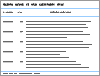
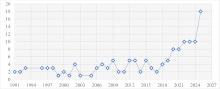
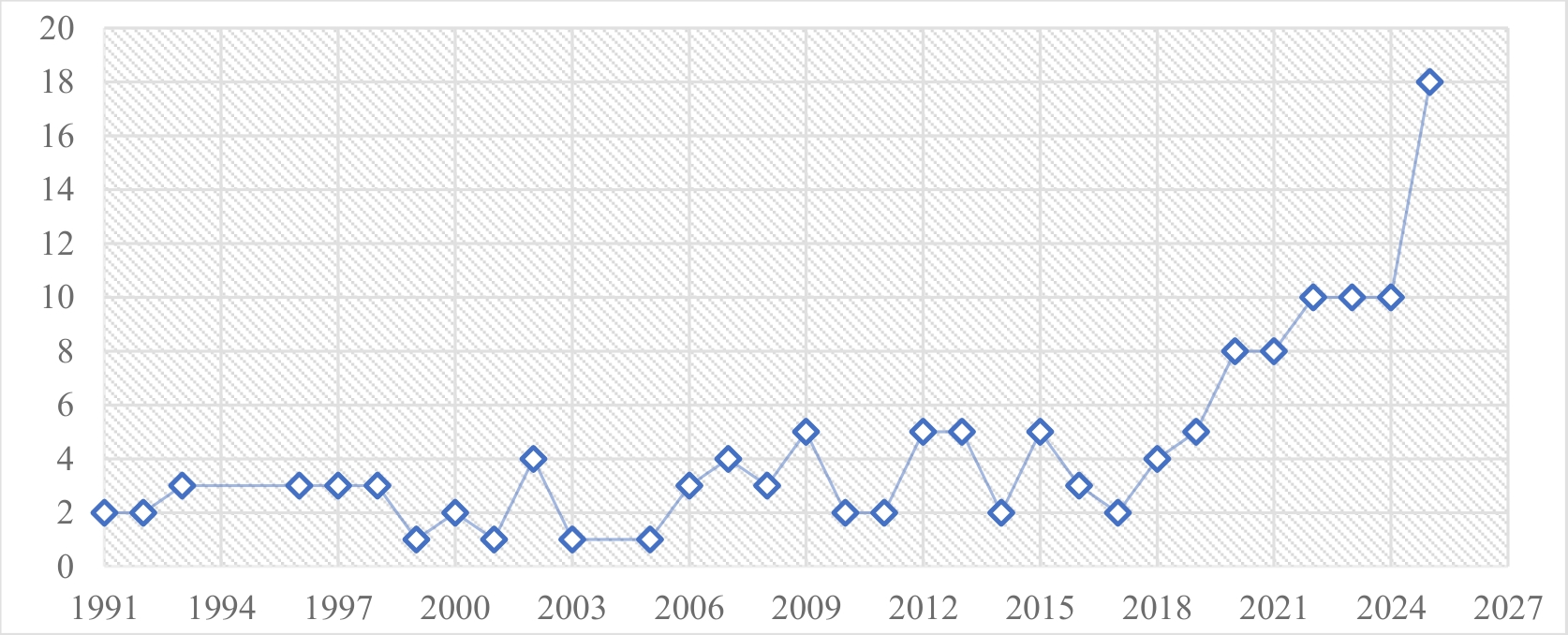
Fig.1

Distribution and evolutionary trajectory of terminologies containing "computation" used in the titles of National Social Science Funding projects (Key/General/Youth projects)"

[1]
黄水清. 回归人文: 从人文计算到计算人文[N]. 社会科学报, 2021-09-09.
[2]
黄水清. 人文计算与数字人文: 概念、问题、范式及关键环节[J]. 图书馆建设, 2019(5): 68-78.
Huang Shuiqing. Humanity computing and digital humanities: Concept, problem, paradigm and key step[J]. Library Development, 2019(5): 68-78.
[3]
黄水清, 刘浏, 王东波. 计算人文学科的内涵、体系及机遇[J]. 图书与情报, 2023(1): 1-11, 153, 145.
Huang Shuiqing, Liu Liu, Wang Dongbo. The connotation, system and opportunity of computational humanities[J]. Library & Information, 2023(1): 1-11, 153.
[4]
黄水清, 刘浏, 王东波. 计算人文的发展及展望[J]. 科技情报研究, 2021, 3(4): 1-12.
Huang Shuiqing, Liu Liu, Wang Dongbo. The development and outlook of computing humanities[J]. Scientific Information Research, 2021, 3(4): 1-12.
[5]
黄鑫宇, 魏向清. “数字人文”还是“计算人文”——汉译术语定名的学科建设视角[J]. 中国科技术语, 2026, 28(2): 23-31.
Huang Xinyu, Wei Xiangqing. "Digital humanities" or "computational humanities": A discipline construction perspective on terminology translation[J]. China Terminology, 2026, 28(2): 23-31.
[6]
马晓娜, 图拉, 徐迎庆. 非物质文化遗产数字化发展现状[J]. 中国科学(信息科学), 2019, 49(2): 121-142.
Ma Xiaona, Tu La, Xu Yingqing. Development status of the digitization of intangible cultural heritages[J]. Science in China (Information Sciences), 2019, 49(2): 121-142.
[7]
张卫, 王东波, 刘浏. 基于大语言模型的成语隐喻式构词方法及其应用: 知识重组、回溯与发现[J]. 情报学报, 2025, 44(9): 1083-1098.
Zhang Wei, Wang Dongbo, Liu Liu. An idiomatic metaphorical word-formation method based on a large language model and its application: Knowledge reorganization, backtracking, and discovery[J]. Journal of the China Society for Scientific and Technical Information, 2025, 44(9): 1083-1098.
[8]
Svensson P. Humanities computing as digital humanities[M]//Defining digital humanities. London: Routledge, 2016: 159-186.
[9]
张小劲, 孟天广. 论计算社会科学的缘起、发展与创新范式[J]. 理论探索, 2017(6): 33-38.
Zhang Xiaojin, Meng Tianguang. On the origin, development and innovation paradigm of computational social science[J]. Theoretical Exploration, 2017(6): 33-38.
[10]
陈加晋, 卢勇. 发现更真的历史: 中国计算史学的百年之路与时代使命[J]. 图书与情报, 2023(1): 21-30.
Chen Jiajin, Lu Yong. Finding a more true history: The centennial road and time mission of Chinese computational historiography[J]. Library & Information, 2023(1): 21-30.
[11]
Busa R A. Foreword: Perspectives on the digital humanities[M]//A Companion to Digital Humanities. Hoboken: Wiley, 2004: xvi-xxi.
[12]
齐月, 刘雏菲, 李文祺, 等. 计算人文视域下的《史记》三家注引书知识标注与计量分析初探[J]. 大学图书馆学报, 2024, 42(5): 64-77.
Qi Yue, Liu Chufei, Li Wenqi, et al. Knowledge annotation and quantitative analysis of citations of the three commentaries on records of the grand historian in the perspective of computational humanities[J]. Journal of Academic Libraries, 2024, 42(5): 64-77.
[13]
王悦, 齐欣. “计算批评”透视下的情感世界: 通向残雪的另一种方式[J]. 天津师范大学学报(社会科学版), 2023(2): 101-107.
Wang Yue, Qi Xin. Sentimental world under the perspective of "computational criticism": Another way of reading can Xue[J]. Journal of Tianjin Normal University (Social Sciences), 2023(2): 101-107.
[14]
张迪, 沈雪琪, 伊晨, 等. 计算美学视角下的国画意境多标签分类方法[J]. 武汉大学学报(工学版), 2025, 58(11): 1816-1826.
Zhang Di, Shen Xueqi, Yi Chen, et al. A multi-label classification method for the artistic conception of Chinese painting from the perspective of computational aesthetics[J]. Engineering Journal of Wuhan University, 2025, 58(11): 1816-1826.
[15]
李俊豪, 祁天娇. “馆藏即数据”: 计算范式驱动下的GLAM馆藏数据化[J/OL]. 中国图书馆学报, 1-20[2026-04-06].
Li Junhao, Qi Tianjiao. "Collections as data": The datafication of GLAM dollections driven by the computational paradigm[J/OL]. Journal of Library Science in China, 1-20[2026-04-06].
[16]
Turchin P, Whitehouse H, Larson J, et al. Explaining the rise of moralizing religions: A test of competing hypotheses using the Seshat Databank[J]. Religion, Brain & Behavior, 2023, 13(2): 167-194.
[17]
刘洋, 余思琪. 文学计算的理论、方法及发展挑战——刘洋博士访谈[J]. 数字人文研究, 2023, 3(4): 37-48.
Liu Yang, Yu Siqi. Theories, methods and developmental challenges to literary computing - Interview with Dr. Liu Yang[J]. Digital Humanities Research, 2023, 3(4): 37-48.
[18]
李阳. 算法批评视域下文学批评的分歧与融合[J]. 云南社会科学, 2023(5): 181-188.
Li Yang. The divergence and convergence of literary criticism from the perspective of algorithmic criticism[J]. Social Sciences in Yunnan, 2023(5): 181-188.
[19]
梁继红, 李小静. 历史档案文本数据化的方法论基础: 面向文种的古文书学[J]. 档案学通讯, 2023(3): 106-112.
Liang Jihong, Li Xiaojing. The datafication of the texts of historical archives: Diplomatics towards documental genre[J]. Archives Science Bulletin, 2023(3): 106-112.
[20]
李敏瑜, 李永卉, 卢章平. 古方志历史名人资源知识图谱构建与知识发现研究[J]. 图书馆杂志, 2026, 45(1): 61-73.
Li Minyu, Li Yonghui, Lu Zhangping. Research on knowledge graph construction and knowledge discovery of ancient local Chronicles and historical celebrities resources[J]. Library Journal, 2026, 45(1): 61-73.
[21]
潘俊, 刘宁. 网络分析与文本挖掘视角下的宋代士人交游研究——基于CBDB与《全宋诗》的分析[J]. 科技情报研究, 2026, 8(1): 66-75.
Pan Jun, Liu Ning. Using network analysis and text mining to study the social networks of song dynasty literati: An analysis based on CBDB and the collection of song poems[J]. Scientific Information Research, 2026, 8(1): 66-75.
[22]
张卫, 王昊, 王东波, 等. 以数据关联促文学认知: 古诗隐喻文化图式的语义组织方法[J]. 图书情报工作, 2024, 68(4): 109-123.
Zhang Wei, Wang Hao, Wang Dongbo, et al. Data association for literary cognition: A semantic organization approach to the metaphorical cultural schema of classical Chinese poetry[J]. Library and Information Service, 2024, 68(4): 109-123.
[23]
贾诗威, 闫慧. 图书情报研究中民族志的应用与发展[J]. 农业图书情报学报, 2023, 35(6): 4-15.
Jia Shiwei, Yan Hui. Application and development of ethnography in library and information science research[J]. Journal of Library and Information Science in Agriculture, 2023, 35(6): 4-15.
[24]
黄水清, 齐月, 赵雪, 等. 大语言模型范式下的计算人文研究[J]. 图书情报工作, 2026, 70(3): 3-11.
Huang Shuiqing, Qi Yue, Zhao Xue, et al. Large language models paradigm-based computational humanities research[J]. Library and Information Service, 2026, 70(3): 3-11.
[25]
吉云飞. 作为“计算批评”的“远读”——以网络小说“升级文”中的节奏与情绪为例[J]. 中国现代文学研究丛刊, 2020(8): 177-187.
Ji Yunfei. "Far Reading" as "Computational Criticism" - Taking the rhythm and emotion in the online novel "Upgrade Text" as an example[J]. Modern Chinese Literature Studies, 2020(8): 177-187.
[26]
李永卉, 周树斌, 周宇婷, 等. 基于图数据库Neo4j的宋代镇江诗词知识图谱构建研究[J]. 大学图书馆学报, 2021, 39(2): 52-61.
Li Yonghui, Zhou Shubin, Zhou Yuting, et al. Research and implementation on knowledge graph of Zhenjiang poetryin song dynasty based on graph database Neo4j[J]. Journal of Academic Libraries, 2021, 39(2): 52-61.
[27]
夏立新. 加快建构信息资源管理学科自主知识体系[J]. 农业图书情报学报, 2023, 35(10): 107.
Xia Lixin. Accelerate the Construction of an Independent Knowledge System for the Discipline of Information Resources Management[J]. Journal of Library and Information Science in Agriculture, 2023, 35(10): 107.
[28]
范涛, 王昊, 陈玥彤. 基于深度迁移学习的地方志多模态命名实体识别研究[J]. 情报学报, 2022, 41(4): 412-423.
Fan Tao, Wang Hao, Chen Yuetong. Research on multimodal named entity recognition of local history based on deep transfer learning[J]. Journal of the China Society for Scientific and Technical Information, 2022, 41(4): 412-423.
[29]
宋雪雁, 杨芳芳, 罗慧. 知识重组视域下《全唐诗》战争诗诗人社会网络关系研究[J]. 图书情报工作, 2023, 67(20): 34-44.
Song Xueyan, Yang Fangfang, Luo Hui. Research on the social network relations of war poets in complete collection of Tang poetry from the perspective of knowledge reorganization[J]. Library and Information Service, 2023, 67(20): 34-44.
[30]
夏翠娟. 构建数智时代社会记忆的多重证据参照体系: 理论与实践探索[J]. 中国图书馆学报, 2022, 48(5): 86-102.
Xia Cuijuan. Building a multiple sources of evidence reference system for social memory in the data and intelligence era: Exploration of theory and practice[J]. Journal of Library Science in China, 2022, 48(5): 86-102.
[31]
Burrows T, Hyvönen E, Ransom L, et al. Mapping manuscript migrations: Digging into data for the history and provenance of medieval and renaissance manuscripts[J]. Manuscript Studies: A Journal of the Schoenberg Institute for Manuscript Studies, 2018, 3(1): 249-252.
[32]
冯志伟. 计算语言学方法研究[M]. 上海: 上海外语教育出版社, 2023.
Feng Zhiwei. A study of methods on computational linguistics[M]. Shanghai: Shanghai Foreign Language Education Press, 2023.
[33]
彭秋茹, 王东波, 黄水清. 面向新时代的人民日报语料中文分词歧义分析[J]. 情报科学, 2021, 39(11): 103-109.
Peng Qiuru, Wang Dongbo, Huang Shuiqing. Analysis of Chinese word segmentation for new era People's Daily corpus[J]. Information Science, 2021, 39(11): 103-109.
[34]
王林旭, 黄水清. 计算人文高质量文本数据集建设: 理念、方法与应用[J/OL]. 图书情报知识, 1-12[2026-04-06].
Wang Linxu, Huang Shuiqing. The construction of high-quality text datasets for computational humanities: Concepts, methods and applications[J/OL]. Documentation,Information & Knowledge, 1-12[2026-04-06].
[35]
吴梦成, 王东波, 黄水清. 古农书翻译与知识组织研究[J]. 中国农史, 2024, 43(2): 52-64.
Wu Mengcheng, Wang Dongbo, Huang Shuiqing. Research on the translation and knowledge organization of ancient agricultural books[J]. Agricultural History of China, 2024, 43(2): 52-64.
[36]
Zhang Yukun, Wu Bei, Tan Lifeng, et al. Information visualization analysis based on historical data[J]. Multimedia Tools and Applications, 2022, 81(4): 4735-4751.
[37]
Tsui L H, Wang Hongsu. Harvesting big biographical data for Chinese history: The China biographical database (CBDB)[J]. Journal of Chinese History, 2020, 4(2): 505-511.
[38]
胡蝶, 赵文华, 王希羽, 等. 《二十四史》引先秦诸子典籍内容自动识别与计量分析[J]. 图书情报工作, 2026, 70(5): 41-55.
Hu Die, Zhao Wenhua, Wang Xiyu, et al. Automatic identification and quantitative analysis of pre-Qin philosophers' texts cited in the twenty-four histories[J]. Library and Information Service, 2026, 70(5): 41-55.
[39]
李斌, 王东波. 计算文献学的概念、范畴及前景[J]. 图书与情报, 2023(1): 31-38.
Li Bin, Wang Dongbo. Concept, category and prospect of computational bibliography[J]. Library & Information, 2023(1): 31-38.
[40]
刘浏, 齐月, 刘雏菲, 等. 计算人文下的古籍引书研究及全文本知识库的构建[J]. 情报学报, 2023, 42(12): 1498-1512.
Liu Liu, Qi Yue, Liu Chufei, et al. Research on ancient book citations from the perspective of computational humanities and the construction of full-text knowledge base[J]. Journal of the China Society for Scientific and Technical Information, 2023, 42(12): 1498-1512.
[41]
张力元, 王军. 基于机器学习的古籍目录互著与别裁探析[J]. 中国图书馆学报, 2022, 48(2): 47-61.
Zhang Liyuan, Wang Jun. Research on inter record and analytic record of classical bibliography based on machine learning[J]. Journal of Library Science in China, 2022, 48(2): 47-61.
[42]
张逸勤, 邓三鸿, 胡昊天, 等. 预训练模型视角下的跨语言典籍风格计算研究[J]. 数据分析与知识发现, 2023, 7(10): 50-62.
Zhang Yiqin, Deng Sanhong, Hu Haotian, et al. Identifying styles of cross-language classics with pre-trained models[J]. Data Analysis and Knowledge Discovery, 2023, 7(10): 50-62.
[43]
叶文豪, 胡蝶, 王东波, 等. 基于古籍大模型的无监督互文自动发现研究[J]. 图书情报工作, 2024, 68(23): 41-51.
Ye Wenhao, Hu Die, Wang Dongbo, et al. Research on unsupervised automatic intertextual discovery based on large models of ancient books[J]. Library and Information Service, 2024, 68(23): 41-51.
[44]
Hu Zhiyuan, Liu Chumin, Feng Yue, et al. PoetryDiffusion: Towards joint semantic and metrical manipulation in poetry generation[J]. Proceedings of the AAAI Conference on Artificial Intelligence, 2024, 38(16): 18279-18288.
[45]
Lazer D, Pentland A, Adamic L, et al. Computational social science[J]. Science, 2009, 323(5915): 721-723.
[46]
郝雅立, 宋沂霏, 阿忠萍, 等. 基于情感计算的涉农突发事件网络舆情态势分析与引导策略[J]. 农业图书情报学报, 2025, 37(10): 37-52.
Hao Yali, Song Yifei, Zhongping A, et al. Analysis of online public opinion situations related to agricultural emergencies based on affective computing and guidance strategy[J]. Journal of Library and Information Science in Agriculture, 2025, 37(10): 37-52.
[47]
吴晔, 王琦. “碰撞”与“融合”: 计算传播学实验室建设与人才培养[J]. 青年记者, 2022(20): 33-35.
Wu Ye, Wang Qi. "Collision" and "integration": Laboratory construction and talent cultivation of computational communication[J]. Youth Journalist, 2022(20): 33-35.
[48]
Leibniz G W. De arte combinatoria[M]. Leipzig: Johann Simon Fick, 1666.
[49]
清华大学新雅书院. 探索哲学的“计算转向”: 第一届清华大学计算哲学学术会议顺利举行[EB/OL]. [2024-01-08].
[50]
庞珣. 全球秩序与人工智能对齐——超越技术问题的国际关系理论视角[J]. 人民论坛·学术前沿, 2025(9): 74-87.
Pang Xun. Global order and AI alignment-a theoretical perspective of international relations on governing technological risk[J]. Frontiers, 2025(9): 74-87.
[51]
资琳, 周旋. 类案推送系统的应用陷阱及其防范[J]. 云南大学学报(社会科学版), 2025, 24(2): 125-134.
Zi Lin, Zhou Xuan. Application pitfalls of the similar case recommendation system and their mitigation strategies[J]. Journal of Yunnan University(Social Sciences Edition), 2025, 24(2): 125-134.
[52]
程龙. 人工智能辅助量刑的证据化改造[J]. 现代法学, 2025, 47(2): 174-188.
Cheng Long. The evidence-based transformation of AI-assisted sentencing[J]. Modern Law Science, 2025, 47(2): 174-188.
[53]
邓矜婷, 沈蔚然. 论基于大模型的刑事司法裁判说理可计算化[J]. 社会科学研究, 2026(1): 51-63.
Deng Jinting, Shen Weiran. Leveraging large language models: The computational potential of legal reasoning in criminal justice[J]. Social Science Research, 2026(1): 51-63.
[54]
林喜芬, 李铮. 论计算法学的全球发展趋势[J]. 上海交通大学学报(哲学社会科学版), 2024, 32(6): 48-62.
Lin Xifen, Li Zheng. Global trend of computational jurisprudence[J]. Journal of Shanghai Jiao Tong University (Philosophy and Social Sciences), 2024, 32(6): 48-62.
[55]
Manovich L. Cultural analytics[M]. Cambridge: MIT Press, 2020.
[56]
常伟廷, 程永奇. 生成式AI与绘画艺术的共生范式: 技术赋权与人文价值的再平衡[J]. 美术观察, 2025(9): 130-134.
Chang Weiting, Cheng Yongqi. Symbiotic paradigm of generative AI and painting art: Technological empowerment and rebalancing of humanistic values[J]. Art Observation, 2025(9): 130-134.
[57]
向勇. 传统艺术学的理论危机与计算艺术学的范式重构[J]. 中国艺术, 2025(4): 15-24.
Xiang Yong. The theoretical crisis of traditional art studies and the paradigmatic reconstruction of computational art studies[J]. Chinese Art, 2025(4): 15-24.
[58]
聂珍钊. AI阅读与文学的计算分析批评[J]. 外国文学研究, 2025, 47(5): 22-32.
Nie Zhenzhao. AI reading and computational analytical criticism of literature[J]. Foreign Literature Studies, 2025, 47(5): 22-32.
[59]
Wang Guoyan, Shen Jiafei, Yue Mengmeng, et al. A computational study of empty space ratios in Chinese landscape painting, 618–2011[J]. Leonardo, 2022, 55(1): 43-47.
[60]
王乙婷, 冉启斌, 彭爽. 从语言距离计算看屯堡话的历史来源及其语言演变方向[J]. 中国语文, 2025(5): 592-606, 640.
Wang Yiting, Ran Qibin, Peng Shuang. Historical development of Tunpu dialect from the perspective of language distance[J]. Studies of the Chinese Language, 2025(5): 592-606, 640.
[61]
王芳, 甘叠, 刘念. 认罪认罚量刑从宽实效研究——基于故意伤害罪轻罪的数据解读[J]. 山东大学学报(哲学社会科学版), 2022(3): 65-77.
Wang Fang, Gan Die, Liu Nian. A study on impact of leniency on sentencing for suspects admitting guilt & accepting punishments - Based on data of misdemeanor crime of intentional injury[J]. Journal of Shandong University (Philosophy and Social Sciences), 2022(3): 65-77.
[62]
中共中央办公厅, 国务院办公厅. 关于推进新时代古籍工作的意见[EB/OL]. (2022-04-11)[2026-04-16].
[63]
黄水清, 王晓光, 夏翠娟, 等. 推进新时代古籍工作,加快创新智能化发展[J]. 农业图书情报学报, 2022, 34(5): 4-20.
Huang Shuiqing, Wang Xiaoguang, Xia Cuijuan, et al. Advancing the work on ancient classics in the New Era and accelerating innovative and intelligent development[J]. Journal of Library and Information Science in Agriculture, 2022, 34(5): 4-20.
[64]
范文洁. 面向计算人文的史志目录知识库构建及应用研究[D]. 南京: 南京农业大学, 2023.
Fan Wenjie. Research on the Construction and Application of Historical Bibliography Knowledge Base for Computational Humanities[D]. Nanjing: Nanjing Agricultural University, 2023.
[65]
高元昊, 王小红, 科林·艾伦, 等. 主题建模辅助哲学研究的方法论探究——以《论语》《孟子》《荀子》的计算分析为例[J]. 数字人文研究, 2021, 1(2): 36-50.
Gao Yuanhao, Wang Xiaohong, Allen C, et al. Assisting philosophical arguments - Taking the computation and analysis of the analects of Confucius, Mencius and Xunzi as examples[J]. Digital Humanities Research, 2021, 1(2): 36-50.
[1] ZHANG Ling. Integrating Digital Humanities and Agricultural Knowledge Services A Simulation Modeling Perspectives [J]. Journal of library and information science in agriculture, 2026, 38(2): 79-89.
[2] Haoxian WANG, Ziming ZHOU, Feifei DING, Chengfu WEI. Digital Humanities & Large Language Models: Practice and Research in Semantic Retrieval of Ancient Documents [J]. Journal of library and information science in agriculture, 2024, 36(9): 89-101.
[3] ZHANG Xingwang, DUAN Xuechun, XIN Jie. A Study on the Knowledge-Based Description Framework and Application Scenarios of Ancient Chinese Map Documents in the Digital Intelligence Era [J]. Journal of library and information science in agriculture, 2023, 35(9): 4-11.
[4] SHAN Shuyang, XIA Cuijuan, LIU Qianqian. Exploration of Genealogy Public Knowledge Service Model with the Resources and Technology: Taking the Exhibition Project of "AR Surname Wall" as an Example [J]. Journal of library and information science in agriculture, 2023, 35(6): 83-92.
[5] LV Ruijuan, ZHANG Jingbei, YAN Dan, CAI Yingchun. Innovative Development of AIGC and GLAM: Review of "Shaping the Future: AIGC and GLAM Innovative Development" Cutting-Edge Academic Forum [J]. Journal of library and information science in agriculture, 2023, 35(5): 27-36.
[6] XIAO Keyi, LI Yunfan. Present Situation and Enlightenment of Chinese University Libraries' Participation in Digital Humanistic Educational Service from the Perspective of Supply and Demand Matching [J]. Journal of library and information science in agriculture, 2023, 35(5): 37-50.
[7] HUANG Shuiqing, WANG Xiaoguang, XIA Cuijuan, OUYANG Jiang. Advancing the Work on Ancient Classics in the New Era and Accelerating Innovative and Intelligent Development [J]. Journal of library and information science in agriculture, 2022, 34(5): 4-20.
[8] CHEN Wen, WANG Dongliang, XU Yunhao, CHEN Yuping, YANG Youqing. The Construction of Metadata Model for Digital Resources of Cultural Creativity Works [J]. Journal of library and information science in agriculture, 2022, 34(12): 77-86.
[9] SHANG Hongli, ZHANG Sijie, WEI Zhipeng, YANG Kehu, ZHOU Wenjie. Evidence Integration Framework of Evidence-based Digital Humanities [J]. Journal of library and information science in agriculture, 2022, 34(11): 38-47.
[10] AI Yuxi, XU Jian, HE Lin, QI Yun. A Construction Method of the Classification System Oriented to Content Analysis of Ancient Books [J]. Journal of library and information science in agriculture, 2021, 33(9): 18-26.
[11] ZHU Suoling, BAO Ping. Practice and Thoughts on Digital Humanities in the Research of Chinese Agricultural History: Taking the Digital Humanities Project of the Chinese Academy of Agricultural Civilization as an Example [J]. Journal of library and information science in agriculture, 2021, 33(8): 79-87.
[12] CAI Siming. Construction of Academic Libraries Supporting Security Systems of Digital Academic Resources [J]. Journal of library and information science in agriculture, 2020, 32(9): 58-67.
[13] XIAO Peng. From "Building the Ecosystem" to "Driven by Demand": How to Meet the Digital Scholarship Needs of Humanities Scholars [J]. Journal of library and information science in agriculture, 2020, 32(9): 50-57.
[14] ZHAO Shenghui, HU Ying. The Multi-lingual Knowledge Fusion Framework for Digital Humanities in Tibetan Studies Humanities in Tibetan Studies [J]. Journal of library and information science in agriculture, 2020, 32(9): 39-49.
[15] PENG Xia, LIU Min, YANG Li, FAN Shan. The Geographical Distribution and Causes of the Female Writers during Ming and Qing Dynasties in Spatial Horizon: A Case Study of Songjiang Prefecture [J]. Journal of library and information science in agriculture, 2020, 32(9): 31-38.
Viewed
Full text


Abstract

Cited

  Shared   
  Discussed   
No Suggested Reading articles found!