中文    English

Journal of library and information science in agriculture


Collaborative Governance, Knowledge Interfaces, and Flow Closed-Loop: A Mechanism Study on Rural Reading Spaces as Agricultural Knowledge Diffusion Nodes

WANG Jian   

  1. Library of Jiangyin Polytechnic College, Jiangyin 214400
  • Received:2025-12-09 Online:2026-01-20

Abstract:

[Purpose/Significance] The effective flow of agricultural knowledge from innovation sources to fields is a core component of agricultural modernization. However, a persistent "structural knowledge gap" exists between macro-level knowledge supply and the micro-level needs of farmers, which traditional top-down extension systems often fail to bridge due to issues such as information decay, a lack of feedback, and poor contextual adaptation. In the context of promoting the high-quality development of rural public cultural services, grassroots reading spaces (e.g., rural libraries and village reading rooms) face a critical imperative to evolve beyond their traditional role as static repositories of books. This study reimagines grassroots reading spaces as dynamic "knowledge nodes" within rural socio-information ecosystems. The primary significance of this research lies in its innovative integration of public governance and knowledge management theories to construct a novel "node-interface-flow" analytical framework. It moves the discourse forward from predominant concerns with resource allocation or technology access to a deeper investigation of how internal governance mechanisms fundamentally shape these spaces' capacity to process and diffuse knowledge. By doing so, it positions the study at the intersection of rural studies, public administration, and knowledge science, offering a refined theoretical lens to understand and design rural knowledge infrastructure. Its practical importance stems from providing evidence-based, mechanistic explanations and actionable pathways for transforming these ubiquitous facilities from venues of "cultural provision" into active agents of "knowledge empowerment" for rural communities. [Method/Process] To uncover the mechanisms through which collaborative governance influences knowledge flow, this study employed a sequential explanatory mixed-methods design (QUAN → QUAL). The research was empirically grounded in a comparative case study of three rural reading spaces in China, deliberately selected through theoretical sampling to represent three distinct ideal-typical governance models: Jiangyin (exemplifying a deep contractual model involving long-term institutional agreements between local government and a vocational college), Liancheng (representing an administrative-dominant model operating within a standardized county-branch library system), and Yuhang (illustrating a social collaborative model based on government-purchased services from local social organizations). The methodological appropriateness of this multi-case comparative approach lies in its capacity to maximize variation in the key independent variable (governance model) while controlling for contextual factors, thereby allowing for clearer causal inference regarding the model's impact. Data were collected from March to August of 2024. The quantitative phase involved a structured questionnaire survey administered to 438 farmers across the villages served by the three case spaces (from 480 distributed, 91.3% valid response rate). The survey instrument was designed to measure key variables derived from the theoretical framework, including perceived interface quality (e.g., resource relevance, expert accessibility), knowledge acquisition, community knowledge sharing, and technology adoption intention. Reliability and validity tests (e.g., Cronbach's α, K-R20) confirmed the robustness of the measures. The subsequent qualitative phase comprised 38 in-depth, semi-structured interviews with space managers, active farmers, and key partners, supplemented by participatory observation and archival analysis. This phase aimed to provide rich, contextual insights into the operational mechanisms linking governance rules, interface functioning, and knowledge flow patterns. Quantitative data were analyzed using SPSS for ANOVA and regression analysis to test performance differences and mediation effects, while qualitative data were thematically coded using NVivo to elucidate underlying processes. [Results/Conclusions] The findings confirm the proposed "governance model → interface characteristics → flow efficacy" mechanism. The deep contractual model, through its "embedded interface," successfully couples strong formal institutional guarantees (e.g., mandated expert deployment, resource co-selection) with derived informal trust relationships from long-term embeddedness. This combination significantly drives the deep, closed-loop flow of highly complex, codified knowledge, completing cycles from external input to local application and feedback. In contrast, the social collaborative model's "networked interface," characterized by vibrant informal community networks activated by skilled social organizers, proves far more effective in stimulating the horizontal sharing, exchange, and co-creation of tacit knowledge within the community. The administrative-dominant model, with its standardized formal interface and underdeveloped informal connections, demonstrates limited efficacy, often resulting in interrupted, one-way knowledge flow. Based on these insights, the study proposes a two-dimensional model of "institutional depth" versus "networked breadth" to describe the unique effectiveness of different governance models. Based on these empirical results, three concrete policy and management recommendations have been proposed to foster responsive rural knowledge nodes: 1) shifting performance evaluation and resource allocation from static input metrics towards a focus on dynamic "interface capability"; 2) designing and institutionalizing specialized "knowledge broker" programs to staff these interfaces with trusted, skilled intermediaries; and 3) initiating collaborative "local knowledge repository" projects to systematically capture, digitize, and valorize indigenous community wisdom. The study acknowledges limitations regarding the generalizability of findings from a three-case comparison and suggests future research directions, including longitudinal studies to observe interface evolution, social network analysis to precisely map relational structures, and exploration of how digital "smart interfaces" might integrate with the social interfaces examined here to create new paradigms for rural knowledge service.

Key words: rural reading space, knowledge node, collaborative governance, knowledge interface, knowledge flow, reading promotion, public pultural services

CLC Number: 

  • G252

Table 1

Case selection and governance model characteristics"

案例地点核心治理架构契约形态关键知识接口特征模式类型
江苏江阴市政府牵头,市图书馆与职业技术学院签订5年期共建协议长期、制度化法律契约强制度化嵌入:明确的资源系统接入、专家义务、学生实践基地条款;衍生出稳定的“师生-社区”信任关系深度契约型
福建连城县文化和旅游局统一领导,纳入县级图书馆总分馆体系行政指令与规范文件标准化垂直通道:统一的资源采购编目、系统平台、业务考核标准;社区互动多基于行政任务行政主导型
浙江余杭乡镇政府委托本地社工组织运营,链接企业、乡贤等多方资源短期项目协议、购买服务合同网络化柔性连接:基于项目需求临时链接多元社会资源;社区内高频非正式互动社会协作型

Table 2

Measurement of key variables (excerpt)"

变量维度操作化定义测量题项示例/方法信效度证据
感知接口质量对资源、专家、互动便利性的综合评价资源适配性“这里的书刊资料很贴合我们村的主要产业”(1~5分)Cronbach's α=0.87
专家可及性“遇到技术问题,能较方便地通过这里联系到专家”(1~5分)Cronbach's α=0.85
知识掌握度对高复杂性知识的理解基于本地农技手册及专家咨询编制的5道技术知识判断题(计0/1分,总分0~5)K-R20=0.78;与农户自评知识水平呈显著正相关(r=0.42,p<0.01)
社区知识共享农户间经验交流的频率与深度“我经常在这里与其他农户交流种植/养殖经验”(1~5分)Cronbach's α=0.82
技术采纳意愿尝试新技术的意愿“我愿意尝试通过这里了解到的新农业技术”(1~5分)Cronbach's α=0.89

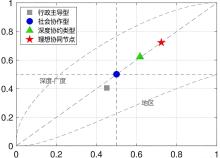
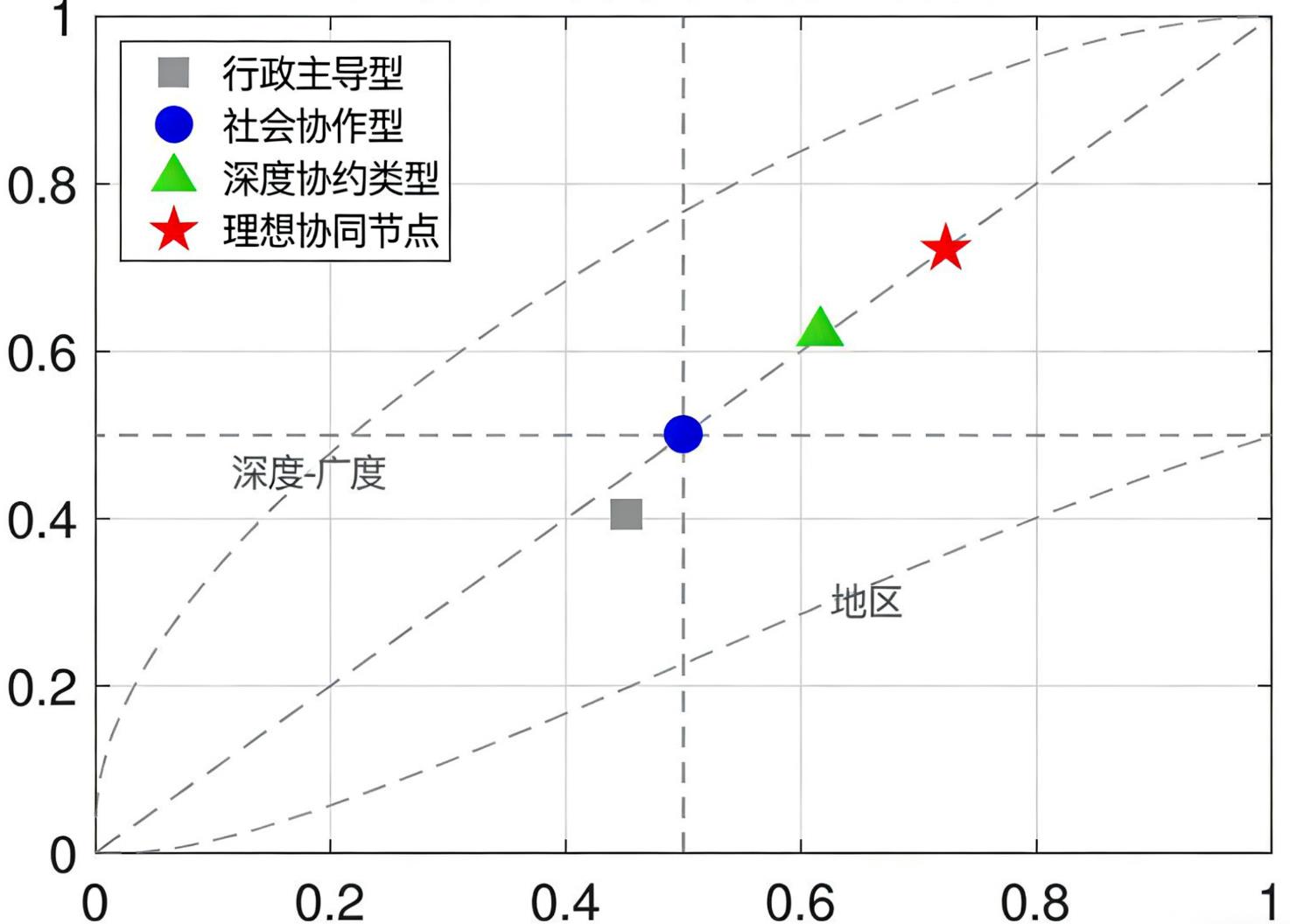
Fig.1

The "Depth-Breadth" two-dimensional model of governance efficacy for rural knowledge nodes"

[1] Rogers E M. Diffusion of Innovations[M]. 5th ed. New York: Free Press, 2003.
[2] 高启杰. 农业推广学[M]. 4版. 北京: 中国农业大学出版社, 2018.
Gao Qijie. Agricultural extension science[M]. 4th ed. Beijing: China Agricultural University Press, 2018.
[3] 沈费伟, 叶温馨. 数字赋能乡村公共文化服务协同治理的逻辑与路径[J]. 图书馆论坛, 2022, 42(6): 70-79.
Shen Feiwei, Ye Wenxin. The logic and path of digital enabling collaborative governance of rural public cultural services[J]. Library Tribune, 2022, 42(6): 70-79.
[4] 吴慰慈, 董焱. 图书馆学概论[M]. 4版. 北京: 国家图书馆出版社, 2019.
Wu Weici, Dong Yan. Introduction to library science[M]. 4th ed. Beijing: National Library of China Publishing House, 2019.
[5] 张新兴, 吴闯. 嵌入与重构: 农家书屋参与乡村知识服务的实践逻辑[J]. 图书馆建设, 2022(4): 65-75.
Zhang Xinxing, Wu Chuang. Embedding and reconstruction: The practical logic of rural libraries' participation in rural knowledge services[J]. Library Development, 2022(4): 65-75.
[6] 王键. 乡村图书馆服务效能提升研究——以江苏省苏南、苏中、苏北9个典型乡村图书馆为例[J]. 农村经济与科技, 2025, 36(19): 182-186.
Wang Jian. Research on improving the service efficiency of rural libraries - Taking nine typical rural libraries in southern Jiangsu, central Jiangsu and northern Jiangsu as examples[J]. Rural economy and science-technology, 2025, 36(19): 182-186.
[7] Nardi B A, O'Day V L. Information ecologies[M]. Cambridge, Mass.: MIT Press, 1999.
[8] 刘明月, 白如江, 董坤, 等. 基于知识基因表达的智慧文献服务模式研究[J]. 情报理论与实践, 2021, 44(1): 147-153.
Liu Mingyue, Bai Ruijiang, Dong Kun, et al. Research on the smart literature service model based on knowledge gene expression[J]. Information Studies: Theory & Application, 2021, 44(1): 147-153.
[9] Nonaka I, Takeuchi H. The knowledge-creating company: How Japanese companies create the dynamics of innovation[M]. New York: Oxford University Press, 1995.
[10] Provan K G, Kenis P. Modes of network governance: Structure, management, and effectiveness[J]. Journal of public administration research and theory: J-PART, 2008, 18(2): 229-252.
[11] Putnam R D. Bowling alone: The collapse and revival of American community[M]. New York: Simon & Schuster, 2000.
[12] Gittell J H, Vidal A. Community organizing: Building social capital as a development strategy[M]. Thousand Oaks: SAGE Publications, 1998.
[13] 戴艳清, 孙英姿. 基于KANO模型的新型公共阅读空间服务内容供给优先序研究[J]. 图书情报工作, 2022, 66(22): 73-82.
Dai Yanqing, Sun Yingzi. Research on priority order of service content supply of new public reading space based on KANO model[J]. Library and Information Service, 2022, 66(22): 73-82.
[1] XIAO Qinghua. Difficulties and Countermeasures in Reading among Children Raised in Intergenerational Caregiving Situations in Rural Areas of China [J]. Journal of library and information science in agriculture, 2025, 37(8): 50-60.
[2] LI Guihua. Promoting "Deep Reading" with "Holistic Reading": A Theoretical Exploration of the Potential Promotion Path for Adolescent Reading in the AI Era [J]. Journal of library and information science in agriculture, 2025, 37(8): 40-49.
[3] KE Ping, WU Jianhua, ZHAO Junling, YAN Beini, XIAO Peng. The Industry's Response and Reflections on the Youth and Student Reading Initiative [J]. Journal of library and information science in agriculture, 2025, 37(8): 4-28.
[4] TAN Miao, DAI Mengfei. Empowered Digital Reading Promotion of Historical Documents with Generative AI [J]. Journal of library and information science in agriculture, 2025, 37(4): 83-93.
[5] ZHAO Hui, CHEN Jinghao, GUO Sha, LI Zhixing, YAN Longfei. Constructing a Cross-border Data Governance Paradigm in the International Cooperation Mechanism of Artificial Intelligence [J]. Journal of library and information science in agriculture, 2025, 37(11): 4-29.
[6] Chaochen WANG, Ayang QI, Xiaoqing XU, Linwei CUI. Group Socialization of Digital Games to Encourage Users' Autonomous Reading Behavior and Content Backtracking: Based on the Domestic Console Game “Black Myth: WUKONG” Known Outside of Fixed Circle [J]. Journal of library and information science in agriculture, 2024, 36(11): 64-78.
[7] NIU Xianyun. A Functional Framework for a Library's Mobile Reading Service [J]. Journal of library and information science in agriculture, 2023, 35(8): 55-65.
[8] LI Peng, SONG Xigui. AIGC Technology Enables Innovative Applications in Library Reading Promotion [J]. Journal of library and information science in agriculture, 2023, 35(12): 84-93.
[9] WU Ning, YANG Yanping. Analysis Framework of Science-Technology Microcosmic Knowledge Flow Based on a Multi-layer Network [J]. Journal of library and information science in agriculture, 2023, 35(11): 40-52.
[10] ZHANG Wenxin, DENG Chuyue. Key Issues and Practical Pathways of Promoting High-Quality Development through Reading: Overview of the First Symposium on Standards and Evaluation in Reading Promotion [J]. Journal of library and information science in agriculture, 2023, 35(10): 91-98.
[11] ZHAO Gongqun. Constructing Reading Promotion Standards and Evaluation System as New Methods, New Tools, New Perspectives in Reading Promotion: Overview of the Second Symposium on Standards and Evaluation in Reading Promotion [J]. Journal of library and information science in agriculture, 2023, 35(10): 99-106.
[12] XIAO Peng, DENG Moyan, SU Jie, ZHU Haiyuan. Report on the Standardization of Reading Promotion (2023 Edition) [J]. Journal of library and information science in agriculture, 2023, 35(10): 34-47.
[13] LIU Qiong, ZHOU Yunfeng, SU Wencheng, LIU Guifeng. Standardized Management System for Reading Promotion under AIGC Technology Environment [J]. Journal of library and information science in agriculture, 2023, 35(10): 48-57.
[14] HUANG Peifang. From Activating Books to Activating Reading: Professional Ideas and Practical Models from the Neighborhood Library Project to Strengthen Reading Promotion [J]. Journal of library and information science in agriculture, 2023, 35(10): 72-79.
[15] ZHOU Xiaoying. Application and Practice of Virtual Reality Technology in the Intelligent Reading Promotion of Ancient Books [J]. Journal of library and information science in agriculture, 2022, 34(8): 79-91.
Viewed
Full text


Abstract

Cited

  Shared   
  Discussed   
No Suggested Reading articles found!