中文    English

Journal of library and information science in agriculture


Fine-Grained Extraction of Knowledge of Methods from Academic Literature and Analysis of Its Role in Shaping Disciplinary Characteristics: Evidence from Economics and Management

XU Hao1,2, FAN Xiaohong3, DENG Sanhong2, FENG Ke3, ZHU Lingling1   

  1. 1. School of Business, Nanjing Institute of Technology, Nanjing 211167
    2. School of Information Management, Nanjing University, Nanjing 210023
    3. School of Management and Engineering, Nanjing Institute of Technology, Nanjing 211167
  • Received:2026-06-09 Online:2026-08-19

Abstract:

[Purpose/Significance] The ability to solve complex scientific problems is increasingly dependent on knowledge of methods from multiple disciplines. Research methods, theories, software tools, data resources, and analytical models are essential elements of knowledge production, but they are often scattered across academic texts and expressed in diverse forms. Accurately identifying such knowledge can reduce the burden of literature analysis, clarify how methods are selected and combined, and provide structured evidence for knowledge discovery. Existing studies have mainly focused on method-sentence detection, single-type entity recognition, or frequency analysis, with limited integration between fine-grained extraction and the identification of disciplinary research characteristics. This study therefore develops a unified framework incorporating key technologies, system support, and core applications. We extend method entity research from textual recognition to the analysis of disciplinary knowledge production by connecting method entities with documents, authors, and journals. This supports the organization of academic texts, the recommendation of methods, and the identification of methodological preferences in economics and management. [Method/Process] Guided by clustering, this study proposed a fine-grained entity extraction strategy for Chinese academic literature by integrating a domain dictionary, linguistic rules, statistical representation, similarity calculation, and manual verification. The procedure consists of four stages. First, academic texts were pre-processed, stop words were removed, and method-related feature terms were combined with an initial dictionary to construct a method feature-term bag. Synonymous and semantically equivalent expressions were then merged. Second, a dense-cluster procedure locates text segments in which method-related terms are concentrated, reducing the amount of text requiring examination. Third, regular-expression rules, vector-space representation, and cosine similarity were used to identify and recommend candidate entities. Candidates satisfying the specified threshold were submitted for manual verification. Fourth, confirmed entities were classified into four categories: method and theory, software tool, data, and model. Each entity was assigned a unique code and linked to its source document and metadata. Two annotators verified the candidates according to a unified specification, while disagreements were resolved by a third annotator. The empirical dataset comprises 9 858 articles published from 2011 to 2020 in six journals in economics and management. Frequency statistics, co-occurrence analysis, and social network analysis were applied to identify disciplinary characteristics associated with methodological knowledge. [Results/Conclusions] A total of 8 153 method entities were identified from the titles, abstracts, and keywords of the sampled articles. The proposed strategy assists annotators in locating, screening, normalizing, and classifying candidate entities, improving the efficiency and consistency of large-scale annotation. Linking these entities with bibliographic and author metadata further reveals quantitative distributions, co-occurrence relationships, and scientific collaboration networks. Economics and management research relies more heavily on method-and-theory knowledge than on software tools, data resources, or models. Empirical research, questionnaire surveys, and the difference-in-differences method are widely used, reflecting the field's emphasis on empirical evidence, data analysis, policy evaluation, and causal identification. The results also show that research methods and data resources are frequently used in complementary combinations. The method-driven author collaboration network exhibits a complex structure and a tendency toward continuous development, with some stable groups maintained through shared methods and data-collection practices. Overall, fine-grained method entity extraction can support academic knowledge organization, method recommendation, disciplinary preference identification, and research collaboration analysis. Nevertheless, the approach still depends on expert-defined rules, domain dictionaries, manually selected thresholds, and Chinese lexical information, while its empirical scope is limited to six journals and one publication period. Future research should incorporate semi-supervised learning and contextual semantic representations, extend extraction to full texts, broaden the coverage of languages and disciplines, and evaluate cross-domain transferability. These improvements will enhance the generalizability of methods of knowledge extraction and support deeper analysis of disciplinary evolution and interdisciplinary knowledge production.

Key words: research methods, entity extraction, research feature recognition, intensive clusters of methodological feature words

CLC Number: 

  • G350.7

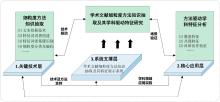
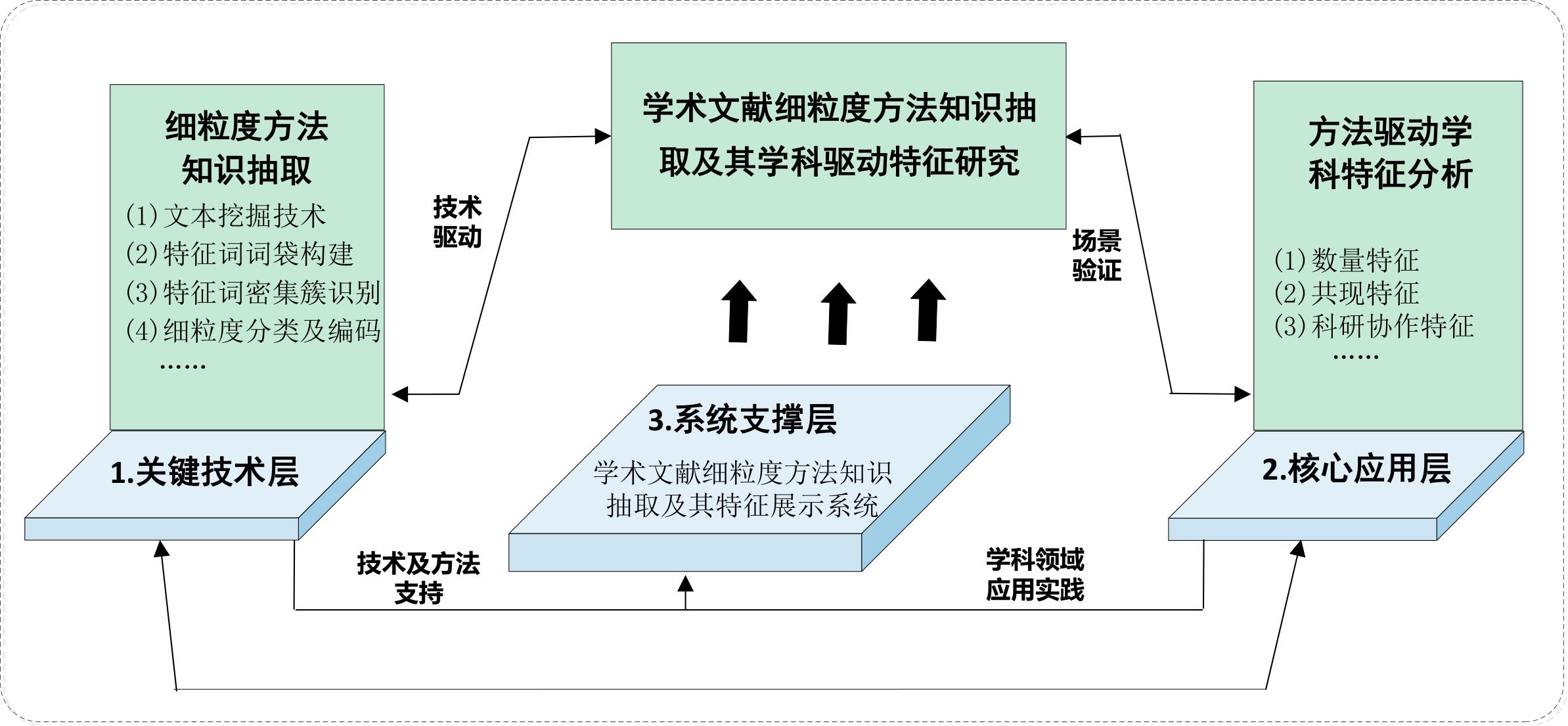
Fig.1

Research framework"

Table 1

Definitions and classification of methodological knowledge"

类别 定义 举例 相关依据
方法理论类 各类数据处理分析检验方法和函数、学科的研究理论、通用方法等 实证研究、问卷调查、文献调研、内容分析法、社会网络分析法、文献计量方法、扎根理论、主成分分析、复杂网络理论等 研究过程中的理论支撑和数据分析的依据
软件工具类 各类研究工具、建模及分析软件等 SPSS软件、CiteSpace、Matlab、Python、AMOS、Ucinet、BICOMB、SATI等 辅助研究的软件工具
数据类 各种数据集信息、数据库、统计年鉴、数据资料以及数据网站等 Web of Science、CNKI数据库、CSSCI数据库、新浪微博、Scopus数据库、德温特(DII)专利数据库、Facebook等 研究所依赖的数据来源
模型类 各种研究模型、数据分析模型等 LDA主题模型、条件随机场模型、结构方程模型、word2vec模型、SIR传播模型等 研究过程中起辅助分析作用

Table 2

Positional information of text terms"

身份码 0 1 2 3 4 5 6 7 8 9
词项 本文 建立 对 项目 筹资 影响 的 计量 模型 ,
位置 0,2 2,4 4,5 5,7 7,9 9,11 11,12 12,14 14,16 16,17
身份码 10 11 12 13 14 15 16 17 18 19
词项 并 对 平台 上 12345 个 项目 进行 实证 分析
位置 17,18 18,19 19,21 21,22 22,27 27,28 28,30 30,32 32,34 34,36
身份码 20 21 22 23 24 25 26 27 28 29
词项 。 借助 专业 的 建模 工具 建立 对数 回归 模型
位置 36,37 37,39 39,41 41,42 42,44 44,46 46,48 48,50 50,52 52,54
身份码 30 31 32 33 34
词项 的 数学模型 进行 深入分析 。
位置 54,55 55,59 59,61 61,65 65,66

Table 3

Information on feature keywords"

序号码 0 1 2 3 4 5 6 7 8 9 10 11
身份码 3 5 7 8 16 18 19 24 25 28 29 31

Table 4

Results of the first iteration"

序号码 4 5 6 7 8 9 10 11
身份码 16 18 19 24 25 28 29 31

Table 5

Results of the second iteration"

序号码 4 5 6
身份码 16 18 19

Table 6

Rules for each cluster"

簇号 关键词集合 匹配规则(正则表达式)
1 {项目,影响,计量,模型} (^.*(?=(项目|影响|计量|模型)).*$)
2 {建模,工具,回归,模型,数学模型} (^.*(=(建模|工具|回归|模型|数学模型)).*$)
3 {项目,实证,分析} (^.*(=(项目|实证|分析)).*$)

Table 7

Matching results for Cluster 1"

序号 可疑片段 候选方法知识 相似度
1 项目筹资影响计量模型 计量模型 0.632
2 项目筹资影响计量模型 空间计量模型 0.516
3 项目筹资影响计量模型 计量经济模型 0.447

Table 8

Matching results for Cluster 2"

序号 可疑片段 候选方法知识 相似度
1 建模工具建立对数回归模型数学模型 条件logistic回归模型 0.433
2 建模工具建立对数回归模型数学模型 古诺模型 0.408
3 建模工具建立对数回归模型数学模型 Gordon模型 0.408
4 建模工具建立对数回归模型数学模型 寿险定价数学模型 0.516
5 建模工具建立对数回归模型数学模型 面板回归模型 0.500
6 建模工具建立对数回归模型数学模型 多元线性回归模型 0.433
7 建模工具建立对数回归模型数学模型 DSGE模型 0.408
8 建模工具建立对数回归模型数学模型 区间回归模型 0.500
9 建模工具建立对数回归模型数学模型 CIPE模型 0.408
10 建模工具建立对数回归模型数学模型 4C模型 0.408

Table 9

Matching results for Cluster 3"

序号 可疑片段 候选方法知识 相似度
1 项目进行实证分析 项目分析 0.577
2 项目进行实证分析 实证分析 0.707

Table 10

Method entity extraction results from six authoritative journals in economics and management"

序号 期刊名称 学科 文章数/篇 方法实体数量/个
1 管理世界 管理学 2 184 1 418
2 中国软科学 管理学 2 247 2 067
3 南开管理评论 管理学 1 108 854
4 经济学(季刊) 经济学 746 719
5 经济研究 经济学 2 063 1 447
6 中国工业经济 经济学 1 510 1 648
合计 9 858 8 153

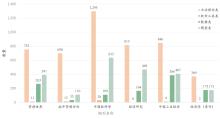
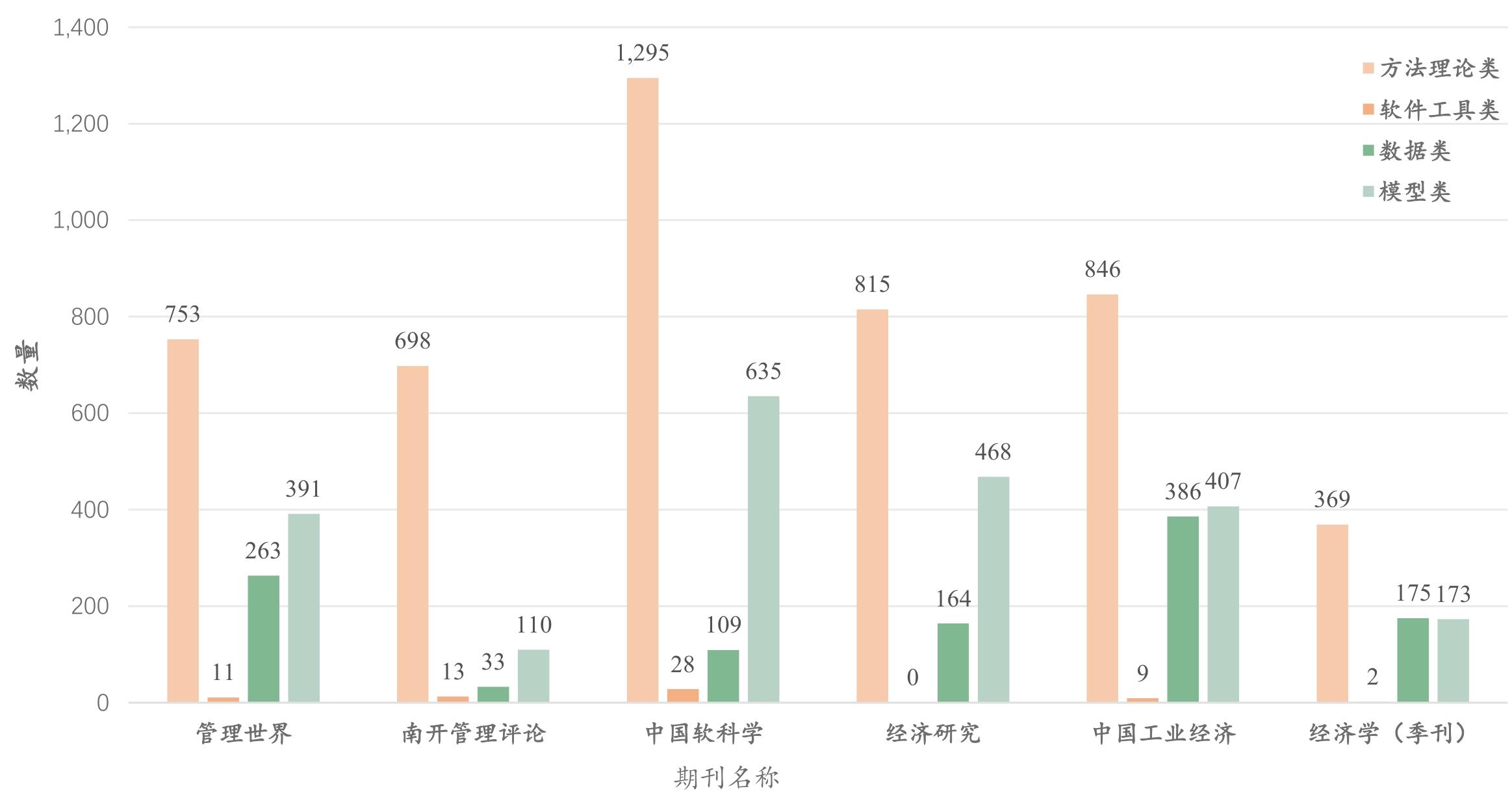
Fig. 2

Usage frequencies of four categories of method knowledge"

Table 11

High-frequency method knowledge in economics and management"

序号 方法知识 频次 序号 方法知识 频次
1 实证研究 783 16 定量分析 29
2 问卷调查 168 17 中国综合社会调查(CGSS)数据 28
3 双重差分法(DID) 141 18 中国海关数据库 27
4 中国工业企业数据库 115 19 比较分析 27
5 动态随机一般均衡模型(DSGE) 103 20 中国家庭追踪调查(CFPS)数据 27
6 结构方程模型 73 21 社会网络分析方法 26
7 案例研究 66 22 因子分析 26
8 扎根理论 54 23 计量模型 25
9 双重差分模型 45 24 中介效应模型 25
10 倾向得分匹配法(PSM) 42 25 面板数据模型 24
11 回归分析 39 26 制度理论 22
12 一般均衡(CGE)模型 36 27 中国制造业企业数据 22
13 中国健康与营养调查(CHNS) 36 28 空间计量模型 22
14 工具变量法 33 29 数值模拟分析 21
15 中国家庭金融调查(CHFS)数据 31 30 委托代理理论 21

Table 12

High-frequency method knowledge co-occurrence pairs in economics and management (co-occurrence frequency>5)"

序号 方法知识A 方法知识B 共现次数
1 中国海关数据库 中国工业企业数据库 17
2 问卷调查 实证研究 17
3 实证研究 双重差分法(DID) 9
4 结构方程模型 问卷调查 9
5 三重差分法(DDD) 双重差分法(DID) 8
6 倾向得分匹配法(PSM) 双重差分法(DID) 8
7 验证性因子分析(CFA) 探索性因子分析(EFA) 8
8 中国工业企业数据库 双重差分法(DID) 7
9 定性分析 定量分析 7
10 实证研究 面板数据模型 7
11 动态随机一般均衡模型(DSGE) 贝叶斯方法 6
12 实证研究 中介效应模型 6
13 实证研究 中国工业企业数据库 6
14 海关数据库 中国工业企业数据库 6
15 理论分析 实证研究 6

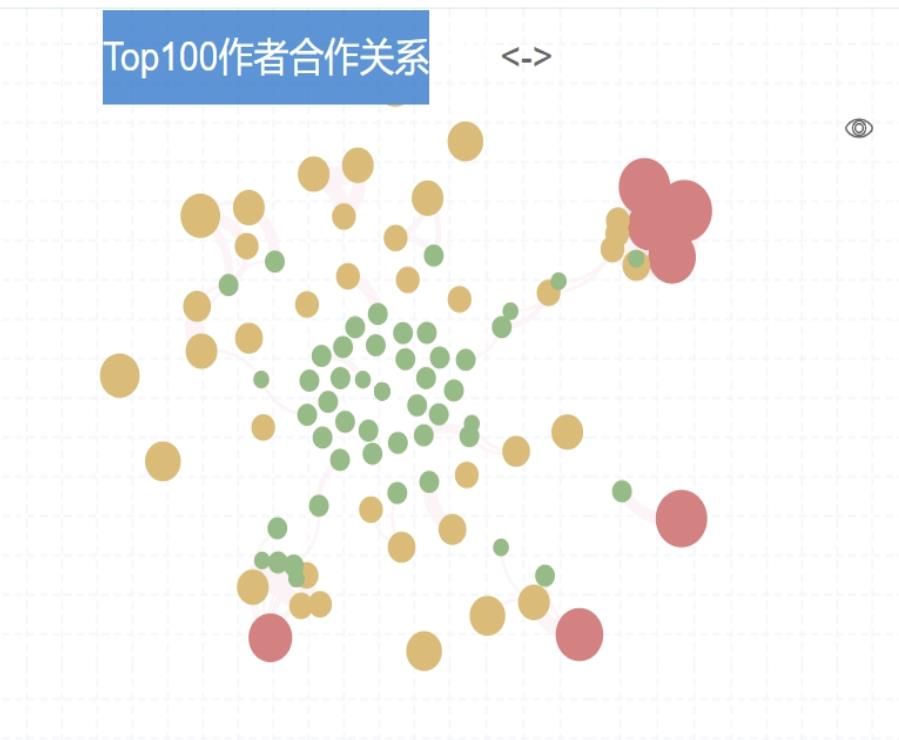
Fig.3

Method knowledge-driven research collaboration network in economics and management (Top 100 authors, system-generated)"

[1]
《中华人民共和国国民经济和社会发展第十五个五年规划纲要》[EB/OL]. (2026-03-13)[2026-07-11].
[2]
中华人民共和国科学技术部. 对十三届全国人大五次会议第0237号建议的答复[EB/OL]. (2022-11-30)[2026-07-11].
[3]
陆伟, 李鹏程, 张国标, 等. 学术文本词汇功能识别——基于BERT向量化表示的关键词自动分类研究[J]. 情报学报, 2020, 39(12): 1320-1329.
Lu Wei, Li Pengcheng, Zhang Guobiao, et al. Recognition of lexical functions in academic texts: Automatic classification of keywords based on BERT vectorization[J]. Journal of the China Society for Scientific and Technical Information, 2020, 39(12): 1320-1329.
[4]
叶鹰, 张家榕, 张慧. 知识流动与跨学科研究之关联[J]. 图书与情报, 2020(3): 29-33.
Ye Ying, Zhang Jiarong, Zhang Hui. The relationship between knowledge flow and interdisciplinary research[J]. Library & Information, 2020(3): 29-33.
[5]
李江. 研究方法: 无高下之分, 但有是否恰当之别——“研究方法”专栏序言[J]. 图书情报知识, 2021, 38(3): 封2.
Li Jiang. Preface of the column“research methods”[J]. Document, Information & Knowledge, 2021, 38(3): 封2.
[6]
崔明, 潘雪莲, 华薇娜. 我国图书情报领域的软件使用和引用研究[J]. 中国图书馆学报, 2018, 44(3): 66-78.
Cui Ming, Pan Xuelian, Hua Weina. Software usage and citation in the field of library and information science in China[J]. Journal of Library Science in China, 2018, 44(3): 66-78.
[7]
Piwowar H. Value all research products[J]. Nature, 2013, 493(7431): 159.
[8]
Wang Yuzhuo, Zhang Chengzhi, Li Kai. A review on method entities in the academic literature: Extraction, evaluation, and application[J]. Scientometrics, 2022, 127(5): 2479-2520.
[9]
Wallace W L. The logic of science in sociology[M]. Chicago: Aldine-Atherton, 1971.
[10]
符福峘, 陆婷. 论情报学方法论体系的构建、发展和应用[J]. 情报理论与实践, 2007, 30(2): 149-153.
Fu Fuhuan, Lu Ting. On the construction, development and application of the methodology of information science[J]. Information Studies (Theory & Application), 2007, 30(2): 149-153.
[11]
杨红梅, 李琳, 杨日东, 等. 基于双向LSTM神经网络电子病历命名实体的识别模型[J]. 中国组织工程研究, 2018, 22(20): 3237-3242.
Yang Hongmei, Li Lin, Yang Ridong, et al. Named entity recognition based on bidirectional long short-term memory combined with case report form[J]. Chinese Journal of Tissue Engineering Research, 2018, 22(20): 3237-3242.
[12]
单赫源, 吴照林, 张海粟, 等. 结合词语规则和SVM模型的军事命名实体关系抽取方法[J]. 指挥控制与仿真, 2016, 38(4): 58-63.
Shan Heyuan, Wu Zhaolin, Zhang Haisu, et al. A military named entities relation extraction method based on SVM integrated with word rules[J]. Command Control & Simulation, 2016, 38(4): 58-63.
[13]
梁晨. 金融领域术语识别的研究[D]. 大连: 大连理工大学, 2017.
Liang Chen. Research on terminology recognition in financial domain[D]. Dalian: Dalian University of Technology, 2017.
[14]
杨双龙, 吕学强, 李卓, 等. 中文专利文献术语自动识别研究[J]. 中文信息学报, 2016, 30(3): 111-117, 124.
Yang Shuanglong, Lv Xueqiang, Li Zhuo, et al. Automatic recognition of terms in Chinese patent literature[J]. Journal of Chinese Information Processing, 2016, 30(3): 111-117, 124.
[15]
赵洪, 王芳. 理论术语抽取的深度学习模型及自训练算法研究[J]. 情报学报, 2018, 37(9): 923-938.
Zhao Hong, Wang Fang. A deep learning model and self-training algorithm for theoretical terms extraction[J]. Journal of the China Society for Scientific and Technical Information, 2018, 37(9): 923-938.
[16]
Ibrahim B. Statistical methods used in Arabic journals of library and information science[J]. Scientometrics, 2021, 126(5): 4383-4416.
[17]
Gupta S, Manning C D. Analyzing the dynamics of research by extracting key aspects of scientific papers[C]//Proceedings of the 24th International Conference on Computational Linguistics and Natural Language Processing (IJCNLP). Jeju Island: ACL, 2012: 587-598.
[18]
张颖怡, 章成志. 基于学术论文全文的研究方法句自动抽取研究[J]. 情报学报, 2020, 39(6): 640-650.
Zhang Yingyi, Zhang Chengzhi. Methodological and automatic sentence extraction from academic article's full-text[J]. Journal of the China Society for Scientific and Technical Information, 2020, 39(6): 640-650.
[19]
Jiang C, Zhu Z, Shen S, et al. Research on software entity extraction and analysis based on deep learning[C]//Proceedings of the 17th International Conference on Scientometrics and Informetrics (ISSI 2019). Rome, Italy: 2019: 826-837.
[20]
章成志, 王玉琢, 王如萍. 情报学方法语料库构建[J]. 科技情报研究, 2020, 2(1): 30-45.
Zhang Chengzhi, Wang Yuzhuo, Wang Ruping. Constructing the corpus of method in the information science domain[J]. Scientific Information Research, 2020, 2(1): 30-45.
[21]
章成志, 张颖怡. 基于学术论文全文的研究方法实体自动识别研究[J]. 情报学报, 2020, 39(6): 589-600.
Zhang Chengzhi, Zhang Yingyi. Automatic recognition of research methods from the full-text of academic articles[J]. Journal of the China Society for Scientific and Technical Information, 2020, 39(6): 589-600.
[22]
Pan Xuelian, Yan Erjia, Wang Qianqian, et al. Assessing the impact of software on science: A bootstrapped learning of software entities in full-text papers[J]. Journal of Informetrics, 2015, 9(4): 860-871.
[23]
徐浩, 朱学芳, 章成志, 等. 面向学术文献全文本的方法论知识抽取系统分析与设计[J]. 数据分析与知识发现, 2019, 3(10): 29-36.
Xu Hao, Zhu Xuefang, Zhang Chengzhi, et al. System analysis and design for methodological entities extraction in full text of academic literature[J]. Data Analysis and Knowledge Discovery, 2019, 3(10): 29-36.
[24]
王芳, 王向女. 我国情报学研究方法的计量分析: 以1999-2008年《情报学报》为例[J]. 情报学报, 2010, 29(4): 652-662.
Wang Fang, Wang Xiangnv. A bibliometric study on research methods of information science in China: Taking JOCSSTI(1999-2008) as example[J]. Journal of the China Society for Scientific and Technical Information, 2010, 29(4): 652-662.
[25]
于晓彤, 潘雪莲, 华薇娜. 知识图谱研究中的软件引用和扩散分析[J]. 情报资料工作, 2019, 40(2): 19-29.
Yu Xiaotong, Pan Xuelian, Hua Weina. Analysis of software citation and diffusion in knowledge mapping research[J]. Information and Documentation Services, 2019, 40(2): 19-29.
[26]
Zhang Chengzhi, Mao Yi, Peng Shuyu. Data-driven evolution of library and information science research methods (1990-2022): A perspective based on fine-grained method entities[J]. Scientometrics, 2024, 129(12): 7889-7912.
[27]
吴小兰, 章成志. 数据驱动视角下方法知识元的分布规律及其组合效应——基于国家自然科学基金数据的实证研究[J/OL]. 图书馆论坛, 1-12[2026-07-22].
Wu Xiaolan, Zhang Chengzhi. Distribution patterns and combination effects of method knowledge elements from a data-driven perspective: An empirical study based on National Natural Science Foundation of China data[J/OL]. Library Tribune, 1-12[2026-07-22].
[28]
SAGE平台[EB/OL]. [2024-07-03].
[29]
青泥学术. 青泥学术简介[EB/OL]. [2022-12-03].
[30]
知网研学. 知网研学简介[EB/OL]. [2022-12-03].
[31]
AI引领智能研发创新[EB/OL]. [2024-07-03].
[32]
Hammer PDF工具简介[EB/OL]. [2024-07-03].
[33]
王昊, 邓三鸿, 苏新宁, 等. 基于深度学习的情报学理论及方法术语识别研究[J]. 情报学报, 2020, 39(8): 817-828.
Wang Hao, Deng Sanhong, Su Xinning, et al. A study on Chinese terminology recognition of theory and method from information science: Based on deep learning[J]. Journal of the China Society for Scientific and Technical Information, 2020, 39(8): 817-828.
[34]
王芳, 陈锋, 祝娜, 等. 我国情报学理论的来源、应用及学科专属度研究[J]. 情报学报, 2016, 35(11): 1148-1164.
Wang Fang, Chen Feng, Zhu Na, et al. Theories of information science in China: Sources, uses and discipline exclusive degrees[J]. Journal of the China Society for Scientific and Information, 2016, 35(11): 1148-1164.
[35]
郝家亿, 王玉琢, 章成志. 情报学细粒度研究方法抽取研究[J]. 科技情报研究, 2025, 7(1): 16-29.
Hao Jiayi, Wang Yuzhuo, Zhang Chengzhi. Research on extraction of fine-grained research methods in information science[J]. Journal of Scientific Information Research, 2025, 7(1): 16-29.
[36]
Manning C, Surdeanu M, Bauer J, et al. The Stanford CoreNLP natural language processing toolkit[C]//Proceedings of 52nd Annual Meeting of the Association for Computational Linguistics: System Demonstrations. ACL, 2014: 55-60.
[37]
赫德军, 武欣嵘, 俞璐. 密度聚类方法研究[J]. 通信技术, 2022, 55(2): 135-142.
He Dejun, Wu Xinrong, Yu Lu. Review of clustering algorithm based on density[J]. Communications Technology, 2022, 55(2): 135-142.
[38]
冯高磊, 高嵩峰. 基于向量空间模型结合语义的文本相似度算法[J]. 现代电子技术, 2018, 41(11): 157-161.
Feng Gaolei, Gao Songfeng. Text similarity algorithm combining semantics based on vector space model[J]. Modern Electronics Technique, 2018, 41(11): 157-161.
[39]
郭庆琳, 李艳梅, 唐琦. 基于VSM的文本相似度计算的研究[J]. 计算机应用研究, 2008, 25(11): 3256-3258.
Guo Qinglin, Li Yanmei, Tang Qi. Similarity computing of documents based on VSM[J]. Application Research of Computers, 2008, 25(11): 3256-3258.
[40]
艾佳琪, 左毅, 刘君霞, 等. 基于余弦相似度的动态语音特征提取算法[J]. 计算机应用研究, 2020, 37(S2): 147-149.
Ai Jiaqi, Zuo Yi, Liu Junxia, et al. A hierarchical clustering approach for speech feature extraction based on cosine similarity[J]. Application Research of Computers, 2020, 37(S2): 147-149.
[41]
谷重阳, 徐浩煜, 周晗, 等. 基于词汇语义信息的文本相似度计算[J]. 计算机应用研究, 2018, 35(2): 391-395.
Gu Chongyang, Xu Haoyu, Zhou Han, et al. Text similarity computing based on lexical semantic information[J]. Application Research of Computers, 2018, 35(2): 391-395.
[42]
QasemiZadeh B, Schumann A K. The ACL RD-TEC 2.0: A language resource for evaluating term extraction and entity recognition methods[C]//Proceedings of the Tenth International Conference on Language Resources and Evaluation (LREC 2016). European Language Resources Association (ELRA), 2016: 1862-1868.
[43]
章成志, 谢雨欣, 宋云天. 学术文本中细粒度知识实体的关联分析[J]. 图书馆论坛, 2021, 41(3): 12-20.
Zhang Chengzhi, Xie Yuxin, Song Yuntian. Association analysis of fine- grained knowledge entities in academic texts[J]. Library Tribune, 2021, 41(3): 12-20.
[44]
陈陆扬. Vue.js前端开发快速入门与专业应用[M]. 北京: 人民邮电出版社, 2017.ChenLuyang. Quick entry and professional application of Vue.js front-end development[M]. Beijing: Posts & Telecom Press, 2017.
[45]
方龙, 李信, 黄永, 等. 学术文本的结构功能识别——在关键词自动抽取中的应用[J]. 情报学报, 2017, 36(6): 599-605.
Fang Long, Li Xin, Huang Yong, et al. Structure-function recognition of academic text - Application in automatic keywords extraction[J]. Journal of the China Society for Scientific and Technical Information, 2017, 36(6): 599-605.
[46]
经济数据研究中心. 中国工业企业、中国海关进出口匹配数据[EB/OL]. [2022-03-05].
[1] LIU Ting, ZHAO Yajuan. Review and Prospect of Research on Technology Opportunity Identification [J]. Journal of library and information science in agriculture, 2023, 35(7): 4-17.
Viewed
Full text


Abstract

Cited

  Shared   
  Discussed   
No Suggested Reading articles found!