中文    English

Journal of library and information science in agriculture


Model Construction for Research Libraries in Performance Evaluation of Science and Technology Projects

QIU Danyi, ZHU Lin(), WANG Chunming, WAN Jingjing, ZHENG Zefeng   

  1. The Science and Technology Library of Guangdong /Institute of Information, Guangdong Academy of Sciences, Guangzhou 510075
  • Received:2026-01-30 Online:2026-03-25
  • Contact: ZHU Lin E-mail:zl@stlib.cn

Abstract:

[Purpose/Significance] Research libraries constitute a vital component of China's science and technology (S&T) think tank ecosystem. Their intelligence services for government departments for S&T project performance evaluations can enhance the scientific rigor and accuracy of the outcomes while catalyzing their own diversified transformation and development. Existing research has demonstrated that research libraries can effectively support government departments in delivering intelligence services such as S&T project performance evaluation. However, current research predominantly focuses on holistic studies of intelligence services undertaken by research libraries, with a notable deficiency in targeted investigations specifically addressing their engagement in S&T project performance evaluation services. Anchored in the empowerment of multi-source data, this study focuses on exploring service models for the evaluation of S&T project performance in research libraries. It examines the potential of these services for government departments conducting multi-source data-empowered S&T project performance evaluation. Additionally, the study promotes the enrichment of vertical application scenarios in library and information science-related fields and supports the construction of digital and intelligent systems for S&T evaluation. [Method/Process] Through literature review, web-based investigation, and information correlation methods, this study systematically examines typical domestic and international practices of multi-source data-empowered S&T project performance evaluation, analyzes the alignment between such practices and research libraries' capabilities, and elucidates the significance of research libraries' engagement in S&T project performance evaluation. Based on the typology and characteristics of multi-source data, and leveraging the inherent advantages of research libraries, we clarify the evaluation rationale and principles, and construct a logical framework and innovative model for multi-source data-driven S&T project performance evaluation. [Results/Conclusions] Typical countries and regions both domestically and internationally emphasize the flexible application of multi-source data in project performance evaluation, establishing management platforms that aggregate full-lifecycle project data, and underscoring inter-departmental collaboration and data linkage among multiple government agencies. As neutral third-party institutions and critical data hubs, research libraries, when conducting S&T project performance evaluation under the new era context, are characterized by their emphasis on integrating fiscal fund effectiveness, S&T policy implementation efficacy, modernized governance systems, and multi-source S&T project data. They can construct innovative models for S&T project evaluation across four dimensions: data infrastructure development, indicator system construction, performance analysis and evaluation, and evaluation results application - thereby supporting the formation of a complete closed-loop chain of "evaluation-feedback-correction-improvement" for S&T project performance evaluation. Furthermore, this study proposes strategic recommendations for research libraries to broaden vertical application scenarios of S&T intelligence and deepen services for S&T project performance evaluation. These suggestions are listed as follows: strengthening policy intelligence service capabilities to enhance decision-support levels; deepening data resource integration and sharing to improve data support capacity; and strengthening the development of interdisciplinary talent teams to advance intelligence service quality. Future research directions will involve conducting specific case study analyses to provide support for refining the model of research library services for S&T project performance evaluation.

Key words: performance evaluation of science and technology projects, research libraries, innovation model, data base

CLC Number: 

  • G311

Table 1

Typical cases of performance evaluation of technology projects enabled by multi-source data at home and abroad"

国家/区域/省市部门/机构计划/平台主要举措典型特征
美国美国科技政策办公室、国家卫生研究院、国家科学基金会等STAR METRICS项目开发基于计量指标及数据分析的科研项目绩效评估模型;创建覆盖全美各州的横向数据库(Federal RePORTER);评估科研对经济增长、劳动力产出、科学知识和生活产出等方面的影响注重较广范围数据共享网络的构建,开展科学计量分析,为项目绩效评价提供充足数据支撑
英国Researchfish公司Researchfish平台设立Researchfish绩效评价平台汇总项目数据;广泛且长周期地收集项目全流程信息注重长周期、多维度项目数据收集及分析,全面体现项目实施绩效
欧盟欧盟委员会科研与创新总司欧盟研发和创新框架计划采用文献计量、技术就绪度、基线与标杆分析法、问卷调查等方法,且注重定性与定量相结合注重积累客观数据以加强定量绩效评价方法的运用
日本国立信息学研究所、文部科学省及学术振兴会;医学研究与开发署KAKEN、AMEDfind数据库数据库汇总并描述科研项目全周期信息;可与全球科研数据进行组合分析注重运用信息化数据系统开展科研项目绩效评价
中国国家自然科学基金委员会面上项目广泛搜集分析与项目相关定性、定量相结合的多源数据,支撑开展项目绩效评价注重多源数据的搜集、整合、分析及运用
福建福建省财政厅省级财政项目

用好大数据,将体现项目绩效的数据纳入分析范围

引入数理模型,提高评价的精准性

注重“大数据+模型”与绩效评价的结合
江苏、湖北、云南财政管理部门财政预算绩效管理平台

构建财政预算绩效管理平台

开展绩效评价数据智能收集、校核及运用

注重绩效评价数据的横向贯通及动态更新

Table 2

Main types, characteristics and sources of multi-source data"

类型特征来源
学术文献数据期刊论文及时反映科技新成果与动向,基础研究成果的主要展示形式,文本量大Web of Science、EI、CNKI、Nature等
会议论文针对特定主题的学术论文或论文集,信息传递迅速、内容创新OCLC、CPCI-S、CPCI-SSH等
学位论文深入探讨专业领域问题,专业性针对性较强PQDT Global、WorldCat Dissertations等
图书专著内容全面系统可靠,但具有较高的时滞性WorldCat、国家科技图书文献中心等
专利标准数据专利包括发明专利、实用新型专利和外观设计专利,是技术创新的重要载体,信息丰富,但更新有延迟Incopat、PatentSight、国家知识产权局专利检索及分析系统等
标准包括国家标准、行业标准、地方标准、团体标准和企业标准,具有权威性,但易滞后于市场且难兼顾差异国家标准全文公开系统、全国标准信息公共服务平台、ISO、IEC等
产业经济数据经济运行数据反映社会经济总体运行的宏观数据,更新速度慢CEIC、CSMAR、EPS DATA、国研网等
产业数据或年鉴反映产业/行业发展长期趋势和周期性变化,更新速度慢国家统计局、各行业主管部门统计年鉴、Wind等
海关进出口数据反映区域、产业进出口外贸数据及变化趋势,更新较及时,易对标分析海关统计数据在线查询平台、腾道等
企业动态国内外上市企业年报、战略动态等相关数据,更新较快企查查、巨潮资讯网等
政策项目数据政策规划政府政策规划、法律文件等,权威性高、前瞻性强,文本量相对较小国家法律法规数据库、北大法宝、政府官网等
基金项目反映研究趋势,洞察国家科技计划与战略,具有前瞻性科技部、国家自科基金委、泛研网等
调研舆情数据产业报告分析行业发展与市场需求变化,反映竞争格局与市场前景行业协会、EMIS、CNRDS等
科技报告政府科技规划与智库分析报告,提供科技发展态势和技术预测政府官网、智库机构等
社交媒体数据更新较快,能够客观反映社会公众声音,但是缺乏科学性和权威性保障微信、微博、知乎、小红书、论坛等

Table 3

Comparative analysis of new and old performance evaluation models"

维度传统绩效评价模式新时期绩效评价模式
决策

目标设定相对单一:主要侧重于财政资金分配和使用效率

部门协同性不足:财政部门主导决策评价,科技等部门参与度有限

前瞻性考虑有限:更多关注科技计划当前的预算安排和短期目标实现情况

目标多元化且更具科技导向:不仅关注资金的合理分配和使用,还注重是否符合科技创新战略部署

部门协同紧密:科技部门与财政部门共同参与决策评价,评价是否同时符合科技、财政相关政策要求

强调战略契合度:充分考虑与国家和省科技创新发展战略规划的契合度,具有更强的战略导向

过程

重点监控资金使用:主要关注资金是否按规定使用,过程管理规范性等关注较少

评价方法较为单一:多采用财务审计等传统方法,对项目组织管理机制健全性等难以进行有效评估

部门间信息共享不畅:财政与科技管理部门之间信息沟通不及时不充分

全面监控实施过程:不仅关注资金使用,还对科技计划的组织管理全过程进行全面评价

评价方法多样化且更具针对性:综合运用多种评价方法及数据,针对不同类型的科技计划环节进行精准评估,更准确地反映项目实施的真实情况

强化部门间信息共享与协同监管:财政和科技部门建立信息共享机制,及时沟通实施问题,共同进行协同监管

产出

产出指标侧重于数量和完成度:主要关注项目是否按照预定目标完成既定的任务和成果数量

对不同类型项目缺乏差异化评价:没有充分考虑各类项目特殊性和差异性

较少评价标志性成果产出:较少考虑项目标志性科研成果产出情况的评价

产出指标多元化且注重质量:不仅关注成果的数量和完成度,更注重成果的质量及创新性

结合项目特征开展分类评价:根据项目特征制定差异化的评价指标和标准,更具针对性和科学性

加强标志性成果的评价:将标志性科研成果产出作为产出评价的重要内容之一,关注成果创新性、引领性及前沿性

效益

效益评估范围较窄:主要关注项目经济方面直接效益,对社会效益、文化效益、可持续性等考虑较少

长期效益评估不足:侧重于项目短期效益评估,对项目长期综合效益缺乏有效的跟踪和评估机制

综合效益衡量缺乏:项目效益评价的体系性、科学性较缺乏

效益评估体系较为全面:从经济、社会、文化效益及可持续性等多个维度对项目进行全面评估

建立长期效益跟踪机制:不仅评价项目短期效益,还对项目实施后的长期效益进行跟踪和评估,关注项目的持续影响力和对经济社会发展的长远贡献

构建综合效益衡量体系:建立科学的综合效益衡量指标体系和评估方法,定性定量相结合,对项目的整体效益进行准确衡量和评价

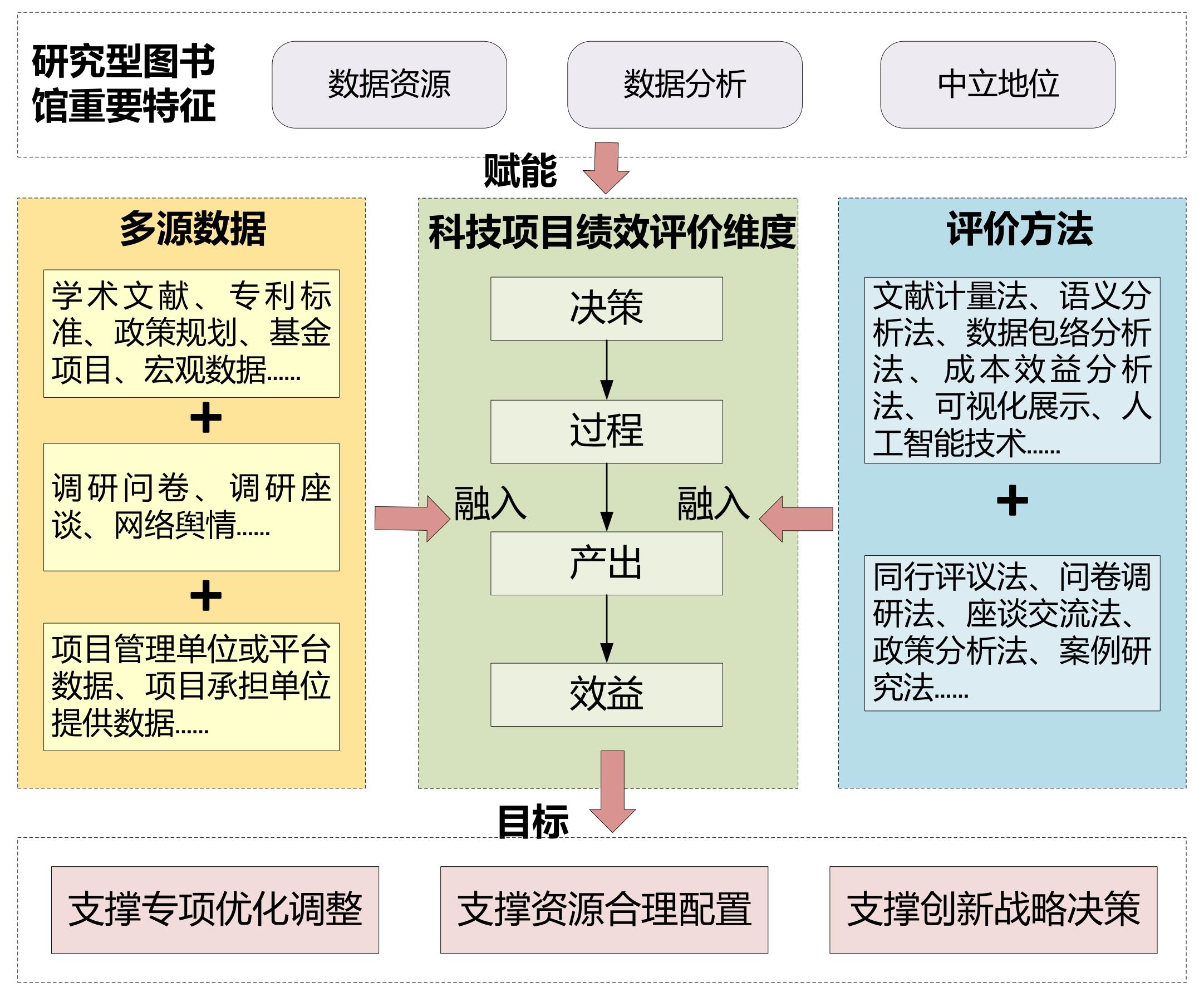
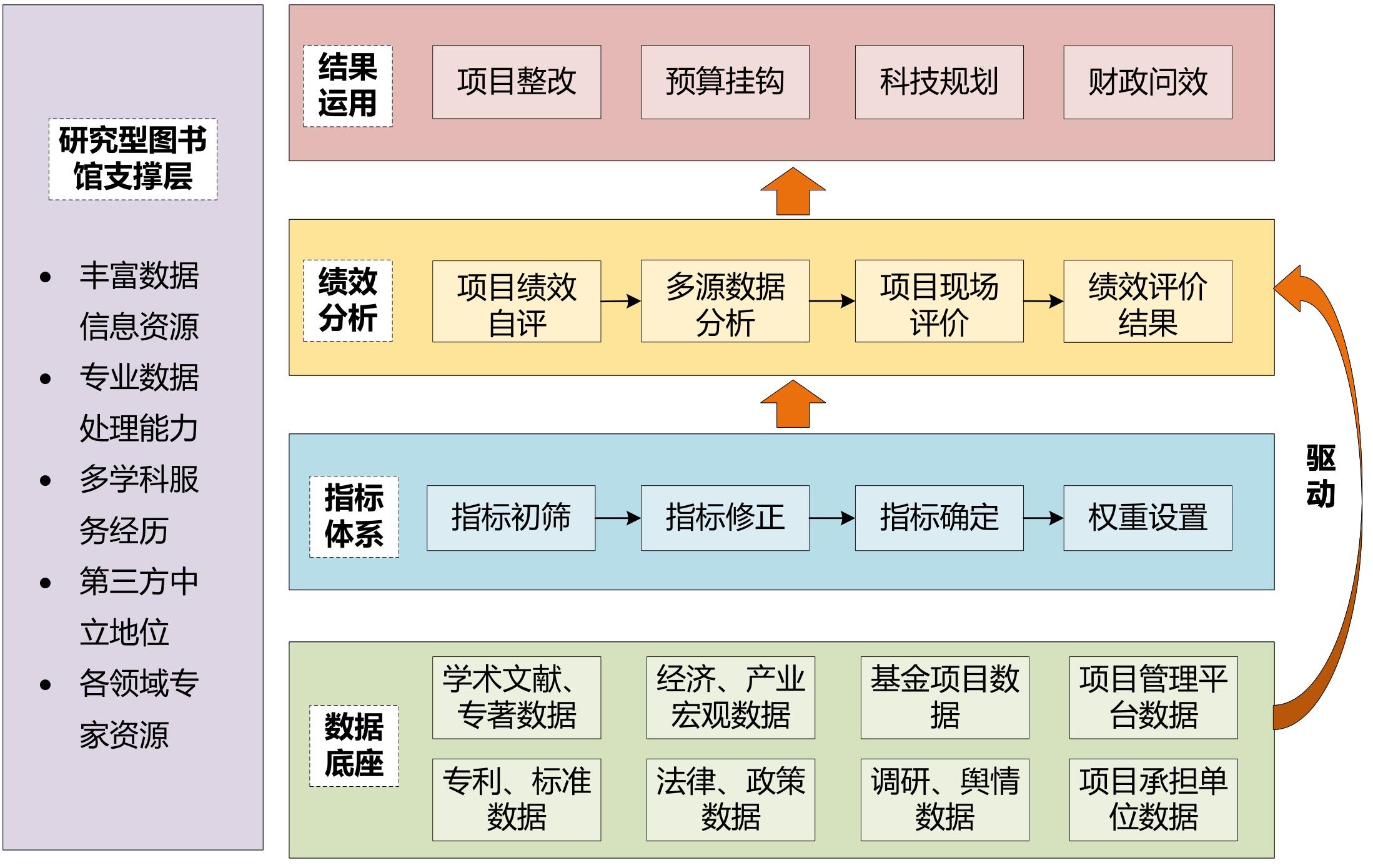
Fig.1

Logical framework for performance evaluation of technology projects based on a multi-source data-driven approach"

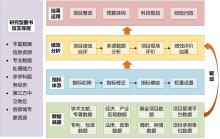
Fig.2

The multi-source data-driven DIPA technology project performance evaluation model"

[1] 贺德方, 潘云涛. 科技评价的内涵、分类与方法辨析及完善策略[J]. 情报学报, 2023, 42(1): 1-9.
He Defang, Pan Yuntao. Concepts, classification, method analysis, and improvement strategies of science and technology evaluation[J]. Journal of the China Society for Scientific and Technical Information, 2023, 42(1): 1-9.
[2] 国家市场监督管理总局, 国家标准化管理委员会. GB/T 22900-2022科学技术研究项目评价通则[EB/OL]. [2022-10-12]. .
[3] Sivaraj P, Madhan V, Mallika V, et al. Enhancing library services through optimization algorithms and data analytics: Enhancing library services mathematical model[M]//AI-Assisted Library Reconstruction. Hershey, Pennsylvania, USA: IGI Global Scientific Publishing, 2024: 290-306.
[4] 曹玲静, 陈云伟. 国际研究型图书馆战略规划及对我国的启示[J]. 图书情报工作, 2020, 64(18): 146-152.
Cao Lingjing, Chen Yunwei. Strategic planning of international research library and its enlightenment to China[J]. Library and Information Service, 2020, 64(18): 146-152.
[5] 王春迎, 苏超萍, 宋宁远. 多源数据驱动下的图书馆智慧服务研究[J]. 图书馆学研究, 2021(22): 49-55.
Wang Chunying, Su Chaoping, Song Ningyuan. A research on library intelligent service driven by multi-source data[J]. Research on Library Science, 2021(22): 49-55.
[6] 刘春艳, 周彤. 协同知识管理能力对新型智库智慧服务创新的作用机理及仿真研究[J]. 农业图书情报学报, 2024, 36(6): 88-101.
Liu Chunyan, Zhou Tong. Action mechanism and simulation research on collaborative knowledge management capability to innovate smart services of new think tanks[J]. Journal of Library and Information Science in Agriculture, 2024, 36(6): 88-101.
[7] 姜春林. 积极构建数智时代的科技评价理论体系[J]. 今日科苑, 2025(2): 1-3.
Jiang Chunlin. Toward a theoretical framework for science and technology evaluation in the digital-intelligent era[J]. Modern Science, 2025(2): 1-3.
[8] Li Hongbo, Yao Bowen, Yan Xin. Data-driven public R&D project performance evaluation: Results from China[J]. Sustainability, 2021, 13(13): 7147.
[9] 蔡祎然, 胡正银, 刘春江. 大语言模型赋能科技文献数据挖掘进展分析[J]. 农业图书情报学报, 2025, 37(2): 4-22.
Cai Yiran, Hu Zhengyin, Liu Chunjiang. Analysis of progress in data mining of scientific literature using large language models[J]. Journal of Library and Information Science in Agriculture, 2025, 37(2): 4-22.
[10] 楼雯, 赵星. 要素化大模型增强的科技成果评价理念前瞻[J]. 中国图书馆学报, 2025, 51(4): 50-65.
Lou Wen, Zhao Xing. Theoretical insights on evaluation of scientific and technological achievements augmented by element-based large models[J]. Journal of Library Science in China, 2025, 51(4): 50-65.
[11] 刘晓娟, 周若卿. 国外科研项目绩效评价实践及启示[J]. 图书情报工作, 2023, 67(14): 119-129.
Liu Xiaojuan, Zhou Ruoqing. Practice and enlightenment of performance evaluation of scientific research projects abroad[J]. Library and Information Service, 2023, 67(14): 119-129.
[12] 郭晓靖, 文庭孝. 国外典型科研成果社会影响评价模式与启示[J]. 农业图书情报学报, 2025, 37(9): 82-96.
Guo Xiaojing, Wen Tingxiao. Evaluation models of the social impact of typical foreign scientific research achievements and their implications[J]. Journal of Library and Information Science in Agriculture, 2025, 37(9): 82-96.
[13] 马千淳, 王楠. 美国STAR METRICS项目的实施与评价——兼论对我国科技政策与科研评估的启示[J]. 科技管理研究, 2020, 40(21): 73-79.
Ma Qianchun, Wang Nan. The implementation and the evaluation of the STAR METRICS project in the U.S.A: And illustration for Chinese evaluation of scientific research policy and scientific research evaluation[J]. Science and Technology Management Research, 2020, 40(21): 73-79.
[14] Clements A, Reddick G, Viney I, et al. Let's talk - Interoperability between university CRIS/IR and researchfish: A case study from the UK[J]. Procedia Computer Science, 2017, 106: 220-231.
[15] 于笑潇. 英国科研绩效评价的特点和启示[J]. 全球科技经济瞭望, 2020, 35(2): 56-62.
Yu Xiaoxiao. The impact evaluation of scientific research in UK and implication for China[J]. Global Science, Technology and Economy Outlook, 2020, 35(2): 56-62.
[16] 张婧婧, 徐海涛, 邸月宝. 欧盟框架计划的演进: 制定背景、模式和方法[J/OL]. 科学学与科学技术管理, 1-28[2025-12-25]. .
Zhang Jingjing, Xu Haitao, Di Yuebao. The evolution of the european framework programme: Formulation backgrounds, modes, and methods[J/OL]. Science of Science and Management of S&T, 1-28[2025-12-25]. .
[17] 陶蕊, 胡维佳. 欧盟框架计划评估体系研究与启示[J]. 科学学研究, 2016, 34(5): 652-659.
Tao Rui, Hu Weijia. The study of the evaluation system of framework programme and suggestions[J]. Studies in Science of Science, 2016, 34(5): 652-659.
[18] 应益昕, 王晔博, 冯洁, 等. 欧盟框架计划监督评估实践与启示研究[J]. 全球科技经济瞭望, 2024, 39(5): 1-7.
Ying Yixin, Wang Yebo, Feng Jie, et al. Practice and implications of supervision and evaluation of E.U. framework programme[J]. Global Science, Technology and Economy Outlook, 2024, 39(5): 1-7.
[19] 钟华, 单连慧, 安新颖. 日本医学科技项目评价体系分析及启示[J]. 世界科技研究与发展, 2021, 43(3): 375-383.
Zhong Hua, Shan Lianhui, An Xinying. Research and enlightenment of evidence based managementand evaluation of medical research projects in Japan[J]. World Sci-Tech R & D, 2021, 43(3): 375-383.
[20] 方勇, 汪楚媛, 苑怡, 等. 基于因果链的国家自然科学基金长周期影响评估逻辑框架构建研究[J]. 科技管理学报, 2024, 26(1): 1-11.
Fang Yong, Wang Chuyuan, Yuan Yi, et al. Research on the logic framework construction of long term impact assessment of National Natural Science Foundation of China based on causal chain[J]. Journal of Science and Technology Management, 2024, 26(1): 1-11.
[21] 国家自然科学基金委员会. 2024年度部门决算[EB/OL]. [2025-07-01]. .
[22] Susan G, Watu W, Stephanie D, et al. A guide to research evaluation frameworks and tools[EB/OL]. [2019-03-10]. .
[23] 冷伏海. 科技战略情报实践与思考[J]. 农业图书情报学报, 2024, 36(5): 4-13.
Leng Fuhai. Practice and reflection on scientific and technological strategic intelligence[J]. Journal of Library and Information Science in Agriculture, 2024, 36(5): 4-13.
[24] 中华人民共和国财政部.财政部关于印发《预算绩效评价共性指标体系框架》的通知[EB/OL]. [2013-04-21]. .
[1] ZHAI Jun, MENG Zihan, LI Fangsu, SHEN Lixin. AI Guides in Research Libraries of North America under the AI4S Context: Based on the Survey of 125 ARL Libraries [J]. Journal of library and information science in agriculture, 2025, 37(7): 35-49.
[2] LIN Zhi-de. Dalian area of non - material Cultural Heritage Database Construction Strategy Research [J]. Journal of library and information science in agriculture, 2014, 26(1): 47-50.
[3] LUAN Mei-chen, BAI Fang. Establishment of Service Innovation Model of University Library Opening to the Community under Digital Environment [J]. Journal of library and information science in agriculture, 2013, 25(12): 11-14.
Viewed
Full text


Abstract

Cited

  Shared   
  Discussed   
No Suggested Reading articles found!