

农业图书情报学报 ›› 2026, Vol. 38 ›› Issue (3): 88-101.doi: 10.13998/j.cnki.issn1002-1248.25-0655
• 研究论文 • 上一篇
梁晓栋, 王茹, 王帅晋, 徐冬梅( )
)
收稿日期:2025-11-18
出版日期:2026-03-05
发布日期:2026-03-30
通讯作者:
徐冬梅
作者简介:梁晓栋(2001- ),男,硕士研究生,研究方向为农户生计
王茹(2001- ),女,硕士研究生,研究方向为农户生产经营
王帅晋(2002- ),男,硕士研究生,研究方向为农户生计
基金资助:
LIANG Xiaodong, WANG Ru, WANG Shuaijin, XU Dongmei()
Received:2025-11-18
Online:2026-03-05
Published:2026-03-30
Contact:
XU Dongmei
摘要:
[目的/意义] 研究国家大数据综合试验区建设是否促进农村居民消费潜力释放,对于扩大内需和培育新经济增长点至关重要。 [方法/过程] 本研究基于2010—2022年中国家庭追踪调查数据(CFPS),将“国家大数据综合试验区”政策作为一项准自然实验,采用双重差分法评估大数据试验区建设对农村居民消费潜力的影响。 [结果/结论] 研究发现:1)国家大数据综合试验区建设显著促进了农村居民消费潜力释放,该结论经过稳健性检验后仍然成立;2)异质性分析发现,该政策释放效应在东部地区尤为明显,且在户主为男性、低收入和年龄结构为中年的农村家庭提振效果更为突出;3)作用机制表明,“国家大数据综合试验区”政策通过增加家庭收入和推动技术进步促进农村居民消费潜力的释放,且家庭负债发挥正向调节作用。鉴于大数据试验区建设对农村居民消费潜力释放具有显著的促进作用,继而提出了几点有助于大数据发展的相关建议。
中图分类号: F328,F126.1
梁晓栋, 王茹, 王帅晋, 徐冬梅. 国家大数据综合试验区建设对农村居民消费潜力的影响研究——基于CFPS数据[J]. 农业图书情报学报, 2026, 38(3): 88-101.
LIANG Xiaodong, WANG Ru, WANG Shuaijin, XU Dongmei. Impact of the Construction of National Big Data Comprehensive Pilot Zones on Rural Residents' Consumption Potential: Evidence from CFPS Data[J]. Journal of library and information science in agriculture, 2026, 38(3): 88-101.
表1
描述性统计"
| 变量 | 定义及赋值 | 均值 | 标准差 | 最小值 | 最大值 |
|---|---|---|---|---|---|
| 消费潜力 | PSM匹配城乡居民消费差值的自然对数 | -0.185 | 1.095 | -4.365 | 4.320 |
| DID | 和 所构成的交互项 | 0.303 | 0.460 | 0 | 1 |
| 户主年龄 | 实际年龄/岁 | 49.370 | 12.090 | 16 | 75 |
| 性别 | 男=1,女=0 | 0.610 | 0.488 | 0 | 1 |
| 受教育年限 | 受教育的实际年限 | 6.805 | 4.102 | 0 | 19 |
| 婚姻状况 | 已婚=1,未婚=0 | 0.895 | 0.306 | 0 | 1 |
| 健康状况 | 不健康=1,一般健康=2,比较健康=3,很健康=4,非常健康=5 | 3.061 | 1.276 | 1 | 5 |
| 医疗保险 | 购买医保=1,未购买医保=0 | 0.937 | 0.243 | 0 | 1 |
| 家庭总收入对数 | 农户家庭总收入取自然对数 | 10.47 | 1.124 | 0 | 16.590 |
| 是否自有住房 | 有自有住房=1,无自有住房=0 | 0.909 | 0.288 | 0 | 1 |
| 家庭人均支出 | 农户家庭人均消费支出取自然对数 | 9.173 | 0.895 | 5.397 | 12.750 |
| 家庭人口抚养比 | 家庭少儿老年人口数/家庭成年劳动人口数 | 0.510 | 0.619 | 0 | 6 |
| 经济发展水平 | 地区人均GDP取自然对数 | 10.670 | 0.421 | 9.464 | 12.100 |
| 城乡收入差距 | 地区城镇居民人均可支配收入/农村居民人均可支配收入 | 2.705 | 0.463 | 1.886 | 3.735 |
| 人力资本水平 | 地区高等学校在校生人数/总人口 | 0.020 | 0.004 | 0.009 | 0.034 |
| 城乡物价差距 | 地区城市居民消费价格指数-农村居民消费价格指数 | -0.046 | 0.443 | -1.300 | 1.400 |
| 家庭人均收入 | 农户家庭人均收入(万元) | 1.584 | 2.824 | 0 | 266.667 |
| 科技创新投入 | 科技创新投入取自然对数 | 14.605 | 1.203 | 12.460 | 17.287 |
| 家庭负债 | 非房贷的金融负债取自然对数 | 2.391 | 4.634 | 0 | 14.914 |
表2
农村居民人均消费潜力单位:元"
| 地区 | 匹配前城乡居民人均消费 | 匹配后城乡居民人均消费 | ||||
|---|---|---|---|---|---|---|
| 农村居民 | 城镇居民 | 消费潜力 | 农村居民 | 城镇居民 | 消费潜力 | |
| 东部地区 | 17 235.83 | 35 143.29 | -17 907.46 | 17 235.83 | 19 318.71 | -2 082.88 |
| 中部地区 | 14 703.82 | 26 895.67 | -12 191.85 | 14 703.82 | 16 814.29 | -2 110.47 |
| 西部地区 | 12 964.84 | 25 776.67 | -12 811.83 | 12 964.85 | 15 477.36 | -2 512.51 |
| 平均 | 14 897.34 | 30 675.08 | -15 777.74 | 14 897.34 | 17 152.57 | -2 255.23 |
表3
基准回归结果"
| 变量 | 消费潜力 | 消费潜力 | 消费潜力 | 消费潜力 |
|---|---|---|---|---|
| (1) | (2) | (3) | (4) | |
| DID | -0.092*** | -0.082** | -0.059** | -0.065** |
| (0.034) | (0.033) | (0.027) | (0.028) | |
| 户主年龄 | 0.008 | 0.003 | 0.003 | |
| (0.006) | (0.005) | (0.005) | ||
| 性别 | 0.327 | 0.068 | 0.069 | |
| (0.321) | (0.120) | (0.118) | ||
| 受教育年限 | -0.053*** | -0.059*** | -0.058*** | |
| (0.006) | (0.005) | (0.005) | ||
| 婚姻状况 | -0.065 | 0.099** | 0.098** | |
| (0.061) | (0.048) | (0.048) | ||
| 健康状况 | 0.007 | 0.015** | 0.015** | |
| (0.009) | (0.007) | (0.007) | ||
| 医疗保险 | 0.280*** | 0.258*** | 0.255*** | |
| (0.039) | (0.031) | (0.031) | ||
| 家庭总收入对数 | -0.048*** | -0.048*** | ||
| (0.009) | (0.009) | |||
| 是否自有住房 | -0.047 | -0.050 | ||
| (0.031) | (0.031) | |||
| 家庭人均支出 | 0.962*** | 0.963*** | ||
| (0.011) | (0.011) | |||
| 家庭抚养比 | 0.060*** | 0.062*** | ||
| (0.015) | (0.015) | |||
| 经济发展水平 | -0.093 | -0.253** | ||
| (0.095) | (0.106) | |||
| 城乡收入差距 | -0.286* | |||
| (0.150) | ||||
| 人力资本水平 | 13.720* | |||
| (7.030) | ||||
| 城乡物价差距 | 0.012 | |||
| (0.018) | ||||
| 时间固定效应 | 是 | 是 | 是 | 是 |
| 个体固定效应 | 是 | 是 | 是 | 是 |
| 常数项 | -0.732*** | -1.103*** | -7.699*** | -5.442*** |
| (0.025) | (0.315) | (1.013) | (1.326) | |
| 样本量/个 | 24 566 | 24 566 | 24 566 | 24 566 |
| R 2 | 0.041 | 0.051 | 0.402 | 0.403 |
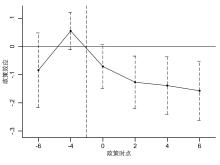
图1
平行趋势检验"
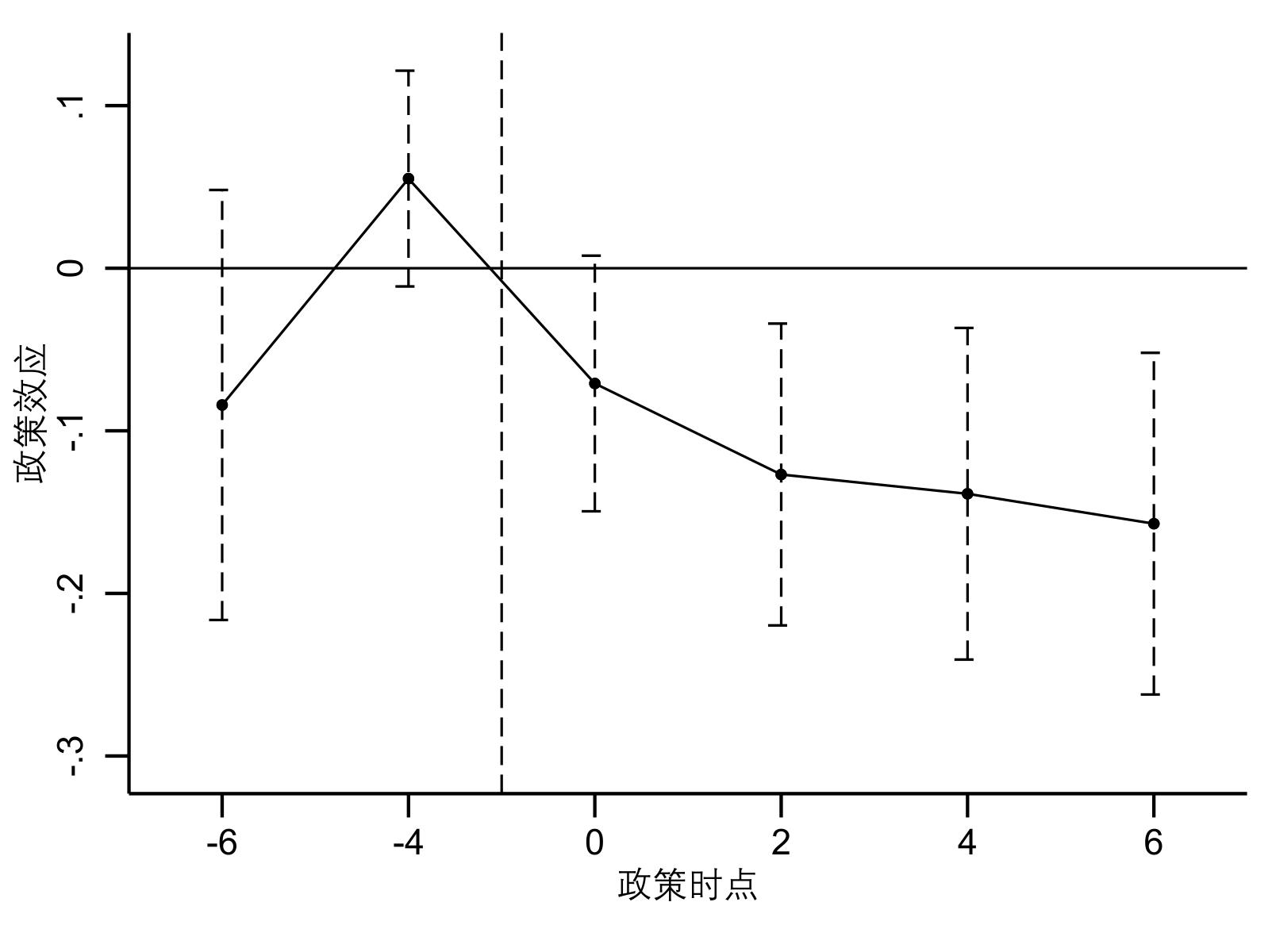
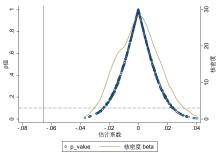
图2
安慰剂检验"
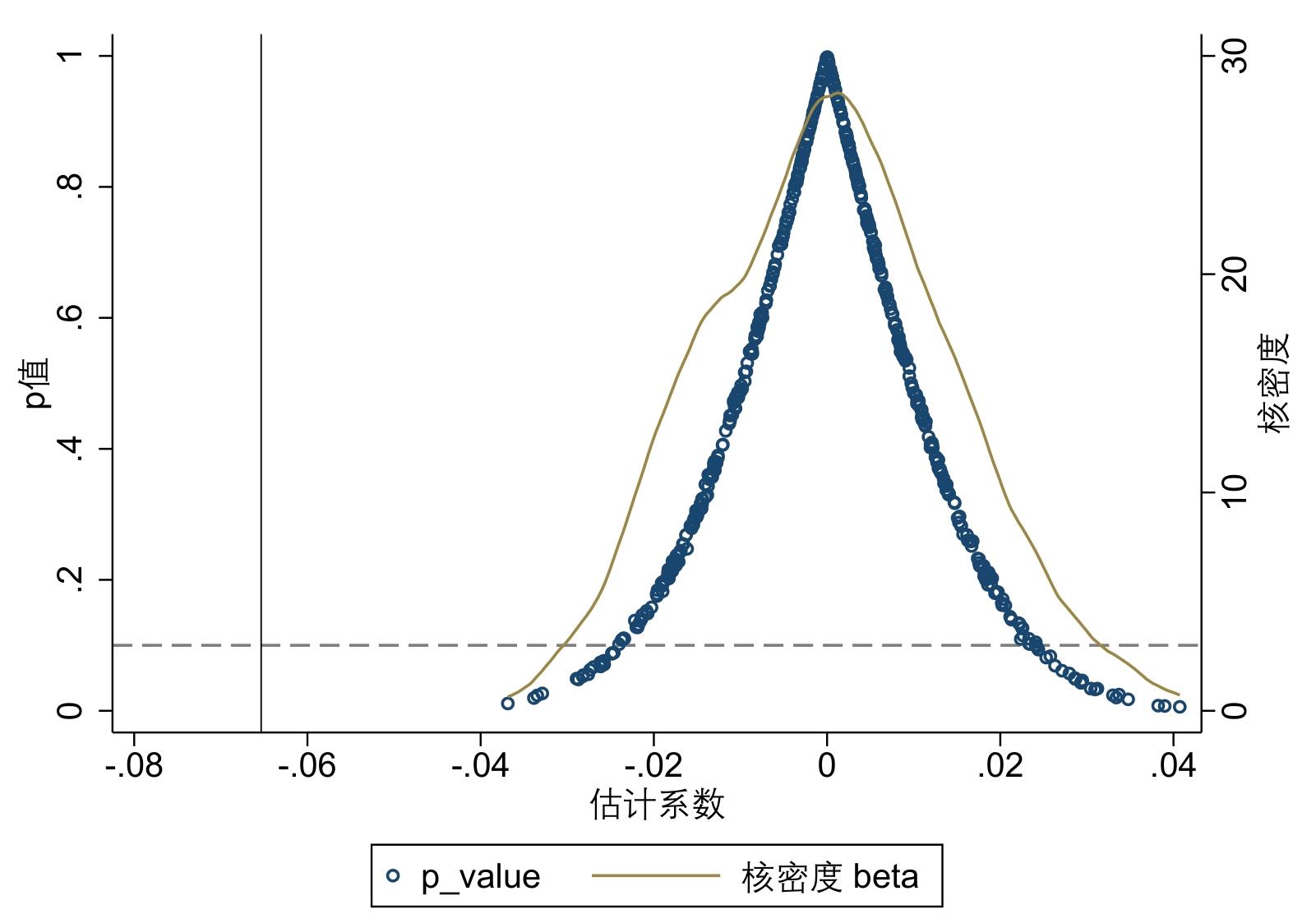
表4
稳健性检验"
| 变量 | (1) | (2) | (3) | (4) | (5) |
|---|---|---|---|---|---|
| 虚构政策时间为2014年 | 虚构政策时间为2012年 | 增加地区固定效应 | 缩尾回归 | 排除“宽带中国”政策影响 | |
| DID | -0.057 | -0.030 | -0.070** | -0.069** | -0.077*** |
| (-1.545) | (-0.656) | (0.028) | (0.027) | (0.029) | |
| 控制变量 | 是 | 是 | 是 | 是 | 是 |
| 家庭固定效应 | 是 | 是 | 是 | 是 | 是 |
| 年份固定效应 | 是 | 是 | 是 | 是 | 是 |
| 常数项 | -5.394*** | -5.653*** | -5.626*** | -5.121*** | |
| (-3.985) | (-4.155) | (1.330) | (1.352) | ||
| 样本量/个 | 24 566 | 24 566 | 19 932 | 24 566 | 24 566 |
| R 2 | 0.402 | 0.402 | 0.644 | 0.401 | 0.403 |
表5
异质性分析结果"
| 变量 | (1) | (2) | (3) | (4) | (5) | (6) | (7) | (8) | (9) | (10) |
|---|---|---|---|---|---|---|---|---|---|---|
| 女性户主家庭 | 男性户主家庭 | 低收入家庭 | 高收入家庭 | 青年家庭 | 中年家庭 | 老年家庭 | 东部地区 | 中部地区 | 西部地区 | |
| DID | -0.026 | -0.079** | -0.140*** | 0.034 | 0.057 | -0.092** | -0.020 | -0.070** | 0.023 | -0.017 |
| (0.047) | (0.035) | (0.044) | (0.046) | (0.081) | (0.038) | (0.088) | (0.035) | (0.040) | (0.077) | |
| 控制变量 | 是 | 是 | 是 | 是 | 是 | 是 | 是 | 是 | 是 | 是 |
| 个体固定效应 | 是 | 是 | 是 | 是 | 是 | 是 | 是 | 是 | 是 | 是 |
| 时间固定效应 | 是 | 是 | 是 | 是 | 是 | 是 | 是 | 是 | 是 | 是 |
| 常数项 | -5.878*** | -5.366*** | -6.809*** | -2.770 | -2.381 | -3.930** | -13.00** | -6.438*** | -5.346*** | -5.902** |
| (2.228) | (1.671) | (2.071) | (2.174) | (3.951) | (1.912) | (5.349) | (1.896) | (1.710) | (2.531) | |
| 样本量/个 | 9 589 | 14 977 | 12 563 | 12 003 | 5 256 | 13 913 | 5 397 | 8 246 | 6 854 | 9 466 |
| R 2 | 0.409 | 0.401 | 0.411 | 0.383 | 0.364 | 0.413 | 0.381 | 0.388 | 0.398 | 0.420 |
表6
机制分析结果"
| 变量 | (1) | (2) | (3) |
|---|---|---|---|
| 收入效应 | 技术溢出效应 | 调节效应 | |
| DID | 0.108** | 0.032*** | -0.069** |
| (0.046) | (0.008) | (0.028) | |
| 家庭负债 | 0.002 | ||
| (0.002) | |||
| DID×家庭负债 | -0.013*** | ||
| (0.004) | |||
| 控制变量 | 是 | 是 | 是 |
| 个体固定效应 | 是 | 是 | 是 |
| 时间固定效应 | 是 | 是 | 是 |
| 常数项 | -15.39*** | -4.570*** | -5.533*** |
| (3.175) | (0.762) | (1.326) | |
| 样本量/个 | 24 566 | 24 566 | 24 566 |
| R 2 | 0.295 | 0.855 | 0.403 |
| [1] |
单德朋, 宋书山. 数字普惠金融赋能城镇居民消费潜力释放——来自CHFS的微观证据[J]. 价格理论与实践, 2024(11): 202-207.
|
|
|
|
| [2] |
龚志民, 李可欣, 李婵. 再论中国最优消费率: 累计消费视角[J]. 消费经济, 2021, 37(5): 11-22.
|
|
|
|
| [3] |
孙豪, 项计豪, 宋明月. 中国居民消费潜力: 规模估算与释放路径[J]. 经济学家, 2025(5): 37-46.
|
|
|
|
| [4] |
陈新娟, 袁持平. 最优消费率测算及其影响因素——基于2000-2018年数据的实证研究[J]. 商业经济研究, 2020(15): 41-43.
|
|
|
|
| [5] |
刘松, 楼嘉军. 城镇居民休闲消费潜力影响因素及其空间异质性[J]. 地域研究与开发, 2022, 41(2): 52-56, 83.
|
|
|
|
| [6] |
陈姝兴, 丁任重. 消费潜力与宏观经济增长: 基于社会再生产的理论和经验分析[J]. 政治经济学评论, 2023, 14(6): 71-101.
|
|
|
|
| [7] |
|
| [8] |
|
| [9] |
王小华, 温涛, 韩林松. 习惯形成与中国农民消费行为变迁: 改革开放以来的经验验证[J]. 中国农村经济, 2020(1): 17-35.
|
|
|
|
| [10] |
魏滨辉, 罗明忠, 夏海龙, 等. 返乡创业能促进农村家庭消费增长吗?[J]. 南方经济, 2023(10): 145-160.
|
|
|
|
| [11] |
金春雨, 孙玉娇. 城乡不同收入阶层居民杠杆率对消费影响的异质性研究——来自CFPS的微观证据[J]. 经济体制改革, 2025(5): 26-34.
|
|
|
|
| [12] |
谷宇. 人口结构变动对居民休闲消费影响的实证研究[J]. 中国商论, 2025, 34(18): 59-62.
|
|
|
|
| [13] |
乔晓楠, 王奕. 家庭资产对消费的异质性影响——基于中国家庭追踪调查(CFPS)的经验分析[J]. 金融市场研究, 2025(7): 11-26.
|
|
|
|
| [14] |
王彦伟. 家庭资产选择、地区经济特征与居民消费水平[J]. 北京工商大学学报(社会科学版), 2020, 35(3): 113-126.
|
|
|
|
| [15] |
王胜利, 孙伊宁. 数字经济发展对消费升级的影响——基于城乡收入差距中介效应[J]. 大连理工大学学报(社会科学版), 2025, 46(4): 16-25.
|
|
|
|
| [16] |
罗章权, 郭凯明. 劳动力市场化改革、价格结构性变化与城乡收入差距[J]. 中国农村经济, 2025(6): 60-80.
|
|
|
|
| [17] |
任铭时, 张勇, 王星欣. 数字经济对农村居民消费的影响研究——基于30个省际面板数据实证[J]. 南方农村, 2025, 41(5): 12-19.
|
|
|
|
| [18] |
刘金, 范雨婷. 数字技术应用促进家庭消费结构升级了吗?——来自中国社会状况综合调查数据库的证据[J]. 西南金融, 2025(9): 82-95.
|
|
|
|
| [19] |
贾兴梅, 姜源露. 数字经济、农村人力资本与乡村产业质量变革[J]. 新疆财经大学学报, 2025(4): 21-32.
|
|
|
|
| [20] |
王薇, 魏阳阳. 数字经济、消费升级与产业高质量发展[J]. 统计与决策, 2025, 41(14): 105-110.
|
|
|
|
| [21] |
肖素萍, 潘家栋. 数智政策、协同赋能与区域创新水平——来自国家大数据与人工智能“双试点”的经验证据[J]. 浙江学刊, 2026(1): 214-226, 240.
|
|
|
|
| [22] |
郑威, 罗润风. 数据要素集聚能否促进产业链现代化?——基于数字金融发展与数字人才集聚的双重视角[J]. 产业经济研究, 2024(6): 43-55, 69.
|
|
|
|
| [23] |
张华平, 许家俊, 钱柯旭. 国家级大数据综合试验区对城乡融合发展的影响[J]. 统计与决策, 2025, 41(20): 97-102.
|
|
|
|
| [24] |
王涛, 丁正, 裴硕. 国家大数据综合试验区试点政策对制造业企业绿色创新的影响——基于数字金融、数字化转型的中介效应[J]. 区域金融研究, 2024(9): 24-31.
|
|
|
|
| [25] |
杨军, 朱庆生. 国家大数据综合试验区设立对企业创新效率的影响[J]. 统计与决策, 2025, 41(18): 158-164.
|
|
|
|
| [26] |
李治, 史锦文, 詹绍文, 等. 国家大数据综合试验区设立对文化企业数字化转型的影响[J]. 技术与创新管理, 2025, 46(5): 558-567.
|
|
|
|
| [27] |
李兰冰, 吴京洪. 数字经济与家庭收入包容性增长[J]. 广东财经大学学报, 2025, 40(4): 21-34.
|
|
|
|
| [28] |
陈明, 崔鹏. 数字经济政策可以提高居民幸福感吗?——基于国家级大数据综合试验区的准自然实验[J]. 济南大学学报(社会科学版), 2025, 35(2): 141-150.
|
|
|
|
| [29] |
王文甫, 曾斌. 城乡二元结构、城市偏向性与居民消费[J]. 当代财经, 2025(4): 3-17.
|
|
|
|
| [30] |
黄永春, 宫尚俊, 邹晨, 等. 数字经济、要素配置效率与城乡融合发展[J]. 中国人口·资源与环境, 2022, 32(10): 77-87.
|
|
|
|
| [31] |
何骏, 连欣燕, 田锦萱. 数据要素集聚如何赋能新质生产力?——基于国家大数据综合试验区的准自然实验[J]. 上海经济研究, 2025(12): 58-72.
|
|
|
|
| [32] |
张宁. 大数据综合试验区建设对商贸流通业创新发展的影响效应——基于国家级大数据综合试验区试点政策的准自然实验[J]. 商业经济研究, 2024(20): 25-28.
|
|
|
|
| [33] |
何颖. 数字金融、消费扩容与零售业高质量发展[J]. 商业经济研究, 2025(4): 44-47.
|
|
|
|
| [34] |
焦丽娜. 数字经济背景下中小企业市场营销数字化转型的策略与实践[J]. 商场现代化, 2025(23): 100-102.
|
|
|
|
| [35] |
盛亦男, 张猛, 陶涛. 早年贫困经历降低了老年消费福祉吗?[J]. 人口学刊, 2025, 47(1): 113-128.
|
|
|
|
| [36] |
熊春林, 李漱, 刘俏. 农业农村大数据政策何以促进农民增收?[J]. 农业经济与管理, 2024(6): 131-143.
|
|
|
|
| [37] |
郭慧龄. 国家大数据综合试验区对农民收入的影响研究[J]. 商展经济, 2025(14): 40-43.
|
|
|
|
| [38] |
孙伯驰, 尹含. 数字乡村发展能否促进农户共同富裕——基于收入增长与收入不平等的双重视角[J]. 华东经济管理, 2025, 39(6): 35-45.
|
|
|
|
| [39] |
张兴元, 陈美玉, 章语嫣, 等. 市场竞争对林业上市企业科技创新投入的影响研究——基于融资约束理论的异质性分析[J]. 资源开发与市场, 2023, 39(12): 1653-1659.
|
|
|
|
| [40] |
刘巨宏, 张卉. 数字服务贸易对居民消费质量的影响机制——基于对外开放水平的中介作用[J]. 商业经济研究, 2025(22): 144-148.
|
|
|
|
| [41] |
赵素燕. 电商下乡对农村家庭消费的影响分析——基于需求与供给的双重视角[J]. 商业经济研究, 2025(6): 68-71.
|
|
|
|
| [42] |
陈泽文, 孙皓程. 促进老工业区城市消费结构升级的路径研究——基于鞍山CHFS微观数据的实证分析[J]. 中国市场, 2025(30): 13-16.
|
|
|
|
| [43] |
程雪军, 汪敏. 金融科技背景下消费金融助力乡村振兴的实现机制研究[J]. 兰州学刊, 2024(8): 131-145.
|
|
|
|
| [44] |
张雅淋, 吴义东, 姚玲珍. 数字金融素养、收入差距与消费不平等——基于中国家庭金融调查的实证研究[J]. 商业经济与管理, 2025(11): 5-21.
|
|
|
|
| [45] |
王文姬, 夏杰长. 数字平台渗透增强家庭消费韧性研究[J]. 经济科学, 2025(6): 198-222.
|
|
|
|
| [46] |
田莹莹, 齐金勃, 程京京. 农村居民消费潜力: 规模估算与释放路径[J]. 商业经济研究, 2025(8): 87-91.
|
|
|
|
| [47] |
尹志超, 郭沛瑶. 精准扶贫政策效果评估——家庭消费视角下的实证研究[J]. 管理世界, 2021, 37(4): 64-83.
|
|
|
|
| [48] |
苗金芳, 马明瑞, 罗军林. 大数据促进农业生产效率的机制与效应研究——基于国家大数据综合试验区试点政策的准自然实验[J]. 农业大数据学报, 2025, 7(3): 331-342.
|
|
|
|
| [49] |
丁建军, 万航. 数字乡村发展与包容性增长: 基于多源数据的微观考察[J]. 湖南师范大学社会科学学报, 2025, 54(6): 89-98.
|
|
|
|
| [50] |
叶堂林, 刘华桢. 信息消费赋能城市数字技术创新研究——来自国家信息消费试点政策的经验证据[J]. 湖北民族大学学报(哲学社会科学版), 2025, 43(6): 121-133.
|
|
|
|
| [51] |
辛冲冲, 董浩然. 公共数据开放对居民消费升级的影响及作用机制——基于政府数据平台上线的准自然实验[J]. 湖北民族大学学报(哲学社会科学版), 2025, 43(5): 122-133.
|
|
|
|
| [52] |
张斌, 魏哲. 数字基础设施建设的消费增长与公平效应——基于供需匹配视角[J]. 经济问题探索, 2023(12): 1-20.
|
|
|
|
| [53] |
孙妍, 刘浩. 夫妻权力、家务劳动与家庭消费——基于CFPS2022的实证分析[J]. 社会学评论, 2025, 13(5): 186-209.
|
|
|
|
| [54] |
周一佳. 数字鸿沟与消费鸿沟——基于城乡居民消费不平等视角[J]. 商业经济研究, 2025(18): 46-50.
|
|
|
|
| [55] |
石芳. 人口年龄结构与家庭消费选择——基于生命周期消费理论的新探讨[J]. 商业经济研究, 2020(4): 71-73.
|
|
|
|
| [56] |
雒敏, 董霞. 家庭养老、社会养老与老年人医疗消费关系研究[J]. 价格理论与实践, 2025(10): 228-234.
|
|
|
|
| [57] |
张温馨. 西部陆海新通道对沿线地区产业结构升级的影响研究[J]. 市场论坛, 2022(8): 46-52.
|
|
|
| [1] | 刘豪, 靳晓荷. 数字经济与农户家庭消费:及时行乐还是保守消费?——来自“宽带乡村”试点政策的证据[J]. 农业图书情报学报, 2025, 37(7): 73-90. |
| [2] | 赵安平, 张琳, 王存存, 王增飞, 赵浩森, 王晓东. 农产品价格指数构建与实证[J]. 农业图书情报学报, 2023, 35(9): 91-99. |
| [3] | 赵又霖, 庞航远, 林怡妮, 潘义概. 数字营销活动的政策指向、实践发展与研究重点[J]. 农业图书情报学报, 2023, 35(2): 4-15. |
| [4] | 张天骄, 张子超, 黄堃, 赵又霖, 林怡妮. 融合关联挖掘与D-ANP的数字经济下消费潜力多模态评估模型构建[J]. 农业图书情报学报, 2023, 35(2): 16-29. |
|
||